Category: Business

Business News: Get latest stock share market news, financial news, economy news, company news, politics news, India news, breaking news, Indian economy news.

  • Moody’s Highlights Planning Issues at IndiGo Due to Ongoing Flight Disruptions

    Moody’s Highlights Planning Issues at IndiGo Due to Ongoing Flight Disruptions

    Credit rating agency Moody’s has raised concerns about IndiGo’s recent operational challenges, identifying them as credit negative. The airline’s inadequate preparation for known aviation regulations has led to considerable flight cancellations and delays. Even with over a year to adjust to the revised Flight Duty Time Limitations, IndiGo’s operational failures have come under scrutiny, triggering alarm over its readiness and the resultant impact on thousands of affected passengers.

    Operational Disruptions and Regulatory Challenges

    Moody’s emphasized that the recent disruptions at IndiGo signify serious deficiencies in planning and operational management. The airline encountered a surge of cancellations and delays, worsened by insufficient adjustments to crew scheduling as per new regulations. These rules, which include limits on night landings and extended rest periods for pilots, were communicated well ahead of time. Consequently, IndiGo struggled to ensure adequate crew availability, resulting in widespread service interruptions that left many passengers stranded at major airports.

    The situation peaked with IndiGo canceling over 1,000 flights in a single day, nearly half of its daily operations. This operational chaos has not only impacted passengers but has also caused a significant decline in the airline’s stock value. Shares of InterGlobe Aviation, IndiGo’s parent company, plummeted by approximately 16.4% over six trading sessions. Investors reacted unfavorably to the operational repercussions from the new Flight Duty Time Limitations, raising concerns about the airline’s future performance.

    Market Reactions and Financial Implications

    The fallout from IndiGo’s operational issues has led to a reassessment among financial analysts and brokerages. UBS has kept a Buy rating on InterGlobe Aviation but has lowered its target price to Rs 6,350. The brokerage cited inadequate readiness for the shift to the new Flight Duty Time Limitations and expected higher operating costs. In contrast, Investec has adopted a more pessimistic view, issuing a Sell rating with a target price of Rs 4,040, highlighting increasing fuel costs and the need for a significant rise in pilot numbers to comply with the new regulations by February 2026.

    Jefferies also reiterated a Buy rating but cautioned that IndiGo’s cost structure is increasingly unfavorable. Rising employee expenses, diminished pilot productivity, and heightened costs related to dollar fluctuations are contributing factors. These operational challenges have led to a notable sell-off, erasing over Rs 37,000 crore from the airline’s market capitalization, highlighting the financial ramifications of the recent disruptions.

    Regulatory Scrutiny and Future Outlook

    In light of the operational issues, regulatory scrutiny has stepped up. The Directorate General of Civil Aviation has given IndiGo CEO Pieter Elbers extra time to respond to a show-cause notice concerning the airline’s operational failures. The notice requests an explanation on why enforcement actions should not be initiated under aviation regulations. This increased oversight illustrates the seriousness of the situation and the necessity for the airline to rectify its operational shortcomings.

    Despite these recent challenges, InterGlobe Aviation shares have displayed resilience, up about 7% year-to-date. This scenario indicates a complex interplay between the immediate operational risks flagged by Moody’s and the airline’s long-term growth potential. As IndiGo navigates these challenging times, the focus remains on how effectively it can adapt to regulatory changes and restore operational stability while sustaining its dominant position in India’s domestic aviation market.

    Digihunt is not a financial advisor and this is not investment advice.

  • Trump Suggests Tariffs Instead of Income Taxes: What Does the Data Show?

    Trump Suggests Tariffs Instead of Income Taxes: What Does the Data Show?

    US President Donald Trump has reignited discussions about the possibility of substituting federal income taxes with tariffs, a key element of his economic strategy for the 2024 presidential campaign. At a recent Cabinet meeting, Trump asserted that the rising revenue from tariffs could eventually eliminate the need for Americans to pay income taxes. However, this claim contradicts federal revenue data, which indicates that individual income taxes remain the primary source of government funding.

    Current Revenue Landscape

    Federal revenue figures paint a different picture than Trump’s assertions regarding tariffs. In the previous fiscal year, the U.S. government collected around $2.66 trillion from individual income taxes, which comprised approximately 51% of the total revenue of $5.23 trillion. In contrast, tariffs contributed nearly $195 billion, accounting for just 3.7% of total revenue. The first month of the new fiscal year reflected a similar trend, with individual income taxes generating $217 billion, or 54% of the total $404 billion collected. Tariffs, conversely, produced approximately $31 billion, representing 7.75% of total revenue during that period.

    Experts have expressed doubts regarding the viability of Trump’s proposal. Brandon DeBot, a senior attorney adviser at New York University’s Tax Law Center, indicated that the idea lacks mathematical and economic feasibility. Analysts from various sectors have echoed this viewpoint, emphasizing that, even with the highest postwar tariffs, the revenue generated remains significantly below that of income taxes.

    Economic Implications of Tariff-Only Taxation

    Trump maintains an optimistic view of a tariff-based revenue system, claiming it could eventually lead to the elimination of income taxes. He cites a boost in foreign investment as evidence that his tariff strategy is effective. White House spokesman Kush Desai remarked that Trump’s tariffs could yield trillions in revenue, with costs ultimately shifting to foreign exporters. However, this assertion raises questions about the reliability of the projected figures, many of which have not been fully disclosed.

    Economists caution that a tax system solely reliant on tariffs could disproportionately affect lower-income households. Unlike income taxes, which can be adjusted with credits and deductions, tariffs generally lead to increased prices for consumers, thereby passing the financial burden onto them. Additionally, heightened tariffs could elicit retaliatory measures from trading partners, potentially resulting in decreased imports and slower economic growth, which could ultimately diminish federal revenue.

    Challenges and Legislative Hurdles

    The initiative to replace income taxes with tariffs encounters significant challenges on both political and economic fronts. Trump’s tariff program is currently under review by the Supreme Court, which could potentially limit the president’s authority to impose such duties. Even if the court rules against Trump, he has alternative mechanisms to tax imports, similar to those used during his first term.

    Eliminating the federal income tax, established with the ratification of the 16th Amendment in 1913, would necessitate substantial legislative changes and a comprehensive overhaul of the national budget. Critics argue that this proposal emerges during a period of growing economic inequality, marked by an increasing number of billionaires and millionaires. Michael Graetz, a professor of tax law at Yale University, pointed out that reducing the tax burden on the wealthy while shifting it to the middle class raises significant ethical concerns.

    Digihunt is not a financial advisor and this is not investment advice.

  • IndiGo Airfare Update: Latest Rates After Government Caps for Delhi, Mumbai, Bengaluru, and Others

    IndiGo Airfare Update: Latest Rates After Government Caps for Delhi, Mumbai, Bengaluru, and Others

    Domestic flight ticket prices have significantly decreased following government intervention to impose temporary fare caps. This action was prompted by a drastic increase in airfares that affected numerous travelers after IndiGo canceled over 1,000 flights. The new fare limits aim to stabilize prices that had ballooned to unprecedented levels, offering essential relief to passengers.

    Fare Surge and Government Action

    Airfares surged alarmingly last Friday, with one-way economy-class tickets reaching exorbitant prices. For example, a SpiceJet ticket from Kolkata to Mumbai for December 6 was listed at a staggering Rs 90,000, while an Air India ticket on the Mumbai to Bhubaneswar route soared to Rs 84,485. Such high fares are unusual, as last-minute price hikes typically range from two to three times the normal rate. In this instance, fares escalated to six times the usual cost. This trend was observed across various routes, with fares from Delhi to Goa on Air India exceeding Rs 56,000, and Delhi to Pune tickets priced between Rs 30,000 and Rs 40,000. Consequently, the government implemented temporary fare ceilings to address these rising costs.

    Details of the Fare Caps

    The civil aviation ministry’s directive established fare limits based on travel distance, ranging from Rs 7,500 to Rs 18,000. Flights covering distances up to 500 kilometers are capped at Rs 7,500. For routes between 500 and 1,000 kilometers, the limit is set at Rs 12,000. Journeys spanning 1,000 to 1,500 kilometers have a maximum fare of Rs 15,000, while distances exceeding 1,500 kilometers are capped at Rs 18,000. This regulation places the popular Delhi to Mumbai route, which exceeds 1,300 kilometers, under the Rs 18,000 ceiling for economy class tickets. Although these fare caps provide some relief, the effects vary across different destinations.

    Current Ticket Prices and Trends

    With the newly imposed fare caps, passengers are noticing a decline in ticket prices. For instance, on Monday, the average one-way ticket cost from Delhi to Mumbai with IndiGo was approximately Rs 17,500, with prices ranging from Rs 11,000 to Rs 28,000. In contrast, return tickets were considerably cheaper, averaging Rs 6,000. Air India tickets for the same route averaged Rs 17,100, while Akasa Air’s prices were around Rs 20,600. Similarly, travel between Delhi and Kolkata has become more affordable, with IndiGo fares ranging from Rs 11,000 to Rs 23,000. SpiceJet tickets were priced between Rs 16,900 and Rs 31,000, while Air India fares were significantly higher at Rs 58,798.

    Other routes have also experienced price reductions. For instance, Delhi to Goa flights now average Rs 13,000 with IndiGo, while Air India Express tickets are around Rs 16,500. The Delhi to Lucknow route has seen a considerable decrease in fares, with IndiGo prices ranging from Rs 4,000 to Rs 9,500. Overall, these fare adjustments have provided much-needed relief for travelers, although they should check for real-time prices as fluctuations continue.

    Advice for Travelers

    As flight fares remain volatile, travelers are encouraged to stay informed about the latest ticket prices. While the recent fare caps have added some stability to the market, prices can still vary significantly based on demand and availability. Passengers planning to fly should regularly check airline websites for the most accurate and updated information. This proactive approach will help ensure that travelers secure the best possible fares for their journeys.

    Digihunt is not a financial advisor and this is not investment advice.

  • Moody’s Report: Asian Banks Outperform US Lenders in Strength

    Moody’s Report: Asian Banks Outperform US Lenders in Strength

    Banks in the Asia-Pacific region are demonstrating stronger capital health compared to their counterparts in the United States and Western Europe, according to a recent survey by Moody’s. The report highlights that these banks have built robust capital levels due to stricter regulatory oversight. It also notes that the risk-weighted asset profiles of major Asia-Pacific banks align closely with their actual credit losses over the past decade, reflecting a realistic assessment of their asset risks.

    Capital Strength in Asia-Pacific Banks
    Moody’s survey shows that banks in the Asia-Pacific region are better positioned in terms of capital strength than those in the US and Europe. The analysis suggests that these banks have accumulated significant capital levels, largely due to tighter regulatory frameworks. This regulatory environment has fostered a culture of caution among lenders, contributing to a more resilient banking sector. The survey examined 35 banks across eight major Asia-Pacific banking systems, representing 75% of the total assets of rated banks in these markets.

    The report emphasizes that while the risk-weighted asset (RWA) densities vary across different markets, they provide a clear picture of the risk levels linked to banks’ portfolios. Higher RWA densities indicate a greater proportion of high-risk assets on balance sheets. This understanding of risk is crucial for maintaining financial stability in the region.

    India’s Private Sector Banks Stand Out
    A key finding from the survey is the capital strength of India’s major private sector banks. Moody’s highlights that these institutions have achieved high Common Equity Tier 1 (CET1) capital adequacy and leverage ratios. This success is attributed to their ability to generate internal capital that has outpaced RWA growth in recent years. Additionally, these banks can access equity from capital markets relatively easily when necessary.

    CET1 capital, which includes retained earnings and equity shares, serves as a critical buffer against potential losses. The report indicates that higher CET1 ratios enhance a bank’s capacity to absorb financial shocks, thereby safeguarding depositor interests. By the end of 2024, large banks in Hong Kong, India, and Korea are projected to have average CET1 ratios of 18.0%, 14.7%, and 14.5%, respectively. These figures surpass the 13.5% reported by the four largest US banks and the 13.8% recorded by the top six banks in Western Europe.

    Challenges for State-Owned Banks
    Despite the overall strength of Asia-Pacific banks, Moody’s points out that state-owned banks in the region are generally weaker in terms of capital and leverage compared to their private sector counterparts. This disparity raises concerns about the long-term sustainability of state-owned institutions, especially in a rapidly evolving financial landscape.

    The report also notes that certain countries, including India and Vietnam, exhibit higher RWA densities due to their reliance on standardized approaches for calculating risk weights. This method is based on fixed regulatory guidelines rather than banks’ internal assessments. In India, regulators have announced plans to transition to the Internal Ratings-Based (IRB) approach by 2028, which is expected to lower RWA density if implemented effectively.

    Comprehensive Overview of Banking Systems
    The survey’s sample included prominent banks such as the State Bank of India, Axis Bank, ICICI Bank, and HDFC Bank, which collectively account for approximately half of India’s total banking system assets. By providing a comprehensive overview of the banking systems in the Asia-Pacific region, the report underscores the importance of maintaining robust capital levels and effective risk management practices.

    Digihunt is not a financial advisor and this is not investment advice.

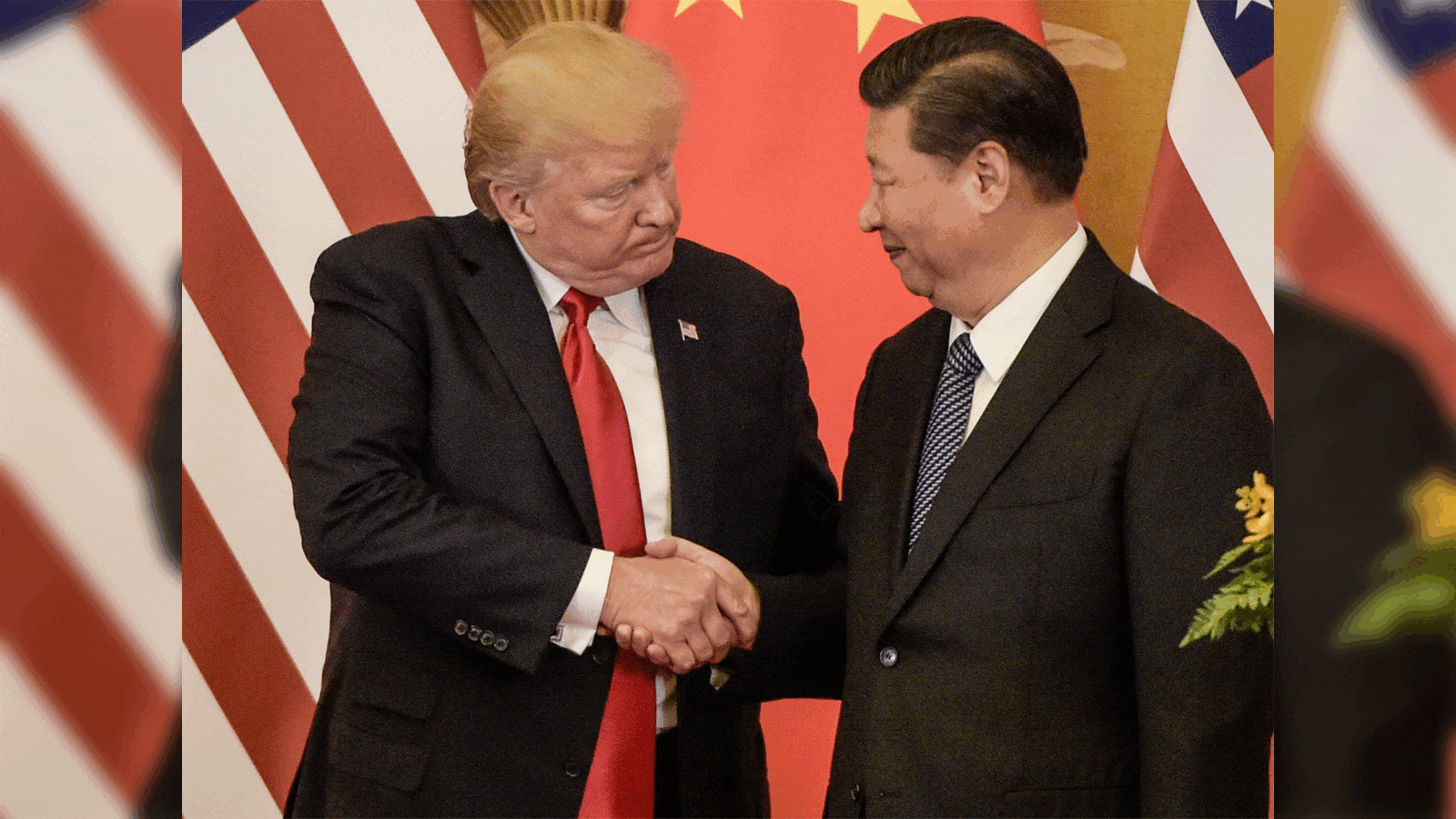
  • Xi Jinping’s Trade Strategy: How He Surpassed Trump in the Trillion-Dollar Trade War

    Xi Jinping’s Trade Strategy: How He Surpassed Trump in the Trillion-Dollar Trade War

    Despite nearly a decade of tariffs imposed by the United States under President Donald Trump, China’s trade surplus has surged to an unprecedented $1.08 trillion through November, marking the highest level ever recorded globally. This figure, announced by China’s customs agency, reflects a 21.7% increase compared to the same period in 2024. The data underscores China’s growing influence in global exports, as the nation continues to adapt and thrive despite ongoing trade tensions.

    China’s Export Resilience

    China’s remarkable trade surplus highlights its ability to navigate the challenges posed by U.S. tariffs. The country has successfully diversified its markets, with exports to Africa rising by 42%, Europe by 15%, and Latin America experiencing double-digit growth. In contrast, shipments to the United States have seen a significant decline, dropping 29% year-over-year in November. This marks the eighth consecutive month of double-digit declines in U.S.-bound shipments. However, sales to key European nations, including France, Germany, and Italy, have flourished, demonstrating China’s capacity to shift its focus to emerging markets and established economies alike.

    Experts suggest that China’s strategic maneuvering has allowed it to maintain its export momentum. Mary Lovely, a senior fellow at the Peterson Institute for International Economics, noted that China has effectively found new markets outside advanced economies. This adaptability has positioned China not only as the world’s leading supplier of goods but also as a significant geopolitical player, leveraging its exports to forge stronger ties with countries in the Global South.

    Manufacturing Shifts and Currency Dynamics

    In response to U.S. tariffs, many Chinese companies have relocated parts of their supply chains to Southeast Asia, Mexico, and Africa. This strategy, known as “trans-shipping,” enables these firms to export goods to the U.S. while circumventing tariff barriers. By moving final assembly outside of China, they can continue supplying American retailers without facing the full brunt of the tariffs.

    Additionally, the depreciation of the renminbi against the euro has made Chinese products even more competitive in international markets. As prices in China decrease while those in the U.S. and Europe rise, Chinese manufacturers are gaining an edge. Jens Eskelund, president of the EU Chamber of Commerce in China, emphasized that the undervalued renminbi poses a significant challenge for European manufacturers trying to compete with Chinese goods.

    Despite the challenges posed by tariffs, China’s export growth remains robust. While exports of certain products, such as toys and electronics, have declined to the U.S., the overall loss has been offset by increased sales in other regions. This shift reflects China’s long-term strategy of selling at lower margins to gain geopolitical influence in emerging markets.

    The Broader Implications of China’s Trade Surplus

    The implications of China’s record trade surplus extend beyond economic metrics. The surge in exports has positioned China as a dominant force in various industries, including electric vehicles, batteries, and consumer electronics. In many African nations, Chinese products have rapidly gained market share, disrupting local industries and altering the competitive landscape.

    While President Trump’s trade war aimed to reduce U.S. reliance on Chinese goods, it has inadvertently allowed China to reorient its export model and reclaim market share more swiftly than anticipated. The ongoing trade tensions have not significantly disrupted China’s trajectory, as evidenced by its ability to adapt and thrive in the global market.

    Looking ahead, the International Monetary Fund is currently assessing China’s currency practices, particularly regarding the renminbi’s valuation. As discussions about allowing the currency to appreciate gain traction, there are concerns about the potential impact on exporters and domestic demand. The Chinese government is increasingly prioritizing domestic consumption as a means to rebalance its economy away from an overreliance on exports.

    Digihunt is not a financial advisor and this is not investment advice.

  • IndiGo Under Pressure: Rs 827 Crore in Refunds with 1,800 Flights Operated During Slow Recovery

    IndiGo Under Pressure: Rs 827 Crore in Refunds with 1,800 Flights Operated During Slow Recovery

    India’s largest airline, IndiGo, is currently facing a significant operational crisis following the implementation of new Flight Duty Time Limitations (FDTL) for pilots. This turmoil, which started on December 2, has led to over 1,000 flight cancellations in a single day, affecting thousands of passengers and causing extensive baggage delays at airports. The civil aviation ministry and the Directorate General of Civil Aviation (DGCA) have intervened as IndiGo works to stabilize its operations and address regulatory scrutiny.

    Flight Operations Begin to Recover
    After a challenging week filled with widespread cancellations, IndiGo has reported a gradual recovery in its flight operations. Recently, the airline managed to schedule over 1,800 flights, an increase from approximately 1,650 flights the day before. However, the civil aviation ministry confirmed that about 500 flights were still canceled, indicating ongoing challenges for the airline. IndiGo has made efforts to optimize its schedules and minimize last-minute cancellations, resulting in an improvement in its on-time performance, which rose to 91 percent from about 75 percent just a day earlier. These efforts come amid significant scrutiny from regulatory bodies.

    Financial Impact and Passenger Compensation
    The financial ramifications of these operational disruptions have been severe. IndiGo announced it has refunded approximately Rs 827 crore for cancellations up to December 15. The civil aviation ministry provided additional details, noting that refunds included Rs 569.65 crore for nearly 586,705 Passenger Name Records (PNRs) canceled between December 1 and December 7, and Rs 827 crore for over 955,591 PNRs canceled from November 21 to December 7. Overall, refunds in the past two weeks have exceeded Rs 1,396 crore, marking this incident as one of the costliest operational breakdowns in Indian aviation history.

    Baggage Delays and Government Intervention
    Baggage delays have become a significant frustration for passengers during this crisis. IndiGo reported that over 4,500 bags have been delivered out of approximately 9,000 bags affected by the disruptions. The airline expects to clear the remaining baggage within the next 36 hours. In response to the chaos, the civil aviation ministry has imposed temporary fare caps on domestic routes to prevent price gouging amid capacity shortages. The fare limits range from Rs 7,500 for flights up to 500 kilometers to Rs 18,000 for flights exceeding 1,500 kilometers, excluding taxes and statutory charges. These caps will remain in place until the fare situation stabilizes.

    Stock Market Reaction and Future Outlook
    The turmoil has also impacted the stock market, with InterGlobe Aviation, IndiGo’s parent company, experiencing a loss of over Rs 37,000 crore in market value over six trading sessions, reflecting a 16.4 percent decline. Analysts have expressed caution, with brokerages like UBS and Jefferies adjusting their forecasts due to rising operational costs and potential staffing challenges. The DGCA has requested explanations from IndiGo’s leadership regarding the unprecedented scale of the disruptions. Despite the recent stock decline, it remains approximately 7 percent higher year-to-date. As the airline navigates this crisis, it has committed to assisting stranded passengers and managing the fallout from the operational challenges.

    Digihunt is not a financial advisor and this is not investment advice.

  • TRAI and DoT Disagree on Charges for Satellite Communication Spectrum

    TRAI and DoT Disagree on Charges for Satellite Communication Spectrum

    Telecom regulator Trai and the Department of Telecom (DoT) are currently at odds over the establishment of satellite communication (satcom) spectrum charges. This disagreement surfaces at a pivotal moment for major satcom players, including Elon Musk’s Starlink and Bharti Group’s Eutelsat OneWeb, who are looking for regulatory clarity to initiate their commercial services in India. The ongoing conflict is expected to delay spectrum allocation, pushing back their service launches.

    Disagreement Over Spectrum Charges

    The tension between Trai and DoT revolves around the proposed spectrum fees for satcom companies. Recently, Trai rejected several significant suggestions from DoT regarding spectrum allocation. A major point of contention is the spectrum fee structure: DoT proposed a 5% annual spectrum fee for satcom players, while Trai suggested a lower rate of 4%. This disagreement underscores the differing regulatory approaches to satellite communications compared to terrestrial players like Reliance Jio and Airtel, which operate under auction-based allocations.

    Furthermore, Trai has stood firm on a Rs 500 per connection charge for urban satcom consumers, despite DoT’s request for reconsideration. DoT suggested that companies showing a commitment to providing services in challenging terrains—such as border and remote hilly areas—should be exempt from this fee. However, Trai has decisively rejected this proposal, stressing the need for a consistent fee structure across various regions.

    Impact on Rural Connectivity

    Trai’s decision to maintain its recommendations stems from concerns regarding rural connectivity. The regulator contends that implementing DoT’s suggestions could potentially leave rural populations without satellite services. Trai highlighted that urban subscribers tend to have greater purchasing power, which might incentivize satellite service providers to concentrate their efforts in urban areas, thereby sidelining rural regions.

    The regulator indicated that enforcing a per-subscriber charge in urban areas while exempting rural customers could motivate operators to expand services into less accessible regions. Trai’s recommendations aim to ensure that satellite connectivity is available to everyone, particularly in underserved areas, to help bridge the digital divide.

    Future of Satellite Services in India

    With the dispute ongoing, the future of satellite services in India remains uncertain. Key players like Starlink and Eutelsat OneWeb are eager to launch their services but face hurdles due to the lack of regulatory clarity. The continued disagreements between Trai and DoT may lead to additional delays, affecting the timeline for these companies’ entry into the Indian market.

    Trai has reaffirmed its commitment to its original recommendations, suggesting that the government might need to consider supplementary schemes to promote satellite services in hard-to-reach areas. This strategy aims to facilitate the expansion of broadband services, especially in regions that are traditionally challenging to connect. The resolution of these regulatory issues will be crucial for the successful rollout of satellite communication services in India, significantly enhancing connectivity for millions across the country.

    Disclaimer: Digihunt is not a financial advisor and this is not investment advice.

  • Stocks to Avoid: Learn How Bad Choices Can Cause Big Losses

    Stocks to Avoid: Learn How Bad Choices Can Cause Big Losses

    When it comes to stock market investing, many individuals share experiences of financial setbacks that often center around a common theme. Instead of merely dealing with bad luck, most significant losses are attributed to poor investment decisions, particularly in low-quality stocks. Experts from Value Research Stock Advisor (VRSA) highlight the need to understand what not to buy, emphasizing the risks tied to penny stocks, story stocks, and speculative trading strategies.

    The Risks of Penny Stocks

    Penny stocks may attract investors with their low prices, leading to the mistaken belief that they are a safer investment. However, the reality can be quite different. A stock priced at Rs 2 can be just as overvalued as one at Rs 2,000; price alone doesn’t dictate value. Penny stocks often come with many issues, such as low trading volumes and unreliable information. This can result in investors facing difficulties selling their shares when they want to exit, leading to considerable losses. VRSA advises against this segment of the market, which often resembles gambling far more than actual investing. A cautionary tale is SecureKloud Technologies, which fell from Rs 900 to around Rs 25 due to poor financial performance and governance issues, exemplifying the risks of investing based solely on a low stock price.

    Avoiding Story Stocks

    Another category of stock to avoid comprises “story stocks.” These companies often present captivating narratives about future growth or market leadership, even as their financial performance doesn’t support the hype. Many investors have experienced this firsthand during the real estate and infrastructure booms of the late 2000s, where numerous stocks have never regained their peak value. A prime example is Suzlon Energy; despite its initial promise in the renewable energy sector, it continues to underperform and trades below its original listing price. VRSA stresses that successful investing should focus on a company’s track record and financial health, rather than its narrative. A compelling story cannot make up for poor business fundamentals.

    The Dangers of Speculative Trading

    The popularity of futures and options (F&O) trading has brought additional risks for investors. Many mistakenly equate F&O trading with investing, but the two practices are fundamentally different. F&O trading involves making leveraged bets on short-term price movements, which can lead to rapid gains or devastating losses. The volatility of these instruments can result in significant capital loss in a short time, even if the underlying business remains sound. VRSA does not include F&O trading in its investment strategy, preferring long-term ownership of quality businesses. While the temptation of quick profits is strong, true investing requires patience and a commitment to understanding the underlying businesses.

    Establishing Personal Investment Rules

    Given the many pitfalls in the stock market, setting personal investment rules can be an effective strategy for safeguarding capital. Investors should be cautious of stocks promoted solely for their low price or those that lack a clear business model. If a company’s narrative changes frequently or relies on leverage and exotic products, it’s wise to walk away. The market will invariably present exciting opportunities, yet the foundation of successful investing lies in maintaining a disciplined approach. By avoiding the wrong types of stocks and adhering to sound investment principles, individuals can markedly enhance their chances of achieving long-term success in the stock market.

    Digihunt is not a financial advisor and this is not investment advice.

  • IndiGo’s Turmoil Hits Day 7: Supreme Court Denies Urgent Plea as Cancellations Surge!

    IndiGo’s Turmoil Hits Day 7: Supreme Court Denies Urgent Plea as Cancellations Surge!

    IndiGo Airlines is currently facing a major operational crisis that has continued for seven days, leading to over 400 flight cancellations at major airports in India, which has left thousands of passengers stranded. The Supreme Court has chosen not to intervene, stating that the government is already addressing the crisis, which began due to stricter pilot duty regulations disrupting flight schedules. Key airports like Bengaluru’s Kempegowda International Airport reported 127 cancellations, Hyderabad’s Rajiv Gandhi International Airport saw 77, and Delhi’s Indira Gandhi International Airport recorded 134 cancellations, among others, resulting in many passengers anxiously waiting for updates. The Supreme Court did not grant an urgent hearing on a plea concerning the cancellations, affirming that lakhs of passengers are affected and noting the government’s actions. The Directorate General of Civil Aviation (DGCA) has responded by giving IndiGo a 24-hour extension to address a Show Cause Notice related to planning and resource management lapses, warning that lack of response could lead to unilateral decisions. Furthermore, the civil aviation ministry has capped domestic airfares at Rs 18,000 to prevent excessive charges during this disruption, commanding IndiGo to restore fully operational flights within two days and ensure timely refunds for affected travelers. In acknowledging the crisis, IndiGo’s CEO has publicly apologized and announced automatic refunds for impacted passengers, alongside waiving rescheduling fees for flights booked between December 5 and 15, with the ministry revealing that Rs 610 crore in refunds have already been processed. As IndiGo aims to stabilize operations by December 10, with plans to run around 1,650 flights daily, the DGCA has requested cooperation from pilot bodies for a return to normalcy as the peak travel season approaches.

    Digihunt is not a financial advisor and this is not investment advice.

  • IndiGo Woes: InterGlobe Aviation Stock Drops as Flight Cancellations Hit Hard

    IndiGo Woes: InterGlobe Aviation Stock Drops as Flight Cancellations Hit Hard

    InterGlobe Aviation, the parent company of IndiGo, saw its stock price tumble over 7% on Monday, dropping to Rs 4,976.40, a fall of Rs 394.90 (7.35%) as of 11:25 AM on the Bombay Stock Exchange (BSE), amid ongoing flight cancellations and disruptions that have continued for a week, causing increasing frustration among passengers. The crisis intensified with over 250 cancellations reported from key hubs like Delhi and Bengaluru, where 134 flights were canceled in Delhi and around 117 in Bengaluru. IndiGo linked these disruptions to the implementation of new flight duty time limitation (FDTL) regulations, which required substantial adjustments to pilot schedules, raising concerns about the airline’s operational management. In response to these operational failures, the Directorate General of Civil Aviation (DGCA) has stepped up its scrutiny, extending the deadline for IndiGo’s top executives, including CEO Pieter Elbers and COO Isidro Porqueras, to respond to a show-cause notice regarding the large-scale operational failures, with a requirement to submit explanations by 6 PM on Monday. The situation is compounded by new duty-time regulations introduced in two phases on July 1 and November 1, which enforce longer weekly rest periods for pilots and limit the number of night landings. IndiGo has received temporary relaxations concerning these regulations until February 10, but its challenges in adapting raise questions about its operational resilience and service quality. Passengers and stakeholders continue to closely monitor the airline’s developments.

    Digihunt is not a financial advisor and this is not investment advice.