Xi Jinping’s Trade Strategy: How He Surpassed Trump in the Trillion-Dollar Trade War

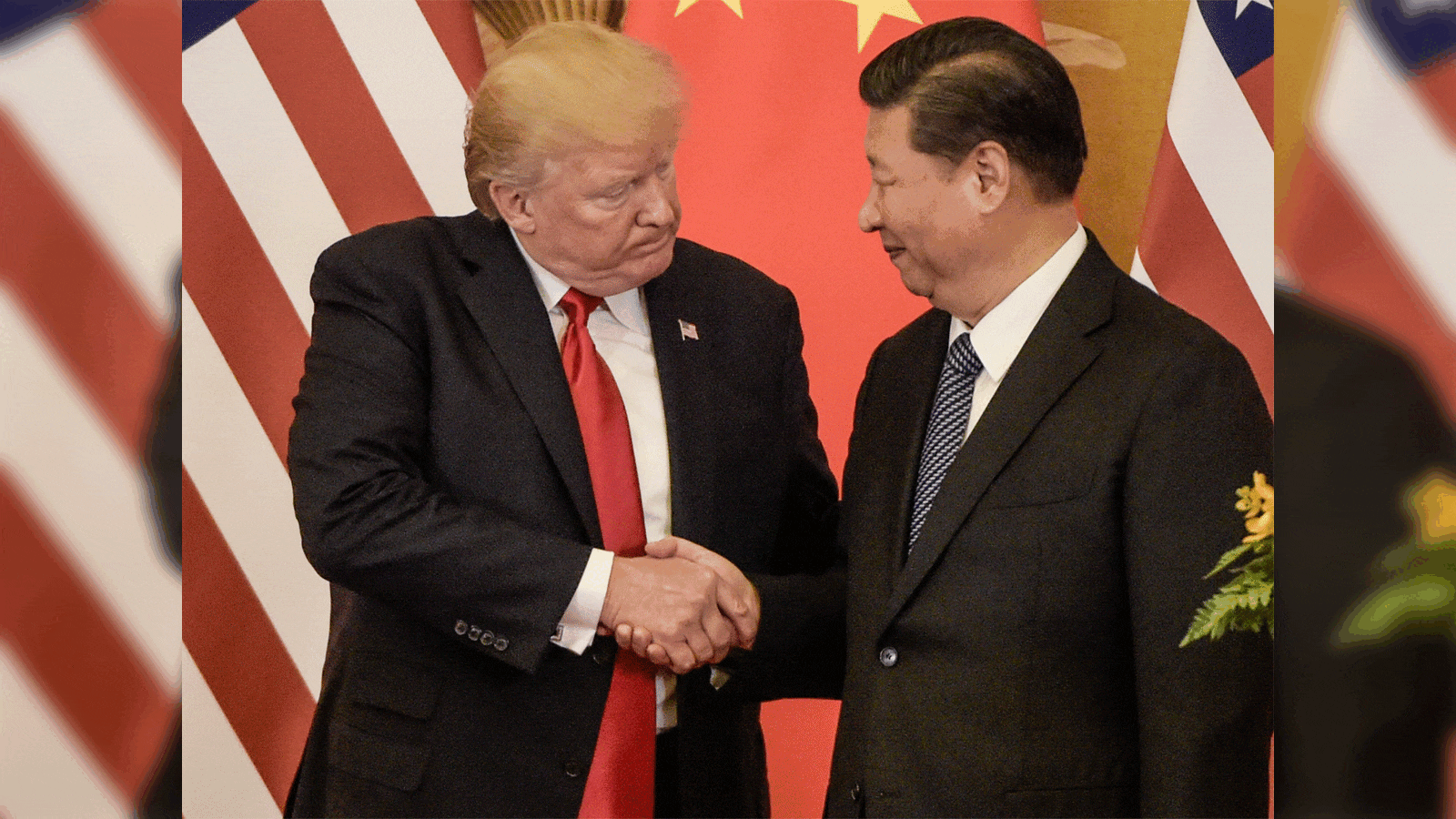
Despite nearly a decade of tariffs imposed by the United States under President Donald Trump, China’s trade surplus has surged to an unprecedented $1.08 trillion through November, marking the highest level ever recorded globally. This figure, announced by China’s customs agency, reflects a 21.7% increase compared to the same period in 2024. The data underscores China’s growing influence in global exports, as the nation continues to adapt and thrive despite ongoing trade tensions.
China’s Export Resilience
China’s remarkable trade surplus highlights its ability to navigate the challenges posed by U.S. tariffs. The country has successfully diversified its markets, with exports to Africa rising by 42%, Europe by 15%, and Latin America experiencing double-digit growth. In contrast, shipments to the United States have seen a significant decline, dropping 29% year-over-year in November. This marks the eighth consecutive month of double-digit declines in U.S.-bound shipments. However, sales to key European nations, including France, Germany, and Italy, have flourished, demonstrating China’s capacity to shift its focus to emerging markets and established economies alike.
Experts suggest that China’s strategic maneuvering has allowed it to maintain its export momentum. Mary Lovely, a senior fellow at the Peterson Institute for International Economics, noted that China has effectively found new markets outside advanced economies. This adaptability has positioned China not only as the world’s leading supplier of goods but also as a significant geopolitical player, leveraging its exports to forge stronger ties with countries in the Global South.
Manufacturing Shifts and Currency Dynamics
In response to U.S. tariffs, many Chinese companies have relocated parts of their supply chains to Southeast Asia, Mexico, and Africa. This strategy, known as “trans-shipping,” enables these firms to export goods to the U.S. while circumventing tariff barriers. By moving final assembly outside of China, they can continue supplying American retailers without facing the full brunt of the tariffs.
Additionally, the depreciation of the renminbi against the euro has made Chinese products even more competitive in international markets. As prices in China decrease while those in the U.S. and Europe rise, Chinese manufacturers are gaining an edge. Jens Eskelund, president of the EU Chamber of Commerce in China, emphasized that the undervalued renminbi poses a significant challenge for European manufacturers trying to compete with Chinese goods.
Despite the challenges posed by tariffs, China’s export growth remains robust. While exports of certain products, such as toys and electronics, have declined to the U.S., the overall loss has been offset by increased sales in other regions. This shift reflects China’s long-term strategy of selling at lower margins to gain geopolitical influence in emerging markets.
The Broader Implications of China’s Trade Surplus
The implications of China’s record trade surplus extend beyond economic metrics. The surge in exports has positioned China as a dominant force in various industries, including electric vehicles, batteries, and consumer electronics. In many African nations, Chinese products have rapidly gained market share, disrupting local industries and altering the competitive landscape.
While President Trump’s trade war aimed to reduce U.S. reliance on Chinese goods, it has inadvertently allowed China to reorient its export model and reclaim market share more swiftly than anticipated. The ongoing trade tensions have not significantly disrupted China’s trajectory, as evidenced by its ability to adapt and thrive in the global market.
Looking ahead, the International Monetary Fund is currently assessing China’s currency practices, particularly regarding the renminbi’s valuation. As discussions about allowing the currency to appreciate gain traction, there are concerns about the potential impact on exporters and domestic demand. The Chinese government is increasingly prioritizing domestic consumption as a means to rebalance its economy away from an overreliance on exports.
Digihunt is not a financial advisor and this is not investment advice.