If you work in technology, marketing, finance, or any digital-first sector in India, you’ve likely encountered a message stating, “This service is not available in your region.” This can be quite frustrating, especially when your work relies on software constrained by regulatory, licensing, or geographical boundaries.
Before exploring how to utilize restricted online tools in India, it’s crucial to grasp why these limitations exist. Sometimes the cause is regulatory—data protection laws, financial compliance, or content restrictions. In other situations, it’s a commercial choice; a company might not have launched in India or could be offering only limited features locally. Additionally, corporate firewalls and organizational policies may present barriers, giving the impression of restriction even when tools are legally permissible—your employer simply might not allow them on the office network.
The main takeaway is this: not every limitation is an absolute “no.” Some are invitations to engage with more compliant channels. Your aim should be to remain productive without venturing into legal grey areas or violating any terms of service. Achieving that balance is entirely possible with the right approach.
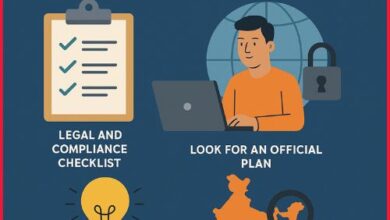
Start With the Legal and Compliance Checklist
Before seeking workarounds or alternative solutions, take a moment for a quick compliance audit. While this may seem tedious, it will spare you from significant complications later. When considering how to use restricted online tools in India, ask yourself three straightforward questions:
-
Is this tool legally allowed in India?
Some platforms are limited or fully blocked due to regulatory reasons. If a regulator has explicitly restricted a service, it’s safest to abide by that decision. No marketing metric or productivity gain justifies a legal dispute.
-
What do the terms of service specify for my country?
Most SaaS providers outline where they operate, which countries are excluded, and what users can do. Violating these terms could lead to account bans, data loss, or even disputes for businesses.
-
Does my company have an internal policy regarding this tool?
If you’re using a corporate device or network, your employer’s regulations are just as vital as local law. Utilizing unauthorized software could breach your employment contract or jeopardize sensitive data.
After completing this checklist, you’ll be better positioned to decide whether to proceed with the tool, seek official access avenues, or move on to legal alternatives. Think of this process like reading the instructions before using a new device: it may seem slow initially, but it can protect you from unpleasant surprises.
Evaluating Your Real Need for a Restricted Tool
It’s essential to recognize that not every “I need this tool” is a genuine necessity. Sometimes, we become attached to a particular brand or interface when we merely require a specific function—be it video meetings, automation, email outreach, or ad analytics.
A smart strategy for determining the next steps is to deconstruct your needs:
- What core job do I expect this tool to perform?
- Are there local or global alternatives that are fully accessible in India?
- Does my use case involve personal data, payments, or regulated industries (e.g., healthcare, finance) that require extra caution?
In many cases, you’ll discover that a localized or India-friendly solution can perform the same tasks with far fewer complications. This path is typically easier for individual users. However, for businesses, there are instances when a specific global platform is genuinely necessary—especially when partners, suppliers, or clients rely on it. This is where structured, compliant access methods come into play.
Legitimate Access Paths for Individuals
If you’re a freelancer, student, or solo professional in India, you might not have the advantage of an in-house legal team or corporate account manager. Nevertheless, there are several legitimate ways to use restricted tools—as long as the tool is legally available and its terms allow such usage.
Here are some common options:
-
Seek an official Indian or “Rest of World” plan
Many SaaS platforms introduce region-specific products over time. Even if a full version isn’t available, they might provide a “lite” or beta version for India or a global plan that includes India. Always check their pricing and country selection pages.
-
Request access through a formal application
Some tools permit early access, closed betas, or special approvals for researchers, developers, or partners in different countries. If your use case is serious and professional, a succinct, clear email can sometimes open doors that are not visible on the homepage.
-
Utilize neutral, compliant collaboration bridges
You may not need an account on the restricted tool yourself. For instance, a colleague based abroad might host a shared document, dashboard, or project space and invite you as a guest through official sharing capabilities. You would work within the platform’s full support without forcing anything.
-
Leverage export/import workflows
In some instances, you could use a local tool to prepare data (like CSV files, designs, drafts) and have a partner, client, or collaborator upload it to a restricted service from another region. This keeps you compliant while allowing the heavy lifting to occur where the tool is officially available.
These methods may not feel as “instant” as hitting a shiny button, but they tend to offer more stability, sustainability, and security. When dealing with tools containing customer data, financial figures, or business-critical assets, that reliability is invaluable.
Business-Grade Options for Companies and Teams
Once you operate as a company serving clients around the globe, the dynamics shift. Global enterprises often must use the same tools as their clients, even when some are limited or challenging to access from India. Fortunately, many vendors acknowledge this reality and provide structured pathways that maintain compliance.
Here are business-grade strategies that remain within a professional, compliant framework:
-
Enterprise or partner programs
Major platforms often have partner ecosystems, reseller networks, or enterprise sales channels that support customers in countries where they have not officially launched. By onboarding through these programs, you gain contractual clarity and support.
-
Regional entities and cross-border teams
Some businesses work with entities in other jurisdictions that have full access to specific services. These entities manage certain aspects of the workflow (like payment processing or campaign setup) while the Indian team concentrates on local execution and support.
-
Managed service providers (MSPs)
MSPs and specialized agencies sometimes incorporate global tools into their services. Instead of your company owning the account directly, you work through their framework, ensuring that someone with appropriate licensing and permission stands between you and the restricted platform.
These are not hacks; they are structured business solutions. While they may necessitate contracts, NDAs, and clear data protection policies, they provide stability that “quick fixes” can seldom match.
Using Proxies for Testing, Optimization, and Compliance
Another essential tool category in modern online work is proxies. When utilized ethically and legally, they enable businesses to simulate user experiences from different locations, monitor their digital assets, and conduct quality assurance checks across various networks.
For example, development, QA, and marketing teams often rely on residential proxies to assess how their sites, apps, or ads appear to users in different regions and on various networks. Such testing is crucial for identifying misconfigured redirects, broken localizations, or inconsistent pricing displays—all without requiring employees to physically travel.
If you require managed infrastructure for this type of work, platforms like Proxys.io offer structured solutions for professionals and businesses. Their services are commonly used for:
- Localization testing
- Performance monitoring
- Brand protection and uptime checks
- Advertising verification and competitive research within legal limits
The key principle is straightforward: proxies should be used to test and optimize what you are legitimately permitted to access, not to violate rules. Always ensure that your usage aligns with Indian law and the terms set by the websites or tools in use.
Practical Workflow Examples
To ground this theory in reality, consider a few practical scenarios familiar to working in India:
- A marketing agency in Mumbai needs to verify how its ad campaigns are displayed to users in multiple countries.
- A SaaS startup in Bengaluru aims to test its signup funnel as if a user were in Europe.
- A global consulting firm with a significant Indian office must collaborate on a client’s preferred tool that hasn’t yet “officially launched” in India, but is accessible through enterprise contracts.
Instead of resorting to guesswork or risky methods, each of these teams can select a structured workflow that aligns with their risk tolerance and compliance requirements.
Here’s a simple framework to help you decide on your approach:
| Scenario |
Recommended Approach |
Compliance Level |
| An individual wants a productivity app not yet available in India |
Search for local alternatives or official global plan |
Very high – safest route |
| A freelancer needs to collaborate on a client’s restricted tool |
Use client-hosted workspaces and official sharing options |
High – within ToS and contracts |
| The agency must ascertain how its website looks abroad |
High – as long as ToS are respected |
| The company needs a core tool that’s region-limited |
Use a legally compliant proxy infrastructure for testing |
| The tool was explicitly banned by Indian authorities |
Do not use it; find alternate solutions |
This table is not a substitute for legal advice, but it helps categorize your situation and choose a path that doesn’t jeopardize your work, clients, or reputation.
Risk Management: What Not to Do
When faced with restrictions, the temptation to seek shortcuts is strong. However, some “solutions” can create more risk than they are worth. To stay prudent, avoid the following practices:
-
Ignoring local regulations entirely
“Everyone else does it” is not a valid defense if something goes awry. Laws and regulations exist for a reason, and violations can result in serious consequences.
-
Misrepresenting your location, identity, or business
Providing false details on sign-up forms can instantly nullify contracts. Even if you manage to access the tool temporarily, a compliance audit or routine check could shut everything down.
-
Mixing personal and client data in experimental setups
Attempting a “quick workaround” with real customer data is risky. If your access method is unsupported, any security breach could lead to significant financial and trust-related losses.
-
Relying on unstable access methods for long-term operations
If your business heavily depends on a fragile method to access a restricted tool, you are treading on thin ice. Any policy change or update could disrupt your entire workflow overnight.
Consider this analogy: while a side street might seem faster, it may not be safe or legal. Roads marked with signs, traffic lights, and speed limits may feel slower but will consistently lead you home.
Building a Long-Term, Future-Proof Tool Stack in India
Restrictions on digital tools aren’t diminishing; in many cases, they’re actually becoming stricter as countries refine their data and content policies. Rather than resisting that trend, a smarter strategy is to cultivate a setup that embraces it while allowing growth.
If you’re serious about operating from India with global clients and platforms, consider this straightforward long-term plan:
- Mapping your current stack: Identify which tools are fully accessible, which are limited, and which are essential.
- Researching official options for restricted tools: Investigate regional alternatives, enterprise programs, or partner structures.
- Designing workflows that integrate compliant testing and monitoring methods, including professional proxy infrastructures for QA and localization.
- Maintaining legal and security documentation: Ensure data processing agreements, NDAs, and internal policies are organized.
- Reviewing your setup regularly, as regulations and platform rules do evolve.
By structuring your processes this way, you’re not merely sidestepping restrictions. You’re establishing a robust, future-proof environment where your base in India becomes a strength instead of a limitation.
Ultimately, engaging with restricted online tools from India is more about strategy than secret tactics: comprehend the rules, opt for formal access pathways, utilize infrastructure like proxies for lawful testing and optimization, and prioritize the best interests of your clients and users in every decision. This approach enables you to remain productive, competitive, and compliant simultaneously.