Category: Business

Business News: Get latest stock share market news, financial news, economy news, company news, politics news, India news, breaking news, Indian economy news.

  • India’s Middle Class: Building Wealth or Struggling with Debt and SIP Growth?

    India’s Middle Class: Building Wealth or Struggling with Debt and SIP Growth?

    The landscape of personal finance in India is undergoing a significant transformation, highlighted by a surge in mutual fund investments alongside rising household debt. As of October 2025, monthly systematic investment plan (SIP) contributions have reached an all-time high of ₹29,529 crore, reflecting a growing trend among investors. However, this financial optimism is tempered by a troubling increase in household liabilities, which have outpaced asset growth, raising questions about the true financial health of the middle class.

    Record SIP Contributions and Investor Behavior

    Recent data reveals a dual narrative in India’s financial sector. In October 2025, SIP inflows hit a record ₹29,529 crore, a slight increase from the previous month, indicating a robust post-pandemic recovery in systematic investing. The assets linked to SIPs have now surpassed ₹16.25 lakh crore, accounting for approximately 20% of the mutual fund industry’s total assets under management (AUM). This growth is particularly notable as SIPs have evolved from a niche investment option to a mainstream choice for many investors.

    Interestingly, the trend is not limited to metropolitan areas; smaller towns contributed over ₹10,000 crore to monthly SIP inflows. This shift showcases the penetration of the SIP culture into the broader Indian market, reaching beyond traditional urban centers. However, despite these impressive figures, the SIP stoppage ratio remains concerningly high, hovering around 75%. This statistic indicates that a significant portion of registered SIPs are being discontinued or allowed to lapse, suggesting that many investors may be facing financial strain despite the influx of new capital.

    Rising Debt Crisis

    A closer examination of household finances presents a stark contrast to the optimistic SIP figures. Analysis of Reserve Bank of India data shows that household financial liabilities have surged by approximately 102% from 2019-20 to 2024-25, while financial assets have only increased by 48% during the same period. This imbalance has resulted in a rising share of liabilities in relation to GDP, with household debt climbing from about 36% to roughly 42% over two years.

    Additionally, the overall household savings rate has declined to approximately 18.1% of GDP, marking a third consecutive year of decrease. This trend indicates that more families are relying on credit to finance their consumption, leading to a precarious financial situation. The net household financial savings, representing the difference between financial assets and liabilities, have plummeted to just over 5% of GDP, the lowest level in over a decade. This growing reliance on debt raises critical questions about the sustainability of current financial practices among the middle class.

    Real-Life Implications: Four Family Scenarios

    Illustrating the impact of these financial trends are four hypothetical families navigating the complexities of SIPs and EMIs.

    • The first family, Rajesh and Sunita, represent the lower-middle class. They earn a combined income of approximately ₹55,000 per month with minimal savings. Their SIP contributions are modest, but they often struggle with credit card debt, highlighting the pressure to invest despite financial instability.

    • Next, Neha and Karan, an emerging middle-class couple, earn around ₹1.6 lakh monthly. They manage significant EMIs for home and car loans while attempting to invest ₹25,000 in SIPs. Their financial situation is precarious; any increase in expenses could push them to rely on credit.

    • The third scenario features Meera and Arjun, a dual-income household in Mumbai earning ₹4.5 lakh monthly. Despite substantial investments in SIPs, their high EMIs leave them feeling financially strained, often resorting to credit for additional expenses.

    • Lastly, Aayushi, a gig worker earning between ₹35,000 and ₹40,000, represents the aspirational solo earner. Her small SIP is a symbolic gesture of financial responsibility; however, she faces the challenge of managing high-cost debt, which grows faster than her investments.

    SIP Boom: A Mask for Financial Stress?

    While the increasing popularity of SIPs signifies a positive shift towards financial literacy and investment, it also raises concerns about underlying financial stress. Many households are adopting SIPs as a way to project financial responsibility, even as they grapple with rising debt levels. The elevated SIP stoppage ratio serves as a warning sign, indicating that when financial pressures mount, investors may prioritize stopping SIPs over defaulting on essential loans.

    The current financial landscape suggests that while the middle class is more engaged with capital markets, they may be doing so from a position of anxiety rather than surplus. The challenge lies in ensuring that families are not merely using SIPs as a psychological band-aid for their financial insecurities. As the trend of financialization continues, it is crucial for individuals to maintain a balanced approach to debt and investment, ensuring that their financial practices are sustainable in the long term.

    Digihunt is not a financial advisor and this is not investment advice.

  • Starlink Unveils New Premium Satellite Communication Prices for India

    Starlink Unveils New Premium Satellite Communication Prices for India

    Elon Musk’s Starlink has revealed its pricing for satellite internet services in India. The monthly fee is set at ₹8,600, along with a one-time hardware charge of ₹34,000. This pricing has generated considerable discussion online, especially since the company has yet to secure the necessary government approvals to launch its services. Following the announcement, Starlink quickly removed the pricing details, citing a technical glitch that had exposed test data on its website.

    Starlink’s Pricing Announcement and Quick Retraction

    Starlink unveiled its satellite internet pricing for India, which took many by surprise due to its significant difference from existing broadband services. The ₹8,600 monthly subscription and the substantial ₹34,000 hardware charge are remarkably higher than the rates from local providers like Airtel and Reliance Jio. In light of the backlash and confusion regarding the pricing, Starlink swiftly took the information off its website. Lauren Dreyer, Vice President of Starlink Business Operations, clarified on social media that the displayed figures were not final and constituted a configuration error. She stressed that the company is not yet accepting orders and is currently focused on obtaining the necessary government approvals to commence its services.

    Current Internet Pricing Landscape in India

    The prices suggested by Starlink starkly contrast with the competitive rates offered by Indian internet service providers. For example, Airtel provides unlimited 5G mobile data for under ₹400 per month, while its home broadband service starts at just ₹499 for speeds of 40 Mbps. Similarly, Reliance Jio offers entry-level broadband plans for ₹399, with installation charges much lower than those proposed by Starlink. This considerable discrepancy illustrates the challenge Starlink may encounter in attracting customers in a market that is used to affordable internet options. The Indian telecommunications industry is known for its aggressive pricing strategies, making it difficult for new entrants to compete without delivering substantial value.

    Regulatory Hurdles and Future Prospects

    Starlink’s entry into the Indian market hinges on resolving various regulatory issues. The company is awaiting clarity on satellite communication spectrum allocation from the government. Ongoing discussions between the Telecom Regulatory Authority of India (TRAI) and the Department of Telecommunications (DoT) concerning the fees that satellite communication companies need to pay further complicate the timeline for Starlink’s launch. Until these regulatory issues are resolved, Starlink cannot initiate consumer services in India. The company is actively preparing for its launch by hiring local staff and establishing the necessary ground infrastructure, but it remains unclear when operations will commence.

    Target Markets and Strategic Focus

    Starlink aims to serve a diverse customer base in India, with a specific focus on rural areas and regions that lack reliable internet access. The company believes its services will be particularly advantageous in underserved regions, as well as in specialized sectors like defense, mining, and maritime industries. While Starlink aspires to build a strong presence in urban centers, its initial customer base might largely consist of users in remote areas. Starlink’s commitment to providing high-speed internet with over 99.9% uptime and unlimited data could make it a valuable option for those seeking reliable connectivity, provided it can effectively navigate the regulatory landscape.

    Digihunt is not a financial advisor and this is not investment advice.

  • IndiGo Crisis: Senior Officials to Inspect 10 Major Airports Across India

    IndiGo Crisis: Senior Officials to Inspect 10 Major Airports Across India

    The Ministry of Civil Aviation has directed senior officials to conduct on-site inspections at major airports across India in response to persistent operational challenges faced by IndiGo airlines. This move follows significant disruptions causing chaos at airports nationwide, resulting in the Directorate General of Civil Aviation (DGCA) enforcing a 5% reduction in IndiGo’s flight schedule. The government has stepped in to actively oversee and ensure passenger safety and service quality.

    On-Site Inspections Ordered

    To tackle the operational issues at IndiGo, the Ministry of Civil Aviation has instructed officials at the deputy secretary, director, and joint secretary levels to visit key airports. These inspections are scheduled to occur within the next day and will focus on major hubs including Mumbai, Bengaluru, Hyderabad, Kolkata, Chennai, Ahmedabad, Pune, Guwahati, Goa, and Thiruvananthapuram. These locations have been identified as the most impacted by passenger distress and frequent flight cancellations. The ministry seeks to gather firsthand accounts to understand the challenges faced by travelers and to facilitate swift improvements.

    Flight Schedule Reduction

    In light of the operational breakdown, the DGCA has mandated a 5% reduction in IndiGo’s flight schedule. With the airline operating approximately 2,200 flights daily, this reduction equates to roughly 110 flights being canceled each day. Officials are currently in the process of identifying which specific flights will be affected. This measure aims to reduce pressure on the airline’s operations and enhance overall service reliability for passengers.

    Government’s Ongoing Monitoring

    The Ministry of Civil Aviation and the DGCA have been closely monitoring the situation since December 3, treating the disruptions as extraordinary circumstances. A high-level review meeting was convened, led by Union Minister Ram Mohan Naidu Kinjarapu, to assess conditions at various airports. Senior officials deployed to these locations are responsible for verifying airline operations and the quality of services extended to passengers. Immediate feedback from travelers is expected to be addressed promptly, ensuring that their concerns are taken seriously.

    Parliamentary Discussion and Regulatory Actions

    The crisis has also been discussed in Parliament. During a session in the Rajya Sabha, Minister Kinjarapu clarified that the issues experienced by passengers are unrelated to the Aircraft Maintenance and Scheduling System (AMSS), but rather stem from IndiGo’s internal crew rostering and operational planning. He assured that safety standards remain a top priority, with stringent Civil Aviation Requirements (CARs) in place to protect passengers affected by delays and cancellations. Additionally, the DGCA has ramped up its regulatory oversight, issuing show-cause notices to IndiGo’s CEO and COO as part of its monitoring efforts.

    Digihunt is not a financial advisor and this is not investment advice.

  • Nifty50 Drops Below 25,800 as BSE Sensex Declines Over 620 Points: Stock Market Update

    Nifty50 Drops Below 25,800 as BSE Sensex Declines Over 620 Points: Stock Market Update

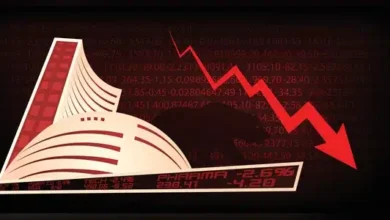
    The Indian stock market faced a substantial decline in early trading on Tuesday, with both the Nifty50 and BSE Sensex witnessing significant drops. The Nifty50 fell below the 25,800 mark, while the BSE Sensex experienced a decline of over 620 points. At 9:42 AM, the Nifty50 was down 196 points, or 0.76%, and the BSE Sensex had decreased by 619 points, or 0.73%. Analysts indicate that market fluctuations will likely be impacted by the INR-USD exchange rate, foreign institutional investor activity, and liquidity conditions in the secondary market.

    Market Trends and Investor Sentiment

    The recent stock market downturn has raised alarms among investors, particularly as the indices have struggled to maintain their recent all-time highs. Dr. VK Vijayakumar, Chief Investment Strategist at Geojit Investments Limited, highlighted that the absence of fresh catalysts for a rally has led to investor fatigue. Many retail investors have not engaged in the recent surge, which has largely been propelled by a handful of large-cap stocks. This situation has fostered a sense of disillusionment among retail investors, especially since a significant number of stocks in the NSE 500 continue to trade below their peak values.

    The current market environment has also seen considerable sell-offs in mid and small-cap stocks, while large-cap stocks have exhibited resilience. Dr. Vijayakumar pointed out that fundamentals are now playing a pivotal role in market movements, with overvalued mid and small-cap stocks facing downward pressure. He indicated that further corrections in these segments could present opportunities for long-term investors looking to acquire quality growth stocks.

    Global Market Influences

    The decline in the Indian stock market follows a downturn in US markets on Monday, with most sectors of the S&P 500 experiencing losses. The Dow Jones Industrial Average fell by 0.45%, the S&P 500 decreased by 0.35%, and the Nasdaq Composite dropped by 0.14%. Investors are paying close attention to the Federal Reserve’s upcoming monetary policy announcement, which has led to rising Treasury yields. Asian markets have mirrored this sentiment, with traders expressing concerns about the Federal Reserve’s easing trajectory beyond the anticipated rate cut.

    Oil prices, which previously saw a 2% decline, stabilized on Tuesday as investors monitored peace negotiations related to the ongoing conflict between Russia and Ukraine, alongside the impending US interest rate decision.

    Foreign and Domestic Investment Activity

    In terms of investment activity, foreign portfolio investors sold shares worth Rs 655 crore on Monday, while domestic institutional investors were net purchasers, acquiring shares worth Rs 2,542 crore. This divergence in investment behavior underscores the contrasting strategies of foreign and domestic investors in the current market climate. As the market continues to respond to both domestic and international factors, the focus remains on how these dynamics will influence future trading sessions.

    Digihunt is not a financial advisor and this is not investment advice.

  • Trump’s Tariff Threat on India Causes Rice Stocks to Fall, Kohinoor Drops 10%

    Trump’s Tariff Threat on India Causes Rice Stocks to Fall, Kohinoor Drops 10%

    Indian rice exporters experienced significant turmoil on Dalal Street following comments from U.S. President Donald Trump regarding potential new tariffs on rice imports from India. This announcement triggered a wave of concern among investors about the future of agricultural trade between the two countries.

    Market Reactions to Tariff Hints

    The stock market responded sharply to Trump’s remarks. Kohinoor Foods saw the most drastic decline, dropping 9.9% to Rs 24.41, marking its lowest intraday and 52-week point on the Bombay Stock Exchange (BSE). Although the stock later showed a minor recovery, it rose to Rs 27.81, reflecting an increase of over 2.5%. Other prominent rice exporters also faced declines; LT Foods decreased by 6.5% to Rs 368, while KRBL fell 2.7% to Rs 370.05. By late morning, KRBL began to recover, gaining over 1.5%, and LT Foods traded at Rs 376 around 11:40 AM. Chaman Lal Setia Exports also experienced a downturn, slipping 4.5% to Rs 243.05 before reducing its losses to just 0.29%.

    Trump’s Remarks and Their Implications

    The sell-off was catalyzed by comments from Trump during an event at the White House, where he announced additional support for American farmers. He raised concerns about what he termed the “dumping” of Indian rice in the U.S. market, asserting that lower-priced imports from India, Vietnam, and Thailand were detrimental to domestic farmers. “They shouldn’t be dumping,” Trump stated, underscoring the need for fair competition. His comments come amid rising pressure from the farming community, a politically significant group given the approaching midterm elections. Farmers face increasing input costs and fluctuating crop prices, influenced in part by prior tariff decisions.

    Potential for Further Tariffs

    The likelihood of new tariffs is exacerbated by the pre-existing 50% tariff imposed by the U.S. on Indian goods in August, which included an additional 25% tariff due to India’s continued purchase of Russian oil. A U.S. delegation is scheduled to visit India this week, but analysts believe the chances of reversing these tariffs are slim. Additionally, Canada, another crucial trade partner, is also facing uncertainty, with Trump hinting that duties on Canadian goods could rise by up to 10%, potentially pushing them to 45%.

    Future Outlook for Rice Exporters

    As the U.S. government signals renewed attention to agricultural trade policies, investors are monitoring the situation closely. Any further developments regarding U.S. tariff policies, especially those impacting the agricultural sector, could significantly sway market trends in the days ahead. Rice-exporting stocks are likely to remain volatile as the ramifications of Trump’s remarks unfold, and stakeholders will be keenly observing how these changes may affect their operations and profitability.

    Digihunt is not a financial advisor and this is not investment advice.

  • Verify Returns That Appear Too Good to Be True for Authenticity

    Verify Returns That Appear Too Good to Be True for Authenticity

    Monday marked a significant milestone for Indian financial markets as the National Stock Exchange (NSE) and Care Ratings launched the country’s first Past Risk and Return Verification Agency (PaRRVA). This independent entity aims to validate performance claims in the securities market, enhancing transparency and safeguarding investors from misleading information. By leveraging historical data, PaRRVA will ensure that investment advisors, research analysts, and stock brokers present verified performance metrics, thus fostering a more trustworthy investment environment.

    Establishing a New Standard for Transparency

    The launch of PaRRVA is a groundbreaking initiative that sets a new international benchmark for transparency and accountability in India’s financial sector. Tuhin Kanta Pandey, the chairman of the Securities and Exchange Board of India (Sebi), emphasized that this independent mechanism will help mitigate the risks associated with unverified performance claims. By ensuring that all risk-return metrics are independently verified, PaRRVA aims to provide investors with credible performance data, which is especially crucial given the presence of unregistered financial influencers who often mislead investors with false claims.

    PaRRVA’s framework will allow Sebi-registered intermediaries to showcase verified past returns, thereby enhancing investor confidence. Pandey noted that while many international jurisdictions recognize the dangers of unverified claims, India is taking the initiative to establish a robust verification process. The agency’s objective is clear: to ensure that investors receive performance numbers they can trust, thereby reinforcing the integrity of the securities market.

    Mechanisms for Investor Protection

    One of the key features of PaRRVA is its strict guidelines regarding the presentation of verified returns. Intermediaries will not be permitted to selectively display returns for specific products or services, ensuring that all performance data is presented fairly and transparently. This approach prevents the arbitrary selection of dates or time periods that could skew results in favor of certain offerings. According to Pandey, this level of scrutiny is designed to provide clarity and confidence to investors, allowing them to make informed decisions based on reliable data.

    The establishment of PaRRVA is expected to significantly enhance the credibility of investment services in India. By providing a platform for regulated entities to showcase genuine performance, the agency aims to create a more equitable and transparent market environment. This initiative aligns with Sebi’s commitment to maintaining fair and orderly securities markets, ultimately benefiting investors across the board.

    Collaboration with Care Ratings

    The collaboration between NSE and Care Ratings is central to the functioning of PaRRVA. Care Ratings will handle the data analysis required to validate performance claims, utilizing historical data from the NSE. Ashishkumar Chauhan, the Managing Director and CEO of NSE, emphasized the importance of the PaRRVA Data Centre (PDC) in capturing authenticated market data. This robust data framework is expected to enhance trust within the investment ecosystem, enabling investors to make more informed choices.

    Mehul Pandya, the Managing Director and Group CEO of Care Ratings, remarked that PaRRVA introduces a new level of trust and transparency in the financial advisory sector. He noted that today’s investors demand credible information, and the independent validation framework provided by PaRRVA ensures they receive accurate and unbiased performance data. This initiative is poised to reshape the landscape of financial advisory services in India, fostering a culture of accountability and integrity.

    Future Implications for the Financial Market

    As PaRRVA begins its operations, it is anticipated to have a profound impact on the Indian financial market. By validating performance claims, the agency will not only protect investors but also encourage a more disciplined approach among financial intermediaries. The emphasis on transparency and accountability is expected to attract more investors to the market, ultimately contributing to its growth and stability.

    The introduction of PaRRVA is a significant step toward enhancing investor protection in India. By providing a reliable mechanism for performance verification, the agency aims to build a more resilient and trustworthy financial ecosystem. As the market evolves, the principles established by PaRRVA could serve as a model for other countries seeking to improve transparency and accountability in their financial sectors.

    Digihunt is not a financial advisor and this is not investment advice.

  • Government Shares Important Update on 8th Pay Commission in Lok Sabha

    Government Shares Important Update on 8th Pay Commission in Lok Sabha

    More than 50.14 lakh Central government employees and approximately 69 lakh pensioners are set to benefit from the newly established 8th Central Pay Commission (CPC). The government has stated that specifics regarding the implementation timeline and funding will be finalized at a later date. This information was shared by Minister of State for Finance Pankaj Chaudhary during a Lok Sabha session, where he addressed questions regarding the commission’s recommendations and their potential effects on beneficiaries.

    Establishment of the 8th Pay Commission

    The 8th Central Pay Commission has been officially formed, with its Terms of Reference (ToR) announced on November 3, 2025. Minister Pankaj Chaudhary confirmed this in response to queries in Parliament. He highlighted that the government will determine when the commission’s recommendations will take effect and assured that adequate funding would be allocated for implementing the accepted recommendations once finalized. The formation of the commission represents a significant advancement in evaluating and potentially revising the pay structure for a large segment of the public sector workforce.

    Who Will Benefit from the 8th CPC

    The 8th CPC will cover a considerable number of individuals, including 50.14 lakh Central government employees and about 69 lakh pensioners. These beneficiaries encompass a broad range of services and institutions, as outlined in the commission’s ToR. The inclusion of such a large group emphasizes the commission’s role in addressing the financial well-being of those who serve or have served in various capacities within the government. Its recommendations are likely to have a widespread impact, potentially affecting the livelihoods of millions of families across the country.

    Scope of the 8th Pay Commission’s Review

    The 8th CPC is tasked with examining and recommending changes to various aspects of compensation, including pay, allowances, pensions, gratuities, and bonuses. The commission will consider multiple factors in its review, such as the country’s economic conditions, the necessity for fiscal prudence, and the availability of resources for developmental and welfare expenditures. Moreover, it will assess the unfunded costs associated with non-contributory pension schemes and the implications of its recommendations on state government finances, which often adapt CPC recommendations with modifications. The commission will also review the structures of Death-cum-Retirement Gratuity and pensions, including those under the National Pension System.

    Consultation and Methodology

    Regarding the consultation process, the government has indicated that the 8th Central Pay Commission will develop its own methodology for formulating recommendations. The commission has the authority to appoint advisors, institutional consultants, and experts to assist in its work. It will also seek information and evidence from various ministries, departments, and stakeholders to ensure a comprehensive review. The commission is expected to submit its recommendations within 18 months of its constitution, with the possibility of interim reports on specific matters as needed. The government has reiterated that decisions concerning the implementation timeline and budgetary allocations will be taken after reviewing the commission’s recommendations.

    Digihunt is not a financial advisor and this is not investment advice.

  • US Market Update: Wall Street Nears Record Highs Again

    US Market Update: Wall Street Nears Record Highs Again

    US stocks remained close to record highs as investors approached a critical Federal Reserve decision with caution. The S&P 500 index was nearly flat, just 0.3% below its all-time high from October, while the Nasdaq Composite saw a slight increase of 0.3%. Overall trading activity was subdued, with many stocks experiencing declines despite some notable moves driven by acquisition news and index changes.

    Warner Bros Discovery Sees Significant Movement

    The most significant stock movement was in Warner Bros Discovery, which surged by 7.8% following Paramount’s direct appeal to shareholders regarding its bid to acquire the media company. Paramount has proposed a cash offer of $30 per share, placing it as a quicker and more straightforward option for investors compared to Netflix’s cash-and-stock deal previously accepted by Warner Bros Discovery. This Netflix transaction is facing scrutiny due to potential regulatory concerns about market concentration. US President Donald Trump commented on the situation, suggesting that a merger between Netflix and Warner Bros could pose challenges. In light of these developments, shares of Paramount Skydance increased by 2.7%, while Netflix’s stock fell by 2.4%.

    Confluent and Carvana Experience Notable Gains

    In other notable market movements, Confluent’s shares skyrocketed by 28.7% after IBM announced its intention to acquire the data streaming company for $11 billion. This acquisition aims to enhance IBM’s artificial intelligence capabilities, leading IBM’s stock to rise by 1.8%. Additionally, Carvana’s stock jumped 6.9% after the company confirmed its inclusion in the S&P 500 index on December 22. Typically, such inclusion attracts buying interest from funds that track the index. Other companies, like CRH and Comfort Systems USA, also saw gains of 5.3% and 0.8%, respectively, following their announcement as new entrants to the S&P 500 index. These companies will replace LKQ, Solstice Advanced Materials, and Mohawk Industries, which are set to drop to the S&P SmallCap 600 index due to a decrease in size.

    Investor Focus on Federal Reserve’s Upcoming Decision

    Despite individual stock movements, overall trading remained calm as investors awaited the Federal Reserve’s decision on interest rates, expected on Wednesday. Analysts anticipate the Fed will announce a third interest rate cut this year. Lower borrowing costs generally support economic activity and asset prices but raise concerns about potential inflation. Investors are particularly interested in the Fed’s guidance regarding future rate adjustments. Inflation continues to exceed the central bank’s 2% target, and there seems to be a division among policymakers regarding whether persistent inflation or a cooling labor market poses a greater risk to the economy.

    Mixed Performance in Global Markets

    In the bond market, US Treasury yields remained stable, with the 10-year yield holding at 4.14%. Internationally, stock markets displayed mixed results. Hong Kong’s index experienced a decline of 1.2%, while South Korea’s benchmark rose by 1.3%, marking one of the stronger performances globally. As investors navigate these varied market conditions, the focus remains on the implications of the Federal Reserve’s upcoming decisions and their potential impact on both domestic and international markets.

    Digihunt is not a financial advisor and this is not investment advice.

  • PSU Banks Write Off Rs 6.15 Lakh Crore in Bad Loans in 5.5 Years, Government Tells Lok Sabha

    PSU Banks Write Off Rs 6.15 Lakh Crore in Bad Loans in 5.5 Years, Government Tells Lok Sabha

    Public sector banks (PSBs) in India have written off loans totaling Rs 6.15 lakh crore over the past five and a half years, as stated in Parliament by Minister of State for Finance, Pankaj Chaudhary. He clarified that this move is part of a strategy to clean up balance sheets and is not intended to absolve borrowers of their debts. The write-offs adhere to Reserve Bank of India (RBI) guidelines and do not eliminate the responsibility of borrowers to repay their loans.

    Details of Loan Write-Offs

    The write-offs by PSBs amount to Rs 6,15,647 crore for the last five financial years and the current fiscal year up to September 30, 2025, as reported by the RBI. Minister Chaudhary explained that these write-offs mainly involve non-performing assets (NPAs) that have been fully provisioned for a minimum of four years. He reassured that such write-offs do not imply a waiver of borrowers’ liabilities and are key to maintaining the banks’ financial health while ensuring compliance with regulations.

    Chaudhary emphasized that the recovery of these written-off loans is ongoing through various legal mechanisms, including civil courts and Debts Recovery Tribunals. The Insolvency and Bankruptcy Code also facilitates the recovery process from borrowers. This structured approach aims to harmonize the banks’ need for financial stability with their duty to recover outstanding debts.

    Government Support and Financial Health of PSBs

    Since the fiscal year 2022-23, there has been no capital infusion from the government into PSBs. Chaudhary noted that these banks have successfully strengthened their financial positions and turned profitable, securing funds through market avenues and internal accruals to meet their capital requirements. Between April 1, 2022, and September 30, 2025, PSBs raised Rs 1.79 lakh crore from the market through equity and bond issuances.

    The minister’s comments reflect a positive trend in the banking sector, illustrating that PSBs are increasingly self-sufficient in managing their capital needs without direct government intervention. This shift is perceived as a sign of resilience and recovery in the public banking sector.

    Export Financing and Fraud Cases

    Minister Chaudhary further addressed the role of banks and financial institutions in export financing. He highlighted that PSBs, along with the Small Industries Development Bank of India (SIDBI) and the Export-Import Bank of India, have disbursed a total of Rs 21.71 lakh crore in export credit over the last five financial years. This illustrates the vital role public sector banks play in bolstering India’s export sector and overall economic growth.

    In addition, the minister reported on 5,83,291 fraud cases involving Rs 3,588.22 crore in the past four and a half years, with recoveries amounting to Rs 238.83 crore. He pointed out that the increase in digital payment transactions has led to more instances of cyber and digital payment fraud, emphasizing the need for enhanced security measures within the banking sector.

    Disclaimer: Digihunt is not a financial advisor and this is not investment advice.

  • Billionaire Club Hits Record High: Inheritance Trends for Next 15 Years

    Billionaire Club Hits Record High: Inheritance Trends for Next 15 Years

    The number of billionaires globally has ascended to an unparalleled high, with their total wealth reaching a remarkable $15.8 trillion in 2025. According to UBS, the count of billionaires has reached 2,919, the highest since this data was first tracked in 1995. This surge in wealth is primarily driven by substantial gains in technology stocks, especially those associated with artificial intelligence, propelling tech billionaires to new financial peaks.

    Record Wealth and Rising Billionaire Count

    In 2025, the wealth of billionaires experienced a notable 13% increase compared to the previous year. The technology sector was crucial to this growth, with assets held by tech billionaires climbing nearly 25% to $3 trillion. Companies like Meta, Oracle, and Nvidia are leading this boom, driven by advancements in AI technology. UBS pointed out that six prominent U.S. tech billionaires alone saw their fortunes rise by an astonishing $171 billion, averaging an increase of $28.5 billion per individual. This trend highlights the strong connection between the fortunes of these billionaires and the capabilities of their companies in the fast-evolving AI landscape.

    The United States remains the frontrunner in the billionaire ranking, hosting 924 individuals, which is about one-third of the global total. China follows with 470 billionaires. The year also marked the rise of 196 new self-made billionaires, with 87 from the U.S. These newcomers span various sectors, including software, genetics, energy, and infrastructure, showcasing a diverse and growing billionaire landscape.

    Concerns Among the Wealthy

    Despite their immense wealth, billionaires have their concerns. A UBS survey conducted from July to September 2025 indicated that geopolitical tensions, tariffs, and policy uncertainty significantly worry the ultra-rich. Concerns differ by region; for example, 75% of billionaires in the Asia-Pacific area expressed anxiety over tariffs, while 70% of American billionaires were mainly worried about inflation and potential geopolitical conflicts. This illustrates the complex environment in which these wealthy individuals operate, as their fortunes are often interlinked with global economic and political dynamics.

    The Looming Wealth Transfer

    As billionaires continue to amass wealth, a substantial transfer of assets is imminent. UBS estimates that approximately $5.9 trillion will be inherited over the next 15 years. In 2025, 91 heirs inherited a record $297.8 billion, a 36% increase from the previous year, despite a decline in the number of inheritors. The report suggests that demographic trends indicate a growing number of heirs as the billionaire population ages.

    Western Europe had the highest number of inheritors in 2025, with 48 individuals receiving $149.5 billion, significantly bolstered by 15 heirs from two prominent German pharmaceutical families. In comparison, North America saw 18 heirs inheriting $86.5 billion, while 11 individuals in Southeast Asia received $24.7 billion. Looking ahead, the United States is expected to undergo the most significant inter-generational wealth transfer, with UBS predicting that half of the global wealth transfer by 2040 will take place in the U.S. alone. Europe is projected to transfer $1.3 trillion to the next generation, while India and China will pass on $382 billion and $316 billion, respectively. These estimates are based on the current age profile of billionaires and do not account for potential asset appreciation, suggesting that actual figures could be even higher.

    Digihunt is not a financial advisor and this is not investment advice.