Category: Business

Business News: Get latest stock share market news, financial news, economy news, company news, politics news, India news, breaking news, Indian economy news.

  • Nifty50 Opens Below 25,200 as BSE Sensex Drops Over 200 Points: Stock Market Update

    Nifty50 Opens Below 25,200 as BSE Sensex Drops Over 200 Points: Stock Market Update

    Weighed down by unfavorable global signals, Indian equity benchmarks Nifty50 and BSE Sensex opened lower, continuing a significant decline of over 1% from the previous session. The Nifty50 index fell below the 25,200 mark, while the BSE Sensex dropped by more than 200 points. As of 9:16 AM, the Nifty50 was trading at 25,192.65, down 40 points or 0.16%, and the BSE Sensex was at 82,019.84, down 161 points or 0.20%. Market analysts indicate a potential short-term rebound despite the current oversold conditions.

    Global Market Influences

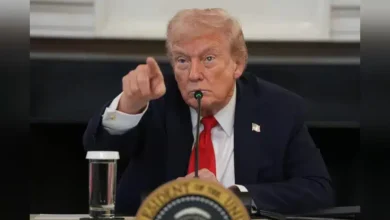
    The global market landscape has shifted dramatically due to escalating trade tensions between the United States and Europe. Dr. VK Vijayakumar, Chief Investment Strategist at Geojit Investments Limited, pointed out the impact of President Trump’s Greenland policy and the proposed tariffs on eight European nations. This has created a risk-off sentiment among investors, leading them to seek safer assets like gold. The uncertainty surrounding these developments has left markets on edge, with fears of a potential trade war looming. If implemented, the tariffs could provoke retaliation from Europe, exacerbating global trade issues and hindering economic growth. Conversely, a retraction by Trump could lead to a market rebound.

    Asian Markets React

    Asian markets reflected the downturn observed in the U.S., where all three major indices experienced their steepest single-day declines in three months. This selloff was primarily attributed to renewed fears regarding Trump’s tariff threats against Europe, raising concerns about global market stability. Heightened volatility has driven gold prices to record highs as investors seek refuge in safer assets. The cautious sentiment has also affected commodities, with West Texas Intermediate crude prices declining due to geopolitical risks and expectations of rising U.S. crude inventories, overshadowing a temporary production halt in Kazakhstan.

    Indian Market Dynamics

    In the Indian market, foreign portfolio investors reduced their exposure, selling equities worth Rs 2,938 crore on Tuesday. While domestic institutional investors provided some support with net purchases of Rs 3,666 crore, it was insufficient to counteract the prevailing risk aversion. Analysts advise that investors remain vigilant and await a return to market stability. Fairly valued large-cap stocks, particularly in the banking sector, are expected to show resilience amid the current volatility.

    Looking Ahead

    As the market navigates these turbulent times, investors are encouraged to adopt a cautious approach. The potential for a rebound exists, but it is contingent on the evolving geopolitical landscape and the reactions from global markets. Uncertainty surrounding trade policies and their implications for economic growth will continue to shape market sentiment. Investors should monitor developments closely and adjust their strategies as the situation unfolds.

    Digihunt is not a financial advisor and this is not investment advice.

  • Asian Markets Fall Before Trump’s Davos Speech; Nikkei Down 280 Points, HSI Steady

    Asian Markets Fall Before Trump’s Davos Speech; Nikkei Down 280 Points, HSI Steady

    Stocks in Asia declined on Wednesday as investors reacted to a significant sell-off in the United States alongside rising geopolitical tensions between Washington and Europe. The market sentiment was further influenced by anticipation surrounding President Donald Trump’s upcoming speech at the World Economic Forum in Davos. Key indices across the region exhibited this unease, resulting in mixed performances among major markets.

    Market Performance Across Asia

    Asian stock markets predominantly traded in the red, reflecting the impact of a sharp decline in U.S. markets the previous day. In Hong Kong, the Hang Seng Index (HSI) fell by 39 points, or 0.15%, settling at 26,447 by 10:40 AM IST. Japan’s Nikkei also experienced a decline, dropping 280 points, or 0.53%, to 52,710. Meanwhile, South Korea’s Kospi index saw a slight decrease of 2 points, or 0.04%. In contrast, the Shanghai Composite and Shenzhen indices managed to gain ground, rising by 0.16% and 0.76%, respectively, reaching 4,120 and 14,263.

    Bond Market Developments

    Investors focused on the bond markets, particularly in Japan, where Finance Minister Satsuki Katayama sought to reassure the public following a heavy sell-off that pushed bond yields to record highs. In Asian trading, U.S. Treasuries stabilized after long-term yields surged during the previous U.S. session. The 30-year Treasury yield increased by eight basis points, reaching a four-month high, largely due to a rout in Japanese bonds and reports indicating that a Danish pension fund was preparing to exit U.S. government debt.

    Market movements indicated growing apprehension among global investors regarding U.S. foreign policy. Many funds began to reduce their exposure to American assets, driven by President Trump’s threats to impose tariffs on European nations opposing his proposal to purchase Greenland. This prompted investors to rethink the U.S. as a reliable safe haven for their investments.

    Investor Sentiment and Global Concerns

    The recent sell-off in global markets was initially triggered in Japan, where yields on 30-year government bonds surged by more than a quarter of a percentage point. This increase raised concerns about Prime Minister Sanae Takaichi’s plans to cut taxes while simultaneously boosting public spending. The rise in yields posed a risk to carry trades that depend on Japan’s low borrowing costs, contributing to higher yields in other markets.

    In response to the market volatility, Japan’s finance minister urged participants to remain calm, emphasizing the country’s historically low dependence on debt issuance, increasing tax revenues, and the smallest fiscal deficit among G7 economies as indicators of a responsible fiscal policy. Meanwhile, Danish pension fund AkademikerPension announced plans to divest from U.S. Treasuries by the end of the month due to concerns over credit risks associated with the Trump administration.

    Future Implications and Economic Strategies

    As the cautious mood persists, South Korea is reportedly delaying plans to invest up to $20 billion in the U.S. this year, primarily due to pressures on its currency. This decision reflects broader investor uncertainty regarding the stability of U.S. financial policies. U.S. Treasury Secretary Scott Bessent has called for restraint, likening the current reaction to the Greenland issue to the “hysteria” that followed Trump’s announcement of sweeping tariffs in April. President Trump is expected to arrive in Davos, where his speech may further influence market dynamics and investor confidence.

    Digihunt is not a financial advisor and this is not investment advice.

  • AU Small Finance Bank’s Net Profit Grows 26% to Rs 667 Crore

    AU Small Finance Bank’s Net Profit Grows 26% to Rs 667 Crore

    AU Small Finance Bank has reported a substantial increase in its net profit for the December 2025 quarter, reaching Rs 667.66 crore, a rise of 26.3% from Rs 528.45 crore during the same period last year. This growth is attributed to robust core earnings and a notable reduction in credit costs that helped mitigate rising operating expenses. The bank’s net interest income also saw a healthy increase, reflecting improved financial performance.

    Strong Financial Performance

    In the December 2025 quarter, AU Small Finance Bank’s net interest income (NII) surged by 15.8% year-on-year, amounting to Rs 2,341.27 crore, compared to Rs 2,022.71 crore in the previous year. The bank’s interest income rose to Rs 4,727.47 crore from Rs 4,113.48 crore, while interest expenses increased to Rs 2,386.20 crore from Rs 2,090.77 crore. On a sequential basis, NII grew by 9.2% from Rs 2,144.42 crore in the September 2025 quarter, indicating improved yields on advances and stable funding costs. This solid performance in core earnings has positioned the bank favorably in a competitive market.

    Leadership Changes and Strategic Realignment

    During the quarter, AU Small Finance Bank announced several key changes in its board and senior management as part of a strategic realignment. Phani Shankar has been appointed as a non-executive independent director for a three-year term. Additionally, Vivek Tripathi, the chief credit officer, is poised to become a whole-time director, pending regulatory and shareholder approvals. Uttam Tibrewal will continue as deputy CEO after completing his term as whole-time director in April 2026. Meanwhile, Divya Sehgal has resigned from her position as a non-executive non-independent director following the integration of Fincare Small Finance Bank. V G Kannan is also nearing the end of his second term as an independent director, which concludes in January 2026.

    Revenue Growth and Operating Expenses

    The bank’s other income increased by 17.0% year-on-year, reaching Rs 723.80 crore, up from Rs 618.41 crore a year earlier. This contributed to an overall total income of Rs 5,451.26 crore for the quarter, compared to Rs 4,731.89 crore in the same period last year. However, operating expenses rose significantly by 28.8% year-on-year, totaling Rs 1,849.75 crore, driven by higher employee costs and expenses related to expansion and regulatory adjustments. Despite these rising costs, the operating profit before provisions remained stable at Rs 1,215.31 crore, slightly up from Rs 1,204.91 crore in the previous year.

    Asset Quality and Capital Position

    AU Small Finance Bank’s asset quality remained stable, with gross non-performing assets (NPAs) recorded at Rs 2,880.54 crore, compared to Rs 2,335.51 crore a year earlier. The gross NPA ratio was relatively unchanged at 2.30%, compared to 2.31% in the corresponding quarter last year. The bank’s capital position has also strengthened, with the capital adequacy ratio improving to 19.01% from 18.01%, providing a solid foundation for future growth. Provisions, excluding tax, decreased by 34.0% year-on-year to Rs 331.14 crore, reflecting lower credit costs, while the tax expense rose to Rs 216.51 crore from Rs 174.78 crore, in line with the bank’s increased profitability.

    Digihunt is not a financial advisor and this is not investment advice.

  • Supreme Court: Husband Must Provide Maintenance Even if He Disobeys Court Order

    Supreme Court: Husband Must Provide Maintenance Even if He Disobeys Court Order

    On January 10, 2025, the Supreme Court delivered a landmark ruling that reinforces the protective nature of maintenance laws in India. The Court clarified that a husband cannot evade his maintenance obligations under Section 125 of the Code of Criminal Procedure simply by obtaining a decree for restitution of conjugal rights, even if the wife does not return to the marital home. This ruling emerged from a case involving a couple whose marriage faced significant challenges, highlighting the importance of individual circumstances in maintenance claims.

    Background of the Case

    The case originated from the marriage of Rina Kumari and Dinesh Kumar Mahto, which took place on May 1, 2014. Their relationship deteriorated by August 2015 due to allegations of harassment and dowry demands, prompting Rina to move back to her parental home. In an attempt to restore their marriage, Dinesh filed for restitution of conjugal rights under Section 9 of the Hindu Marriage Act, 1955. The Family Court in Ranchi ruled in his favor on April 23, 2022, ordering Rina to return to their marital home within two months. However, Rina did not comply with this decree.

    While the restitution proceedings were ongoing, Rina sought maintenance from Dinesh under Section 125 of the CrPC, citing her lack of independent income. The Family Court granted her a monthly maintenance of ₹10,000 on February 15, 2022, recognizing her financial dependency. Dinesh challenged this decision in the Jharkhand High Court, which later overturned the Family Court’s ruling, arguing that Rina had withdrawn from the marital relationship without sufficient cause.

    Supreme Court’s Ruling

    Dissatisfied with the High Court’s decision, Rina appealed to the Supreme Court, which examined whether her failure to comply with the restitution decree disqualified her from receiving maintenance. The Supreme Court found that the High Court had erred in its judgment. It emphasized that the maintenance provisions under Section 125 CrPC are designed to protect vulnerable individuals, rather than to punish them.

    The Court clarified that a wife’s non-compliance with a decree for restitution does not automatically negate her right to maintenance. It distinguished between a refusal to live with a husband and mere non-compliance with a court order, asserting that the latter does not imply a lack of valid reasons for separation. The Court stated that each case must be evaluated based on its unique facts and circumstances, and that the existence of a restitution decree does not inherently disqualify a wife from claiming maintenance.

    Factors Considered by the Court

    In its ruling, the Supreme Court took into account various factors surrounding Rina’s situation. It noted the husband’s conduct, including his failure to support Rina after she experienced a miscarriage and the ill-treatment she faced during their marriage. These elements were deemed significant in justifying Rina’s decision to remain separated from Dinesh. The Court highlighted that even after obtaining the restitution decree, Dinesh did not take steps to enforce it or seek a divorce based on Rina’s non-compliance.

    The Supreme Court reiterated that maintenance proceedings are not punitive but are intended to ensure that a dependent spouse can maintain a dignified life. It emphasized that the interpretation of Section 125 CrPC should be liberal, aligning with the legislative intent to prevent destitution and support social justice.

    Outcome and Implications

    Ultimately, the Supreme Court set aside the Jharkhand High Court’s ruling and reinstated the Family Court’s order for maintenance. Rina was awarded ₹10,000 per month, effective from the date of her maintenance application, and Dinesh was directed to clear any outstanding arrears within a specified timeframe. This decision underscores the Court’s commitment to protecting the rights of individuals in vulnerable situations and reinforces the principle that maintenance obligations cannot be easily evaded through legal technicalities. The ruling serves as a significant precedent in family law, emphasizing the need for courts to consider the broader context of marital relationships when adjudicating maintenance claims.

    Digihunt is not a financial advisor and this is not investment advice.

  • MSMEs and Startups Share Their Wishlist for Compliance Reforms

    MSMEs and Startups Share Their Wishlist for Compliance Reforms

    As the Union Budget 2026 approaches, industry leaders are sharing their expectations for measures aimed at easing the financial pressures on micro, small, and medium enterprises (MSMEs) while enhancing the startup ecosystem. With a focus on job creation and entrepreneurship, stakeholders are advocating for targeted initiatives to address cash-flow challenges, compliance issues, and long-term sustainability. Calls for action come amid ongoing funding constraints and regulatory hurdles that threaten the growth of these essential sectors.

    MSMEs: Focus on Liquidity, Costs, and Exports

    The Associated Chambers of Commerce and Industry of India (ASSOCHAM) has underscored the importance of MSMEs in driving employment and exports. The organization urges the government to enforce strict payment timelines and expedite Goods and Services Tax (GST) and Remission of Duties and Taxes on Exported Products (RoDTEP) refunds to reduce working capital stress. ASSOCHAM also emphasized the need for timely support for sectors negatively affected by tariff fluctuations, especially textiles, gems and jewelry, and seafood.

    To bolster MSMEs further, ASSOCHAM is advocating for expanded incentives to promote the adoption of distributed renewable energy solutions. Additionally, the organization is pushing for enhanced cash-flow-based lending via digital platforms and Account Aggregators, as well as targeted credit enhancements for Non-Banking Financial Companies (NBFCs) that lend to MSMEs. These measures aim to lower borrowing costs and simplify customs procedures, thus improving logistics and facilitating cross-border e-commerce exports.

    Startups: Governance Reforms and Easier Compliance

    The Confederation of Indian Industry (CII) has raised concerns regarding recent corporate governance challenges faced by Indian startups, highlighting the need for stronger oversight mechanisms. The CII recommends fostering independent oversight, enhancing shareholder protection, and promoting transparency to ensure ethical management practices that prioritize long-term success.

    To strengthen the startup ecosystem, the CII suggests allowing startups to maintain accounts in non-INR currencies to facilitate global expansion. The organization also calls for a reduction in compliance burdens by simplifying the approval process for licenses and permits and easing adherence to labor and taxation laws. These reforms aim to create a more supportive environment for startups to thrive.

    Broader Policy Context Ahead of Budget Day

    The expectations articulated by industry bodies reflect the concerns of founders across various sectors. Despite numerous government initiatives, startups continue to face limited access to credit, stringent compliance requirements, and taxation challenges. Ashok Chandra, Managing Director and CEO of Punjab National Bank, noted that MSMEs are likely to remain a focal point in the upcoming Union Budget, alongside rural infrastructure and capital expenditure-led growth. He emphasized that prioritizing these areas could attract new entrepreneurs and capital investment.

    As Budget Day approaches, industry leaders and entrepreneurs are optimistic that targeted interventions for MSMEs and startups will help stabilize cash flows, reduce regulatory friction, and foster sustainable growth. The anticipation for effective policy measures highlights the critical role these sectors play in the overall economic landscape.

    Digihunt is not a financial advisor and this is not investment advice.

  • Stock Market Update: Nifty50 and BSE Sensex Fall to 3-Month Lows, Rs 9.86 Lakh Crore Lost

    Stock Market Update: Nifty50 and BSE Sensex Fall to 3-Month Lows, Rs 9.86 Lakh Crore Lost

    Stock markets in India faced a significant decline on Tuesday, with investors witnessing a staggering loss of approximately Rs 9.86 lakh crore in market capitalization. Both the Nifty50 and BSE Sensex fell over 1%, hitting their lowest levels in more than three months. This steep drop was linked to a mix of escalating geopolitical tensions, particularly concerning U.S. tariff threats, alongside ongoing foreign fund outflows that have adversely affected market sentiment.

    Market Performance Overview

    The Indian stock market experienced a widespread selloff, primarily due to disappointing corporate earnings and global trade concerns. The NSE Nifty 50 closed down 1.38% at 25,232.5, marking a substantial decline. The BSE Sensex extended its losses by dropping 1,065.71 points or 1.28%, closing at 82,180.47. During intraday trading, it hit a low of 82,010.58, reflecting a decline of 1,235.6 points or 1.48%. The total market capitalization of BSE-listed companies fell to Rs 4,55,82,683.29 crore, approximately $5.01 trillion. Additionally, foreign investors sold Indian equities worth around $3 billion in January, marking the largest monthly outflow since August. The Nifty 50 has recorded losses in nine out of 13 trading sessions this month alone.

    Sector-Specific Declines

    Heavyweight stocks like Reliance Industries and ICICI Bank were major contributors to the market’s decline, as both reported third-quarter results that disappointingly fell short of expectations. Reliance shares decreased by 1.4%, continuing their downward trajectory. The information technology sector was particularly affected, with the Nifty IT index dropping by 2.1%. Companies such as LTIMindtree and Wipro experienced significant stock price drops of 6.7% and 2.5%, respectively, due to lackluster earnings. The broader market also took a hit, with the BSE smallcap index falling 2.74% and the midcap index declining by 2.52%. All sectoral indices on the BSE closed lower, with realty stocks leading the losses at 5.21%.

    Investor Sentiment and Future Outlook

    Experts in the market are expressing caution amidst rising global uncertainties. Vinod Nair, Head of Research at Geojit Investments Limited, pointed out that domestic markets are apprehensive ahead of a U.S. Supreme Court ruling regarding tariffs imposed during the Trump administration. The ongoing outflows from foreign institutional investors (FIIs), combined with rising bond yields in the U.S. and Japan and a weakening rupee, have further clouded investor confidence. Nair highlighted that mid- and small-cap stocks have underperformed compared to benchmarks, suggesting that overall market sentiment will likely be influenced by the current earnings season and geopolitical developments.

    The uncertainty surrounding the U.S. Supreme Court’s ruling on the legality of Trump’s tariffs has added further tension to global markets. Ponmudi R, CEO of Enrich Money, emphasized that the unpredictable use of tariffs as foreign policy tools by the U.S. administration is unsettling global investors, leading to increased market volatility. This situation has caused a decline in risk assets while driving safe-haven commodities like gold and silver higher. The Indian equity market firmly closed in the red, shaped by weak global cues, cautious investor positioning, and a subdued risk appetite.

    Digihunt is not a financial advisor and this is not investment advice.

  • US Stock Market Update: Dow Jones and Nasdaq Fall Due to Trump’s Tariff Warnings on EU

    US Stock Market Update: Dow Jones and Nasdaq Fall Due to Trump’s Tariff Warnings on EU

    US stocks faced a notable decline in morning trading, spurred by President Donald Trump’s announcement of potential new tariffs on eight NATO countries. This situation has intensified geopolitical tensions, especially concerning Trump’s controversial interest in Greenland. The market drop marked the first trading day post the Martin Luther King Jr. Day holiday, enabling investors to respond to these rising tensions.

    Market Reaction to Tariff Threat
    Around 10:04 AM ET, the Dow Jones Industrial Average dropped by 682 points, translating to a 1.5% decline. The S&P 500 also fell by 1.5%, moving further from the record high achieved the previous week. The Nasdaq Composite experienced a larger setback, decreasing by 1.7%, largely due to losses in significant technology stocks. The sell-off was widespread, with tech stocks leading the downturn. Noteworthy drops included Nvidia, down by 3.2%, Amazon at 2.7%, JPMorgan Chase declining by 1.9%, and Caterpillar losing 1.3%. Other sectors like retail, banking, and industrial companies also registered considerable losses, while the energy sector performed better, aided by increasing crude prices, leading to a 1.5% gain for Exxon Mobil.

    Details of the Tariff Announcement
    The market downturn followed Trump’s weekend announcement regarding a 10% import tax set to begin in February on goods from Denmark, Norway, Sweden, France, Germany, the United Kingdom, the Netherlands, and Finland. This decision is especially concerning as the annual combined imports from these EU nations exceed those from the US’s two largest individual import sources, Mexico and China. Trump’s tariff threat is associated with opposition from these European countries regarding his aspirations for US control over Greenland, a territory governed by NATO member Denmark. Additionally, Trump expressed dissatisfaction over Norway’s decision not to award him the Nobel Peace Prize last year, stating that he no longer felt “an obligation to think purely of Peace.”

    Global Market Impact and Investor Sentiment
    The geopolitical tensions have prompted significant declines in European markets for the second straight session, with Asian markets also following the trend. In Asia, Japan’s Nikkei 225 fell by 1.1%, Hong Kong’s Hang Seng dropped 0.3%, South Korea’s Kospi decreased by 0.4%, and Australia’s S&P/ASX 200 lost 0.7%. Conversely, Taiwan’s Taiex saw a modest gain of 0.4%, while India’s Sensex declined by 0.8%. Amid this rising uncertainty, investors sought safety in precious metals, leading to a 3.2% increase in gold prices to a record level and a 7% rise in silver. This behavior reflects a growing demand for safe-haven assets during times of geopolitical unrest.

    Bond Market and Future Outlook
    In the bond market, Treasury yields showed mixed results. The yield on the benchmark 10-year Treasury rose to 4.28% from 4.23% late Friday, while the two-year yield dipped slightly to 3.59% from 3.60%. Oil prices also increased, with U.S. benchmark crude rising by 1.5%. Market participants indicate that geopolitical risks will likely continue to dominate in the near term. Investors are closely monitoring developments related to trade, diplomacy, and policy signals as the standoff between the US and Europe evolves, suggesting that volatility may persist in the upcoming weeks.

    Digihunt is not a financial advisor and this is not investment advice.

  • EU Halts US Trade Agreement Amid Growing Greenland Dispute and Trump’s Tariff Threat

    EU Halts US Trade Agreement Amid Growing Greenland Dispute and Trump’s Tariff Threat

    The European Parliament is set to pause the approval of a vital EU-US trade agreement due to President Donald Trump’s recent threats to impose tariffs on various European nations concerning Greenland. This impending announcement highlights the rising tensions between the United States and its European allies. The trade deal, initially agreed upon in July 2025, aimed to cut tariffs on European goods while promoting investment and enhancing exports between the two regions.

    Trade Deal Background

    This trade agreement, negotiated at Trump’s golf course in Scotland, was intended to reduce US tariffs on European products from 30% to 15%. In exchange, Europe pledged to boost investments in the US and increase American exports. The European Parliament had planned to vote on January 26-27 to finalize the deal, which included provisions to abolish tariffs on US industrial goods. However, influential members of the European Parliament, including Manfred Weber from the European People’s Party, have indicated that approval is no longer feasible in light of Trump’s recent tariff threats.

    Trump’s Tariff Threats

    President Trump has issued a warning of a potential 10% tariff on goods from several European countries, such as Denmark, Sweden, France, Germany, the Netherlands, Finland, the UK, and Norway, effective February 1. This threat is linked to his interest in the US acquiring Greenland, which is a self-governing territory of Denmark. European officials have criticized these actions as coercive, with French Foreign Minister Jean-Noel Barrot stating that the tariff threats equate to blackmail intended to secure unjustifiable concessions. He emphasized that the European Commission has powerful tools to respond effectively to such measures.

    Market Reactions and Concerns

    The looming tariff threats have raised fears of a potential trade war, resulting in notable fluctuations in global markets. European stock indices have faced declines for the second consecutive day, while major US indices, including the Dow, S&P 500, and Nasdaq, dropped by more than 1% during early trading. In the currency markets, the euro increased by 0.8% against the dollar, while the pound rose by 0.2%. Conversely, the US dollar experienced a sharp decline. The EU had previously held back from retaliatory actions against US tariffs totaling €93 billion ($109 billion), which are set to resume on February 7 unless a new agreement is reached.

    Diplomatic Responses

    In light of the escalating rhetoric, Denmark, with EU support, has asserted that diplomatic channels remain open. Danish Foreign Minister Lars Løkke Rasmussen remarked that the US is more than just its president, highlighting the checks and balances present within American society. Additionally, French President Emmanuel Macron and Italian Prime Minister Giorgia Meloni have expressed their readiness to defend Greenland, with Meloni stating that Trump’s threats represent a significant misstep. The situation remains fluid, with European leaders reaffirming their commitment to cooperation while standing firm against unacceptable demands.

    Digihunt is not a financial advisor and this is not investment advice.

  • US Secretary Claims India Stops Russian Oil Trade as 500% Tariff Legislation Approaches

    US Secretary Claims India Stops Russian Oil Trade as 500% Tariff Legislation Approaches

    US Treasury Secretary Scott Bessent recently remarked that India has reduced its imports of Russian oil, a change he attributes to tariffs imposed by President Donald Trump. During an interview at the World Economic Forum, Bessent pointed out that India had initially ramped up its purchases of Russian crude following the onset of the Ukraine conflict. However, the implementation of a 25% tariff has led to a notable decline in these imports. This comes against a backdrop of proposed legislation that could introduce even higher tariffs on nations continuing to trade with Russia.

    India’s Response to Tariff Proposals

    In response to Bessent’s statements, India has not officially confirmed any reduction in its Russian oil imports. Nevertheless, the Indian External Affairs Ministry has acknowledged awareness of the proposed US legislation, which intends to impose tariffs of up to 500% on countries that continue to procure Russian crude oil. Spokesperson Randhir Jaiswal stated that India is closely monitoring the situation and the implications of the proposed bill. This legislation, introduced by US Senator Lindsey Graham, specifically targets nations like India and China, both of which are among the largest buyers of Russian oil.

    The proposed tariffs aim to coerce countries into halting their trade with Russia, especially in light of the ongoing conflict in Ukraine. Graham has mentioned that President Trump supports this initiative, which could significantly affect global oil markets and trade dynamics.

    India’s Energy Security Strategy

    Despite external pressures, India has consistently defended its choice to import Russian crude. The Indian government maintains that its energy sourcing decisions are primarily driven by market conditions and the necessity to ensure energy security for its population. Jaiswal reiterated that India’s energy choices are guided by global market dynamics, with a focus on providing affordable energy to its citizens. This stance reflects India’s broader strategy of balancing its energy needs with geopolitical considerations.

    Recent discussions suggest that India might be re-evaluating its approach to Russian oil imports. Reports indicate that Indian Ambassador to the US, Vinay Kwatra, communicated to Graham that New Delhi is, in fact, reducing its purchases. This aligns with Washington’s ongoing requests for India to limit its Russian oil imports, citing concerns that such revenues are aiding Moscow’s military actions in Ukraine.

    The Global Implications of India’s Oil Imports

    The dynamics surrounding India’s oil imports have far-reaching implications for international relations and global energy markets. As one of the largest consumers of Russian crude, India’s purchasing decisions can significantly influence global oil prices and supply chains. The proposed US tariffs could complicate these dynamics further, potentially prompting shifts in trade relationships and energy sourcing strategies among major economies.

    As the situation unfolds, India finds itself in a precarious position, balancing its energy needs with international pressures. Ongoing discussions at platforms like the World Economic Forum underscore the complexities of global trade in the context of geopolitical conflicts, and how nations navigate these challenges in pursuit of their national interests.

    Digihunt is not a financial advisor and this is not investment advice.

  • Indian Railways Pushes for Shift from Diesel Engines to Alternative Fuels like Hydrogen

    Indian Railways Pushes for Shift from Diesel Engines to Alternative Fuels like Hydrogen

    India is making remarkable progress in modernizing its railway system by enhancing the use of battery and alternative fuel-powered train engines. This initiative coincides with the nearing completion of its electrification project, with only 405 route kilometers remaining to electrify out of a total of 70,117. The current focus is on phasing out approximately 2,500 diesel locomotives, primarily utilized for short and medium-distance routes. Officials have stated that these diesel engines will either be retrofitted or replaced with cleaner alternatives to minimize environmental impact.

    Transitioning from Diesel to Cleaner Alternatives

    The Indian Railways is prioritizing the replacement of diesel locomotives, specifically those employed in yard operations, shunting services, and last-mile freight connectivity. Diesel remains dominant in these areas due to sections of the rail network that are not fully electrified or feature intermittent electrification. While overhead electric traction will persist as the backbone of railway operations, the introduction of battery-powered and alternative fuel solutions is being investigated for specific operational requirements where total electrification is not viable. This dual strategy aims to enhance operational efficiency while reducing carbon emissions.

    Innovations in Propulsion Technology

    Advancements in cleaner propulsion systems are already visible. In September 2022, Concord Control Systems successfully retrofitted a 700-horsepower diesel locomotive to operate on a lithium ferro phosphate (LFP) battery. Recently, the company announced its plans to develop the world’s largest hydrogen-fueled locomotive propulsion system, boasting 3,100 horsepower. This innovative locomotive is being designed for NTPC, a public sector utility, to transport coal to its power plants. Besides that, the Indian Railways is actively testing hydrogen-powered train technology, including the world’s longest hydrogen train set that includes ten coaches with a capacity of 2,400 kW on a broad-gauge platform.

    Ongoing Pilot Projects and Future Plans

    The Indian Railways has been experimenting with battery technologies for around six years. Chittaranjan Locomotive Works (CLW) has been assigned the task of constructing ten battery-powered locomotives, while Eastern Railway’s Kanchrapara workshop has converted a motor coach into a battery-cum-25 kV shunting engine. This engine is capable of pulling both freight and passenger trains at low speeds on battery power. Currently, Indian Railways continues to rely significantly on diesel locomotives for long-haul freight services, although most long-distance passenger trains have shifted to electric traction powered by overhead lines.

    International Collaborations and Future Deliveries

    In a significant step towards cleaner freight operations, Siemens, a German company, was awarded a substantial contract worth Rs 26,000 crore in December 2022. This contract involves the supply and maintenance of 1,200 electric freight locomotives. The first batch of these advanced engines is expected to be delivered by May 2025. This collaboration highlights India’s commitment to modernizing its railway infrastructure and reducing its carbon footprint through innovative technology and international partnerships.

    Digihunt is not a financial advisor and this is not investment advice.