Category: Business

Business News: Get latest stock share market news, financial news, economy news, company news, politics news, India news, breaking news, Indian economy news.

  • Should You Buy Gold This Festive Season?

    Should You Buy Gold This Festive Season?

    Gold prices rose Rs 200 to revisit the all-time high of Rs 78,700 per 10 grams in the national capital on Monday on persistent buying by stockists and traders even as the precious metal lost steam globally, according to the All India Sarafa Association.

    The yellow metal had closed at Rs 78,500 per 10 grams on Friday.

    Silver jumped Rs 500 to Rs 93,500 per kg on the back of fresh industrial demand. It had ended at Rs 93,000 per kg in the previous close.

    Additionally, gold of 99.5 per cent purity climbed by Rs 600 to reclaim its all-time high level of Rs 78,300 per 10 grams.

    The metal had finished at Rs 78,100 per 10 grams.

    Earlier, gold prices hit a record Rs 78,700 per 10 grams on October 7.

    Despite a weak trend overseas, the precious metal gained in the domestic market, mainly due to an increase in demand from jewellers, traders said.

    Buying Gold On Dhanteras?

    Gold could be a good buy depending on your investment goals and the current market conditions.

    Dr. Renisha Chainani, Head Research – Augmont – Gold For All, said, “In 2024, gold prices remained strong, driven by ongoing geopolitical tensions and expectations of Federal Reserve rate cuts. Gold has traditionally been seen as a hedge against inflation and economic uncertainty. With global inflationary pressures persisting and central banks adjusting interest rates, gold could protect your portfolio.”

    Festive Gold Buying

    Festive seasons in India, such as Navratri and Diwali, see higher demand for gold, especially for jewellery. This seasonal spike can drive up prices, making it a good time to buy before demand peaks.

    Chainani added, “If you are considering gold for the long term, purchasing during auspicious days can be a strategic move, especially having corrected a bit from record highs. However, always monitor price fluctuations and consider diversifying with options like Digital Gold and Gold ETFs for liquidity.”

    “If you are considering gold for the long term, purchasing during Navratri can be a strategic move, especially if prices dip. However, always monitor price fluctuations and consider diversifying with options like Gold ETFs for liquidity.”

    “Gold is expected to continue its bull run for the next six months for the targets of $3000 (~Rs 84000) by Akshaya Tritiya,” Chainani added.

    Multi Commodity Exchange

    In futures trade on the Multi Commodity Exchange (MCX), gold contracts for December delivery declined by Rs 207 or 0.27 per cent to trade at Rs 76,100 per 10 grams.

    Silver contracts for December delivery plummeted Rs 929 or 1.01 per cent to Rs 90,761 per kg on the MCX.

    “Gold prices experienced volatility, fluctuating in MCX, while Comex gold remained relatively flat near USD 2,660. This sideways movement is a result of anticipation around a major data event scheduled for Thursday.

    “Market participants are closely watching the potential impact of China’s stimulus measures, although uncertainty surrounding the specifics and total figure is causing hesitancy in global liquidity flows,” Jateen Trivedi, VP Research Analyst – Commodity and Currency at LKP Securities, said.

    In the international markets, Comex gold is trading 0.25 per cent lower at USD 2,669.50 per ounce.

    “Gold resumed trading on a weaker note on Monday, pressured by strong US dollar and Treasury yields,” Saumil Gandhi, Senior Analyst – Commodities at HDFC Securities, said.

    In addition to this, the long liquidation by short-term traders also had a negative impact on gold prices, and money managers reduced their net-bullish bets on gold to their lowest level in eight weeks, Gandhi added.

    Silver fell 1.17 per cent lower to USD 31.39 per ounce in Asian markets.

    “COMEX gold is holding onto modest gains from last week. However, the sharp upside potential is being limited by a stronger dollar, as markets have scaled back aggressive rate cut expectations,” Kaynat Chainwala, AVP-Commodity Research, Kotak Securities, said.

    According to Pranav Mer, Vice President, EBG – Commodity & Currency Research, JM Financial Services, gold prices consolidating previous sessions gains as market participants look for fresh cues like incoming data, developments in the Middle East and strong physical demand at Asian trading centres due to festive season.

    Focus this week will be incoming data from China, inflation numbers from the UK, Eurozone, European Central Bank (ECB) monetary policy and US data on retail sales and the housing market, which will further provide more insights on the trajectory of the gold prices, Mer said.

  • Stock Market Updates: Sensex Surges 250 Points, Nifty Near 25,200

    Stock Market Updates: Sensex Surges 250 Points, Nifty Near 25,200

    Indian benchmark equity indices opened higher on Tuesday, tracking overnight gains on Wall Street, where the S&P 500 and Dow Jones closed at record highs.

    At opening bell, the BSE Sensex was up 294 points, or 0.36 per cent, at 82,267, while the Nifty 50 was at 25,203, up 75 points, or 0.3 per cent.

    Global Cues

    Meanwhile, markets in the Asia-Pacific region were mixed on Tuesday with China leading loses.

    The Shanghai Composite was down 0.55 per cent and the CSI 300 was down 0.55 per cent. Similarly, Hong Kong’s Hang Seng index was down 0.29 per cent, even as Chinese media outlet Caixin Global reported that China may raise an additional $846.5 billion through treasury bonds over three years to help its economy find firmer ground.

    That apart, investors in the region assessed trade data out of South Korea, which showed a trade surplus of $6.7 billion in September, up from $3.7 billion in the previous month.

    South Korea’s Kospi was 0.08 per cent higher, while Australia’s S&P/ASX 200 rose 0.75 per cent.

    Japan’s Nikkei 225 gained 1.1 per cent, while the broad-based Topix rose 0.8 per cent.

    On Monday, US stocks ended higher with a boost from technology shares amid light Columbus Day trading on Monday, while crude prices dipped as investors parsed signs of economic softness in China and girded themselves for a string of high-profile corporate earnings.

    The S&P 500 and blue-chip Dow both nabbed fresh record closing highs.

  • Hyundai IPO Opens Today: Know Price Band, GMP, Reviews; Should You Subscribe?

    Hyundai IPO Opens Today: Know Price Band, GMP, Reviews; Should You Subscribe?

    Hyundai IPO Launch Date in India: Hyundai Motor India Ltd (HMIL), the Indian subsidiary of South Korean automaker Hyundai, is launching its much-anticipated initial public offering (IPO) for public subscription starting today.

    The Rs 27,870.2 crore IPO is a complete offer-for-sale (OFS) where Hyundai’s South Korean parent company will divest a portion of its stake. The offer will close on October 17.

    IPO Timeline and Details

    • Public Subscription Period: October 15 – October 17
    • Anchor Investor Bids: October 14
    • Share Allotment: October 18
    • Listing on BSE and NSE: October 22
    • This IPO is India’s largest, surpassing the previous record set by LIC’s Rs 21,000-crore IPO.

    Price Band and Lot Size

    The price band for the IPO is set between Rs 1,865 and Rs 1,960 per share. Investors can bid for a minimum of 7 equity shares, with additional bids to be made in multiples of 7 shares.

    Hyundai IPO GMP

    As per market observers, Hyundai Motor India’s unlisted shares are trading at a Rs 65 premium in the grey market, indicating an expected 3.32% listing gain. It’s important to note that the GMP fluctuates based on market sentiment.

    Analyst Recommendations

    The Hyundai Motor India IPO is a landmark event for the Indian auto industry, being the first automaker’s IPO in over two decades, following Maruti Suzuki’s listing in 2003. Most brokerages have recommended a ‘buy,’ reflecting optimism around this offering.

    Hyundai Motor India IPO recommendations from various brokerages.

    Giving a ‘Buy’ recommendation, Bajaj Broking in its IPO note said, “For the last three fiscals, the company has reported an average EPS (earning per share) of Rs 62.56, and an average RoNW (return on net worth) of 39.11 per cent. The issue is priced at a P/BV (price-to-book value) of 13.11 based on its NAV (net asset value) of Rs 149.52 as of June 30, 2024, as well as post-IPO equity capital since this is a secondary issue.”

    Another brokerage Master Capital Services in its IPO note said, “Hyundai’s IPO offers potential value growth by expanding investment prospects in the underdeveloped Indian auto market.”

    Another brokerage LKP Securities also recommended a ‘subscribe for long term’.

    However, since the PV industry is slightly in a slow lane currently, this may augur well for the company, as HMI is expanding its capacity by 30 per cent in the next 2 to 3 years. With new model launches (4 in mid-term, including the new Creta EV), HMI should give a strong fight to its rivals. At the upper end of the price band, on FY 24 earnings, the stock should trade at 26x times which is a fair value as compared to its closest peer Maruti Suzuki (29x FY 24 earnings).

    “Therefore, on all favourable parameters, we assign a SUBSCRIBE rating on the stock. We recommend investing in this stock over the long term for higher returns,” LKP said.

    Disclaimer: The views and investment tips by experts in this digihunt.com report are their own and not those of the website or its management. Readers are advised to check with certified experts before making any investment decisions.

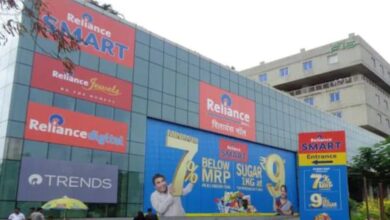
  • Reliance Retail Q2 Results: RIL’s Retail Arm’s Revenue Slides From Last Year, EBITDA Rises To Rs 5,861 Crore

    Reliance Retail Q2 Results: RIL’s Retail Arm’s Revenue Slides From Last Year, EBITDA Rises To Rs 5,861 Crore

    Reliance Retail Q2 financial results have been announced.

    Reliance Retail expanded to 18,946 outlets spread across 79.4 million sq ft across the country by the end of the three months.

    Reliance Industries Ltd reported its results for the quarter ended September 2024 on Monday, October 14. Reliance Retail reported a fall in revenue at ₹76,325 crore, down from ₹77,163 crore in the year-ago period. A CNBC-TV18 poll had estimated an 8% increase in revenue at ₹83,250 crore. The retail business of the Reliance group had reported a revenue of ₹77,630 crore in the previous quarter.

    The earnings before interest, taxes, depreciation, and amortisation (EBITDA) came in at ₹5,861 crore, a 0.5% jump from the year-ago period. The EBITDA was in-line with the estimated ₹5,860 crore. In the previous quarter, the EBITDA came at ₹5,672 crore. EBITDA margin came at 7.7% for the September quarter.

    Commenting on the results, Mukesh D. Ambani, Chairman and Managing Director, Reliance Industries Limited said: “The retail business continues to partner with renowned domestic as well as global players, expanding its basket of quality product offerings. The focus on strengthening our Retail operations will help us rapidly scale-up this business in the coming quarters and years and sustain our industry-leading growth momentum.”

    The conglomerate’s retail arm recorded footfalls of 297 million, up 14.2% from the year-ago period. The company stated that the digital and new commerce channels contributed 17% of the total revenue. RRVL’s registered customer base grew to 327 million by the end of September 2024.

    Reliance Retail expanded to 18,946 outlets spread across 79.4 million sq ft across the country by the end of the three months. The total transactions went up 8.9% as compared to the corresponding period a year ago to 343 million. Reliance’s network of consumer electronics stores crossed 650 outlets. The Digital India campaign boosted revenues by 60% year-on-year offering a wide product selection and attractive consumer deals.

    Fashion and lifestyle categories witnessed an uptick during the quarter. The company leveraged regional festivals like Onam, Ganesh Chaturthi, and Pujo to enhance customer engagement and boost transactions. Reliance launched several new retail formats, including the youth-focused fashion brand Yousta, which crossed 50 stores in its first year of operation.

    The e-commerce platform AJIO expanded its product catalogue by 25% and gained over 1.8 million new customers, including collaborations with brands like H&M, Timberland, and ASOS.

    Reliance’s premium retail segment also witnessed growth, with Ajio Luxe increasing its product range by 28%. Reliance launched India’s first Armani Café, while Hamleys continued its international expansion. The jewellery business performed well aided by higher average bill values and the launch of nine new collections.

    The grocery segment delivered another quarter of steady growth, with Smart Bazaar and Smart stores aiding business. Promotional events like the Full Paisa Vasool Sale and Independence Day sales drove significant traffic, according to the company. The confectioneries and snacks segment grew by 30% year-on-year, fruits by 26%, and apparel by 49%. The Metro format, part of the company’s New Commerce strategy, strengthened its engagement with traders and HoReCa (Hotels, Restaurants, and Cafés) segments.

    JioMart’s non-grocery categories posted growth, with the average order value doubling from the preceding year. The seller base, on the other hand, expanded by 46%, and the product catalogue grew by 13%. Reliance’s consumer brands division reported a 250% year-on-year increase in revenue from general trade. New products and markets across various categories contributed to this growth.

  • Jio Platforms Q2 Profit Rises 23.4% To Rs 6,539 Crore, ARPU At Rs 195.1

    Jio Platforms Q2 Profit Rises 23.4% To Rs 6,539 Crore, ARPU At Rs 195.1

    Reliance Jio announces Q2 FY25 financial results.

    The company’s revenue from operations rose 18 percent to Rs 31,709 crore in the September quarter

    Jio Platforms Ltd, the digital services unit of India’s largest conglomerate and parent of Reliance Jio Infocomm Ltd, on October 14 reported a 23.4 percent increase in quarterly profit to Rs 6,539 crore from a year earlier.

    The company’s revenue from operations rose 18 percent to Rs 31,709 crore in the September quarter from Rs 26,875 crore a year earlier, driven by the partial impact of the tariff hike and the scale-up of home and digital services businesses.

    EBITDA increased 17.8 percent to Rs 15,931 crore in the September quarter from Rs 13,528 crore a year ago, led by healthy revenue growth.

    Reliance Jio Infocomm, India’s largest telecom operator by users, reported a quarterly profit of Rs 5,445 crore, up 12 percent from Rs 4,863 crore in the same quarter a year ago.

    Jio’s ARPU rose 7.4 percent to Rs 195.1 from a year earlier due to the tariff hike and a better subscriber mix. Jio said the full impact of the tariff hike will be felt in the next 2-3 quarters.

    Disclosure: digihunt.com is part of the Network18 group. Network18 is controlled by Independent Media Trust, of which Reliance Industries is the sole beneficiary.

  • Reliance Industries Q2 Net Profit Rises 9.4% Quarter-on-quarter To Rs 16,563 Crore, Beats Analysts’ Estimates

    Reliance Industries Q2 Net Profit Rises 9.4% Quarter-on-quarter To Rs 16,563 Crore, Beats Analysts’ Estimates

    Reliance Industries Ltd’s fiscal second-quarter net profit rose to Rs 16,563 crore, up 9.4 percent from the preceding quarter.

    Revenue from operations for India’s most valuable company stood at Rs 2.35 lakh crore in the quarter ended September 30, compared with Rs 2.36 lakh crore a quarter ago.

    A Moneycontrol poll of seven brokerages estimated Reliance Industries fiscal second-quarter revenue to fall marginally to Rs 2.31 lakh crore from the preceding three months. Net profit was expected to fall 12 percent to Rs 15,354 crore.

    “Our performance reflects robust growth in Digital Services and Upstream business. This helped partially offset weak contribution from O2C business which was impacted by unfavourable global demand-supply dynamics,” said chairman and managing director Mukesh Ambani.

    Reliance Jio said the telecom operator’s monthly ARPU (average revenue per user) grew by a strong 7.4 percent year-on-year to Rs 195.1. The company said that the full impact of the tariff hike will flow through in the next 2-3 quarters. Further, Jio strengthened its leadership in 5G with 148 million subscribers upgrading to the faster service. This segment contributes 34 percent of wireless data traffic for Reliance Jio.

    Disclosure: digihunt is part of the Network18 group. Network18 is controlled by Independent Media Trust, of which Reliance Industries is the sole beneficiary.

  • HCL Technologies Q2 Results: Net Profit Rises 11%, Beats Estimates; Rs 12 Dividend Declared

    HCL Technologies Q2 Results: Net Profit Rises 11%, Beats Estimates; Rs 12 Dividend Declared

    HCL Tech has released its Q2 FY25 financial results.

    HCL Technologies Q2 Results: Its revenue from operations for India’s third-largest IT major during July-September 2024 rose 8.2 per cent to Rs 28,862 crore.

    HCL Technologies Q2 Results: IT major HCL Technologies on Monday reported a 11 per cent rise year-on-year in its net profit to Rs 4,235 crore, beating Street expectations, for the second quarter of FY25. The revenue from operations for India’s third-largest IT major during July-September 2024 rose 8.2 per cent to Rs 28,862 crore.

    On a quarter-on-quarter basis, HCL Tech’s net profit slipeed by a marginal 0.5 per cent. However, its revenue grew about 3 per cent.

    HCL Tech also declared another interim dividend of Rs 12 per share. With this, the total interim dividend for the fiscal year now stands at Rs 42 per share.

    Earlier, HCL Tech had given an interim dividend of Rs 18 per share in May, and Rs 12 per share in July.

  • CPI Inflation in September Jumps to 9-Month High of 5.49%

    CPI Inflation in September Jumps to 9-Month High of 5.49%

    Official CPI inflation data for September 2024 has been released.

    Year-on-year inflation rate based on All India Consumer Food Price Index (CFPI) number is 9.24% (Provisional) for the month of September, 2024

    Retail Inflation in September 2024: India’s CPI inflation in September 2024 jumped to a nine-month high of 5.49 per cent on high food prices, as compared with 3.65 per cent in the previous month, according to official data released on Thursday, September 12. The previous high than this was recorded in December 2023 at 5.69 per cent.

    India’s retail inflation had stood at 5.02 per cent in September 2023.

    The retail inflation print of 5.49 per cent is higher than the RBI’s tolerance band of 2-6 per cent.

    “Year-on-year inflation rate based on All India Consumer Price Index (CPI) for the month of September, 2024 is 5.49%. Corresponding inflationrates for rural and urban are 5.87% and 5.05%, respectively. It is likely that the increase in inflation rate for the month of September, 2024 is due to high base effect and weather conditions,” the Ministry of Statistics & Programme Implementation said in a statement.

    Year-on-year inflation rate based on All India Consumer Food Price Index (CFPI) number is 9.24% (Provisional) for the month of September, 2024. Corresponding inflation rate for rural and urban is 9.08% and 9.56%, respectively, it added.

  • ‘Anybody who met Mr Tata…’: Tata Sons Chairman N Chandrasekaran Shares Rare Insights on Ratan Tata

    ‘Anybody who met Mr Tata…’: Tata Sons Chairman N Chandrasekaran Shares Rare Insights on Ratan Tata

    Tata Sons Chairman N Chandrasekaran says Ratan Tata’s direction squarely focused on making sure employees were well taken care of.

    In a hearfelt post, Tata Sons Chairman N Chandrasekaran says anybody who met Rata Tata came away with a story about his humanity, warmth, and dreams for India. There really was no one like him.

    Days after the demise of Ratan Tata, Tata Sons Chairman N Chandrasekaran on Monday penned down moments with the former Tata Sons chairman and said anybody who met Rata Tata came away with a story about his humanity, warmth, and dreams for India. There really was no one like him.

    Tata, who remained the Chairman Emeritus of the sprawling salt-to-software conglomerate till his death, breathed his last at Breach Candy Hospital in south Mumbai at 11:30 pm on October 9. He was put under intensive care on October 7. Ratan Tata was laid to rest on October 10 with full state honours in Mumbai.

    “Anybody who met Mr Tata came away with a story about his humanity, warmth, and dreams for India. There really was no one like him. Our relationship grew over the years, first focusing on business and eventually evolving into a more personal connection. We discussed interests ranging from cars to hotels, but when our conversations turned to other matters — those of daily life — he would show how much he noticed and felt. He was someone to be discovered, over time and through experience. I remember several such instances,” Chandrasekaran said in a post on LinkedIn.

    Chandrasekaran record the momemt when he just became Chairman, saying “I was introduced to a situation within Tata Motors which involved a dispute between the company and the employees’ union over wages for two years. In March ‘17, Mr. Tata and I met the union leaders together. During the meeting, Mr. Tata relayed three messages: he regretted the delay in finding a resolution. He explained that the company was passing through hardship. And both of us committed that this dispute would be concluded within a fortnight.”

    Ratan Tata’s direction squarely focused on making sure employees were well taken care of—not just to resolve the dispute, but to ensure they and their families’ well-being. Across other Group companies, his perspective on employees was uniform. It is something that has shaped a number of our leaders across the Group, he stated.

    Chandrasekaran also shared a telling anecdote about Tata’s character during the renovation of Bombay House, the Tata headquarters.

    He wrote, “Bombay House had not been touched since 1924, and more important (as many people told me) Mr. Tata would not like it. “Bombay House is a temple,” I was told, emphasising its sanctity. When I finally mentioned to Mr. Tata about Bombay House, he said, “May I ask you something? When you say ‘renovate’, do you mean ‘vacate’?” I explained that we planned to move everyone to a nearby office. He gently clarified: “Where will the dogs go?” The dogs were an integral part of Bombay House, often seen at the reception. “We will build a kennel.” “Really?” he said, considering it. When the renovation of Bombay House was complete, Mr. Tata wanted to see the kennel first.”

    He was very happy to see how thoughtful the kennel’s design was, and how well the dogs would be cared for. Seeing his happiness with the kennel and his priorities was a reminder that while big projects are important, it’s the details that reveal how we think, what we prioritise, and how we are perceived. His joy was confirmation that we had done the right thing, the Tata Sons chairman wrote.

    Chandrasekaran concluded his tribute by highlighting Tata’s remarkable memory and keen observation skills. Whether recalling the intricacies of a room’s design or the content of a book read years prior, Tata possessed a photographic memory and an exceptional ability to process information.

    “His eye received everything clearly, as his mind perceived everything clearly,” Chandrasekaran concluded, encapsulating the essence of Ratan Tata: a leader defined not only by his business acumen but also by his profound humanity and unwavering attention to detail.

  • Housing Prices in Top-10 Cities Surge 88% in 5 Years, Gurugram Rate Jumps 160%

    Housing Prices in Top-10 Cities Surge 88% in 5 Years, Gurugram Rate Jumps 160%

    In terms of per sq. ft. prices, Mumbai continues to be the costliest with average price at Rs 35,500 psqft. (Representative Photo)

    Mumbai experienced the lowest increase at 37%, with prices rising from Rs 25,820 per sq ft to Rs 35,500 per sq ft during the same period.

    The average price of newly launched residential projects in India’s top 10 cities has surged by a staggering 88 per cent over the past five years, according to a report by real estate data analytics firm PropEquity released on Monday.

    Gurugram witnessed the most dramatic price growth, with average prices catapulting by 160% from Rs 7,500 per sq ft in 2019 to Rs 19,500 per sq ft in 2024. In contrast, Mumbai experienced the lowest increase at 37%, with prices rising from Rs 25,820 per sq ft to Rs 35,500 per sq ft during the same period.

    Following Gurugram in terms of price growth are Noida (146%), Bengaluru (98%), Hyderabad (81%), Chennai (80%), Pune (73%), Navi Mumbai (69%), Kolkata (68%), Thane (66%), and finally Mumbai.

    The report analysed 15,000 new launch projects comprising apartments, floors, and villas across the top 10 cities: Bengaluru, Chennai, Hyderabad, Kolkata, Mumbai, Thane, Navi Mumbai, Pune, Noida, and Gurugram.

    “Real estate prices have escalated exponentially across all major cities in the last five years,” explains Samir Jasuja, Founder & CEO of PropEquity. “The massive infrastructure development, growing interest from NRIs, HNIs/UHNIs and stock market gainers looking to create wealth and generate income through real estate investment, rising homeownership sentiments and overall shift towards luxury/super luxury homes as a result of rising aspiration and affluence are the contributing factors for such a steep rise.”

    Despite experiencing the lowest price increase, Mumbai remains the most expensive city with an average price of Rs 35,500 per sq ft. Gurugram follows at Rs 19,500 per sq ft, and Noida at Rs 16,000 per sq ft.

    The data further reveals a significant shift in the affordability landscape. In 2019, only Mumbai boasted average new launch prices exceeding Rs 10,000 per sq ft. However, by 2024, all cities except Hyderabad, Chennai, and Kolkata crossed this threshold, highlighting the growing demand and shrinking affordability in India’s prime real estate markets.