Category: Business

Business News: Get latest stock share market news, financial news, economy news, company news, politics news, India news, breaking news, Indian economy news.

  • Highway Projects Delayed: 574 NH Initiatives Miss Deadlines as Rs 3.6 Lakh Crore Stuck

    Highway Projects Delayed: 574 NH Initiatives Miss Deadlines as Rs 3.6 Lakh Crore Stuck

    Highway expansion efforts in India are currently facing significant challenges, with 574 National Highway projects valued at Rs 3.60 lakh crore lagging behind schedule. In a recent statement, Road Transport and Highways Minister Nitin Gadkari revealed that many of these projects, awarded over the past five years, are experiencing delays ranging from a few months to over three years. The government is actively working to address these issues, including improving coordination with state authorities to streamline land acquisition and necessary approvals.

    Extent of Delays in Highway Projects
    According to Minister Gadkari, out of the 574 under-construction projects, 300 are delayed by up to one year, while 253 face delays of one to three years. Alarmingly, 21 projects have exceeded their timelines by more than three years. These delays have raised concerns about the efficiency of the highway expansion initiative, which is crucial for improving transportation infrastructure across the country. The minister emphasized the need for timely execution, as these projects are essential for enhancing connectivity and supporting economic growth.

    Bottlenecks Before Project Initiation
    The government has identified several bottlenecks that hinder the timely commencement of highway projects. A total of 133 National Highway projects, with an estimated cost of around Rs 1 lakh crore, have been awarded but have not yet reached their appointed start dates. Minister Gadkari pointed out that issues such as the unavailability of encumbrance-free land and delays in obtaining forest and wildlife clearances are significant obstacles. To mitigate these challenges, the ministry is enhancing collaboration with state governments and other stakeholders to expedite land acquisition and necessary approvals.

    Progress in Highway Construction
    Despite the setbacks, highway construction has continued at a robust pace. As of October 2025, the ministry has successfully constructed 3,468 km of National Highways. Looking ahead, the government has set an ambitious target of 10,000 km for the financial year 2025-26, taking into account the ongoing work and the readiness of projects, contingent upon the completion of pre-construction activities. This target is slightly lower than the previous year’s goal of 10,420 km, which was surpassed with an actual achievement of 10,660 km.

    Improvements in Road Safety
    In addition to addressing project delays, Minister Gadkari provided updates on road safety statistics. Official data indicates a gradual improvement in fatality rates related to road accidents. The number of road accident deaths per 10,000 vehicles decreased from 5.8 in 2018 to 4.3 in 2022. Similarly, fatalities per 10,000 km of roads fell from 254 to 250 during the same period. India is committed to the Stockholm Declaration on Road Safety, which aims to reduce road traffic deaths by at least 50% between 2020 and 2030. Furthermore, the minister reported 45 incidents of buses catching fire between January 1, 2021, and December 10, 2025, resulting in 64 fatalities, highlighting ongoing safety concerns in the transportation sector.

    Digihunt is not a financial advisor and this is not investment advice.

  • IndiGo and DGCA Under Investigation for ‘Unconvincing’ Responses, Say Panel Officials

    IndiGo and DGCA Under Investigation for ‘Unconvincing’ Responses, Say Panel Officials

    New Delhi witnessed a significant parliamentary inquiry as IndiGo faced scrutiny over its recent mass flight cancellations that left many passengers stranded. The airline attributed these disruptions to system glitches combined with adverse weather conditions. The Directorate General of Civil Aviation (DGCA) and the Ministry of Civil Aviation defended their roles amid increasing criticism. Members of the parliamentary committee expressed dissatisfaction with the responses from various stakeholders, deeming them unconvincing and evasive regarding the crisis.

    IndiGo’s Defense and Apology
    During the parliamentary meeting, IndiGo’s Chief Operating Officer, Isidre Porqueras, represented the airline and addressed the committee’s concerns. IndiGo acknowledged the turmoil caused by the cancellations and offered an apology. However, committee members felt that the airline’s demeanor did not reflect true contrition. IndiGo explained that several factors contributed to the operational disruptions, including a critical system glitch that required a reboot and adverse weather conditions that left pilots stranded in various locations. The airline also reported that all passenger luggage had been delivered, except for 52 unclaimed bags.

    Committee’s Concerns and Future Actions
    The parliamentary committee, led by Sanjay Jha of the Janata Dal (United), expressed its intent to await the findings of an inquiry initiated by the DGCA before drawing any conclusions. Established on December 5, this inquiry is expected to deliver its report within 15 days. The committee plans to reconvene and may summon the involved stakeholders again for further discussions. Committee members voiced their frustrations, suggesting that the responses from IndiGo and other stakeholders seemed to deflect responsibility rather than address the underlying issues.

    Allegations of Corruption and Regulatory Compliance
    Captain Sam Thomas, president of the Airline Pilots Association of India, stirred controversy during the meeting by alleging corruption within the DGCA. He claimed that individuals could evade accountability by aligning themselves with influential figures. However, committee members urged him to refrain from making broad accusations without substantial evidence. The inquiry also scrutinized IndiGo’s adherence to the Flight Duty Time Limitation guidelines, which are designed to ensure pilot safety by allowing for more rest. There are suspicions that IndiGo may have resisted these regulations to avoid hiring additional pilots, leveraging its market dominance to influence the ministry’s decisions.

    Implications for the Aviation Sector
    The fallout from IndiGo’s operational disruptions has raised significant concerns within the aviation sector. The DGCA was compelled to relax the implementation of new guidelines due to the chaos caused by IndiGo’s flight cancellations. This situation highlights the ongoing challenges of balancing operational efficiency with safety regulations in the airline industry. As the inquiry progresses, the committee’s findings may lead to recommendations aimed at preventing similar incidents in the future and ensuring that passenger safety remains a top priority.

    Digihunt is not a financial advisor and this is not investment advice.

  • Sebi Cuts Mutual Fund Fee Cap to Reduce Costs for Investors

    Sebi Cuts Mutual Fund Fee Cap to Reduce Costs for Investors

    Mutual fund investors in India are set to benefit from a recent decision by the Securities and Exchange Board of India (Sebi), which has reduced the maximum fees that fund houses can charge. This change will see fees cut by up to 15 basis points in select mutual fund schemes. Additionally, Sebi has lowered the maximum brokerage fees that fund houses can pay to brokers for trading in various markets. These adjustments aim to reduce costs for investors while enhancing transparency and compliance within the mutual fund industry.

    Fee Reductions for Investors
    Sebi’s latest move to lower fees is expected to provide significant relief to mutual fund investors. The reduction of up to 15 basis points means that investors will pay less to fund houses managing their investments. This change is particularly relevant in the current economic climate, where cost efficiency is crucial for many investors. Furthermore, the regulator has also decreased the maximum brokerage fees that fund houses can pay to brokers for transactions in equity, futures and options, and debt markets. This could lead to further cost reductions for investors, making mutual funds a more attractive investment option.

    Changes to Statutory Charges
    In a notable shift, Sebi has clarified that all statutory charges, including Goods and Services Tax (GST), exchange fees, and securities transaction tax (STT), will now be excluded from the fees charged by fund houses. Previously, these charges were included in the overall fees, which could obscure the true cost of investing in mutual funds. By separating these charges, Sebi aims to enhance transparency and allow investors to better understand the actual fees they are paying. This change is part of a broader effort to streamline regulations and improve the investor experience in the mutual fund sector.

    Comprehensive Regulatory Revisions
    Sebi is undertaking a comprehensive review of regulations governing mutual funds and stock brokers, marking a significant overhaul after 30 years. The new regulations are designed to simplify compliance and improve clarity for stakeholders. Sebi’s release emphasized that while the revised framework aims to simplify processes, it will maintain core principles and safeguards that have been established over the years. The goal is to enhance investor protection, transparency, and governance standards within the mutual fund ecosystem. This initiative reflects Sebi’s commitment to adapting to contemporary changes in the financial industry.

    Proposals for Public Offers and Debt Listings
    In addition to fee reductions, Sebi has approved proposals aimed at simplifying public offers. The board has decided that a shorter summary should accompany draft offer documents, helping investors make informed decisions. Furthermore, to encourage participation in public issues for debt offerings, Sebi is considering offering incentives to certain investors. To alleviate compliance burdens for companies with significant debts, the threshold for identifying High Value Debt Listed Entities (HVDLEs) will be raised from Rs 1,000 crore to Rs 5,000 crore. These changes are part of Sebi’s ongoing efforts to enhance the regulatory framework and support the growth of the financial market.

    Digihunt is not a financial advisor and this is not investment advice.

  • TCS CEO Announces $1.5 Billion Revenue Growth from AI Services

    TCS Reports Surge in AI Revenue

    TCS CEO K. Krithivasan announced that the company’s annualized revenue from artificial intelligence (AI) services has reached $1.5 billion, reflecting a notable quarter-on-quarter increase of 16.3%. He highlighted that over 85% of TCS clients with revenues exceeding $20 million are currently utilizing the company’s AI capabilities. Krithivasan stressed a significant internal transformation at TCS, encouraging employees to embrace an “AI-first” culture where AI solutions take precedence in project discussions. This strategic shift is intended to redefine TCS’s service offerings and strengthen its competitive position in the fast-evolving tech landscape.

    AI Revenue Growth and Client Engagement

    TCS has achieved impressive growth in its AI services, with revenue climbing to $1.5 billion, marking a robust 16.3% increase quarter-on-quarter. Krithivasan noted that a significant majority of TCS’s clients, particularly those with revenues above $20 million, leverage the company’s AI services. This trend highlights the increasing reliance on AI in business operations. TCS’s commitment to fostering an AI-first culture is evident from its approach to client engagements, prioritizing discussions on how AI can enhance project outcomes. This proactive stance ensures that AI is considered as the primary solution, even if it potentially disrupts existing revenue streams.

    In contrast, other major Indian IT firms have yet to disclose their AI revenue separately. However, global competitor Accenture has taken significant steps in this space, investing $3 billion over several years to enhance its generative AI capabilities. Accenture’s revenue from generative and agentic AI has impressively tripled to $2.7 billion in FY25, showcasing the competitive landscape TCS is navigating as companies increasingly shift towards AI-driven solutions.

    Strategic Pillars of AI Transformation

    TCS’s AI-driven transformation is anchored in five strategic pillars. The first pillar emphasizes internal transformation, positioning TCS as its own primary customer while cultivating an AI-first culture. The second pillar focuses on service reimagining, redefining every service line with AI at its core. The third involves talent transformation, which constitutes extensive reskilling and team restructuring to adapt to new delivery models.

    The fourth pillar aims to reimagine customer value chains, shifting the focus from slight productivity enhancements to comprehensive business transformation. Finally, the fifth pillar is about forming ecosystem partnerships, encompassing collaborations, acquisitions, and co-creation efforts to expedite innovation. Krithivasan believes that the transition from digital to AI represents a substantial opportunity for both enterprises and TCS, positioning the company to lead this transformation effectively.

    Investments in Learning and Role Transformation

    TCS has consistently prioritized investment in learning infrastructure, with recent initiatives including the launch of a personalized AI learning coach. This innovative tool, powered by generative and agentic AI, tailors employee guidance based on their skill levels, aspirations, and goals. The implementation of this AI learning coach is already producing positive results, enhancing employee development across both technical and soft skills.

    Additionally, TCS reported that the number of employees with higher-order AI skills has nearly doubled to 180,000 in the past year. The company acknowledges the significance of role transformation, noting that every position, from sales to delivery, is increasingly becoming AI-centric. Initiatives such as the AI Dojo program have been introduced to equip sales, advisory, and delivery teams with the necessary skills to excel in an AI-driven environment. However, TCS COO Aarthi Subramanian emphasized that while AI supports mid-level tasks, human expertise remains essential for driving project success.

    Digihunt is not a financial advisor and this is not investment advice.

  • Apple Collaborates with Indian Chip Makers for Possible iPhone Chip Production

    Apple Collaborates with Indian Chip Makers for Possible iPhone Chip Production

    Apple is exploring the possibility of assembling iPhone chips in India, marking a significant step in its supply chain strategy. The tech giant is reportedly in early discussions with Indian chip manufacturers, particularly CG Semi, which is establishing a semiconductor assembly and test facility in Gujarat. This initiative could bolster India’s semiconductor sector and enhance Apple’s operational capabilities in the region.

    Initial Discussions with CG Semi

    Apple’s engagement with CG Semi, a company owned by the Murugappa Group, is still in its infancy. The discussions revolve around the assembly and packaging of specific chips at CG Semi’s new facility in Sanand, Gujarat. This facility, supported by both the central and state governments, is part of a larger investment plan amounting to Rs 7,600 crore. It aims to develop two advanced units, G1 and G2, over the next five years, with G1 already operational since August 28. Designed to handle up to 0.5 million units daily, it covers the entire chip assembly process, including packaging and testing.

    CG Semi has set a timeline to commence commercial operations by 2026, aligning with India’s Semiconductor Mission. However, the exact types of chips to be produced at this facility remain uncertain, though display chips are anticipated to be a key focus. Meeting Apple’s stringent quality standards, which are crucial for inclusion on Apple’s supplier list, poses a significant challenge for CG Semi.

    Implications for India’s Semiconductor Sector

    The potential collaboration between Apple and CG Semi could greatly impact India’s burgeoning semiconductor industry. This development follows Intel’s recent partnership with Tata Electronics, aimed at manufacturing and packaging Intel products domestically. Such collaborations highlight a growing trend of multinational companies investing in India’s semiconductor capabilities, essential for the global electronics supply chain.

    Industry analysts suggest that Apple’s move may provide the company with greater stability and diversity in its supply chain. Currently, Apple sources its iPhone display panels from major OLED manufacturers like Samsung Display Corp and LG Display. The integrated circuits for these displays are primarily produced in facilities located in South Korea, Taiwan, and China. Establishing a presence in India might help Apple mitigate risks associated with geopolitical tensions and supply chain disruptions.

    Challenges Ahead for CG Semi

    While the prospect of assembling chips in India is promising, CG Semi faces significant challenges. Meeting Apple’s high-quality standards will be paramount. The company must ensure consistent production yields and develop deep expertise in outsourced semiconductor assembly and test (OSAT) processes, crucial for maintaining Apple’s reputation for quality and reliability.

    As CG Semi navigates these challenges, it will also need to compete with other suppliers vying for a spot on Apple’s supplier list. The competitive landscape is fierce, with many companies eager to partner with Apple, making it essential for CG Semi to effectively demonstrate its capabilities.

    Digihunt is not a financial advisor and this is not investment advice.

  • How Trump’s H-1B Visa Fee Hike Affects TCS and Infosys: A Detailed Look

    How Trump’s H-1B Visa Fee Hike Affects TCS and Infosys: A Detailed Look

    US President Donald Trump’s proposed $100,000 fee for new H-1B visa applicants is poised to have a significant impact on the Indian IT sector, particularly affecting major firms like Tata Consultancy Services (TCS) and Infosys. A recent analysis indicates that this fee could impose substantial financial burdens on companies reliant on H-1B workers. The proposed changes are part of a larger crackdown on immigration policies, which could reshape the employment landscape for skilled foreign workers in the United States.

    Impact on Major IT Firms

    The proposed fee is expected to heavily impact Indian IT giants, with TCS, Infosys, and Cognizant Technology Solutions bearing the brunt of these financial implications. According to the analysis, around 90% of new H-1B appointments for these companies between May 2020 and May 2024 were approved at US consulates. If the $100,000 fee had been in effect during this period, TCS would have incurred costs for approximately 6,500 workers, affecting 82% of their newly approved H-1B staff. Similarly, Infosys would have faced fees for over 10,400 workers, representing more than 93% of their new H-1B appointments, potentially leading to visa charges exceeding one billion dollars. Cognizant would have been responsible for fees related to more than 5,600 employees, comprising 89% of their new H-1B recruits. This financial strain may compel these firms to rethink their hiring strategies and operational models.

    Future of H-1B Visa Applications

    Despite potential legal challenges regarding the implementation of the new fee, industry analysts forecast a notable decline in H-1B visa applications and an increase in the deployment of overseas staff. Immigration attorney Jonathan Wasden, representing numerous IT employers, highlighted that the concern over losing exceptional talent to overseas markets is already influencing hiring practices. While some organizations believe the immediate impact of the fee will be minimal, others are proactively adjusting their recruitment strategies. For instance, Cognizant has significantly reduced its reliance on visas, utilizing them only for select technology roles that complement their US workforce.

    The Biden administration’s Department of Homeland Security has identified manipulation of the H-1B lottery system by IT consultancies, leading to modifications in the lottery process. The newly proposed fee aims to provide more certainty for American companies seeking skilled workers while preventing organizations from exploiting the system to drive down wages. Legal challenges from the US Chamber of Commerce and various states are currently underway, with a forthcoming hearing set to address the validity of the fee.

    Shifts in Recruitment Strategies

    As companies prepare for the potential effects of the new fee, many are revising their recruitment strategies. The IT consultancy sector has already seen a reduction in new H-1B applications since 2024, and the fee increase is expected to accelerate offshore recruitment. Steve Hall, chief AI officer at Information Services Group Inc., anticipates that corporate investment in India, a primary source of H-1B workers, will rise over the next five years. This shift underscores the necessity for companies to adapt to the changing landscape of skilled labor.

    Infosys has stated that it will continue to deliver client services without disruption, despite the changing sponsorship requirements for US staff. Similarly, IBM Corp., which recruited 88% of its H-1B workers from international sources, is modifying its skilled immigration strategy. The increased fee is viewed as a necessary adjustment, though employers are expected to find ways to navigate the new environment. Analysts believe the upcoming H-1B lottery will serve as an initial indicator of the measure’s effectiveness, particularly concerning the skill and wage levels of applicants.

    Long-Term Implications for the H-1B Program

    The proposed $100,000 fee, along with changes to the lottery process, is likely to reshape the behaviors of organizations participating in the H-1B program. A forecast from a legal technology startup suggests that these added expenses could lead to a 30% to 50% reduction in next year’s lottery entries. Companies will need to carefully assess both the financial implications of the fee and the chances of candidates under the revised selection process. Measures introduced by the Trump administration are creating a new set of incentives that will influence market behavior regarding the H-1B lottery, potentially leading to a more competitive environment for skilled foreign workers seeking employment in the United States.

    Digihunt is not a financial advisor and this is not investment advice.

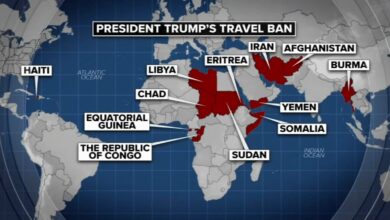
  • Trump Expands Travel Ban to Include 20 New Countries

    Trump Expands Travel Ban to Include 20 New Countries

    The Trump administration has announced a significant expansion of travel restrictions, now affecting an additional 20 countries and the Palestinian Authority. This move effectively doubles the number of nations facing strict travel and immigration limits to the United States, drawing criticism for its broad scope. The decision follows a recent incident involving an Afghan national accused of attacking National Guard troops, raising concerns around national security and immigration enforcement.

    Expansion of Travel Restrictions

    On Tuesday, the Trump administration revealed that it would add five more countries to its travel ban list. The new countries include Burkina Faso, Mali, Niger, South Sudan, and Syria. Furthermore, individuals traveling on documents issued by the Palestinian Authority will face a complete entry ban into the U.S. This action continues the administration’s efforts to tighten entry standards for foreign nationals. The announcement also includes partial restrictions on 15 other nations, such as Angola, Nigeria, and Zimbabwe, which will now undergo increased scrutiny for travelers wishing to enter the U.S.

    The rationale behind these restrictions centers on concerns about corruption, unreliable civil documentation, and high rates of visa overstays in the affected countries. Officials argue that these factors complicate the vetting process for travelers. However, critics contend that the measures unfairly target individuals based on nationality rather than legitimate security issues.

    Background of Previous Restrictions

    This recent announcement builds on earlier travel restrictions implemented in June, when President Trump banned citizens from 12 countries and imposed additional limitations on seven others. The original list included nations like Iran, Libya, and Yemen, which were cited for various security and immigration enforcement issues. The administration argues that these restrictions are essential for protecting national security and ensuring the integrity of the immigration system.

    Following a recent shooting incident involving an Afghan national, the administration has intensified its focus on immigration enforcement. The Afghan suspect has pleaded not guilty to charges of murder and assault, further justifying the expansion of travel restrictions.

    Impact on Palestinian Authority Passport Holders

    The new restrictions particularly target individuals holding Palestinian Authority passports, making it almost impossible for them to obtain travel documents for entry into the U.S. This move comes after previous limitations that already made travel for Palestinian Authority passport holders extremely challenging. The administration cited the presence of U.S.-designated terrorist groups operating in the West Bank and Gaza Strip as a key reason for the ban, claiming these groups pose a threat to American citizens.

    The implications of these restrictions are significant, impacting travel for business and education while also preventing individuals from emigrating to the U.S. Critics argue that this policy is part of a broader trend of demonizing individuals based on their nationality and background rather than addressing genuine security concerns.

    Reactions and Future Considerations

    The expansion of the travel ban is expected to face strong opposition from various advocacy groups and legal organizations. Critics assert that the administration’s approach is discriminatory and unjust, using national security as a pretext to exclude individuals from specific countries. Laurie Ball Cooper, Vice President of U.S. Legal Programs at the International Refugee Assistance Project, described the expanded ban as a shameful attempt to stigmatize people based on their origin.

    As the administration implements these restrictions, the timeline has not been clearly defined, leaving many potential travelers uncertain about their ability to enter the U.S. The ongoing debate highlights the complex intersection of national security, immigration, and human rights in the current political landscape.

    Disclaimer: Digihunt is not a financial advisor, and this is not investment advice.

  • Nifty50 Opens Steady; BSE Sensex Nears 84,700 – Latest Stock Market Update

    Nifty50 Opens Steady; BSE Sensex Nears 84,700 – Latest Stock Market Update

    Stock markets in India opened on a flat note on Wednesday, with the Nifty50 and BSE Sensex experiencing minimal movement. The Nifty50 hovered just above 25,850, while the BSE Sensex was close to 84,700. Market analysts predict that trading will remain sideways due to a lack of significant short-term catalysts, despite some fluctuations in currency and crude oil prices that have captured investor attention.

    Current Market Performance

    As of 9:16 AM, the Nifty50 was trading at 25,864.25, reflecting a slight increase of 4 points or 0.016%. Meanwhile, the BSE Sensex registered a gain of 26 points or 0.030%, reaching 84,705.43. These figures indicate a cautious approach among investors as they navigate through a market characterized by uncertainty. Analysts suggest that the absence of strong catalysts is likely to keep the markets in a holding pattern for the time being.

    Currency and Crude Oil Dynamics

    Dr. VK Vijayakumar, Chief Investment Strategist at Geojit Investments Limited, highlighted the recent sharp decline in the Indian rupee and crude oil prices as significant factors influencing market sentiment. The drop in crude oil prices, attributed to weak demand from major economies like China and the US, is seen as a positive development for India’s economic landscape. However, the sustained depreciation of the rupee raises concerns about foreign institutional investor (FII) outflows, which could negatively impact market performance. Notably, the trade deficit in November showed a significant reduction, dropping to $24.5 billion from $41.5 billion in October, which was unexpected.

    Future Outlook for Foreign Investments

    Despite current challenges, Dr. Vijayakumar expressed optimism regarding future foreign investments in India. He noted that if the trend of weakening artificial intelligence (AI) trade continues, FIIs may begin to view India as an attractive market by 2026. Additionally, the potential for a US-India trade deal could further enhance this outlook. He anticipates a strengthening of the rupee in the first half of 2026, suggesting that while current FII selling is exerting downward pressure on stock prices, investors should consider buying in anticipation of a market rally in the coming years.

    Global Market Influences

    The performance of US stock market indices on Tuesday showed mixed results, with the Nasdaq closing higher while the S&P 500 and Dow Jones experienced declines, primarily due to losses in the healthcare and energy sectors. This volatility in US markets has had a ripple effect on Asian equities, which opened lower following disappointing US employment data that failed to bolster expectations for Federal Reserve rate cuts. Additionally, oil prices surged on Wednesday after US President Donald Trump announced a comprehensive embargo on oil tankers associated with Venezuela, raising geopolitical tensions amid ongoing demand uncertainties. In the Indian market, foreign portfolio investors reported net sales of shares totaling Rs 2,381 crore, while domestic institutional investors continued to make net purchases amounting to Rs 1,077 crore.

    Digihunt is not a financial advisor and this is not investment advice.

  • Saregama to Acquire 28% Share in Bhansali Productions

    Saregama to Acquire 28% Share in Bhansali Productions

    RPSG Group’s entertainment arm, Saregama India, is set to acquire a significant 28% stake in Bhansali Productions Private Limited, a company founded by renowned filmmaker Sanjay Leela Bhansali. The deal, valued at Rs 325 crore, allows Saregama the option to increase its stake to 51% by March 31, 2030. This partnership aims to merge Bhansali Productions’ acclaimed storytelling with Saregama’s expertise in music and live events, creating a formidable presence in the media and entertainment sector.

    Details of the Investment
    Saregama’s investment involves the subscription of 9,960 compulsory convertible preference shares in Bhansali Productions. This strategic move is expected to significantly enhance Bhansali Productions’ content offerings. The company plans to develop a world-class studio while retaining the intellectual property rights of all its future films. This collaboration represents not just a financial transaction but an effort to elevate the quality and quantity of cinematic content produced by Bhansali Productions.

    Exclusive Music Rights
    As part of the agreement, Bhansali Productions will exclusively sell the music rights for all its upcoming films to Saregama, based on a pre-established formula. This arrangement ensures Saregama has a consistent supply of film music, reducing the need for competitive bidding and allowing for better control over acquisition costs. This strategic alignment aims to secure Saregama’s long-term market share in the music industry, particularly in the film sector.

    Future Prospects and Financial Expectations
    Saregama anticipates that this partnership will benefit its earnings per share (EPS) by the fiscal year 2027, enhancing profit margins in both its music and video segments. Bhansali Productions has a robust pipeline, with over ten feature films planned for release in the next three years. The studio is committed to maintaining its auteur-driven approach while scaling its output. For the fiscal year 2025, Bhansali Productions reported impressive financial figures, including a revenue of Rs 304 crore, an EBITDA of Rs 60 crore, and a profit after tax (PAT) of Rs 45 crore.

    Statements from Key Figures
    Sanjay Leela Bhansali expressed his belief that creating impactful cinema requires time, trust, and respect for the artistic process. He emphasized that Saregama shares this philosophy, making them an ideal partner. Avarna Jain, vice chairperson of Saregama India Ltd, highlighted that this collaboration aligns with Saregama’s strategy of partnering with India’s top creative talents, ultimately delivering long-term value to shareholders. Bhansali Productions is celebrated for its iconic films, including “Hum Dil De Chuke Sanam,” “Devdas,” and the Netflix series “Heeramandi,” further solidifying its reputation in the industry.

    Disclaimer: Digihunt is not a financial advisor, and this is not investment advice.

  • Why Your Mutual Fund Advisor Matters for Smart Investing

    Why Your Mutual Fund Advisor Matters for Smart Investing

    Investors often focus on high-return funds, but the key to successful investing lies in asset allocation. A recent discussion emphasized that a mediocre fund can outperform a top fund if the asset mix is appropriate. Understanding how to balance investments among equities, debt, and other assets is crucial for achieving financial goals without unnecessary risk. This article delves into the significance of asset allocation and its impact on investment outcomes.

    The Importance of Asset Allocation

    Asset allocation is the strategy of dividing investments among different asset categories, including stocks, bonds, and cash. This approach is vital for managing risk and achieving financial objectives. A well-thought-out allocation can determine a portfolio’s growth potential and how much it can decline before an investor feels compelled to make costly decisions. For example, if an investor has a goal just three years away, such as saving for a home, the allocation becomes even more essential.

    Investors often face the dilemma between high-risk, high-reward options and more stable investments. While a high-performing equity fund may seem attractive, if it comprises a substantial portion of the portfolio, it can result in significant losses during market downturns. Conversely, a balanced strategy that includes a mix of equities and debt can provide stability, helping investors stay aligned with their goals, even in volatile markets.

    Understanding Risk and Reward

    The relationship between risk and reward is a foundational concept in investing. Many investors are drawn to funds with impressive past performance, believing they will continue to deliver high returns. However, markets are unpredictable, and past performance does not always guarantee future results. For instance, an investor allocating 90% of their portfolio to equities based on a fund’s historical success may face severe consequences if the market takes a downturn.

    In contrast, a more conservative allocation—such as 40% in equities and 60% in debt—might not generate the same excitement but offers a safety net during market fluctuations. This approach reduces emotional stress linked to investing and aids in maintaining focus on long-term goals. Ultimately, the right mix is likely to yield better outcomes than merely chasing the latest top-performing fund.

    Behavioral Management in Investing

    Asset allocation serves not only as a financial strategy but also as a tool for managing investor behavior. Many individuals panic during market declines, often leading them to sell at inopportune times. Such behavior can transform a potentially profitable investment into a loss. By establishing a sensible asset allocation, investors can lessen the emotional impact of market volatility and make more rational decisions.

    The key takeaway is that the best-performing fund is often one that investors did not own during sharp declines. Thus, instead of concentrating solely on fund performance, investors should consider how their asset mix will allow them to remain invested long enough for returns to materialize. This shift in focus can foster more sustainable investment practices.

    Making Informed Investment Decisions

    At Value Research Fund Advisor (VRFA), the emphasis is placed on determining the appropriate equity-debt allocation based on individual goals, age, and risk tolerance. This personalized approach ensures that investors select funds purposefully, aligning their choices with their financial objectives. Once the asset mix is established, the next step is to choose specific funds that fit within that framework.

    Investors are encouraged to remember that a portfolio’s success relies less on picking the “perfect fund” and more on selecting the right mix. A well-structured allocation can lead to better sleep and fewer impulsive decisions, ultimately enhancing investment outcomes. For individuals with short-term goals, a quick self-assessment can determine if their current asset allocation remains appropriate. If a significant market drop would necessitate a sale, it may be time to reassess their strategy.

    Digihunt is not a financial advisor and this is not investment advice.