Author: Sumit Rathore

  • Gold and Silver Prices Rise: Silver Tops Rs 3 Lakh/kg in Delhi, Gold Hits Record High

    Gold and Silver Prices Rise: Silver Tops Rs 3 Lakh/kg in Delhi, Gold Hits Record High

    Silver prices hit an unprecedented high in the national capital, exceeding the critical Rs 3 lakh-per-kg mark. Gold has also reached a new record level, influenced by rising geopolitical tensions and uncertainties surrounding tariffs, driving demand for safe-haven assets. Market analysts observed that these trends indicate a growing pattern as investors increasingly turn to precious metals in light of global instability.

    Record Surge in Silver Prices
    On Monday, silver prices surged by Rs 10,000 in just one trading session, reaching Rs 3,02,600 per kg, up from Rs 2,92,600 per kg. This remarkable increase represents a year-to-date gain of Rs 63,600, or 26.61 percent, from the end of 2025, when silver was priced at Rs 2,39,000 per kg. The escalation in silver prices is linked to various factors, including heightened geopolitical tensions and tariff uncertainties prompting investors to flock towards safe-haven assets. As global market reactions unfold, the demand for silver as a protective investment continues to rise.

    Gold Prices Hit New Heights
    Gold also saw a notable increase, climbing by Rs 1,900 to reach a new all-time high of Rs 1,48,100 per 10 grams, inclusive of all taxes. This rise follows a recent session where gold was valued at Rs 1,46,200 per 10 grams. Since the beginning of 2026, gold has gained Rs 10,400, or 7.55 percent, from its price of Rs 1,37,700 per 10 grams at the end of the previous year. The upward movement in gold prices signifies a broader trend within the bullion market, as investors seek safety in precious metals amid ongoing global uncertainties.

    Geopolitical Tensions and Tariff Threats
    Analysts attribute the sharp increases in both gold and silver prices to growing global uncertainty, particularly following recent tariff threats from U.S. President Donald Trump. Over the weekend, Trump had announced plans to implement a 10 percent tariff on various goods imported from several European nations, including Denmark, Sweden, France, Germany, the Netherlands, Finland, the UK, and Norway. This tariff is set to rise to 25 percent from June 1, 2026, unless an agreement concerning Greenland is reached. These developments have heightened concerns about possible retaliation from European nations, further adding to market volatility and uncertainty.

    Global Market Reactions
    The international market reflected the domestic surge in precious metals. Spot silver reached a record USD 94.13 per ounce, while gold ascended to an all-time high of USD 4,690.80 per ounce. Analysts stress that the recent tariff announcements have heightened the demand for safe-haven gold and silver, as investors look for stability amid geopolitical tensions. The swift response of precious metals to the evolving situation underscores their role as protective assets during uncertain times, emphasizing the ongoing volatility in global markets and the significance of safe-haven investments.

    Digihunt is not a financial advisor and this is not investment advice.

  • India-EU Free Trade Agreement Nears Finalization: Understanding Benefits Amid Trump’s Tariff Concerns

    India-EU Free Trade Agreement Nears Finalization: Understanding Benefits Amid Trump’s Tariff Concerns

    In a significant development for international trade, India and the European Union are set to finalize a long-awaited free trade agreement (FTA) that has nearly two decades in the making. Commerce Minister Piyush Goyal has referred to this potential deal as the “mother of all deals,” emphasizing its importance. The formal signing is expected around January 26-27, coinciding with the visit of senior EU leaders to India, and will likely be announced during the 16th India-EU Summit in New Delhi. This agreement, now officially termed the India-EU Free Trade Agreement, replaces the earlier Broad-based Trade and Investment Agreement label used since negotiations began in 2007.

    India-EU Trade Dynamics
    If successfully concluded, the India-EU FTA would mark India’s ninth trade agreement in the last four years, contributing to a growing list that includes partnerships with countries such as Mauritius, the UAE, Australia, and the UK. This proposed agreement is notable not only for its scale but also for its regulatory breadth, offering preferential access to all 27 EU member states through a unified framework. The EU, with a GDP estimated between €18-22 trillion and a market of approximately 450 million high-income consumers, presents a lucrative opportunity for India.

    Negotiations have reached this advanced stage due to shifting geopolitical dynamics, prompting both parties to adopt a more pragmatic approach rather than merely resolving long-standing differences. The timing of the agreement is particularly significant given the ongoing trade tensions initiated by the United States, leading to increased tariffs affecting both India and the EU. In the fiscal year 2025, India exported goods worth about $76 billion to the EU while importing roughly $61 billion, resulting in a trade surplus. However, the EU’s withdrawal of the Generalised System of Preferences in 2023 has reduced the competitiveness of several Indian exports, making the FTA increasingly critical.

    What’s in it for India?
    Once finalized, the India-EU FTA would become India’s largest free trade agreement in terms of both economic scale and regulatory coverage. It is expected to provide Indian exporters with enhanced access to the European market, especially in sectors like textiles, pharmaceuticals, and machinery, which currently face higher tariffs. The average EU tariff on Indian goods stands at approximately 3.8 percent, but labor-intensive sectors like textiles and apparel still contend with duties close to 10 percent.

    Eliminating these tariffs could result in significant export gains for India. The FTA would not only restore lost market access but also lower tariffs on key exports, assisting Indian firms in navigating the challenges posed by rising U.S. tariffs. Additionally, the agreement would facilitate expanded market access in services, particularly in IT and other skill-driven sectors, allowing India to leverage its vast talent pool and reduce dependency on the U.S. market.

    Negotiations have been intricate, with the EU advocating for the elimination of tariffs on over 95% of imports. India is prepared to approach 90%, with exclusions for agriculture and dairy, while also seeking improved access for labor-intensive exports facing higher tariffs than those from competing nations. The negotiations cover a wide array of issues, including services, where India is resisting EU demands for local presence and high salary thresholds.

    How will the European Union Benefit?
    For the European Union, a trade agreement with India offers access to a rapidly growing market that is increasingly vital for sustained economic growth. With an economy valued at around $4.2 trillion and a population of 1.4 billion, India presents a significant opportunity for European exporters. Currently, European exports to India face substantial barriers, with an average tariff of approximately 9.3 percent on shipments valued at $60.7 billion. Certain sectors, like automobiles and pharmaceuticals, encounter even steeper duties, which can impede market entry for EU firms.

    Lowering these barriers through the FTA would create significant opportunities for European exporters in high-value sectors such as machinery, aircraft, and chemicals. Moreover, the agreement would enhance access to services, public procurement, and investment, aligning with the EU’s strategic goal of diversifying supply chains and reducing reliance on China. Strengthening economic ties with India is seen as a crucial step in establishing a long-term foothold in one of Asia’s fastest-growing economies.

    Digihunt is not a financial advisor and this is not investment advice.

  • Moody’s Notes Improved Underwriting in PSUs to Boost Non-Life Insurance Sector

    Moody’s Notes Improved Underwriting in PSUs to Boost Non-Life Insurance Sector

    Moody’s Ratings has released a report outlining that India’s insurance sector is on the verge of significant improvements due to government initiatives aimed at recapitalizing and merging state-owned non-life insurers. These measures are intended to enhance underwriting discipline, ease pricing pressures, and strengthen long-term profitability in a rapidly growing economy. The report highlights historical challenges faced by large state-owned insurers, which have often emphasized market share over profitability, leading to artificially low pricing that stifles competition with private sector firms.

    Government Initiatives and Their Impact

    The report states that the Indian government’s initiatives to recapitalize and potentially merge state-owned insurance companies are seen as credit positive for the industry. By focusing on improving underwriting profitability, these initiatives aim to enhance the overall performance of the state-owned sector. Moody’s suggests that a sustained improvement in underwriting discipline will alleviate pricing pressures across the market. This shift is vital, as the current pricing strategies of state-owned insurers have historically undermined profitability and posed challenges for private competitors.

    Economic Growth and Insurance Demand

    Moody’s forecasts a 7.3% growth in India’s economy for the fiscal year 2025, which is likely to drive an increase in average incomes and correspondingly boost the demand for insurance products. The report also mentions that a proposed GST exemption for individual life and health insurance policies could improve product affordability, enhancing insurance penetration. However, this positive influence on market growth may be somewhat offset by the loss of income tax credits. As of now, India’s overall insurance penetration stands at 3.7% for FY 2024, which is significantly lower than developed markets like the UK and the US, with penetration rates of 11.8% and 12.1%, respectively. This discrepancy highlights a considerable opportunity for growth in the Indian insurance sector.

    Premium Growth and Market Trends

    Data referenced in the report shows that total insurance premiums grew by 17% in the first eight months of 2025, a significant increase compared to the 7% growth seen in FY 2024. During this period, new business premiums in life insurance experienced a remarkable 20% rise, while health insurance premiums rose by 14%. This broad-based increase in demand suggests a positive trend in the market, indicating that consumers are increasingly recognizing the value of insurance products.

    Future Prospects and Regulatory Changes

    The report also points out a significant amendment to the Insurance Act in December 2025, which increased the foreign investment limit in the sector from 74% to 100%. This change is expected to provide insurers with greater financial flexibility, promote product innovation, and improve governance standards. Increased foreign participation is anticipated to help insurers better navigate capital and regulatory pressures in the medium term, thereby further strengthening the industry’s resilience and growth potential.

    Disclaimer: Digihunt is not a financial advisor and this is not investment advice.

  • EU Chief to Visit India Soon as Historic Free Trade Agreement Moves Closer to Finalization

    EU Chief to Visit India Soon as Historic Free Trade Agreement Moves Closer to Finalization

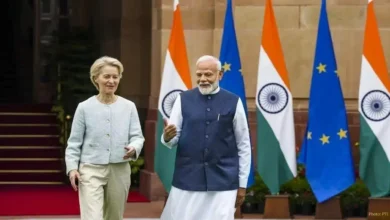
    India is on the brink of finalizing a major trade agreement with the European Union, as highlighted by EU chief Ursula von der Leyen during her address at the World Economic Forum in Davos. She referred to the potential deal as a historic milestone that could create a market encompassing two billion people and contributing nearly a quarter of the global GDP. While acknowledging that further work is required, von der Leyen emphasized the EU’s commitment to strengthening its trade partnerships, particularly with India.

    Upcoming Engagements to Advance Trade Talks

    Ursula von der Leyen will visit India next weekend to further discussions on the proposed trade agreement. This visit is part of a broader strategy to enhance economic ties between Europe and India. Von der Leyen will be a prominent guest at the 77th Republic Day celebrations and will co-chair the 16th India-EU Summit on January 27 with Antonio Luis Santos da Costa, the President of the European Council. This high-level engagement highlights the EU’s intention to prioritize its relationship with India as part of its global trade strategy.

    Significance of the Trade Agreement

    The proposed trade agreement has been described as the “mother of all deals” by both von der Leyen and India’s Commerce and Industry Minister Piyush Goyal. Goyal noted that this agreement would surpass previous deals India has signed, which have mainly involved developed economies. He expressed confidence that the ongoing negotiations, currently in their final phase, would lead to a mutually beneficial outcome. The agreement aims to address the interests of both parties, with Goyal stating that the two sides do not compete directly, creating a win-win situation.

    Progress on Negotiations

    Recent updates indicate significant progress in negotiations between India and the EU. Commerce Secretary Rajesh Agrawal reported that discussions have concluded on 20 of the 24 chapters of the agreement. The aim is to finalize the remaining chapters by January 26, ahead of von der Leyen’s visit. This swift advancement reflects the urgency and importance both sides place on establishing a robust trade framework that could enhance economic collaboration and open new markets for businesses in both regions.

    Disclaimer: Digihunt is not a financial advisor and this is not investment advice.

  • Silver Prices Rise: Metal Hits Over Rs 85,000 in 2026; Is It a Good Time to Invest?

    Silver Prices Rise: Metal Hits Over Rs 85,000 in 2026; Is It a Good Time to Invest?

    Silver has made a significant impact in 2026, witnessing a remarkable increase of over 35%, with prices now approaching Rs 85,000 per kilogram. This surge is primarily due to dwindling supplies and escalating geopolitical tensions involving the United States, Iran, and Greenland. The uptrend in silver really gained traction as MCX silver futures exceeded Rs 3 lakh per kilogram, climbing more than 2.5% in the recent trading session, ultimately settling at Rs 3,19,949 per kilogram. This rise comes in the wake of heightened tensions between the U.S. and the European Union, especially after President Donald Trump’s threats to acquire Greenland and impose tariffs on European goods.

    Market Dynamics and Expert Insights

    Aamir Makda, a commodity and currency analyst at Choice Broking, noted that silver’s price has surged to $94 per troy ounce, a previously considered unattainable level. He attributes this upward trend to a “perfect storm” of industrial scarcity and geopolitical developments. Makda indicated that technical charts suggest potential further upward momentum for silver, with immediate support identified at the 20-day exponential moving average (DEMA) level of Rs 255,100. However, he also warned of early signs of fatigue in the rally, pointing out a bearish Relative Strength Index (RSI) divergence, suggesting that while prices hit new highs, the underlying momentum may be weakening. He advised traders holding long positions to consider taking profits at current levels.

    Consolidation and Future Projections

    Jigar Trivedi, a senior analyst at Reliance Securities, remarked on the market’s potential shift toward a phase of time-based consolidation. While he noted the possibility of short-term consolidation, he stressed that the current political and geopolitical situation could still push prices higher, possibly reaching the psychological threshold of $100 per ounce. Trivedi highlighted that the broader international trend remains bullish, although the risk-reward ratio currently stands balanced at 1:1 following the significant price increases over the last 13 to 14 months. He identified Rs 3,30,000 per kilogram as the next crucial resistance level.

    Investment Strategies and Market Outlook

    From an investment standpoint, the recent price breakout is perceived as part of a long-term structural trend rather than just a transient spike. Justin Khoo, a Senior Market Analyst at VT Market, pointed out that the price movement is backed by supply constraints and robust industrial demand, particularly from sectors such as solar energy, electronics, and electric vehicles. Despite the potential for volatility due to high prices, Khoo recommended that investors focus on strategic positioning rather than chasing record highs. He suggested that tactical profit-taking might benefit short-term traders, while long-term investors should view silver as a hedge against inflation and market uncertainty. He emphasized the importance of disciplined entry and exit strategies in the current market landscape.

    Long-Term Potential and Diversification

    Akshat Garg, head of research and product at Choice Wealth, advised new investors to consider silver exchange-traded funds (ETFs) as part of a diversified multi-asset portfolio to leverage the metal’s structural strengths. He recommended that existing investors maintain their positions, as the underlying support remains sturdy. Garg suggested that new investors allocate 5-10% of their portfolios to silver and gold ETFs, viewing this exposure as a diversification strategy rather than a momentum-driven trade. He encouraged current holders to stay invested through market volatility, citing institutional flows, ETF participation, and long-term fundamentals as ongoing support through 2026. Analysts reiterated silver’s dual role as both a monetary hedge and an industrial commodity, with over half of its demand coming from sectors like solar power and electric vehicles. This positions silver to potentially outperform gold during growth phases while still serving as a protective asset during turbulent times.

    Digihunt is not a financial advisor and this is not investment advice.

  • Budget 2026: Call for Simpler Customs Duties and Quicker Clearance Like GST

    Budget 2026: Call for Simpler Customs Duties and Quicker Clearance Like GST

    As the Union Budget for the financial year 2026-2027 approaches, Indian businesses are urging for significant reforms in the customs duty framework. They advocate for a transformation similar to the Goods and Services Tax (GST) to enhance trade facilitation and streamline dispute resolution processes. Key proposals include rationalizing customs duty rates, reducing the number of duty slabs, and implementing a single-window clearance system for imports and exports. Industry leaders stress the necessity for defined timelines for Authorised Economic Operator (AEO) certification and a formal charter to guide investigations by the Directorate of Revenue Intelligence (DRI).

    Calls for Simplification of Customs Duty Structure

    Industry representatives are pushing for a simpler customs duty structure, which currently consists of eight duty slabs. They propose cutting this down to five or six slabs to ease compliance burdens on businesses. The complexity of the existing system often forces importers and exporters to navigate multiple ministries and departments for the necessary clearances, hindering trade operations. Deloitte India Partner Gulzar Didwania emphasized that the current process is cumbersome and creates significant obstacles for businesses. He highlighted the importance of launching a single-window facility to streamline import-export licensing requirements, thereby enhancing operational efficiency.

    Need for Timely AEO Certification

    Another crucial area of concern is the Authorised Economic Operator (AEO) scheme. Businesses are requesting fixed timelines for obtaining AEO certification, which offers facilitation support from overseas customs authorities. This status is vital for improving efficiency in global trade operations. Didwania noted that while operational guidelines exist for the Directorate General of GST Intelligence (DGGI), a similar framework for the DRI is essential to clarify its investigative processes. Establishing clear timelines and guidelines would not only benefit businesses but also strengthen the overall trade environment in India.

    Addressing Dispute Resolution Challenges

    Dispute resolution has emerged as a significant pain point for the industry, with a staggering 38,014 customs duty cases worth Rs 1.52 lakh crore currently tied up in litigation as of March 2024. EY India Tax Partner Saurabh Agarwal highlighted the need for a Customs Dispute Resolution Scheme to address these pending cases. He suggested that the scheme should focus on issue-wise or year-wise settlements instead of complete resolutions of pending litigations. This approach could unlock stuck revenue and create a more predictable tax environment, which is essential for attracting global investors.

    Expectations for Budget 2026 Amid Global Uncertainty

    As businesses prepare for the upcoming budget, they seek greater predictability and stronger policy support for initiatives like Make-in-India. KPMG Partner Abhishek Jain noted that the current global economic landscape, marked by uncertainty and tariff wars, necessitates rationalized customs duties on key raw materials. Companies are advocating for fewer duty slabs to simplify compliance and a one-time window to resolve legacy disputes. Additionally, they seek expedited approvals for related-party valuations, suggesting that post-clearance risk-based audits could replace the current lengthy processes. These changes are viewed as crucial steps toward improving the ease of doing business and enhancing supply chain efficiency in India.

    Digihunt is not a financial advisor and this is not investment advice.

  • Union Budget 2026: Mobile Firms Seek Relief from China’s Restrictions and Its Importance

    Union Budget 2026: Mobile Firms Seek Relief from China’s Restrictions and Its Importance

    The Indian mobile industry is urging the government to implement significant changes in the upcoming Union Budget aimed at enhancing local manufacturing capabilities. The India Cellular and Electronics Association (ICEA) has outlined a wishlist that includes the reduction of customs duties on essential mobile components and machinery. This request is prompted by recent export restrictions imposed by China, raising concerns regarding India’s reliance on imported manufacturing equipment. Representing major players in the mobile sector, such as Apple, Xiaomi, and Vivo, the ICEA emphasizes the necessity for policy adjustments to cultivate a more self-reliant manufacturing ecosystem.

    Customs Duty Reduction for Mobile Components

    The ICEA advocates for a reduction in customs duties on critical mobile parts, including microphones, printed circuit boards, and wearables. These changes aim to lower production costs for mobile handsets, enhancing their competitiveness in both domestic and international markets. It has been noted that certain specialized machinery crucial for manufacturing mobile phones and lithium-ion cells is currently excluded from existing customs duty exemptions. This exclusion results in increased project costs and hinders the development of comprehensive manufacturing lines. The ICEA argues that these machines are specifically designed for mobile phone production and are essential for completing the manufacturing process.

    Addressing Supply Chain Vulnerabilities

    In light of China’s recent export restrictions on manufacturing machinery, the ICEA highlights that India’s dependence on imported equipment presents a strategic risk. The association recommends that the government extend the zero-duty benefit on capital equipment to encompass all components and assemblies imported for manufacturing. This extension is vital for mitigating supply chain vulnerabilities and reinforcing domestic production capabilities. The ICEA believes that reducing setup costs and expediting the commissioning of manufacturing facilities will not only enhance export competitiveness but also generate job opportunities within the energy-storage sector.

    Rationalizing Tax Structures for Displays and PCBs

    The ICEA has also called for a rationalization of the tax structure for displays used in various devices, such as automotive dashboards. The association proposes a 15% import duty on display assemblies, while exempting components used in their manufacturing from basic customs duties. This change aims to promote local production and decrease reliance on imports. Furthermore, the ICEA seeks a reduction in the import duty on printed circuit board assemblies (PCBA) from 15% to 10%. The organization asserts that such a reduction will not negatively impact domestic producers, as PCBA manufacturing is already well-established in India.

    Impact on Hearables and Wearables Market

    Additionally, the ICEA is advocating for a decrease in the basic customs duty on finished hearables and wearables from 20% to 15%. This adjustment is expected to make imported audio devices more affordable without adversely affecting local manufacturing. The association argues that a moderate reduction aligns with India’s objective of establishing a uniform and moderate peak tariff structure. This shift aims to promote market access, scalability, and affordability, bolstering India’s reputation as a progressive, market-oriented economy. The ICEA’s comprehensive recommendations indicate a concerted effort to fortify the domestic electronics manufacturing ecosystem in response to global challenges.

    Digihunt is not a financial advisor and this is not investment advice.

  • Startup IPOs Surge as Stock Prices Drop: An Overview of Today’s Market

    Startup IPOs Surge as Stock Prices Drop: An Overview of Today’s Market

    Even as a wave of startups rushes to list on Dalal Street, many established companies are facing challenges, with their stock prices falling below initial public offering (IPO) levels. This trend raises concerns about the long-term value these firms can deliver to investors. Notably, several high-profile startups, including Swiggy, FirstCry, Paytm, Ola Electric, and Delhivery, are currently trading below their offer prices. Analysts attribute this decline to market volatility and disappointing growth, which has not met investor expectations.

    Startups Struggle in a Volatile Market

    The recent surge of startups entering the public market has not translated into sustained investor confidence. Data from exchanges and Prime Database shows that nearly ten startups are trading below their IPO prices. Analysts suggest that while market fluctuations contribute to this trend, the primary issue is the lack of robust growth among these companies. Nikunj Doshi from Bay Capital noted that investor disappointment arises from a realization that performance is not aligning with expectations. Many startups have depended on acquisitions to increase their top-line growth, but it remains unclear whether these strategies will positively affect their bottom lines.

    Since 2021, over 30 startups have made their market debuts, spurred by favorable regulatory conditions and appealing public market valuations. This has caused a shift away from larger private fundraising efforts. Following the successful listings of billion-dollar startups like Lenskart, Groww, and Meesho, other companies such as PhonePe, Zepto, Oyo, and Flipkart are gearing up for their own IPOs in 2026.

    Investor Sentiment and Lock-In Periods

    While many recently listed startups show promising performance, analysts warn that their true performance should be closely evaluated six months post-listing. This timeframe is critical as it marks the expiration of lock-in periods for venture capital, private equity, and high-net-worth investors. Once these restrictions lift, a surge in share supply can happen, possibly leading to price corrections. Doshi highlighted that some startups have already seen declines in their stock prices after the six-month mark, indicating that initial excitement may not be sustainable.

    The expiry of lock-in periods is a significant event in the market, allowing shareholders to sell their stakes freely. This increase in available shares can potentially overwhelm the secondary market, making it difficult for prices to maintain stability. Investors are advised to exercise caution in navigating this landscape.

    Changing Valuations for Tech Companies

    Public market valuations for technology-driven businesses have undergone a notable reset from their previous highs. For instance, high-quality Software as a Service (SaaS) companies that once traded at mid-teens revenue multiples are now facing much lower market benchmarks. Mehekka Oberoi, a fund manager at IIFL Fintech Fund, explained that this shift reflects both a compression of multiples and a slowdown in growth rates compared to earlier expectations.

    As the next wave of startups gears up to enter the market, they may need to re-evaluate their valuation strategies, potentially listing at lower valuations than those achieved in previous private funding rounds. This trend underscores the evolving landscape of startup financing and the challenges that await new entrants in the public market.

    Digihunt is not a financial advisor and this is not investment advice.

  • GM Tackles  Billion in Costs as EV Incentives Drop and Emission Rules Relax

    GM Tackles $6 Billion in Costs as EV Incentives Drop and Emission Rules Relax

    General Motors (GM) is encountering substantial financial hurdles, as it anticipates about $6 billion in charges stemming from a decline in electric vehicle (EV) sales. This downturn follows the U.S. government’s decision to cut tax incentives for EV purchases and ease auto emissions standards. Consequently, GM’s shares fell nearly 3% on Friday, reflecting investor apprehension regarding the company’s bold plans for electric vehicle production.

    Financial Impact of EV Sales Decline

    The $6 billion in charges will be incorporated into GM’s fourth-quarter financial results. This comes on the heels of an earlier announcement made in October, where the automaker revealed a $1.6 billion charge for the previous quarter, attributed to similar challenges. The drop in EV sales has led GM, along with other automakers, to reassess their approaches to transitioning to electric power. The clean vehicle tax credit, which offered incentives of up to $7,500 for new EVs and $4,000 for used ones, concluded in September, complicating the electric vehicle market further.

    In its recent filing with the Securities and Exchange Commission, GM clarified that the $6 billion charge comprises about $1.8 billion in non-cash impairments and other non-cash expenses. Additionally, around $4.2 billion is earmarked for supplier settlements, contract cancellation fees, and other related costs. These financial adjustments underscore the struggles GM faces while navigating a rapidly evolving automotive market.

    Shifting Strategies in the Automotive Industry

    Historically, GM has been one of the most ambitious U.S. automakers regarding electric vehicle production. In 2020, the company announced plans to invest $27 billion in electric and autonomous vehicles over five years, significantly upping its previous commitments. GM targeted to ensure that more than half of its North American and Chinese plants could produce electric vehicles by 2030. The automaker also committed to investing nearly $750 million in EV charging networks by 2025.

    However, these ambitious objectives are now under threat due to changing economic and environmental policies between the Biden and Trump administrations. The competitive landscape has also shifted dramatically, with China emerging as a global leader in electric vehicle technology. Chinese manufacturers have increased production and developed an extensive charging infrastructure, posing challenges for U.S. automakers.

    Global Competition and Market Dynamics

    The global electric vehicle market is rapidly evolving, highlighted by companies like China’s BYD surpassing Tesla as the world’s largest EV manufacturer. BYD produced 2.26 million electric vehicles last year, illustrating the fierce competition in this sector. This development emphasizes the challenges GM and other U.S. automakers face as they attempt to keep pace with progress in EV technology and production capabilities.

    In a related move, Stellantis, the parent company of brands like Jeep and Dodge, declared plans to phase out plug-in hybrid electric vehicle (PHEV) programs in North America, starting with the 2026 model year. The company aims to concentrate on more competitive electrified solutions, reflecting a broader trend among automakers to respond to evolving consumer preferences and market demands.

    As GM and its competitors confront these challenges, the future of electric vehicles in the U.S. remains uncertain. The automaker’s capacity to adapt its strategies in response to market dynamics will be pivotal in determining its success in the changing automotive landscape.

    Digihunt is not a financial advisor and this is not investment advice.

  • Gold Price Predictions: Market Insights for January 9, 2025

    Gold Price Predictions: Market Insights for January 9, 2025

    Gold prices are currently under downward pressure, with February futures trading around ₹1,37,800. Jateen Trivedi, VP Research Analyst at LKP Securities, notes that the recent rally seems to be losing momentum, suggesting a potential sell-on-rise strategy for traders. Technical indicators point to resistance levels near ₹1,38,000, prompting market participants to approach trading with caution.

    Current Market Analysis

    Gold prices have recently undergone a noticeable pullback, with February futures on the Multi Commodity Exchange (MCX) hovering around ₹1,37,800. This recovery is viewed as corrective, given the strong resistance in the previous breakdown zone. Technical indicators show that the upward momentum is weakening, making higher price levels vulnerable to renewed selling pressure. The prevailing intraday setup indicates that traders should consider a sell-on-rise strategy within the ₹1,37,800 to ₹1,38,000 range.

    Technical Indicators and Resistance Levels

    The current trading scenario reveals that gold prices are beneath the short-term exponential moving average (EMA) cluster, with EMA 8 failing to hold above EMA 21. This indicates a fragile short-term structure, suggesting that any rallies are likely to be met with selling rather than sustained upward movement. The price recently moved back toward the mid-Bollinger band after testing lower levels, but the upper band near ₹1,38,000 remains a significant resistance point.

    The previous day’s pivot points indicate a resistance zone between ₹1,37,800 and ₹1,38,000, while support levels have been identified at ₹1,36,800 and ₹1,36,400. The inability to sustain above the pivot resistance suggests a bearish bias for the intraday trading session.

    Trading Strategy and Recommendations

    For traders navigating the current gold market, the recommended strategy is to sell on any rise within the ₹1,37,800 to ₹1,38,000 range. A stop-loss should be set at ₹1,39,100, targeting downside movement aimed at ₹1,36,400. Market sentiment remains bearish below ₹1,38,000, with any strength only being confirmed above ₹1,39,100.

    The Relative Strength Index (RSI) currently stands around 60, indicating a short-term recovery but lacking the strength to confirm a trend reversal. Additionally, the Moving Average Convergence Divergence (MACD) has shown a brief positive crossover; however, the flattening histogram bars suggest diminishing bullish momentum, increasing the likelihood of a price rollover from higher levels.

    Digihunt is not a financial advisor and this is not investment advice.