Author: Sumit Rathore

  • Hyderabad’s AM Group to Invest  Billion in 1GW AI Compute Hub in Greater Noida

    Hyderabad’s AM Group to Invest $25 Billion in 1GW AI Compute Hub in Greater Noida

    Energy transition player AM Group (AMG), backed by the founders of Greenko Group, has unveiled plans to set up a pioneering 1 GW high-performance AI infrastructure hub in Greater Noida, Uttar Pradesh. With an investment of $25 billion, this ambitious initiative will cater to global AI workloads and is projected to create thousands of high-skilled jobs while attracting significant foreign direct investment (FDI). The project aligns with the Indian government’s vision for a developed nation by 2047, focusing on the expansion of AI-driven services.

    Phased Development and Job Creation
    The AI infrastructure hub will be developed in phases, with the initial capacity expected to be operational by 2028 and the full 1 GW capacity projected for completion by 2030. This mega project aims to create a local ecosystem that fosters hardware manufacturing, software development, and specialized cooling technologies. The establishment of the hub is anticipated to generate thousands of high-skilled jobs, greatly benefiting the local economy. AMG solidified its commitment to this project through a memorandum of understanding (MoU) signed with Invest UP during the World Economic Forum in Davos.

    Investment in Cutting-Edge Technology
    The infrastructure will consist of approximately 500,000 state-of-the-art high-performance chipsets, making it one of the largest investments in AI infrastructure in India. This initiative aligns with the government’s Viksit Bharat 2047 vision, which seeks to enhance the nation’s AI capabilities. The AI hub will utilize AMG’s renewable energy sources, including wind, solar, and pumped storage, to provide 24/7 carbon-free energy. This commitment to sustainability is a fundamental aspect of the project, ensuring minimal environmental impact.

    Supporting India’s AI Ecosystem
    AMG’s high-performance computing (HPC) capabilities will provide access to chipsets for a wider Indian developer community. This access is intended to expedite the development of AI solutions for both global and domestic markets. As demand for HPC and AI workloads continues to climb in India, AMG aims to efficiently and sustainably fulfill the needs of global hyperscalers, frontier labs, and enterprises. The company emphasizes its vision of democratizing AI, which includes creating an end-to-end value chain from efficient energy use to intelligent tokens that will serve various sectors including healthcare, manufacturing, and gaming.

    A Sustainable Future for AI Infrastructure
    Anil Chalamalasetty, Group Chairman of AM Group, underscored the importance of intentionally evolving the global AI ecosystem. He noted that transforming electron agents into intelligent tokens is a natural extension of AMG’s technology-first approach. Mahesh Kolli, Group President of AM Group, stated that by combining 1 GW of compute capacity with green power solutions, they are establishing the foundation for a sustainable future in global AI infrastructure. Support from the State of Uttar Pradesh further fortifies this initiative, positioning it as a significant development in the AI landscape.

    Digihunt is not a financial advisor and this is not investment advice.

  • GTRI Highlights Key Concerns About India’s Role in Trump’s  Billion ‘Board of Peace’

    GTRI Highlights Key Concerns About India’s Role in Trump’s $1 Billion ‘Board of Peace’

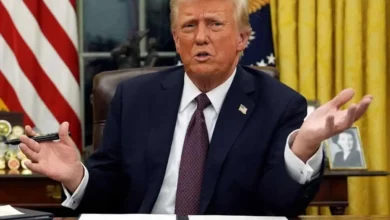
    US President Donald Trump has extended an invitation to India to join the newly established US-led Gaza Peace Board, placing New Delhi in a complex diplomatic situation. This invitation comes as the Gaza conflict enters its third year, raising critical questions about international involvement in the region’s post-war reconstruction. A recent report from the Global Trade Research Institute (GTRI) highlights concerns about the initiative, suggesting it may pose significant risks for India, both strategically and reputationally.

    Concerns Over India’s Participation

    The GTRI report outlines several reasons for India to consider refraining from formal participation in the Gaza Peace Board. A primary concern is the perception that the initiative lacks Palestinian political ownership, potentially rendering outcomes as externally imposed and lacking legitimacy. The report emphasizes that the absence of Palestinian representation casts doubts on the fairness and effectiveness of the proposed reconstruction efforts. Furthermore, it points out that Israel, while not a formal board member, holds de facto veto power over security and implementation, creating an imbalance that could undermine accountability.

    Additionally, the report criticizes the board for bypassing established United Nations frameworks that India has historically supported. This deviation from international norms could jeopardize India’s credibility on the global stage. The US-led structure of the board also raises questions about the future governance, borders, and sovereignty of Gaza, leaving many uncertainties that could complicate the reconstruction process.

    The Implications of the $1 Billion Plan

    The Gaza Peace Board was formally introduced on January 15, 2026, following the announcement of a 20-point redevelopment plan on September 29, 2025. This initiative includes a $1 billion reconstruction package aimed at addressing critical needs such as housing, power, water, sanitation, and job creation. However, the funding is contingent upon security conditions and regional cooperation, which could delay essential humanitarian aid delivery.

    The report warns that linking reconstruction funds to security requirements may hinder timely assistance to those in need. It raises concerns that the financial burden could shift to partner countries without adequately addressing the underlying political issues that have fueled the conflict. Critics argue that this approach could prioritize commercial interests over the rights and needs of the Palestinian people, further complicating the situation on the ground.

    Composition of the Gaza Peace Board

    The Executive Board of the Gaza Peace Board consists of a diverse group of diplomats, politicians, and financiers. Notable members include Nickolay Mladenov, the High Representative for Gaza, US Secretary of State Marco Rubio, and former UK Prime Minister Tony Blair, among others. The board’s composition reflects a blend of political and financial interests, raising questions about the potential prioritization of commercial projects over humanitarian considerations.

    Founding membership invitations have been extended to various countries across multiple regions, including Egypt, Jordan, Turkey, Qatar, the UAE, and Morocco, as well as nations from South America, Asia, and Europe. This broad outreach underscores the international dimension of the initiative while highlighting the complexities and sensitivities involved in garnering support for Gaza’s reconstruction.

    As India weighs its options regarding participation in the Gaza Peace Board, the implications of such a decision will likely resonate beyond the immediate context of the conflict, influencing its diplomatic relations and standing in international affairs.

    Digihunt is not a financial advisor and this is not investment advice.

  • Gujarat Deputy CM Leads Delegation to Meet Business Leaders and Investors at Davos

    Gujarat Deputy CM Leads Delegation to Meet Business Leaders and Investors at Davos

    A delegation from the Gujarat government, led by Deputy Chief Minister Harsh Sanghavi, is preparing to attend the World Economic Forum annual meeting in Davos, Switzerland, from January 19 to 23. The main objective of this visit is to promote the ‘Developed Gujarat @2047’ initiative, which highlights the state’s roadmap for future development. Sanghavi will participate in numerous high-level meetings with global business leaders to attract investments in various sectors such as advanced manufacturing, textiles, and renewable energy.

    Strengthening Gujarat’s Industrial Ecosystem

    At the World Economic Forum, Deputy Chief Minister Harsh Sanghavi will engage in 58 one-on-one meetings with major industrialists and leaders worldwide. This initiative aims to expand employment opportunities and foster industrial growth in Gujarat. As the state’s industries minister, Sanghavi’s focus will include attracting investments in key sectors such as semiconductors, pharmaceuticals, food processing, chemicals, shipping-logistics, and aerospace. The delegation aims to create a robust industrial ecosystem that supports significant job creation for the youth of Gujarat.

    Engagement with Global Corporations

    The Gujarat delegation plans to discuss collaboration with heads of major global corporations, including AP Moller Maersk, Engie, EDF, Johnson Controls, Sumitomo Group, Linde, SEALSQ, and Tillman Global. These meetings will underscore the importance of introducing new technologies in Gujarat and fostering innovation. The state government aims to establish long-term international relationships through these interactions, positioning Gujarat as a crucial player in the global value chain. The focus will be on collaborations that can lead to sustainable development and technological advancements in the region.

    Showcasing Gujarat’s Vision on Global Platforms

    Alongside attracting investments, Sanghavi is set to represent Gujarat’s vision during various keynote sessions at the forum. He is expected to discuss the state’s successful development model on topics such as ‘India in the New Geo-Economic Order,’ ‘Power of Sports: From Glory to Heritage,’ and ‘Energy Transition under the Call to Clean Initiative.’ These discussions will also touch upon critical issues like water security under ‘Mission Water’ and sustainability efforts. By presenting these themes, Gujarat aims to enhance its visibility and influence in global policy discussions.

    Focus on GIFT City and Financial Services

    The delegation will also include senior officials from the International Financial Services Centres Authority (IFSCA), with an emphasis on GIFT City, which is experiencing notable growth in international banking, fund management, and fintech. The GIFT City team will engage in strategic discussions with global players in financial services and multinational corporations. These conversations will explore collaboration opportunities and facilitate global capital flows, positioning GIFT City as a preferred destination for international firms looking to expand their operations in India. The emphasis will be on sustainable finance, emerging technologies, and innovative financial solutions.

    Digihunt is not a financial advisor and this is not investment advice.

  • Nalco to Expand into Rare Earths, Magnesium, and Chromite Under Critical Minerals Initiative

    Nalco to Expand into Rare Earths, Magnesium, and Chromite Under Critical Minerals Initiative

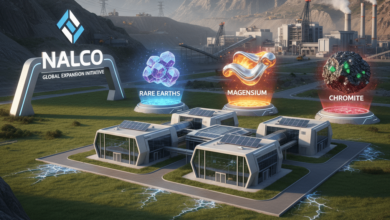
    State-owned National Aluminium Company Ltd (Nalco) is exploring opportunities in the mining of rare earth elements (REEs) as part of its strategy to diversify beyond its traditional focus on bauxite and alumina. The company’s Chairman-cum-Managing Director, Brijendra Pratap Singh, announced that a bid advisor is currently conducting due diligence on domestic auctions for REEs, magnesium, and chromite blocks. This initiative aims to secure critical minerals essential for various industries, including electronics, defense, and renewable energy, amidst India’s push for self-reliance in these vital resources.

    Strategic Shift Towards Rare Earth Elements

    Nalco’s interest in rare earth elements marks a significant shift in its operational strategy. The company recognizes the growing importance of REEs, which are crucial for manufacturing magnets used in wind turbines, electric vehicle (EV) motors, and missile guidance systems. Currently, India relies heavily on imports for these materials, with domestic production being minimal. Singh emphasized that achieving self-reliance in REEs is vital for India’s Atmanirbhar Bharat initiative, especially in light of geopolitical tensions affecting global supply chains, particularly with China, which dominates 80 percent of the global REE market.

    The bid advisor’s role will be to evaluate the viability of potential mines, determine optimal acquisition premiums, and advise on participation in upcoming auctions. Singh confirmed that the advisor will assess whether Nalco should engage in these domestic auctions, which could significantly enhance India’s capacity to produce and utilize REEs.

    Acquisition of Lithium Mine Stake

    In addition to its focus on REEs, Nalco is pursuing a stake in an operational lithium mine in Australia through its joint venture, Khanij Bidesh India Ltd (KABIL). This venture involves partnerships with Hindustan Copper Ltd and Mineral Exploration and Consultancy Ltd, all of which are public sector undertakings under the Ministry of Mines. Acquiring a stake in the lithium mine is seen as a strategic move to secure a guaranteed supply of lithium, essential for manufacturing batteries for electric vehicles and renewable energy technologies.

    Singh noted that the due diligence process for this acquisition is ongoing, with the demand for lithium surging due to India’s ambitious electric vehicle initiatives and commitment to achieving net-zero emissions. By increasing its stake in KABIL from 40 percent to potentially 50 percent, Nalco aims to bolster its position in the critical minerals market and ensure a steady supply of lithium for domestic use.

    Expansion Plans and Operational Priorities

    Looking ahead, Nalco has outlined its expansion plans, focusing on maximizing operational efficiency and customer satisfaction. Singh stated that the company’s top priority is to ensure existing operations run at full capacity, which includes maximizing production volumes and reducing operational costs to enhance competitiveness in the market.

    The company is set to commission its fifth stream refinery by June 2026, which Singh described as a critical milestone. Additionally, Nalco plans to commence operations at the Pottangi bauxite mines around the same time. The next phase of expansion will also involve increasing smelter capacity by 0.5 million tonnes and establishing a 1,080 MW power plant, further solidifying Nalco’s position in the aluminium value chain.

    As a ‘Navratna’ public sector undertaking, Nalco plays a pivotal role in India’s aluminium industry, encompassing bauxite mining, alumina refining, aluminium smelting, and power generation. The company’s strategic initiatives reflect its commitment to adapting to market demands and contributing to India’s economic growth.

    Digihunt is not a financial advisor and this is not investment advice.

  • Trump’s Tariffs on Eight European Countries Affect Global Markets; US Stock Futures Drop

    Trump’s Tariffs on Eight European Countries Affect Global Markets; US Stock Futures Drop

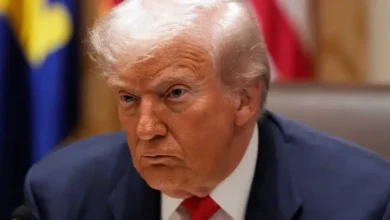
    US stock futures fell on Monday following President Donald Trump’s announcement of potential new tariffs on eight European nations. This situation arises amid escalating tensions regarding the United States’ interest in purchasing Greenland, sparking concerns over a broader trade conflict across the Atlantic. As markets reacted, S&P 500 and Nasdaq futures declined, while investors turned to safe-haven assets such as gold and silver.

    Market Reactions to Tariff Threats
    The announcement of these additional tariffs created significant ripples in financial markets. S&P 500 futures dropped roughly 0.7%, while Nasdaq futures fell by 1.0% during a day characterized by thin trading, as US equity and bond markets were closed for a holiday. The dollar weakened against traditional safe-haven currencies, slipping against both the Japanese yen and the Swiss franc. Amid fears of an escalating trade dispute that could harm global growth and demand, investors increasingly sought safety in gold and silver, which have soared to record highs. Oil prices have also eased, reflecting concerns about potential economic repercussions from ongoing tensions.

    In Europe, market sentiment mirrored the trepidation in the US. The EUROSTOXX 50 and Germany’s DAX futures both fell by 1.1%. The impact was felt in Asian markets as well, with Japan’s Nikkei index declining by 1.0%, and the MSCI’s broad index of Asia-Pacific shares outside Japan slipping by 0.1%. The interconnectedness of global markets is evident as investors respond to the evolving situation.

    Political Implications and Responses
    President Trump has announced plans to impose a 10% import tariff on goods from Denmark, Norway, Sweden, France, Germany, the Netherlands, Finland, and Britain, starting February 1. Should no agreement be reached, these tariffs could escalate to 25% by June 1. Major European Union countries have condemned this tariff threat, calling it an attempt at economic coercion linked to the Greenland issue. In retaliation, the EU is considering measures including tariffs on around €93 billion ($108 billion) worth of US imports, which had been previously approved but were suspended.

    Analysts at Deutsche Bank have pointed out the deep financial connections between Europe and the US, noting that European countries hold about $8 trillion in US bonds and equities—nearly double the amount held by the rest of the world combined. The possibility of European nations repatriating some of these investments could have significant consequences for US financial markets. George Saravelos, the bank’s global head of foreign exchange research, cautioned that capital flow leverage could disrupt markets even more than tariffs.

    Global Economic Outlook
    These ongoing trade tensions are poised to overshadow discussions at the World Economic Forum in Davos, where global leaders, including a significant US delegation led by Trump, will gather. Investors in Asia are keenly awaiting upcoming Chinese economic data, forecasting growth to slow to 4.4% in the December quarter, down from 4.8% previously. This slowdown is attributed to weak domestic demand, despite strong export and manufacturing performance.

    Attention is also on the Bank of Japan’s policy meeting scheduled for Friday. While no interest rate hike is anticipated, policymakers might hint at potential tightening as early as April. Moreover, political uncertainty in Japan is a factor, with Prime Minister Sanae Takaichi expected to dissolve parliament ahead of a February election. In the United States, delayed data on core inflation and consumer spending for November is expected to be released on Thursday, which could influence expectations for future interest rate cuts by the Federal Reserve.

    Currency and Commodity Market Movements
    In currency markets, the euro rose by 0.1% to $1.1613 after an initial decline, while the British pound increased to $1.3387. The dollar decreased by 0.2% against the Swiss franc and 0.3% against the yen. Despite US Treasury cash markets being closed, 10-year futures saw a slight increase as investors sought refuge. Gold prices climbed by 1.5%, reaching $4,664 an ounce, reflecting ongoing demand for secure assets.

    Oil prices also retreated, with Brent crude dropping by 0.5% to $63.84 a barrel and US crude falling by 0.4% to $59.18. Traders remain cautious amid rising tensions in the Middle East, especially with a US Navy aircraft carrier group expected to arrive in the Persian Gulf this week. The blend of geopolitical uncertainties and economic concerns continues to shape market dynamics as investors navigate this complex landscape.

    Disclaimer: Digihunt is not a financial advisor, and this is not investment advice.

  • IMF World Economic Outlook: Global Growth Steady Despite Trade and Geopolitical Issues

    IMF World Economic Outlook: Global Growth Steady Despite Trade and Geopolitical Issues

    Global growth is expected to remain steady, with projections of 3.3% in 2026 and 3.2% in 2027, closely aligning with the estimated 3.3% for 2025. This outlook, detailed in the latest World Economic Outlook Update from the International Monetary Fund (IMF), indicates a slight upward revision for 2026 compared to previous forecasts. However, the report emphasizes that growth momentum varies significantly across different regions and sectors, influenced by factors such as shifting trade policies, geopolitical risks, and strong investments in technology, particularly in artificial intelligence.

    Steady Global Growth Path

    The IMF’s report suggests that world output is projected to grow by 3.3% in 2026 and 3.2% in 2027, reflecting a slight slowdown compared to the expected growth in 2025, though it’s an improvement over earlier forecasts for the coming years. This resilience in the global economy is attributed to favorable fiscal and monetary policies along with the private sector’s adaptability. Despite these encouraging indicators, the report warns that the growth trajectory is uneven across regions, with some areas demonstrating stronger performance than others.

    AI Investment as a Key Tailwind

    A significant factor driving the projected growth is the increased investment in technology and AI, particularly noticeable in North America and parts of Asia. These investments are helping to offset challenges such as trade tensions and declining demand in other sectors. The report notes that the emphasis on technology, particularly artificial intelligence, is opening up new opportunities for growth and innovation. As businesses ramp up their investments in AI, the potential for productivity gains and economic expansion becomes more evident, positively influencing the overall economic outlook.

    Inflation Continues to Cool

    Global inflation is expected to gradually decline, with forecasts showing a decrease from 4.1% in 2025 to 3.8% in 2026 and further to 3.4% in 2027. This trend highlights a broader stabilization in price levels, although the report indicates that risks to the inflation outlook still lean downward. In the United States, the normalization of inflation is predicted to be slower than in other major economies, due to factors like tariff impacts and ongoing cost pressures. The gradual easing of inflation is seen as a positive sign for economic stability, although continuous vigilance is essential to manage potential risks.

    Trade Tensions and Regional Disparities

    Recent truces, such as the US-China pause on tariffs and export controls until November 2026, have alleviated some immediate trade tensions; however, uncertainty remains higher than early 2025 levels. The report highlights robust growth in the US fueled by technology investments, while parts of Europe face challenges related to export weaknesses and manufacturing. In China, growth has moderated because of weak domestic demand, although strong exports provide some support. The differing momentum across regions highlights the complexities within the global economic landscape, where localized issues can significantly affect overall growth trajectories.

    Digihunt is not a financial advisor and this is not investment advice.

  • EU-India Summit: Key Focus on FTA, Defence, Mobility, and EU’s Stance on CBAM and Paris Agreement

    EU-India Summit: Key Focus on FTA, Defence, Mobility, and EU’s Stance on CBAM and Paris Agreement

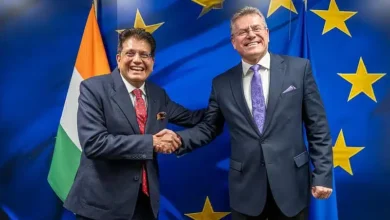
    The upcoming India-EU summit is poised to be a pivotal moment in diplomatic relations, with both entities ready to announce the successful conclusion of negotiations for a free trade agreement (FTA). Although the formal signing will take place later, the summit will also feature the establishment of a security and defense partnership aimed at enhancing industrial collaboration, along with an agreement focused on mobility. This summit will be co-chaired by Indian Prime Minister Narendra Modi and the presidents of the European Council and Commission on January 25, coinciding with India’s Republic Day celebrations.

    Key Outcomes of the Summit

    The India-EU summit is anticipated to produce three crucial agreements that will elevate the partnership between the two parties. The foremost is the completion of FTA negotiations, a long-sought goal for both sides. Although the formal signing of the agreement will follow, the announcement of its completion is regarded as a significant achievement. Additionally, a security and defense partnership will be introduced, aimed at fostering collaboration in defense industries and enhancing mutual trust. This partnership signifies a shared commitment to addressing security challenges, despite existing differences, particularly concerning India’s relationship with Russia.

    The leaders will also endorse a Joint Comprehensive Strategic Agenda for 2026-2030, aligning with the EU’s strategic framework for India released last year. Indian officials have positively received this agenda, as it closely aligns with India’s interests and priorities.

    Contentious Issues in FTA Negotiations

    While progress has been made in FTA negotiations, several contentious issues remain unresolved. A central point of contention is the EU’s Carbon Border Adjustment Mechanism (CBAM), which India perceives as a sovereignty concern that should not be linked with trade agreements. The EU maintains that any agreement must incorporate both parties’ commitments to the Paris Agreement on climate change. Sources suggest that a compromise on CBAM is possible, allowing for a reference to the Paris treaty in the FTA without imposing stringent limitations on India.

    The formal signing of the FTA hinges on completing legal reviews and securing approval from the European Parliament. Both parties are committed to expediting this process, aiming for the FTA to come into effect as soon as possible. The EU has affirmed its unwillingness to exempt India from CBAM, as it applies universally, but discussions are ongoing regarding support for India’s decarbonization efforts.

    Strengthening Security and Defense Ties

    Another critical outcome of the summit is the anticipated security and defense agreement. This partnership signifies a mutual recognition of India and the EU as reliable partners, despite differing views on geopolitical matters. Under this new framework, both parties will commence negotiations for a Security of Information Agreement, which will enable the exchange of classified information and strengthen cooperation in security and defense areas.

    This agreement could facilitate India’s involvement in EU security and defense initiatives, aligning with EU treaty frameworks. The summit discussions are likely to address regional and global security challenges, including the ongoing situation in Ukraine, where the EU is encouraging India to offer humanitarian assistance.

    Mobility Agreement and Broader Implications

    In addition to the FTA and defense agreements, the summit will emphasize a mobility agreement aimed at effectively managing migration. This agreement seeks to tackle illegal migration while promoting balanced talent mobility that aligns with India’s developmental goals and the EU’s economic needs. The EU underscores the importance of a sensible approach to migration, providing benefits for both entities.

    As the summit approaches, discussions are expected to encompass various global issues, including the humanitarian crisis in Ukraine. The EU has emphasized the urgent need for assistance, particularly in supplying power generators and equipment to restore essential services in the war-stricken country. The outcomes of this summit are likely to shape the future of India-EU relations, reinforcing their commitment to tackling critical global challenges.

    Digihunt is not a financial advisor and this is not investment advice.

  • China Files WTO Complaint Against India Over Auto, Battery, and EV Subsidies Amid Trade Issues

    China Files WTO Complaint Against India Over Auto, Battery, and EV Subsidies Amid Trade Issues

    China has escalated its trade conflict with India by requesting the World Trade Organization (WTO) to set up a dispute settlement panel. This request follows unsuccessful bilateral consultations concerning India’s incentive schemes for automobiles, batteries, and electric vehicles. In a formal communication, China stated that discussions held on November 25, 2025, and January 6, 2026, did not result in a resolution, leading to this latest action.

    Details of the Dispute

    The dispute centers on a complaint China lodged in October 2025. China claims that India’s Production Linked Incentive (PLI) schemes for advanced chemistry cell batteries, automobiles, and electric vehicles breach global trade regulations by favoring domestic products over imports. According to China, such measures discriminate against Chinese goods, which they argue contradicts India’s commitments under various international trade agreements, including the Subsidies and Countervailing Measures (SCM) Agreement and the General Agreement on Tariffs and Trade (GATT) 1994.

    In its complaint, China specifically mentions three programs: the Production Linked Incentive scheme, the National Programme on Advanced Chemistry Cell (ACC) Battery Storage, and the PLI Scheme for the Automobile and Auto Component Industry. While these programs are designed to encourage local manufacturing, they have raised concerns in Beijing regarding their alignment with WTO rules.

    WTO Process and Implications

    Seeking consultations is the first step in the WTO dispute resolution process. If these consultations do not lead to a satisfactory resolution, the complainant can request a panel to review the matter. China’s request for a panel will be discussed at the next Dispute Settlement Body meeting, scheduled for January 27 in Geneva. This development could markedly increase trade tensions between the two nations, both members of the WTO.

    If the panel process is initiated, it may take several months to reach a conclusion, potentially affecting ongoing trade negotiations and the economic relationship between India and China, which are already under strain.

    Trade Dynamics Between India and China

    India and China share a complex trading relationship, with China being India’s second-largest trading partner. However, the trade balance significantly favors China. In the fiscal year 2024-25, India’s exports to China fell by 14.5% to USD 14.25 billion, while imports increased by 11.52% to USD 113.45 billion, resulting in a trade deficit of USD 99.2 billion.

    China’s request for a WTO panel comes at a time when it is aiming to broaden its electric vehicle (EV) market internationally. Chinese manufacturers, such as BYD, are investigating opportunities in Asia and Europe, despite facing challenges like a 27% tariff on EV imports imposed by the European Union. This situation adds further complexity to the ongoing trade dispute.

    India’s Response and Policy Measures

    In light of the challenges posed by international competition, India has implemented various policy measures to bolster domestic manufacturing. The government approved the PLI ACC Battery Storage scheme in May 2021, allocating Rs 18,100 crore for its implementation. This was followed by the PLI scheme for automobiles and auto components in September 2021, which received a budgetary allocation of Rs 25,938 crore. Additionally, in March 2024, India launched a policy to attract global EV manufacturers to set up production facilities within the country.

    These initiatives underscore India’s commitment to enhancing its manufacturing capabilities and reducing dependence on imports. However, the ongoing trade dispute with China could complicate these efforts as both nations navigate the complexities of global trade dynamics.

    Digihunt is not a financial advisor and this is not investment advice.

  • Indian Firms Gear Up to Manage Risks from Sanctions

    Indian Firms Gear Up to Manage Risks from Sanctions

    A shifting geopolitical landscape and ongoing global supply chain disruptions are compelling Indian companies to reassess their risk management strategies. Sanctions risk has emerged as a significant concern, pushing businesses to seek guidance from legal and accounting firms to navigate its complex implications. Experts emphasize that sanctions exposure is now a critical governance issue, affecting cash flows, vendor relationships, financing, and corporate reputation.

    Sanctions Risk: A Growing Concern

    In today’s interconnected world, sanctions risk is no longer a mere compliance issue but a central concern for businesses operating globally. Tarun Bhatia, regional managing director and co-head of Asia Pacific investigations at Kroll, highlights that the implications of sanctions extend beyond financial penalties. Companies must prioritize sanctions compliance to safeguard their operational licenses, reputations, and long-term value. He stresses that leaders must proactively identify and assess sanctions risks, implement robust compliance frameworks, and monitor potential breaches. Failure to do so can lead to severe consequences, including regulatory enforcement actions, reputational damage, financial penalties, and even criminal liability.

    The recent imposition of new restrictions by the United States on countries like Venezuela, alongside existing sanctions on Russia and North Korea, has further complicated the compliance landscape for globally connected firms. Indian companies must remain vigilant, as even indirect transactions involving U.S. dollars can attract scrutiny from U.S. authorities, regardless of whether an American entity is involved.

    Legal and Financial Implications

    The impact of sanctions is being felt across various sectors, with many Indian firms experiencing payment delays or freezes due to their connections with sanctioned entities. Legal experts report an uptick in inquiries from domestic companies seeking advice on how to navigate these challenges. Manavendra Mishra, a partner at Khaitan & Co, emphasizes the need for proactive measures. He warns that the repercussions of sanctions are becoming increasingly apparent, urging companies to actively monitor their operations, recalibrate supply chains, and establish comprehensive sanctions standard operating procedures (SOPs).

    The complexities of sanctions compliance are underscored by the fact that the U.S. dollar remains the primary currency for international trade. As a result, corporations cannot afford to overlook the risks associated with U.S. sanctions. Suveer Khanna, partner and head of forensic services at KPMG India, stresses the importance of oversight from Indian boards with U.S. connections. He asserts that these boards must provide essential leadership to help their organizations navigate the potential penalties associated with sanctions violations.

    Strategies for Mitigating Sanctions Risk

    To effectively manage sanctions risk, companies must adopt a multifaceted approach. This includes conducting thorough risk assessments to identify potential vulnerabilities within their operations and supply chains. Implementing robust compliance frameworks is essential for ensuring that all employees understand the importance of adhering to sanctions regulations. Regular training sessions can help staff recognize red flags and respond appropriately to potential sanctions-related issues.

    Moreover, organizations should establish clear communication channels with legal and financial advisors to facilitate timely responses to any sanctions-related inquiries. By fostering a culture of compliance and vigilance, companies can better protect themselves from the adverse effects of sanctions. This proactive stance not only safeguards their reputations but also enhances their ability to operate effectively in a complex global marketplace.

    As the geopolitical landscape continues to evolve, Indian companies must remain agile and informed. By prioritizing sanctions compliance and risk management, they can navigate the challenges posed by an increasingly volatile environment and secure their positions in the global economy.

    Digihunt is not a financial advisor and this is not investment advice.

  • AI Essential for Businesses and Governments, Global Expert Predicts India’s Edge

    AI Essential for Businesses and Governments, Global Expert Predicts India’s Edge

    Embracing artificial intelligence (AI) has become essential for survival in today’s fast-paced world, according to Jack Hidary, CEO of SandboxAQ. Speaking at the World Economic Forum (WEF) Annual Meeting, Hidary emphasized that businesses, governments, and individuals must adopt AI technologies or risk obsolescence. He highlighted the urgency of AI integration across various sectors, suggesting that those who fail to adapt will inevitably fall behind. His insights come as he prepares to release a book titled “Embrace AI or Die,” which aims to underscore the critical need for AI adoption beyond mere content generation.

    The Imperative of AI Adoption

    Jack Hidary articulated a stark message at the WEF: companies that embrace AI will thrive, while those that do not will face extinction. This perspective reflects a significant shift in how businesses view technology. Hidary, who leads SandboxAQ—a company specializing in AI and quantum technologies—believes that the current phase represents a pivotal moment for industries worldwide. He noted that AI is no longer a luxury but a necessity for business survival. The urgency of this transition is particularly pronounced in sectors like healthcare, where AI can dramatically reduce the time required for drug discovery, potentially shortening timelines for diseases such as cancer and Alzheimer’s from over a decade to mere months.

    AI’s Role in India’s Economic Landscape

    Hidary pointed out India’s unique position in the global landscape, given its population of 1.4 billion. He stressed that for India to maintain its competitive edge, it must fully embrace AI technologies. The CEO highlighted the importance of AI in various sectors, including energy and cybersecurity. In energy, AI-powered catalysts can enhance the conversion of oil and gas into new energy products, providing a significant advantage to companies that adopt these technologies. Furthermore, cybersecurity has emerged as a critical concern for India, especially for major tech firms like Infosys and Wipro, which manage vast amounts of sensitive data. Hidary emphasized that robust cybersecurity measures are essential for protecting national infrastructure and ensuring the safety of both federal and state operations.

    Transforming Intellectual Property in India

    Hidary also discussed the potential for a paradigm shift in India’s pharmaceutical sector, where many companies currently rely on intellectual property developed abroad. He argued that there is a significant opportunity for Indian firms to create their own intellectual property domestically. By leveraging SandboxAQ’s AI-driven molecular design tools, Indian companies could transition from being consumers of IP to creators of their own. This shift could not only enhance the country’s economic standing but also foster innovation within its borders. Hidary’s vision includes a future where Indian enterprises lead in developing new medicines and technologies, thereby contributing to a more self-sufficient economy.

    SandboxAQ’s Focus on Real-World Applications

    While many AI tools focus on digital content creation, Hidary emphasized that SandboxAQ is dedicated to addressing real-world challenges. The company’s efforts are concentrated on sectors such as physics, chemistry, and materials science, which are crucial for driving tangible advancements in industries that constitute 80 percent of India’s economy. By collaborating closely with both industry leaders and government entities, SandboxAQ aims to facilitate significant transformations that will benefit the broader economy. Hidary’s commitment to applying AI in practical settings underscores the potential for technology to revolutionize traditional industries and enhance overall productivity in India.

    Digihunt is not a financial advisor and this is not investment advice.