Category: Business

Business News: Get latest stock share market news, financial news, economy news, company news, politics news, India news, breaking news, Indian economy news.

  • Is Aadhaar Mandatory For Getting A Mobile SIM?

    Is Aadhaar Mandatory For Getting A Mobile SIM?

    UIDAI is a statutory authority established under the provisions of the Aadhaar Act, 2016. (Representative image)

    As per the Department of Telecommunications (DoT) guidelines, you can register up to nine mobile numbers under your name.

    Aadhaar is one of the most crucial documents for verifying an individual’s identity in India. It serves as a unique 12-digit identification number that is linked to an individual’s biometric and demographic data. Aadhaar is essential for various official purposes, including accessing government services, filing taxes, opening bank accounts, applying for passports, and obtaining mobile SIM cards. Its widespread use helps streamline administrative processes and ensures transparency and efficiency in public service delivery.

    Is Aadhaar Mandatory For Mobile Connection?

    As of now, Aadhaar is not mandatory for getting a mobile SIM in India. However, it is one of the accepted identity proofs for the Know Your Customer (KYC) process.

    According to the information available on the official website of UIDAI, Aadhaar is not mandatory for obtaining a mobile connection. However, under the amendments to the Telegraph Act, 1885, telecom users may voluntarily use their Aadhaar number as a KYC document along with authentication for getting a new SIM card.

    For your safety and the security of the nation, it is recommended to verify the identity of all mobile subscribers using a reliable identifier like Aadhaar.

    This helps prevent misuse, as many criminals and terrorists obtain SIM cards using fake identities or in the names of unsuspecting individuals to commit fraud and other crimes.

    When a mobile number is verified and linked to Aadhaar, it becomes easier to track down fraudsters, criminals, and terrorists, ensuring they are identified and brought to justice.

    The UIDAI has clarified that no entity, including mobile phone companies, is allowed to store or use your biometrics collected during Aadhaar verification. Once you place your finger on the fingerprint sensor, your biometric data is immediately encrypted and securely transmitted to the UIDAI for verification purposes.

    How Many SIM Cards Are Linked to Your Aadhaar?

    As per the Department of Telecommunications (DoT) guidelines, you can register up to nine mobile numbers under your name.

  • RBI Governor Asks Banks to Strengthen Liquidity Buffer, Stay Alert on Social Media

    RBI Governor Asks Banks to Strengthen Liquidity Buffer, Stay Alert on Social Media

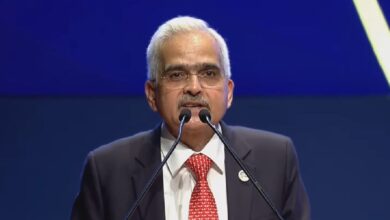
    RBI Governor Shaktikanta Das. (File photo)

    The feasibility of expanding RTGS (real-time gross settlement) to settle transactions in major trade currencies such as dollar and euro can be explored, says RBI Governor Shaktikanta Das.

    RBI Governor Shaktikanta Das on Friday asked banks to strengthen their liquidity buffer to handle any unfavourable situation and stay alert in social media space. He also said the feasibility of expanding RTGS (real-time gross settlement) to settle transactions in major trade currencies such as the dollar and euro can be explored.

    He also said the Central Bank Digital Currency has the potential to facilitate efficient cross-border payments.

    In his keynote address at the conference on ‘Central Banking at Crossroads’, Das said, “Remittances are the starting point for many emerging and developing economies, including India, to explore cross-border peer-to-peer (P2P) payments. We believe there is immense scope to significantly reduce the cost and time for such remittances.”

    He added that the feasibility of expanding real-time gross settlement (RTGS) to settle transactions in major trade currencies such as dollar. Euro and Pound can be explored through bilateral or multilateral arrangements.

    Das also said divergence of monetary policies across the world is leading to volatility in capital flows and exchange rates. Today’s global economy is more integrated than ever before.

    The RBI Governor also raised concerns over misuse of Artificial Intelligence in the banking space saying it could lead to more cyber attacks and data breaches.

    “Banks and other financial institutions must put in place adequate risk mitigation measures against all these risks. In the ultimate analysis, banks have to ride on the advantages of AI and Bigtech and not allow the latter to ride on them,” he said.

  • Hyundai IPO to Open Tomorrow: Should You Apply? Check Recommendations, Price, Lot Size

    Hyundai IPO to Open Tomorrow: Should You Apply? Check Recommendations, Price, Lot Size

    Hyundai IPO: Hyundai Motor India Ltd (HMIL), the Indian arm of South Korean automaker Hyundai, is set to launch its initial public offering (IPO) for public subscription on Tuesday, October 15. The Rs 27,870.2-crore IPO, which is a complete offer-for-sale (OFS) where the company’s South Korean parent will be diluting some of the stake, will be closed on October 17. Should you apply? Here’s everything you need to know:

    Though the IPO will remain opened for public between October 15 and October 17, anchor investors can submit bids on October 14. The share allotment will take place on October 18, while Hyundai Motor India’s shares will be listed on BSE and NSE on October 22.

    It is India’s biggest IPO comfortably surpassing LIC’s Rs 21,000-crore IPO, which was until now the biggest IPO in the country’s history.

    Hyundai Motor India IPO: Price Band and Lot Size

    The price band of the much-awaited IPO has been fixed in the range of Rs 1,865 to Rs 1,960 per share.

    Investors can bid for the IPO for a minimum of 7 equity shares and in multiples of 7 equity shares thereafter.

    Hyundai Motor India IPO GMP Today

    According to market observers, unlisted shares of Hyundai Motor India Ltd are trading Rs 65 higher in the grey market than its issue price. The Rs 65 grey market premium or GMP means the grey market is expecting a 3.32 per cent listing gain from the public issue. The GMP is based on market sentiments and keeps changing.

    ‘Grey market premium’ indicates investors’ readiness to pay more than the issue price.

    Hyundai Motor India IPO: Analysts’ Recommendations

    This IPO marks a significant milestone for the Indian auto industry, as it is the first automaker’s initial share sale in over two decades, following Japanese automaker Maruti Suzuki’s listing in 2003. Most brokerages have given a ‘buy’ ratings to the IPO.

    Hyundai Motor India IPO recommendations from various brokerages.

    Giving a ‘Buy’ recommendation, Bajaj Broking in its IPO note said, “For the last three fiscals, the company has reported an average EPS (earning per share) of Rs 62.56, and an average RoNW (return on net worth) of 39.11 per cent. The issue is priced at a P/BV (price-to-book value) of 13.11 based on its NAV (net asset value) of Rs 149.52 as of June 30, 2024, as well as post-IPO equity capital since this is a secondary issue.”

    If one attributes FY25 annualised super earnings to its post-IPO fully diluted paidup equity capital, then the asking price is at a price-to-earning (P/E) of 26.73, and based on FY24 earnings, the P/E stands at 26.28, it said.

    “The issue relatively appears fully priced, but the company is poised for bright prospects post completion of its ongoing expansions,” said Bajaj Broking.

    Hyundai Motor India reported profit after tax (PAT) margins of 6.05 per cent (FY22), 7.67 per cent (FY23), 8.50% (FY24), 8.48% (Q1-FY25), and RoCE (return of capital employed) margins of 20.37 per cent, 28.75 per cent, 62.90 per cent, 13.69 per cent for the referred periods, respectively.

    Another brokerage Master Capital Services in its IPO note said, “Hyundai’s IPO offers potential value growth by expanding investment prospects in the underdeveloped Indian auto market.”

    Another brokerage LKP Securities also recommended a ‘subscribe for long term’.

    “We believe it (Hyundai Motor India IPO) is the second best player to play as a proxy to the Indian PV (passenger vehicle) theme along with the likes of Maruti Suzuki. The company has about 15 per cent market share on the back of 68 15 per cent share coming from the SUVs, while more than 20 per cent share coming from exports. Its revenues are growing along with the industry in India and have strong return ratios as well. Its EBITDA margins at 13.8 per cent in Q1 FY25 are best among the industry. The current capacity utilisation of HMI’s plants is nearly 100 per cent, due to which in near future the company may not be able to cater to the demand,” LKP stated.

    However, since the PV industry is slightly in a slow lane currently, this may augur well for the company, as HMI is expanding its capacity by 30 per cent in the next 2 to 3 years. With new model launches (4 in mid-term, including the new Creta EV), HMI should give a strong fight to its rivals. At the upper end of the price band, on FY 24 earnings, the stock should trade at 26x times which is a fair value as compared to its closest peer Maruti Suzuki (29x FY 24 earnings). “Therefore, on all favourable parameters, we assign a SUBSCRIBE rating on the stock. We recommend investing in this stock over the long term for higher returns,” LKP said.

    Saji John, senior research analyst at Geojit Financial Services, said, “Hyundai’s impressive financial performance and premium product mix, especially in the SUV segment, could alter the competitive landscape in the listed space. This could force other automakers to innovate and improve their offerings to build investors’ confidence. Investors might reallocate their portfolios based on Hyundai’s perceived growth potential and valuation, which could put downward pressure on its competitors’ share price.”

    Hyundai’s emphasis on innovation, particularly in the EV sector, strategically places it to gain a larger market share and command higher prices. With the growing consumer preference for EVs, Hyundai’s cutting-edge and competitive models are likely to draw more buyers. The company’s robust brand image and loyal customer base, especially in the SUV and premium car markets, could further diminish Maruti’s market share and sales. Additionally, Hyundai’s strong reputation for quality and safety is a significant factor in attracting customers, John added.

    “Hyundai’s IPO being the first major auto IPO in India in over two decades could attract significant global investor interest. This influx of foreign investment could further enhance the sector’s valuation. The company’s portfolio expansion and manufacturing capabilities highlight the growth potential and investment in the automotive market. The increased competition and innovation driven by Hyundai’s enhanced financial strength post-IPO could push other automakers to reassess their growth potential and market positioning, positively re-rating the sector. Conversely if the listing has been perceived as overvalued then it can negatively impact,” John said.

    Mirae Asset Capital Markets in its note said, “On financial metrics, HMIL exhibits superior operating margins relative to its closest competitor. At the upper price band of INR 1,960, HMIL is priced at a PE of 26.3x FY24 EPS, in comparison to Maruti Suzuki Ltd., which trades at 30.8x FY24 EPS.”

    Hyundai Motor India IPO: More Details

    Hyundai Motor India commenced operations in India in 1996 and currently sells 13 models across segments.

    In its draft papers, Hyundai Motor India said, “Further, our Company expects that listing of the Equity Shares will enhance our visibility and brand image and provide liquidity and a public market for the Equity Shares in India.”

    Hyundai set up its India operations in 1996, starting off with the Santro hatchback, once its most sold car. Hyundai holds India’s no.2 carmaker spot, coming in behind Maruti Suzuki. It currently has a roughly 15% share in the country’s competitive car market. It sold 614,721 cars in India and exported 163,155 units in the year to March 2024

    Hyundai has one factory outside of Chennai in southern Tamil Nadu state, also dubbed the Detroit of Asia. The factory has a capacity of 824,000 units per year and is running at a utilisation rate of 94 per cent, leaving little room for growth that would help compete with Maruti Suzuki.

    Hyundai aims to reach production of about 1 million units a year with the acquisition of a former General Motors plant in western Maharashtra state. The plant is expected to start operations only by the second half of the year to March 2026.

    Hyundai has 1,377 dealers across India. In India, the carmaker sells 13 models, with the ‘Creta’ and ‘Venue’ sport utility vehicles as well as the ‘Grand i10 Nios’ hatchback among its top-selling models.

    Hyundai’s current factory is also a key export hub, which manufactures cars that are shipped to South Africa, the Middle East as well as Latin America.

    Citi, HSBC Securities, JP Morgan, Kotak Mahindra Capital and Morgan Stanley are the investment banks advising on the transaction and law firm Shardul Amarchand Mangaldas is the company counsel. Cyril Amarchand Mangaldas is the banks’ counsel and Latham and Watkins is acting as the international counsel.

  • Stocks Markets Updates: Sensex, Nifty 50 Trade High On Pre-open

    Stocks Markets Updates: Sensex, Nifty 50 Trade High On Pre-open

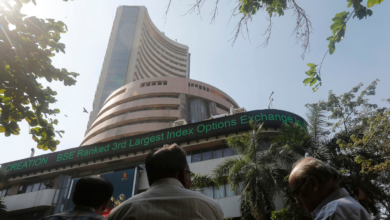
    The Indian stock market indices, Sensex and Nifty 50, are expected to open higher on Monday, following gains in global markets. Gift Nifty trends suggest a mildly positive start for the Indian benchmark index.

    Gift Nifty trades around the 25,085 level, a premium of approximately 35 points over the previous close of Nifty futures.

  • Stocks to Watch: Reliance Industries, Hindustan Aeronautics, Bajaj Housing, Avenue Supermarts and More

    Stocks to Watch: Reliance Industries, Hindustan Aeronautics, Bajaj Housing, Avenue Supermarts and More

    On October 14, market participants will focus on several key events, including the September quarter earnings of major companies along with Hyundai’s upcoming IPO. Global factors such as US retail sales, the ECB interest rate decision, China’s Q3 GDP data, and oil price fluctuations will also play a significant role.

    Indian markets are expected to open with a slight upward trend, as indicated by GIFT Nifty futures. Here are some of the stocks likely to be in focus today:

    Reliance Industries: The company is set to release its Q2 earnings report after market hours on Monday, October 14. Investors will also be looking for any announcements regarding the record date for its bonus share issue.

    Wipro: The company’s board is scheduled to meet on October 16 to consider a bonus share issue. Wipro is notable for being the Nifty constituent with the most bonus issues to date.

    Bajaj Housing Finance: The lock-in period for shareholders expires on Monday, October 14, which will allow 12.6 crore shares (equivalent to 2% of the company’s outstanding equity) to become tradable. However, the end of the lock-in period doesn’t necessarily mean all these shares will be sold on the open market.

    Hindustan Aeronautics: Recently elevated to Maharatna status by the Finance Ministry, making it the 14th such company in India.

    Avenue Supermarts: The company reported a 5.8% rise in net profit for Q2, reaching Rs 659.6 crore, with revenue increasing by 14.4% to Rs 14,444.5 crore. However, its EBITDA margin narrowed by 40 basis points to 7.6% compared to 8% last year.

    Ola Electric: The company has come under scrutiny by the Automotive Research Association of India (ARAI) due to its pricing practices for the S1 X 2 kWh model. ARAI raised concerns about the company failing to notify about a price reduction before its ‘BOSS’ sale, which could impact its eligibility for government subsidies.

    Disclaimer: The views and investment tips by experts in this digihunt.com report are their own and not those of the website or its management. Readers are advised to check with certified experts before making any investment decisions.

  • Petrol, Diesel Fresh Prices Announced: Check Rates In Your City On October 14

    Petrol, Diesel Fresh Prices Announced: Check Rates In Your City On October 14

    Petrol and diesel prices on October 14.

    Petrol Diesel Price Today In India. Check city-wise rate table now

    Petrol, Diesel Prices Today On October 14, 2024: Every day at 6 a.m., oil marketing companies (OMCs) update petrol and diesel prices, providing consistency despite the volatility of these commodities. These adjustments reflect changes in global crude oil prices and fluctuations in foreign exchange rates, ensuring consumers stay informed about the latest fuel costs.

    Petrol Diesel Price Today In India (Check city-wise rate table below)

    Check city-wise petrol and diesel prices on October 14

    City Petrol Price (Rs/litre) Diesel Price (Rs/litre)
    Delhi 94.72 87.62
    Mumbai 103.44 89.97
    Chennai 100.75 92.56
    Kolkata 104.95 91.76
    Noida 94.81 87.93
    Lucknow 94.65 87.76
    Bengaluru 102.86 88.94
    Hyderabad 107.41 95.65
    Jaipur 104.88 90.36
    Trivandrum 107.25 96.13
    Bhubaneswar 100.97 92.46

    In India, fuel prices have remained steady since May 2022, following a reduction in fuel taxes by the central government and several states.

    Fuel retail prices are adjusted by OMCs daily at 6 am based on the global price of crude oil. The government oversees fuel prices through excise tax, base pricing, and price caps.

    Factors Affecting Petrol And Diesel Prices In India 

    In India, petrol and diesel prices are influenced by several factors, including freight charges, value-added tax (VAT), and local taxes, resulting in varying rates across different states.

    Crude oil price: The primary raw material for the production of petrol and diesel is crude oil; as such, its price directly influences the ultimate cost of these fuels.

    The exchange rate between the Indian rupee and the US dollar: As a major importer of crude oil, India’s petrol and diesel prices are also influenced by the exchange rate between the Indian and US dollar.

    Tax: Various taxes on petrol and diesel are imposed by both the central and state governments. These taxes may differ across states, exerting a notable influence on the ultimate prices of petrol and diesel.

    The cost of refining:

    The final price of petrol and diesel is additionally influenced by the expenses incurred in refining crude oil into these fuels. The refining process can be costly, and the refining expenses may fluctuate based on factors like the type of crude oil utilised and the refinery’s efficiency.

    The demand for petrol and diesel: The demand for petrol and diesel can also affect their prices. If demand for these fuels increases, it can lead to higher prices.

  • USISPF’s ‘India Leadership Summit 2024’ To Deepen Economic, Tech Ties

    USISPF’s ‘India Leadership Summit 2024’ To Deepen Economic, Tech Ties

    The summit offers a vital platform to strengthen the dynamic strategic partnership between Washington and New Delhi. (Representative image)

    The day-long summit on October 14 also aims to bolster defence ties, promote clean energy and secure a free and open Indo-Pacific.

    In a bid to enhance bilateral trade, supply chains, semiconductor investment, AI and next-gen technologies, the US-India Strategic Partnership Forum (USISPF) is set to host its annual ‘India Leadership Summit 2024′ in the national capital on Monday (October 14).

    The summit follows on the heels of Prime Minister Narendra Modi’s successful recent visit to the US for the Quad Leaders’ Summit and the United Nations General Assembly (UNGA).

    The day-long summit also aims to bolster defence ties, promote clean energy and secure a free and open Indo-Pacific.

    “This is India’s century and I am excited about the possibilities that lie ahead as we work closely with Indian leaders to build a shared and prosperous future for both nations,” said John Chambers, Chairman of USISPF.

    The summit offers a vital platform to strengthen the dynamic strategic partnership between Washington and New Delhi.

    According to a USISPF statement, the summit will feature sessions with prominent leaders including Union Ministers Piyush Goyal, Dharmendra Pradhan and Jyotiraditya Scindia, among other key officials.

    “This summit provides a unique platform for industry and government leaders from both countries to come together for meaningful dialogue. Our aim is to deepen economic ties and explore collaborative solutions that will strengthen the strategic partnership between Washington and New Delhi,” said Mukesh Aghi, President and CEO of USISPF.

    The summit will delve into strategies for fortifying India’s manufacturing economy, as Washington and New Delhi collaborate on rebuilding and realigning global supply chains.

    “The partnership between the United States and India has never been stronger. As two of the world’s leading democracies, we have the unique opportunity to co-create the next generation of technologies and fortify our bilateral ties across critical sectors such as digital transformation, clean energy, and defence,” said Chambers.

    (This story has not been edited by digihunt staff and is published from a syndicated news agency feed – IANS)

  • SBI Plans to Raise Threshold for Instant MSME Loans, Empowering Small Businesses

    SBI Plans to Raise Threshold for Instant MSME Loans, Empowering Small Businesses

    Apart from a vast branch network, SBI reaches its customers through 65,000 ATMs and 85,000 business correspondents.

    To ensure adequate credit availability to the MSME sector, SBI is planning to enhance the threshold under the instant loan scheme from the existing Rs 5 crore.

    To ensure easy and adequate credit availability to the MSME sector, the State Bank of India (SBI) is planning to enhance the threshold under the instant loan scheme from the existing Rs 5 crore.

    ‘MSME Sahaj – End to End Digital Invoice Financing’, provides solutions ranging from applying for the loan, documentation and disbursement of the sanctioned loan within 15 minutes, without any manual intervention.

    “We have, last year, introduced a business rule engine based, data-based assessment of the credit limits up to Rs 5 core. Anybody walking into our MSME branch has to give only their PAN and approval for sourcing GST data, we can give approval in 15-45 minutes,” SBI Chairman C S Setty told PTI in an interview.

    Simplification of the MSME credit is something that the bank is emphasising on and making lending cash flow based backed by the CGTMSE guarantee, he said.

    This reduces the need for collateral, which would enable a lot of people to come into the formal MSME borrowing system, he said.

    “We still have a large number of MSME customers accessing the informal credit. We would like to bring them to the banking fold,” he said.

    As far as network expansion is concerned, Setty said SBI is planning to open 600 branches across the country in the current financial year.

    SBI has a network of 22,542 branches across the country as of March 2024.

    “We have strong branch expansion plans… this would be mainly focused on emerging areas. A lot of residential colonies are not covered by us. Around 600 branches is something we are planning in the current year,” he said.

    Apart from a vast branch network, SBI reaches its customers through 65,000 ATMs and 85,000 business correspondents.

    “We serve about 50 crore customers and we take pride in saying that we are the banker to every Indian, and, more importantly, to every Indian family,” he said.

    He also said he will endeavour to transform SBI into the best and the most valued bank not only from a shareholder point of view but for every stakeholder who deals with the lender.

    “It could be my customers, it could be our shareholders, it could be the larger ecosystem — the society, the institutional framework — all the stakeholders should be saying that this is the best bank to deal with,” he added.

    MSME Sahaj

    MSME Sahaj is a web-based digital solution designed to provide business loans for MSMEs through invoice financing.

    The platform leverages a data-driven credit assessment engine to offer a seamless process, from the loan application and documentation to the disbursement of the sanctioned amount, all within 15 minutes.

    The system also automates loan closure on the due date, ensuring efficient management without manual intervention.

    With MSME Sahaj, customers can access finance of up to Rs 1 lakh against their GST-registered sales invoices in under 15 minutes.

  • FPIs Take Out Rs 58,711 Crore From Equities In October On Geopolitical Crisis, Strong Chinese Stocks

    FPIs Take Out Rs 58,711 Crore From Equities In October On Geopolitical Crisis, Strong Chinese Stocks

    According to the data, FPIs made a net withdrawal of Rs 58,711 crore from equities between October 1 and 11. (Representative image)

    Foreign investors turned net sellers in October, withdrawing shares worth Rs 58,711 crore in month so far owing to escalating conflict between Israel and Iran

    Foreign investors turned net sellers in October, withdrawing shares worth Rs 58,711 crore in the month so far owing to the escalating conflict between Israel and Iran, a sharp rise in crude oil prices, and the strong performance of the Chinese market.

    The outflow came following a nine-month high investment of Rs 57,724 crore in September.

    Since June, Foreign Portfolio Investors (FPIs) have consistently bought equities, after withdrawing Rs 34,252 crore in April-May. Overall, FPIs have been net buyers in 2024, except for January, April, and May, data with the depositories showed.

    Looking ahead, global factors such as geopolitical developments and the future direction of interest rates will play a crucial role in determining the flow of foreign investments into the Indian equity markets, Himanshu Srivastava, Associate Director, Manager Research, Morningstar Investment Research India, said.

    According to the data, FPIs made a net withdrawal of Rs 58,711 crore from equities between October 1 and 11.

    “Escalating conflicts, particularly in the Middle East between Israel and Iran, have increased market uncertainty, leading to risk aversion among global investors. FPIs have become cautious and pulling out money from emerging markets,” Vinit Bolinjkar, Head of research at Ventura Securities, said.

    The geopolitical crisis has also led to a sharp rise in Brent crude oil prices from USD 69 per barrel on Sep 10 to USD 79 per barrel on Oct 10, which poses inflationary risks and increases the fiscal burden for India, he added.

    V K Vijayakumar, Chief Investment Strategist, Geojit Financial Services, believes that FPIs have been following a strategy of ’Sell India, Buy China’ after the Chinese authorities announced monetary and fiscal measures to stimulate the slowing Chinese economy. FPI money has been moving to Chinese stocks, which are cheap even now.

    Together, these developments have created a temporary barrier in Indian equities, reflected in FPI outflow in both debt and equity segments.

    It is anticipated these trends will stabilise around the time of the US polls, Pankaj Singh, smallcase Manager and Founder & Principal Researcher at Smartwealth.ai, said.

    In the debt markets, FPIs pulled out Rs 1,635 crore through the General Limit and invested Rs 952 crore via Voluntary Retention Route (VRR) during the period under review.

    So far this year, FPIs invested Rs 41,899 crore in equities and Rs 1.09 lakh crore in the debt market.

    (This story has not been edited by digihunt staff and is published from a syndicated news agency feed – PTI)

  • Update Mobile Number On Aadhaar Card, Can You Do It Online?

    Update Mobile Number On Aadhaar Card, Can You Do It Online?

    Mobile number update in Aadhaar card

    Know how can you update mobile number in Aadhaar

    In a world where everything is going digital, our Aadhaar card has become a crucial gateway to various services, from banking to government benefits. Yet, something as simple as changing your mobile number on Aadhaar can still feel like a challenge. If you’ve been wondering how to go about this, here’s a clear guide to help you navigate the process effortlessly and stay connected to the services you rely on.

    Is It Mandatory To Provide Mobile Number For Aadhaar Enrolment?

    Providing a mobile number or email ID is not mandatory for Aadhaar enrolment for Resident Indians. However, it is recommended to provide these details to receive updates on your Aadhaar application status and to access various Aadhaar-based services through OTP-based authentication.

    Email ID is mandatory for Non-Resident Indians (NRIs) and Resident Foreign Nationals.

    Need For Mobile Number Linked With Aadhaar

    Your mobile number is used to send One-Time Passwords (OTPs) for Aadhaar-based authentication when accessing government services, banking, or e-KYC processes. This adds a layer of security to your transactions.

    Many online services, like PAN card linking, mobile number portability, or opening bank accounts, require your Aadhaar for verification, and having an updated mobile number ensures you don’t miss out on important messages or alerts.

    Can You Update the Mobile Number On the Aadhaar Card Online?

    You can update your mobile number in Aadhaar by visiting any Aadhaar Enrolment Centre or by using a Postman service. No supporting documents or the old mobile number are required for the update.

    Mobile number updates cannot be done online.

    Aadhaar Enrolment centre can be located by visiting at Bhuvan portal: https://bhuvan-app3.nrsc.gov.in/aadhaar/