Category: Business

Business News: Get latest stock share market news, financial news, economy news, company news, politics news, India news, breaking news, Indian economy news.

  • ‘We Aren’t A Perfect Country, But…’, Radhika Gupta Praises India’s Healthcare After Facing An Emergency Hospital Visit

    ‘We Aren’t A Perfect Country, But…’, Radhika Gupta Praises India’s Healthcare After Facing An Emergency Hospital Visit

    Radhika Gupta. (File Photo)

    After her recovery, Gupta took to the social media to share her experience and express her gratitude for the swift medical care she received at the hospital.

    Radhika Gupta, CEO and Managing Director of Edelweiss Mutual Fund was rushed to the hospital on Sunday, October 06, after suffering a severe fall that resulted in a head injury.

    The incident occurred earlier in the day, and she was immediately taken to hospital, where she received emergency care, including medical tests and stitches.

    Gupta praised India’s healthcare system, noting that medical services in “developed countries” are often slower to respond. She shared her experience on social media, emphasising the high cost of medical insurance in developed nations, where people still face long waits for urgent care, even in critical situations.

    Gupta was treated at Mumbai’s Jaslok Hospital for her injuries, and despite the seriousness of the fall, she was discharged within two and a half hours. She credited the swift response and efficiency of the medical staff for her rapid recovery.

    Appreciation Post

    After her recovery, Gupta took to the social media platform X (formerly Twitter) to share her experience and express her gratitude for the swift medical care she received at the hospital.

    “This is an appreciation post! I had a bad fall and subsequent head injury last Sunday. Had to be rushed for emergency medical care and then treatment. Despite it being a Sunday morning, I managed to get an ambulance, excellent care, tests, and stitches within a few hours thanks to the efficient team at Jaslok Hospital. I was back home in 2.5 hours of the fall,” She wrote on X.

    Healthcare In Developed Countries

    In her post, Gupta contrasted her experience with healthcare services in other developed nations, emphasising the long waits often encountered in emergency departments overseas. She commended the Indian healthcare system for its efficiency, stating, “We’re not a perfect country, but there are many things we do well, and for that, I am very grateful.”

    “Have lived and seen medical emergencies in many very “developed” parts of the world where long waits at ERs spanning hours and hours are common and medical care even when your head is bleeding is not immediate (despite paying a lot of money for insurance). We aren’t a perfect country, but there are many things we do right, and for this, I am very grateful,” Gupta’s X post added.

    Radhika Gupta is also well-known for her motivational speeches and thought leadership, often sharing insights on resilience, leadership, and the importance of being one’s authentic self.

  • Petrol, Diesel Fresh Prices Announced: Check Rates In Your City On October 13

    Petrol, Diesel Fresh Prices Announced: Check Rates In Your City On October 13

    Petrol and diesel prices on October 13

    Petrol Diesel Price Today In India. Check city-wise rate table now

    Petrol, Diesel Prices Today On October 13, 2024: Every day at 6 a.m., oil marketing companies (OMCs) update petrol and diesel prices, providing consistency despite the volatility of these commodities. These adjustments reflect changes in global crude oil prices and fluctuations in foreign exchange rates, ensuring consumers stay informed about the latest fuel costs.

    Petrol Diesel Price Today In India (Check city-wise rate table below)

    Check city-wise petrol and diesel prices on October 13

    City Petrol Price (Rs/litre) Diesel Price (Rs/litre)
    Delhi 94.72 87.62
    Mumbai 103.44 89.97
    Chennai 100.75 92.56
    Kolkata 104.95 91.76
    Noida 94.81 87.93
    Lucknow 94.65 87.76
    Bengaluru 102.86 88.94
    Hyderabad 107.41 95.65
    Jaipur 104.88 90.36
    Trivandrum 107.25 96.13
    Bhubaneswar 100.97 92.46

    In India, fuel prices have remained steady since May 2022, following a reduction in fuel taxes by the central government and several states.

    Fuel retail prices are adjusted by OMCs daily at 6 am based on the global price of crude oil. The government oversees fuel prices through excise tax, base pricing, and price caps.

    Factors Affecting Petrol And Diesel Prices In India 

    In India, petrol and diesel prices are influenced by several factors, including freight charges, value-added tax (VAT), and local taxes, resulting in varying rates across different states.

    Crude oil price: The primary raw material for the production of petrol and diesel is crude oil; as such, its price directly influences the ultimate cost of these fuels.

    The exchange rate between the Indian rupee and the US dollar: As a major importer of crude oil, India’s petrol and diesel prices are also influenced by the exchange rate between the Indian and US dollar.

    Tax: Various taxes on petrol and diesel are imposed by both the central and state governments. These taxes may differ across states, exerting a notable influence on the ultimate prices of petrol and diesel.

    The cost of refining:

    The final price of petrol and diesel is additionally influenced by the expenses incurred in refining crude oil into these fuels. The refining process can be costly, and the refining expenses may fluctuate based on factors like the type of crude oil utilised and the refinery’s efficiency.

    The demand for petrol and diesel: The demand for petrol and diesel can also affect their prices. If demand for these fuels increases, it can lead to higher prices.

  • Israeli PM Benjamin Netanyahu Offers Condolences Over Demise Of Ratan Tata

    Israeli PM Benjamin Netanyahu Offers Condolences Over Demise Of Ratan Tata

    Ratan Tata (L) passed away at the age of 86 on October 9. (Photo Credits: PTI) A file image of Israeli prime minister Benjamin Netanyahu (R). (Reuters)

    Ratan Tata passed away on Wednesday evening aged 86.

    Israeli Prime Minister Benjamin Netanyahu expressed his heartfelt condolences following the passing of industrialist Ratan Tata.

    The former Tata Group chairman passed away on Wednesday evening aged 86.

    In a message on social media, Netanyahu addressed Prime Minister Narendra Modi, acknowledging Tata’s immense contributions to India’s growth and his significant role in strengthening Israel-India relations.

    He sympathised with Tata’s family and lauded the industrialist’s enduring legacy.

    French President Emmanuel Macron also conveyed his condolences, noting that Tata’s leadership had profoundly influenced industries in both India and France and commended his humanist vision and lifelong dedication to societal progress.

  • Real Estate Developers Expect Housing Demand Pick-Up this Festive Season, to Roll Out Attractive Offers

    Real Estate Developers Expect Housing Demand Pick-Up this Festive Season, to Roll Out Attractive Offers

    As the festive season graces India, the real estate market is poised for its traditional surge, fuelled by developer incentives and strong economic indicators. This year, a confluence of factors, including evolving buyer preferences and robust infrastructure development, is driving growth, particularly in emerging luxury hotspots like Gurugram.

    CBRE’s Festive Season Residential Outlook 2024 predicts continued growth, building on the strong sales performance witnessed throughout 2023 and the first nine months of 2024. Developers are preparing a range of attractive offers for homebuyers, including EMI waivers, GST exemptions, and complimentary add-ons like modular kitchens and furnished apartments. Some developers are even partnering with banks to offer fixed interest rates for specified periods, further sweetening the deal.

    “Building on the strong sales performance throughout 2023 and the Jan-Sep 2024 period, the housing market remains well-positioned for continued growth as we approach the festive season,” says Anshuman Magazine, Chairman & CEO (India, South-East Asia, Middle East & Africa) of CBRE. “Traditionally, this time of the year is considered auspicious for home purchases, hence the sector will witness a surge in demand, particularly from previously hesitant first-time homebuyers.”

    Gurugram, in particular, is attracting significant attention, emerging as a focal point for luxury real estate investments. Major infrastructure developments, coupled with a growing affluent population, are driving this trend. Knight Frank’s India Real Estate Report reveals a 12% year-on-year increase in property sales across the Delhi-NCR region in the first half of 2024, with Gurugram playing a significant role. Areas like Golf Course Road, Golf Course Extension Road, and Southern Peripheral Road (SPR) are highly sought after due to their excellent connectivity, commercial expansion, and luxury residential projects.

    Aakash Ohri, Joint Managing Director and Chief Business Officer of DLF Homes, notes, “The Indian festive season has evolved into the annual high point for residential real estate. This auspicious time is seen as an ideal opportunity to invest in wealth-creating assets. The growing significance of homeownership, bolstered by consumer confidence in recent years, has notably stimulated housing demand.” He adds, “This year, the sector is poised to experience a substantial upsurge, particularly in the luxury segment, attracting HNIs and UHNIs, as well as significant investments from the NRI community.”

    This demand for luxury is reflected in a report by Liases Foras, which shows that luxury property prices in Gurugram increased by an average of 8% in the first half of 2024. Prime areas like Golf Course Extension Road and Dwarka Expressway are outpacing the national average in price appreciation, solidifying their status as prime investment hotspots.

    Vineet Dawar, Senior Vice President of Sales & Strategy at Elan Group, echoes this sentiment, stating, “With market sentiment already strong, we anticipate that the festive season will further accelerate the real estate sector’s growth. Both the residential and commercial segments are seeing promising buyer interest, particularly in key areas of the Delhi-NCR such as Dwarka Expressway and SPR road.”

    Gurugram’s success is intrinsically linked to its continuous infrastructure improvements. The expansion of the Rapid Metro and the upgrade of SPR have significantly enhanced connectivity, attracting both residential and commercial interest. Savills India reports that commercial leasing in Gurugram grew by 18% in the first half of 2024, with SPR and Dwarka Expressway emerging as key growth corridors for IT parks, retail outlets, and office spaces.

    Rahul Singla, Director of Mapsko Group, highlights a shift in buyer preferences, stating, “After the pandemic, there’s been a marked rise in demand for homes that offer more space and lifestyle features like work-from-home setups. We’re expecting strong interest in the mid-to-luxury market segments, as more buyers now prefer comfort, convenience, and enhanced living experiences.”

    Mohit Malhotra, Founder and CEO of NEOLIV, adds, “As the festive season approaches, expectations for sales in Gurgaon’s real estate market are high. This period typically ignites increased buyer interest, driven by optimism and the desire to invest in new homes. Developers are expected to roll out attractive offers and along with the ongoing infrastructure improvements we can expect a good festive period.”

    Beyond Gurugram, emerging markets like Sonipat and Panchkula are also witnessing increased real estate activity. Sonipat, benefiting from its proximity to Delhi and ongoing infrastructure projects like the KMP Expressway, is attracting both residential and industrial investment. Panchkula, close to Chandigarh, is seeing growing interest due to its strategic location and burgeoning IT and business hubs.

    Impact of Loan Rates

    Despite higher loan rates, homeownership remains a priority for many. RBI data shows a substantial 40% increase in home loan deployment, reflecting the resilience and confidence in the housing market. However, credit providers need to remain cautious to manage NPAs effectively.

    In conclusion, the festive season is set to illuminate India’s real estate market, driven by a potent mix of developer incentives, evolving buyer preferences, and strong economic fundamentals. While Gurugram shines as a luxury hotspot, emerging markets are also presenting compelling investment opportunities. As the year progresses, the sector appears poised for sustained growth, fuelled by the enduring aspiration for homeownership and the allure of a prosperous future.

  • Avenue Supermarts Q2 Results: Net Profit Rises 5.8% To Rs 659.6 Crore, Revenue Up 14.4%

    Avenue Supermarts Q2 Results: Net Profit Rises 5.8% To Rs 659.6 Crore, Revenue Up 14.4%

    DMart Q2 Results: Ebitda rises 29.3% to Rs 1,093.8 crore in Q2 FY25.

    Avenue Supermarts Q2 Results: Its revenue during July-September 2024 increases 14.4 per cent to Rs 14,444.5 crore, compared with Rs 12,624.4 crore in the year-ago period.

    Avenue Supermarts Ltd, which owns and operates retail chain D-Mart, on Saturday reported a 5.8 per cent jump in its net profit to Rs 659.6 crore for the second quarter of the current financial year 2024-25 ended September 30. Its revenue during July-September 2024 increased 14.4 per cent to Rs 14,444.5 crore, compared with Rs 12,624.4 crore in the year-ago period.

    DMart’s net profit had stood at Rs 623.6 crore in the corresponding period last year.

    The Radhakrishna Damai-owned company’s Ebitda rose 29.3 per cent to Rs 1,093.8 crore in Q2 FY25, compared with Rs 846 crore a year ago. Ebitda stands for earnings before interest, tax, depreciation, and amortisation.

    Shares of Avenue Supermarts on Friday fell Rs 34.1 or 0.74 per cent to close at Rs 4,572.35 apiece on the BSE.

  • Hi-Tech Pipes Raises Rs 500 Crore Via QIP

    Hi-Tech Pipes Raises Rs 500 Crore Via QIP

    Hi-Tech Pipes issued 26,996,734 fresh equity shares at Rs 185.50 per equity share under the QIP.

    The Hi-Tech Pipes QIP was oversubscribed by marquee institutional investors and received bids of over Rs 800 crore.

    Steel pipes maker Hi-Tech Pipes has raised over Rs 500 crore through Qualified Institutional Placement (QIP) route. The QIP opened on October 7 post market hours, and closed on October 11, the company said in an exchange filing.

    The QIP was oversubscribed by marquee institutional investors and received bids of over Rs 800 crore.

    “Hi-Tech Pipes announces successful closure of Rs 5,000 Million Qualified Institutional Placement (QIP), with oversubscription by marquee institutional investors,” the company said.

    The QIP attracted leading domestic institutions like Motilal Oswal Fund, Bandhan Mutual Fund, Bank of India Mutual Fund, JM Financial Mutual Fund, LIC Mutual Fund, WhiteOak Mutual Fund, SBI General Insurance. Besides, prominent global institutions also participated in the QIP.

    The company issued 26,996,734 fresh equity shares at Rs 185.50 per equity share under the QIP.

    Hi-Tech Pipes owns and operates six integrated manufacturing facilities having a combined installed capacity of around 8,00,000 metric tonne per annum.

    (This story has not been edited by digihunt staff and is published from a syndicated news agency feed – PTI)

  • Boeing to Lay off 10% of Its Employees as Strike by Factory Workers Cripples Airplane Production

    Boeing to Lay off 10% of Its Employees as Strike by Factory Workers Cripples Airplane Production

    Boeing has lost more than $25 billion since the start of 2019. (AP file Photo)

    Boeing will further delay the rollout of a new plane, the 777X, to 2026 instead of 2025. It will also stop building the cargo version of its 767 jet in 2027 after finishing current orders.

    Boeing plans to lay off about 10% of its workers in the coming months, about 17,000 people, as it continues to lose money and tries to deal with a strike that is crippling production of the company’s best-selling airline planes. New CEO Kelly Ortberg told staff in a memo Friday that the job cuts will include executives, managers and employees.

    The company has about 170,000 employees worldwide, many of them working in manufacturing facilities in the states of Washington and South Carolina.

    Boeing had already imposed rolling temporary furloughs, but Ortberg said those will be suspended because of the impending layoffs.

    The company will further delay the rollout of a new plane, the 777X, to 2026 instead of 2025. It will also stop building the cargo version of its 767 jet in 2027 after finishing current orders.

    Boeing has lost more than $25 billion since the start of 2019.

    About 33,000 union machinists have been on strike since Sept. 14. Two days of talks this week failed to produce a deal, and Boeing filed an unfair-labor-practices charge against the International Association of Machinists and Aerospace Workers.

    As it announced layoffs, Boeing also gave a preliminary report on its third-quarter financial results — and the news is not good for the company.

    Boeing said it burned through $1.3 billion in cash during the quarter and lost $9.97 per share. Industry analysts had been expecting the company to lose $1.61 per share in the quarter, according to a FactSet survey, but analysts were likely unaware of some large write-downs that Boeing announced Friday — a $2.6 billion charge related to delays of the 777X, $400 million for the 767, and $2 billion for defense and space programs including new Air Force One jets, a space capsule for NASA and a military refueling tanker.

    The company based in Arlington, Virginia, said it had $10.5 billion in cash and marketable securities on Sept. 30. Boeing is scheduled to release full third-quarter numbers on Oct. 23.

    The strike has a direct bearing on cash burn because Boeing gets half or more of the price of planes when it delivers them to airline customers. The strike has shut down production of the 737 Max, Boeing’s best-selling plane, and 777s and 767s. The company is still making 787s at a nonunion plant in South Carolina.

    “Our business is in a difficult position, and it is hard to overstate the challenges we face together,” Ortberg told staff. He said the situation “requires tough decisions and we will have to make structural changes to ensure we can stay competitive and deliver for our customers over the long term.”

    Ortberg took over at Boeing in August, becoming the troubled company’s third CEO in less than five years. He is a longtime aerospace-industry executive but an outsider to Boeing.

    The new CEO faces many challenges to turn the company around.

    The Federal Aviation Administration increased scrutiny of the company after a panel blew out of a Max during an Alaska Airlines flight in January. Boeing has agreed to plead guilty and pay a fine for conspiracy to commit fraud tied to the Max, but relatives of the 346 people who died in two Max crashes want tougher punishment.

    And Boeing got attention for all the wrong reasons when NASA decided that a Boeing spacecraft wasn’t safe enough to carry two astronauts home from the International Space Station.

    (This story has not been edited by digihunt staff and is published from a syndicated news agency feed – Associated Press)

  • Gold Rate Rises In India: Check 22 Carat Price In Your City On October 12

    Gold Rate Rises In India: Check 22 Carat Price In Your City On October 12

    Gold Rate Today In India.

    Gold Rate Today: Stay updated with the latest gold prices across various cities in India.

    Gold Rate Today In India: On October 12, gold prices in India were around Rs 77,000 per 10 grams. The price of 24-carat gold, known for its highest purity, stood at Rs 77,820 per 10 grams. For jewellery buyers, 22-carat gold, which is more durable due to its alloy composition, was priced at Rs 71,350 per 10 grams.

    Silver, on the other hand, was trading at Rs 97,000 per kilogram.

    Gold Rate Today In India: Retail Gold Price On October 12

    Check gold prices today in different cities on October 12, 2024; (In Rs 10/gram)

    City 22 Carat Gold Rate Today 24 Carat Gold Rate Today
    Delhi 71,350 77,820
    Mumbai 71,200 77,670
    Ahmedabad 71,250 77,720
    Chennai 71,200 77,670
    Kolkata 71,200 77,670
    Gurugram 71,140 77,590
    Lucknow 71,140 77,590
    Bengaluru 71,200 77,670
    Jaipur 71,140 77,590
    Patna 71,250 77,720
    Bhubaneshwar 71,200 77,670
    Hyderabad 71,200 77,670

    Retail Cost of Gold in India

    What Is The Retail Price Of Gold Per Gram?

    Gold price per gram is the cost of one gram of gold. It’s typically expressed in a specific currency (e.g., Indian Rupees). The price can fluctuate daily due to various factors, including economic conditions, geopolitical events, and supply and demand.

    The retail price of gold in India, which represents the final cost per unit weight for consumers, is shaped by multiple factors beyond its intrinsic value.

    Gold is deeply embedded in Indian culture, acting as a key investment and holding significant importance in traditional weddings and festivals.

    As market conditions shift, investors and traders closely watch these trends. Stay tuned for more updates on this developing story.

  • Industrial Output Contracts 0.1% in August: Govt Data

    Industrial Output Contracts 0.1% in August: Govt Data

    India’s industrial production contracted mainly due to poor showing by the mining and power generation sectors.

    The IIP growth rate for the month of August 2024 is (-) 0.1 per cent, which was 4.7 per cent in the month of July 2024

    India’s industrial production contracted 0.1 per cent in August, mainly due to poor showing by the mining and power generation sectors, according to official data released on Friday. The factory output, measured in terms of the Index of Industrial Production (IIP) witnessed a growth of 10.9 per cent in August 2023.

    “The IIP growth rate for the month of August 2024 is (-) 0.1 per cent, which was 4.7 per cent in the month of July 2024,” an official statement said.

    The data released by the National Statistical Office (NSO) showed that the growth in mining, manufacturing and electricity for August 2024 stood at (-) 4.3 per cent, 01 per cent and (-) 3.7 per cent, respectively.

    The decline in growth of the mining sector is likely due to heavy rainfall in August 2024, NSO said.

    In April-August this fiscal, the IIP grew 4.2 per cent against 6.2 per cent in the year-ago period.

    (This story has not been edited by digihunt staff and is published from a syndicated news agency feed – PTI)

  • Rupee Declines Below 84 Vs Dollar for the First Time in History: Why is Indian Currency Falling?

    Rupee Declines Below 84 Vs Dollar for the First Time in History: Why is Indian Currency Falling?

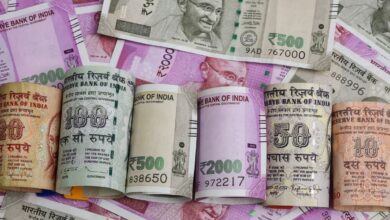
    The rupee has fallen to a record low of 84.0975 per US dollar.

    The Indian rupee has been falling vis-a-vis the US dollar due to continued outflow of foreign funds from Indian equities and elevated crude oil prices amid global uncertainties.

    Rupee Crosses 84 Mark Vs Dollar: The Indian rupee on October 11 breached the 84 mark against the US dollar for the first time in history, declining 12 paise to a record low of 84.0975 per dollar, due to continued outflow of foreign funds from Indian equities and elevated crude oil prices amid global uncertainties.

    The rupee had closed at 83.98 to a dollar, according to the Clearing Corporation of India Ltd (CCIL).

    “After keeping it in a range below 83.99 since August 8, 2024, the rupee finally weakened past 84.00 as FPIs (foreign portfolio investors) have emerged as big sellers in Indian equities, thus raising dollar demand,” Anil Kumar Bhansali, head of treasury and executive director at Finrex Treasury Advisors LLP, told digihunt.com.

    Foreign investors bring in dollars to invest in India, and they pull out the US currency in case of outflows. So, inflows raise the supply of dollars in India and hence making it cheaper as compared with the rupee, while outflows raises its demand to make it expensive.

    FPIs have sold shares worth Rs 55,000 crore in the Indian stock market in the past nine days, which is around $1 billion per day.

    “We can now expect the rupee to further fall to 84.25 in the short term. Importers will continue buying at all dips and exporters may now hold their exports with a stop below 83.95. The Iran-Israel-Lebanon issue also continues with no de-escalation, which could keep crude oil strong and the rupee weaker,” Bhansali added.

    The Brent crude has jumped to $78.92 per barrel now from nearly $69 dollar on September 30.

    The recent stimulus in China, which also included 10 basis points policy rate cut and a 50 basis point reduction in cash reserve ratio, is also causing foreign investors to move to Chinese equity markets as they have cheaper valuations, according to a market analyst.

    According to Bloomberg, China may unveil another 2 trillion yuan ($283 billion) fresh fiscal stimulus on Saturday in order to shore up its economy.

    The dollar index, which gauges the greenback’s strength against a basket of six currencies, continues to hover nearly 102.90. The US yields continued to trade higher though they have fallen slightly from their highs.

    European currencies on Friday were slightly higher but moved in a range, while Asian currencies were range-bound after South Korea cut rates by 25 bps for the first time in four years.