Trump’s Tariffs on Eight European Countries Affect Global Markets; US Stock Futures Drop

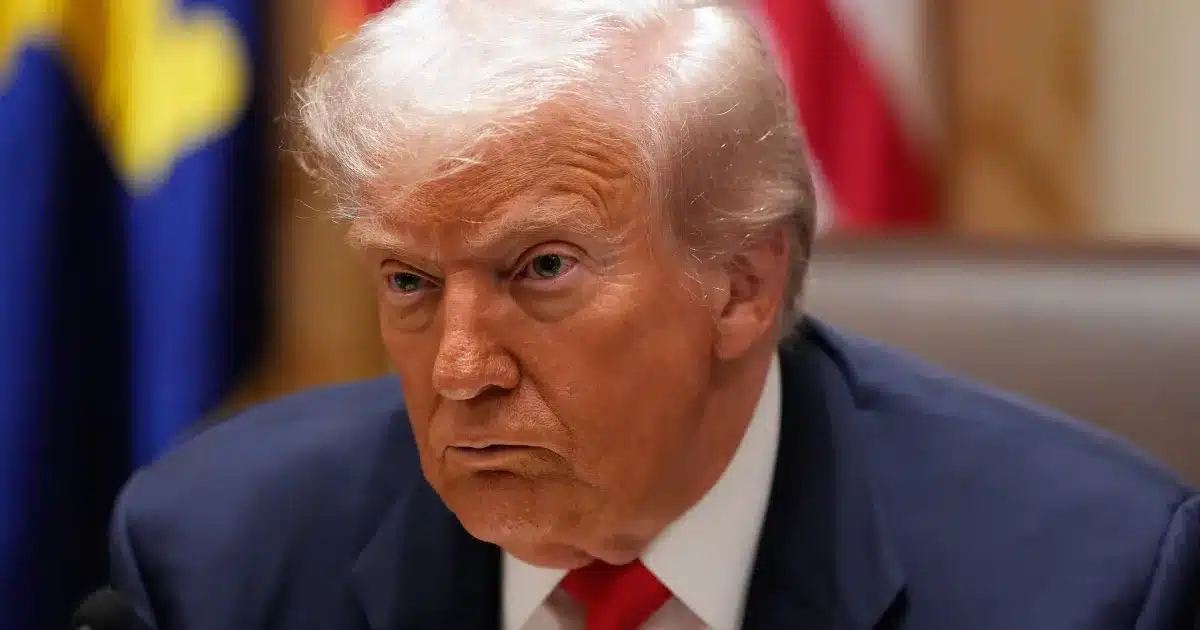
US stock futures fell on Monday following President Donald Trump’s announcement of potential new tariffs on eight European nations. This situation arises amid escalating tensions regarding the United States’ interest in purchasing Greenland, sparking concerns over a broader trade conflict across the Atlantic. As markets reacted, S&P 500 and Nasdaq futures declined, while investors turned to safe-haven assets such as gold and silver.
Market Reactions to Tariff Threats
The announcement of these additional tariffs created significant ripples in financial markets. S&P 500 futures dropped roughly 0.7%, while Nasdaq futures fell by 1.0% during a day characterized by thin trading, as US equity and bond markets were closed for a holiday. The dollar weakened against traditional safe-haven currencies, slipping against both the Japanese yen and the Swiss franc. Amid fears of an escalating trade dispute that could harm global growth and demand, investors increasingly sought safety in gold and silver, which have soared to record highs. Oil prices have also eased, reflecting concerns about potential economic repercussions from ongoing tensions.
In Europe, market sentiment mirrored the trepidation in the US. The EUROSTOXX 50 and Germany’s DAX futures both fell by 1.1%. The impact was felt in Asian markets as well, with Japan’s Nikkei index declining by 1.0%, and the MSCI’s broad index of Asia-Pacific shares outside Japan slipping by 0.1%. The interconnectedness of global markets is evident as investors respond to the evolving situation.
Political Implications and Responses
President Trump has announced plans to impose a 10% import tariff on goods from Denmark, Norway, Sweden, France, Germany, the Netherlands, Finland, and Britain, starting February 1. Should no agreement be reached, these tariffs could escalate to 25% by June 1. Major European Union countries have condemned this tariff threat, calling it an attempt at economic coercion linked to the Greenland issue. In retaliation, the EU is considering measures including tariffs on around €93 billion ($108 billion) worth of US imports, which had been previously approved but were suspended.
Analysts at Deutsche Bank have pointed out the deep financial connections between Europe and the US, noting that European countries hold about $8 trillion in US bonds and equities—nearly double the amount held by the rest of the world combined. The possibility of European nations repatriating some of these investments could have significant consequences for US financial markets. George Saravelos, the bank’s global head of foreign exchange research, cautioned that capital flow leverage could disrupt markets even more than tariffs.
Global Economic Outlook
These ongoing trade tensions are poised to overshadow discussions at the World Economic Forum in Davos, where global leaders, including a significant US delegation led by Trump, will gather. Investors in Asia are keenly awaiting upcoming Chinese economic data, forecasting growth to slow to 4.4% in the December quarter, down from 4.8% previously. This slowdown is attributed to weak domestic demand, despite strong export and manufacturing performance.
Attention is also on the Bank of Japan’s policy meeting scheduled for Friday. While no interest rate hike is anticipated, policymakers might hint at potential tightening as early as April. Moreover, political uncertainty in Japan is a factor, with Prime Minister Sanae Takaichi expected to dissolve parliament ahead of a February election. In the United States, delayed data on core inflation and consumer spending for November is expected to be released on Thursday, which could influence expectations for future interest rate cuts by the Federal Reserve.
Currency and Commodity Market Movements
In currency markets, the euro rose by 0.1% to $1.1613 after an initial decline, while the British pound increased to $1.3387. The dollar decreased by 0.2% against the Swiss franc and 0.3% against the yen. Despite US Treasury cash markets being closed, 10-year futures saw a slight increase as investors sought refuge. Gold prices climbed by 1.5%, reaching $4,664 an ounce, reflecting ongoing demand for secure assets.
Oil prices also retreated, with Brent crude dropping by 0.5% to $63.84 a barrel and US crude falling by 0.4% to $59.18. Traders remain cautious amid rising tensions in the Middle East, especially with a US Navy aircraft carrier group expected to arrive in the Persian Gulf this week. The blend of geopolitical uncertainties and economic concerns continues to shape market dynamics as investors navigate this complex landscape.
Disclaimer: Digihunt is not a financial advisor, and this is not investment advice.