Category: Business

Business News: Get latest stock share market news, financial news, economy news, company news, politics news, India news, breaking news, Indian economy news.

  • Fossil Fuels Return: Oil Prices Rise, Delaying Peak Demand to the 2030s

    After years of speculation regarding a peak in global oil demand due to the rise of renewable energy, 2025 has marked a crucial shift in this narrative. Oil and gas have regained strength, with India emerging as a key driver of global consumption. Major energy forecasts from organizations like BP, McKinsey, and the International Energy Agency have moved expectations for peak oil demand into the 2030s while also raising projected demand for 2050. India is expected to lead this growth, outpacing energy demand increases from both China and Southeast Asia combined.

    Policy Delays and Geopolitical Tensions Revive Fossil Fuels

    The resurgence of oil in 2025 can be attributed to multiple factors, including delays in clean energy policies, inadequate infrastructure, and ongoing geopolitical tensions. European nations, despite being at the forefront of clean energy initiatives, are increasingly relying on fossil fuels due to supply shortages and skyrocketing prices arising from the Russia-Ukraine conflict. In the United States, the administration under President Donald Trump has also favored fossil fuels, further highlighting oil’s renewed significance in the global energy landscape. This combination of circumstances has created a complex energy environment where fossil fuels remain a critical component of energy strategies worldwide.

    India’s Shifting Import Patterns

    India’s oil and gas sector is undergoing transformation influenced by global trends, including changes in import patterns and rising demand. The country continues to depend heavily on crude oil imports, with Russian oil playing a significant role despite international pressures. The United States has urged India to reduce its purchases of Russian oil, even imposing a 50 percent tariff on Indian goods. Nevertheless, Russian crude accounted for over one-third of India’s oil imports for much of the year, supplying domestic refineries that produce crucial fuels like petrol and diesel. Following sanctions on major Russian exporters in late November, imports from Russia began to decline, falling from approximately 1.7 million to below 1 million barrels per day. However, as Russian oil itself was not sanctioned, refiners have managed to continue sourcing from non-sanctioned Russian suppliers to maintain access to discounted crude.

    Supply Diversification and Policy Reforms

    To mitigate over-reliance on any single nation, India has diversified its oil imports, increasing purchases from the United States, especially after the introduction of new tariffs. Additionally, there has been a notable rise in trade involving liquefied natural gas (LNG) and liquefied petroleum gas (LPG). The Indian government has also implemented new regulations for the oil and gas sector, known as the Petroleum and Natural Gas Rules, 2025. These regulations aim to establish a more streamlined licensing process and encourage investment in oil and gas exploration and production, reflecting a proactive approach to energy security.

    Rising Demand and Refining Expansion

    India’s oil consumption is projected to grow at a rate faster than that of China in 2025, positioning the country as a significant contributor to global demand growth in the coming decade. The expansion of India’s refining capacity further solidifies its role as a global refining hub. However, challenges persist in crude oil and gas production due to aging oil fields. To address these issues, the state-owned Oil and Natural Gas Corporation (ONGC) has partnered with BP to enhance production at key fields in Mumbai. Furthermore, the use of natural gas is on the rise, supported by improvements in pipeline infrastructure and the expansion of city gas distribution networks, aligning with government initiatives to promote cleaner energy sources.

    Calm Oil Prices Offer Fiscal Relief

    Despite ongoing geopolitical conflicts, sanctions, and trade challenges, oil prices have remained surprisingly stable in 2025. Brent crude prices fluctuated between $60 and $70 per barrel, dipping to around $59–60 by mid-December. This stability can be attributed to increased oil production from non-OPEC countries such as the United States, Brazil, Guyana, and Canada, along with effective supply management by OPEC+. For major oil importers like India, these steady prices provide fiscal relief. Similar to the period during the COVID-19 pandemic, the Indian government raised taxes on petrol and diesel without increasing retail prices, leveraging a drop in crude prices to manage tax hikes and enhance revenue. As 2025 concludes, the oil and gas sector faces a multifaceted outlook, balancing geopolitical risks and demand growth with climate pressures and strategic shifts in the global energy landscape.

    Digihunt is not a financial advisor and this is not investment advice.

  • India’s Telecom Sector Grows as 5G Reaches 85% of the Population by 2025

    India’s Telecom Sector Grows as 5G Reaches 85% of the Population by 2025

    India’s telecom sector has concluded 2025 on a high note, showcasing significant advancements in digital connectivity, infrastructure, and technological self-reliance. A year-end review from the Ministry of Communications highlights the launch of the National Broadband Mission (NBM) 2.0, aimed at enhancing digital inclusion by expanding high-speed broadband access to essential institutions. The report also reveals a remarkable increase in internet and mobile usage, with total internet connections surpassing 100 crore, marking substantial growth since 2014.

    National Broadband Mission 2.0 and Digital Inclusion
    Launched in January 2025, the National Broadband Mission (NBM) 2.0 is a pivotal step toward improving digital access across India. This initiative focuses on extending high-speed broadband connectivity to villages, schools, health centers, and other critical institutions. The government’s vision of a “Viksit Bharat” by 2047 underpins this mission, aiming to ensure that all citizens have access to reliable internet services. The review indicates that the push for digital inclusion has led to a significant rise in internet connections, now crossing the 100-crore milestone. This figure is nearly four times higher than the number recorded in 2014, demonstrating the rapid growth of digital infrastructure in the country.

    Surge in Internet and Mobile Usage
    The year 2025 witnessed a dramatic increase in both internet and mobile usage across India. Broadband subscriptions have approached 100 crore, while the average monthly data consumption per wireless user has soared to 24 GB. This surge places India among the highest data-consuming nations globally. Additionally, median mobile broadband speeds have improved significantly, reaching over 130 Mbps by October 2025. The rollout of 5G services has been a standout achievement, with coverage extending to 99.9 percent of districts and reaching approximately 85 percent of the population. Telecom operators have installed over 5.08 lakh 5G base stations, supported by a doubling of optical fiber cable length since 2019, further enhancing connectivity.

    Technological Advancements and Rural Connectivity
    2025 marked a significant technological milestone for India, as the country became the fifth globally to develop an indigenous 4G technology stack. This system, created by C-DOT, Tejas Networks, and TCS, and deployed by BSNL, is fully software-driven and can be upgraded to 5G. Progress has also been made under the Bharat 6G Mission, indicating a commitment to future technological advancements. Rural connectivity has seen impressive growth, with rural telephone connections increasing by nearly 43 percent since 2014, nearly double the growth rate in urban areas. By September, overall tele-density reached 86.65 percent, reflecting the expanding reach of telecommunications in rural regions.

    Citizen Services and Manufacturing Growth
    On the citizen services front, platforms like Sanchar Saathi have gained significant traction, logging 22 crore visits and over 1.5 crore downloads of its mobile app. The Financial Fraud Risk Indicator has played a crucial role in preventing losses of approximately Rs 450 crore by flagging more than 70 lakh suspicious transactions. The manufacturing sector has also shown robust growth, with the telecom Production-Linked Incentive (PLI) scheme generating cumulative sales exceeding Rs 96,000 crore and exports surpassing Rs 19,000 crore. This momentum reinforces India’s ambition to become a global hub for digital innovation and manufacturing, marking a transformative period for the nation’s telecom landscape.

    Digihunt is not a financial advisor and this is not investment advice.

  • World Bank Grants 0 Million to Pakistan as Part of Multi-Phase Funding Plan

    World Bank Grants $700 Million to Pakistan as Part of Multi-Phase Funding Plan

    The World Bank has recently approved a significant funding package of $700 million for Pakistan, aimed at bolstering macroeconomic stability and enhancing public service delivery. This financing is part of the Public Resources for Inclusive Development – Multiphase Programmatic Approach (PRID-MPA), which could ultimately provide Pakistan with up to $1.35 billion over several phases. The latest tranche is designed to strengthen public resources and improve essential services at both federal and provincial levels, particularly in Sindh.

    Details of the Funding Allocation
    Out of the approved $700 million, $600 million is earmarked for federal-level programs, while the remaining $100 million will support initiatives in Sindh, Pakistan’s southern province. This funding is part of a broader strategy to enhance the efficiency of public services and ensure that essential resources are effectively utilized. The World Bank’s initiative aims to address the pressing needs of the population by improving service delivery mechanisms across various sectors. This latest approval follows a $47.9 million grant extended in August to support primary education reforms in Punjab, the country’s most populous province. Together, these funding decisions reflect the World Bank’s ongoing commitment to assist Pakistan in navigating its economic challenges.

    Challenges in Governance and Institutional Framework
    Despite the positive steps taken by the World Bank, significant concerns regarding governance and institutional weaknesses persist in Pakistan. A recent report from the IMF and World Bank, shared by Pakistan’s finance ministry, highlighted critical issues such as fragmented regulation, opaque budgeting practices, and the political capture of public resources. These challenges continue to hinder investment and weaken the country’s revenue base, ultimately limiting the effectiveness of economic reforms. Addressing these governance issues will be crucial for the successful implementation of the new funding and for fostering a more stable economic environment.

    Pakistan’s Economic Landscape
    The approval of this funding comes at a time when Pakistan is heavily reliant on external financial support to stabilize its economy. The country has seen a rise in public debt, driven by slower economic growth and ongoing borrowing from multilateral institutions. Recent financial inflows from organizations like the IMF have helped bolster external reserves and support fiscal consolidation efforts. However, the pressures of debt remain a significant concern. Despite these challenges, there are signs of gradual recovery in Pakistan’s economy, with modest growth, a surplus in the current account, and improved foreign exchange reserves, aided by multilateral disbursements and increased remittance inflows.

    The Path Forward for Economic Reforms
    The World Bank’s phased financing approach allows it to maintain leverage over future funding while continuing to support Pakistan’s economic stabilization efforts. The effectiveness of the newly allocated funds in translating into lasting reforms and improved service delivery will be critical in determining the pace and scale of further disbursements under the $1.35 billion program. As Pakistan navigates its economic landscape, the focus will remain on addressing governance issues and ensuring that public resources are utilized effectively to foster sustainable growth and development.

    Digihunt is not a financial advisor and this is not investment advice.

  • Infosys Stock Rises: What Caused the 40% Jump in ADRs on NYSE?

    Infosys Stock Rises: What Caused the 40% Jump in ADRs on NYSE?

    US-listed shares of Infosys witnessed a significant surge on Friday, climbing by up to 40% shortly after the market opened. This sudden increase briefly added tens of billions of dollars to the Indian IT giant’s market capitalization, pushing its American Depositary Receipts (ADRs) to a 52-week high of $30. The volatility prompted the New York Stock Exchange to halt trading. Importantly, this dramatic rise occurred during a low-liquidity holiday session and was not linked to any new company announcements.

    Unexpected Market Movements

    The swift uptick in Infosys shares surprised many traders, as there was no evident catalyst for the surge. Analysts remarked that such extreme fluctuations are unusual for a well-established and closely monitored stock like Infosys. The trading halt underscored how fragile market conditions can become, especially when liquidity is low and automated trading systems are prevalent. This incident raises concerns about the stability of market dynamics during holiday trading sessions when participation is typically diminished.

    Possible Causes Behind the Surge

    One predominant theory among traders suggests that a short squeeze may have fueled the stock’s rise. A short squeeze occurs when investors betting against a stock are forced to buy shares quickly as prices climb, further escalating the stock’s value. Reports indicate that a significant lender may have recalled between 45 to 50 million Infosys ADR shares that had been lent out, a number considerably higher than the usual daily trading volume of seven to eight million shares. In a thin market, such a recall could have compelled short sellers to rush for shares, intensifying the price spike.

    Technical Glitches and Market Confusion

    Another perspective points to a potential technical glitch as a contributing factor. Reports reveal that several market data platforms mistakenly classified the Infosys ticker ‘INFY’ as ‘American Noble Gas Inc.’ While the company name was incorrect, the financial data associated with the ticker remained relevant to Infosys, including information about its investments in artificial intelligence and its $75 billion market value. This mix-up may have confused algorithmic trading systems, leading to automated buying that exacerbated the rally.

    Sector Influence and Company Response

    The context of the Indian IT sector may also have influenced the surge. Indian IT stocks had recently gained momentum following better-than-expected results from Accenture. However, analysts emphasized that this alone could not explain the extraordinary movement in Infosys ADRs. In response to the volatility, Infosys issued a statement clarifying that there were no material reasons for the price fluctuations. The company confirmed that the ADRs experienced sharp price movements, resulting in two trading pauses on the NYSE, but assured that there were “no material events that require disclosure” under listing regulations. This incident highlights the potential for rapid market changes when low liquidity, automated trading, and data errors converge, even for established blue-chip stocks.

    Digihunt is not a financial advisor and this is not investment advice.

  • Parliament’s Winter Session: Shaping Your Financial Future with Insurance, SIPs, and Retirement Tips

    Parliament’s Winter Session: Shaping Your Financial Future with Insurance, SIPs, and Retirement Tips

    While the recent Winter Session of Parliament was filled with typical political drama, a significant legislative package was quietly passed that has the potential to reshape personal finance in India. The government has enacted reforms allowing for up to 100% foreign ownership in insurance and pension firms, along with a comprehensive overhaul of banking regulations. These changes address pressing global economic challenges, aiming to stimulate internal investment and enhance competition in the financial sector.

    Transforming the Insurance Landscape

    One of the standout reforms is the introduction of the Sabka Bima Sabki Raksha Bill, which raises the foreign direct investment (FDI) cap in the insurance sector from 74% to a full 100%. This pivotal change permits international companies to fully own Indian insurance firms, infusing the market with much-needed capital and innovation. According to PRS Legislative Research, the bill also simplifies entry for foreign reinsurers and strengthens the regulatory oversight of the Insurance Regulatory and Development Authority of India (IRDAI) concerning agents and commission disclosures. This shift aims to tackle the long-standing issues of low consumer confidence and under-penetration in the insurance market.

    The implications for consumers could be significant. With increased competition, policyholders may enjoy lower premiums and improved service offerings, including modern insurance products that meet contemporary needs. However, experts warn that while the potential for better pricing exists, factors such as medical inflation and claim volatility could temper immediate expectations for cost reductions.

    Enhancements in Mutual Fund Regulations

    In a parallel development, the Securities and Exchange Board of India (SEBI) has made changes that could markedly reduce the costs associated with mutual funds. By lowering the commissions mutual funds can pay to distributors and brokers, SEBI aims to decrease investor costs by 10 to 15 basis points. Although this may appear minor, the impact of compounding over time could lead to substantial savings for investors.

    For example, a reduction of 0.15% in fees on a ₹10 lakh investment, compounding at 12% over 20 years, could yield an additional ₹2.5 lakh in returns. This regulatory shift encourages fund houses to prioritize performance over commission payouts, fostering a more competitive environment. Consequently, investors can expect greater transparency in fees and a rise in direct-to-consumer channels, ultimately enhancing their long-term wealth.

    Pension Funds Embrace Market Dynamics

    The reforms also extend to pension funds, as the Pension Fund Regulatory and Development Authority (PFRDA) has granted these funds greater flexibility to invest in equities and diversified assets. This marks a significant departure from the traditional Provident Fund model, which prioritized safety over risk. By allowing pension funds to engage in higher-risk, higher-return strategies, the government seeks to channel household savings into productive investments that can support infrastructure and industrial growth.

    With the allowance for foreign pension managers to hold 100% ownership, there is potential for the introduction of modern investment strategies that optimize long-term returns. However, this shift may also lead to increased short-term volatility in pension balances. Regulators emphasize that the objective is to ensure household savings are utilized effectively, moving away from less productive assets like cash and gold.

    Strengthening Market Regulations

    The introduction of the Securities Markets Code Bill, 2025, aims to enhance SEBI’s enforcement capabilities by establishing market courts and stricter conflict-of-interest rules. This initiative comes at a time when India’s retail investor base is expanding rapidly. Ensuring fair and efficient market operations is essential for maintaining investor confidence and encouraging participation in financial markets.

    As the government looks to attract foreign investment amid global economic pressures, these reforms are viewed as a strategic move to bolster investor sentiment. While challenges persist, including recent capital outflows and currency fluctuations, the overall narrative reflects optimism for the future of India’s financial landscape. If successfully implemented, these reforms could lead to a more robust and trustworthy market environment, benefiting both domestic and international investors.

    Digihunt is not a financial advisor and this is not investment advice.

  • Walmart Boosts Training Programs to Tackle Skilled Labor Shortage in India

    Walmart Boosts Training Programs to Tackle Skilled Labor Shortage in India

    As the United States faces a dwindling workforce in skilled trades, Walmart is proactively strengthening its in-house maintenance team. The retail giant has revamped its training programs to meet the rising demand for maintenance technicians, who are vital for the seamless operation of its extensive logistics and retail networks. Amid a tightening labor market, Walmart seeks to fill these positions while offering new career opportunities to its employees.

    Walmart’s Training Initiative

    In light of the ongoing labor shortage, Walmart has made significant enhancements to its training initiatives over the past year. The company is concentrating on increasing the pipeline of maintenance technicians, essential for managing equipment repairs and ensuring the functionality of electrical and mechanical systems across its stores and distribution centers. This strategic shift comes as demand for skilled tradespeople continues to surge, with many companies struggling to identify qualified candidates.

    Walmart’s initiatives include a tuition-free training program that merges classroom education with hands-on experience in various areas, such as HVAC, electrical work, and general maintenance. Originally launched in the Dallas-Fort Worth area, the program has since expanded to other locations, including Vincennes, Indiana, and Jacksonville, Florida. By mid-November, nearly 400 employees had graduated from the program, and all participants from the pilot batch secured technician roles with an average pay of approximately $32 per hour. The company has set an ambitious target to train 4,000 workers by 2030.

    Career Opportunities for Employees

    The skilled trades labor shortage has created new opportunities for workers like Liz Cardenas, who joined Walmart as an automation equipment operator in May 2023. Initially responsible for monitoring conveyor belts, Cardenas has advanced to fixing conveyor systems and other machinery. Her hourly wage has nearly doubled to $43.50, allowing her to achieve personal milestones such as moving out of her parents’ home and enhancing her retirement savings.

    This trend underscores how Walmart’s commitment to training and development addresses both the company’s operational needs and provides employees with valuable skills and career advancement opportunities. As the demand for skilled tradespeople rises, Walmart’s initiatives could serve as a benchmark for others facing similar challenges.

    Industry-Wide Challenges

    The shortage of skilled tradespeople impacts various sectors across the United States, not just Walmart. Analysts attribute this crisis to multiple factors, including a wave of retirements and a slowdown in immigration exacerbated by recent policies. A McKinsey analysis forecasts a considerable imbalance in the labor market, with 20 job openings for every new worker in skilled trades projected from 2022 to 2032.

    This shortage poses significant concerns for companies reliant on skilled trades for their operations. High turnover rates could cost businesses over $5.3 billion annually in hiring and training expenses. In response, organizations like the Business Roundtable are launching initiatives to promote awareness of trade careers among younger generations, aiming to inspire more individuals to pursue these essential roles.

    The Importance of Skilled Trades

    Walmart CEO Doug McMillon highlighted the necessity for greater awareness regarding the significance of skilled trades. Many Americans may not fully grasp the critical roles that technicians play in maintaining the infrastructure of retail operations. As the company continues to enhance its training programs, it aims to ensure that it has the right skills in place to prevent equipment failures, particularly during peak seasons like the holidays.

    R.J. Zanes, Walmart’s vice president of facility services, emphasized the financial ramifications of maintenance failures, noting that a refrigeration breakdown at a single store could result in losses between $300,000 and $400,000 due to spoiled goods. This highlights the need for a well-trained maintenance workforce to minimize downtime and maintain operational efficiency. As Walmart and other companies navigate these challenges, the focus on skilled trades will remain crucial for sustaining their operations and supporting the economy.

    Digihunt is not a financial advisor and this is not investment advice.

  • Trump Strikes Deals with Nine Pharma Firms to Lower Medicine Prices to Global Standards

    Trump Strikes Deals with Nine Pharma Firms to Lower Medicine Prices to Global Standards

    US President Donald Trump has unveiled a landmark agreement with nine major pharmaceutical companies aimed at lowering prescription drug prices in the United States. This initiative aims to bring domestic drug costs in line with those in other affluent nations, tackling a long-standing issue where American patients typically pay much higher prices for medications. The agreements include companies such as Amgen, Merck, and Novartis, employing pricing strategies similar to those used in other wealthy countries, signaling a pivotal change in the U.S. pharmaceutical sector.

    Details of the Agreements

    The newly established agreements will see participating pharmaceutical companies adjusting their pricing for medications sold through Medicaid. The aim is to make prices comparable to those in other developed nations. Furthermore, new drugs launched by these companies will operate under a “most-favored-nation” pricing model across various markets, including Medicare, Medicaid, and commercial insurance. This approach seeks to eliminate the historical disparity where U.S. patients have subsidized drug costs for the rest of the globe. President Trump highlighted this change, asserting, “We were subsidizing the entire world. We’re not doing it anymore,” during a press conference at the White House.

    Impact on Patients and Drug Availability

    The agreements also introduce a new direct-to-consumer platform named TrumpRx, set to launch in January. This platform will enable patients to purchase medications directly from manufacturers, potentially enhancing accessibility and affordability. Some companies have committed to offering discounts of up to 70% on selected medications. Notably, Bristol Myers Squibb announced that it would provide its widely used blood thinner, Eliquis, free of charge to Medicaid patients, a move that health economists commend as a crucial step towards health equity. Additionally, several companies have pledged to donate active pharmaceutical ingredients to a national reserve for emergency use, bolstering the country’s readiness for health crises.

    Market Reactions and Future Negotiations

    The announcement has been positively received by the stock market, with shares of the participating drugmakers seeing an upturn. This favorable shift is partly due to the agreements offering a three-year exemption from potential pharmaceutical tariffs, depending on the companies’ commitments to invest in U.S. manufacturing. President Trump indicated that the prospect of tariffs was a calculated strategy to motivate these companies to act. Currently, the administration has successfully secured pricing agreements with 14 out of the 17 drugmakers it approached earlier this year, with negotiations still ongoing with the remaining companies.

    Broader Implications for the Pharmaceutical Industry

    These agreements signify a major transformation in the pharmaceutical industry, aiming to tackle the high costs of prescription drugs that have long affected American consumers. By aligning U.S. drug prices with those in other wealthy nations, the administration aspires to establish a more equitable healthcare system. The commitment from pharmaceutical companies to provide discounts and direct purchasing avenues could lead to better access to essential medications for millions of Americans. As negotiations progress, the outcome may reshape the future landscape of drug pricing and availability in the United States for years to come.

    Digihunt is not a financial advisor and this is not investment advice.

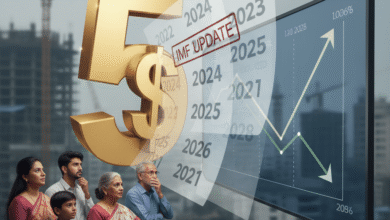
  • India’s -Trillion Goal Postponed: What IMF’s New Timeline Means for Consumers

    India’s $5-Trillion Goal Postponed: What IMF’s New Timeline Means for Consumers

    When senior Indian ministers set a goal of achieving a $5 trillion economy by 2024-25, it was framed as a transformative milestone promising improved job opportunities, enhanced infrastructure, and increased salaries. However, recent projections from the International Monetary Fund (IMF) suggest this target may now be delayed until around 2028-29. This shift raises questions about the implications for everyday financial realities, including salaries, loans, investments, and the cost of living.

    The Numbers Behind the Slippage

    Despite the delay in reaching the $5 trillion milestone, the IMF anticipates that India will still be the fastest-growing major economy, with real GDP growth projected between 6.2% and 6.6% for 2025-26. The Reserve Bank of India (RBI) maintains a more optimistic outlook, forecasting growth of 7.3% for the same period, alongside an inflation rate of just 2%. The delay in meeting the $5 trillion target is not attributed to a decline in growth but rather to how the figure is calculated. The target is based on nominal GDP, which is affected by the rupee-dollar exchange rate and inflation levels. A weaker rupee and lower inflation can hinder the growth of nominal GDP, even if the real economy continues to thrive.

    In April 2025, the IMF projected India’s nominal GDP to be approximately $4.19 trillion, positioning India as the world’s fourth-largest economy. However, this still falls short of the $5 trillion goal by about $800 billion. The depreciation of the rupee to around Rs 91 against the dollar has intensified this issue, as a weaker currency results in lower dollar-denominated GDP figures. Thus, while the real economy remains resilient, the dollar calculations depict a contrasting narrative, pushing the $5 trillion target even further into the future.

    Jobs and Salaries: Slower Sprint, Not a Halt

    The postponement of the $5 trillion target does not necessarily mean job losses or salary reductions. Projections from the IMF, RBI, and private analysts like Moody’s indicate that India will likely achieve growth rates of around 6.5% to 7% in 2025, making it a standout performer among large economies. Domestic demand and investment remain strong, supported by government capital expenditure and tax cuts on consumer goods.

    In practical terms, this suggests that while sectors like IT, financial services, and digital platforms may not witness the rapid hiring seen during the post-COVID boom, they are also unlikely to face significant layoffs. Industries such as manufacturing, construction, and logistics, benefiting from public investment initiatives, are expected to continue job additions, albeit unevenly across different states. However, the informal and low-skill urban job market may encounter challenges due to global trade issues and tariffs affecting export-driven sectors. Thus, while salary increases might not be immediately influenced by the delayed timeline, prolonged economic growth will delay significant rises in per-capita incomes.

    EMIs, Interest Rates, and Your Bank Deposits

    The revised timeline for the $5 trillion economy aligns with a period of low inflation and interest rates in India. As of October 2025, the Consumer Price Index (CPI) inflation rate has edged near-zero levels, aided by falling food prices and tax cuts. The RBI has also lowered the repo rate, making borrowing more economical. This situation presents a mixed scenario for consumers.

    For borrowers, reduced home and car loan equated monthly installments (EMIs) are expected, offering some relief compared to the tighter financial conditions following the COVID pandemic. However, savers could experience diminishing returns on fixed deposits and small savings as interest rates trend downward. While inflation remains low, the era of high, risk-free interest rates appears to be coming to an end.

    It’s crucial to note that the RBI’s ability to further cut rates may be constrained by the rupee’s depreciation and the potential for imported inflation. Therefore, consumers should consider this period an opportunity to refinance loans rather than anticipate a prolonged phase of low rates.

    Rupee at 91: Imported Dreams Get Pricier

    The rupee’s fall to approximately Rs 91 per dollar has notable implications for the average consumer. This depreciation impacts various aspects of daily life, especially in areas such as fuel prices, imported goods, and foreign education.

    Fuel and transportation costs are directly linked to global crude prices and the rupee’s value. Even if international oil prices remain stable, a weaker rupee restricts how much domestic fuel prices can decline. Additionally, imported electronics like smartphones and laptops are becoming pricier, affecting consumer purchasing decisions. Families planning to send children abroad for education or travel will also face sharply rising costs due to the currency’s decline.

    On the flip side, exporters and IT service companies may benefit from a weaker rupee, as their dollar revenue generates higher earnings in rupees. Households receiving remittances from abroad will see enhanced purchasing power. However, from a broader economic perspective, the rupee’s decline complicates the path to the $5 trillion goal, as it reduces the dollar value of India’s GDP.

    Digihunt is not a financial advisor and this is not investment advice.

  • ADB Approves .26 Billion Sovereign Loan for India’s Development by 2025

    ADB Approves $4.26 Billion Sovereign Loan for India’s Development by 2025

    The Asian Development Bank (ADB) has unveiled a major commitment of $4.258 billion in sovereign lending to India for the year 2025. This funding will support various projects focused on enhancing workforce skills, promoting renewable energy, and improving urban infrastructure, among other initiatives. ADB’s investment underscores its ongoing dedication to fostering inclusive and sustainable growth in the country, particularly in critical sectors such as healthcare and ecotourism.

    Focus on Workforce Skilling and Renewable Energy

    A key element of ADB’s 2025 portfolio is an ambitious $846 million financing initiative for PM-SETU, India’s flagship skilling program. This initiative aims to modernize numerous Industrial Training Institutes across various states, enhancing employability and workforce readiness. Additionally, ADB is allocating $650 million to the PM Surya Ghar Muft Bijli Yojana, a national rooftop solar program designed to boost solar energy adoption at the household level across India. ADB Country Director for India, Mio Oka, has expressed pride in the bank’s support for India’s development agenda, emphasizing the importance of workforce skilling, clean energy deployment, and transformative urban growth.

    Investments in Urban Development and Transport

    In its commitment to urban transformation, ADB has earmarked $775 million for five urban projects across states including Assam, Kerala, Sikkim, and West Bengal. These investments are aimed at upgrading and expanding essential urban services, such as water supply and sanitation. Furthermore, ADB has pledged $729 million to enhance regional rapid rail connectivity along the Delhi-Meerut corridor and to improve metro networks in Chennai and Indore. These initiatives aim to boost mobility, alleviate congestion, and address the challenges of rapid urbanization.

    Healthcare and Ecotourism Initiatives

    ADB’s financial support also extends to healthcare and ecotourism. A notable loan of $460 million has been allocated to Maharashtra to modernize rural power infrastructure and improve solar electricity supply for irrigation. Additionally, $398.8 million has been committed to Assam for upgrading its healthcare and medical education systems. The bank has also dedicated over $200 million in loans to Meghalaya and Uttarakhand to promote ecotourism development, highlighting its commitment to sustainable growth across various sectors.

    Technical Support and Knowledge Frameworks

    Beyond financial assistance, ADB is providing policy and knowledge support through various technical and operational studies. In 2025, the bank assisted the Ministry of Housing and Urban Affairs in developing three knowledge frameworks that focus on creative city redevelopment, urban growth hubs, and urban water supply and sanitation. These frameworks are integral to the government’s new urban challenge fund, reinforcing ADB’s role in supporting India’s urban development initiatives. Founded in 1966, ADB is owned by 69 members, including 50 from the Asia-Pacific region, and is dedicated to promoting inclusive, resilient, and sustainable growth throughout the region.

    Disclaimer: Digihunt is not a financial advisor and this is not investment advice.

  • Know Your Rights as a Traveler: Rules on Flight Delays, Cancellations, and Compensation in India

    Know Your Rights as a Traveler: Rules on Flight Delays, Cancellations, and Compensation in India

    The Ministry of Civil Aviation has rolled out extensive rights and protections for air travelers, establishing clear guidelines addressing flight delays, cancellations, baggage handling, and ticket management. These new provisions are particularly significant in light of recent air travel disruptions, underscoring the importance of consumer rights. The regulations are designed to enhance passenger convenience and keep travelers informed about their entitlements.

    Compensation Rules for Flight Disruptions

    The regulations specify compensation and assistance for passengers facing flight disruptions. For delays of 2 to 4 hours, airlines are required to provide free meals. If a flight is delayed for over 6 hours, passengers can choose alternative flights or refunds. In instances where delays surpass 24 hours, airlines must arrange hotel accommodations for affected travelers.

    In the case of cancellations, compensation is based on the length of the delay. Passengers may receive Rs 5,000 for cancellations within one hour and Rs 10,000 for delays exceeding two hours. Moreover, airlines must manage overbooking situations by offering alternate flights within one hour and compensating up to Rs 20,000 for delayed rebooking that takes longer than 24 hours.

    Accessibility and Emergency Protocols

    The updated guidelines emphasize safety and accessibility, particularly during emergencies. Airlines are not allowed to refuse service to passengers with disabilities and must provide necessary assistive devices, accessible seating, and prior support if passengers notify them at least 48 hours in advance.

    In the event of medical emergencies, airlines are obligated to facilitate assistance, which could include medical professionals or ambulance services. If flights are diverted, passengers can disembark and receive refreshments based on their waiting time.

    Baggage Handling and Liability Limits

    The regulations establish compensation limits for lost or damaged baggage and cargo. For domestic flights, compensation is capped at Rs 20,000 per passenger for baggage and Rs 350 per kilogram for cargo. For international flights, the limits are set at 1,131 Special Drawing Rights (SDR) for baggage and 19 SDR per kilogram for cargo.

    In cases of fatalities during air travel, airlines’ liability is set at Rs 20 lakh for domestic flights and 113,100 SDR for international flights. These provisions aim to ensure proper compensation for passengers and their families in unfortunate situations.

    Ticket Management and Passenger Protections

    Passengers have the right to cancel or reschedule their tickets with a full refund for all taxes and fees. A free cancellation window of 24 hours is available for tickets purchased up to seven days before the flight. Refunds for cash transactions are processed immediately, while those made via credit card may take up to seven days.

    The regulations also highlight exceptions due to strikes, adverse weather, security concerns, or air traffic control issues. Passengers can file complaints through multiple channels, including the help desk, the Air Sewa app, or any relevant statutory authority. Additional benefits include free Wi-Fi at all airports and the entitlement to receive written notifications regarding their rights as air travelers.

    Digihunt is not a financial advisor and this is not investment advice.