Author: Sumit Rathore

  • Rupee Stops 5-Day Slide as Indian Currency Rebounds from Record Low Against US Dollar

    Rupee Stops 5-Day Slide as Indian Currency Rebounds from Record Low Against US Dollar

    The Indian rupee demonstrated a strong recovery on Wednesday, halting a five-day decline to close at 90.38 against the US dollar, marking a gain of 55 paise. This rebound is attributed to what analysts perceive as aggressive intervention by the Reserve Bank of India (RBI). After a weak opening at 91.05 per dollar, the rupee rallied to an intraday high of 89.96, staging a significant comeback from its record low of 91.14 reached just a day earlier.

    RBI’s Intervention Sparks Recovery
    Bankers reported that the RBI played a critical role in the rupee’s resurgence by selling dollars to stabilize the currency. This action followed a considerable decline in the rupee’s value during previous sessions. The domestic currency improved to an intraday high of 89.75 on the interbank order-matching system, recovering from levels near 91.00 ahead of the RBI’s involvement. This strategy is consistent with the central bank’s prior interventions in October and November, where it sold dollars heavily in both spot and non-deliverable forward markets to counter ongoing downward trends. Unlike earlier actions conducted before market hours, the RBI’s dollar sales on Wednesday began shortly after onshore trading commenced, indicating a proactive stance to halt the rupee’s downward slide.

    Dilip Parmar, a research analyst at HDFC Securities, mentioned that while the rupee’s appreciation is encouraging, volatility in the currency market is likely to persist. He noted that the USD/INR faces immediate resistance at 90.60 and support at 89.70, suggesting caution for traders in the current climate.

    Factors Behind the Rupee’s Decline
    The recent weakness of the rupee has primarily been linked to external factors instead of domestic economic conditions. Analysts indicated that the rupee is one of the worst-performing currencies globally this year, having depreciated nearly 6 percent against the dollar. This decrease has been intensified by a growing trade deficit, high US tariffs, and ongoing investment outflows. Experts noted that no other currency has suffered as much from US tariffs as the Indian rupee, and uncertainty regarding US-India trade negotiations has made investors cautious.

    Deepak Agrawal, Chief Investment Officer at Kotak Mutual Fund, highlighted that the rupee’s record low against the dollar was mainly driven by external pressures, not weaknesses within the domestic economy. He pointed to persistent capital outflows and increased dollar demand associated with non-deliverable forward maturities as significant factors in the rupee’s decline. Despite India’s solid GDP growth and healthy foreign exchange reserves, stalled progress in trade talks with the US and continued foreign portfolio selling have adversely impacted market sentiment.

    Market Reactions and Future Outlook
    The dollar index climbed by 0.42 percent to 98.56, while Brent crude prices rose by 2.09 percent to USD 60.16 per barrel. Domestic equity markets also reacted negatively, with the Sensex falling 120.21 points to close at 84,559.65, and the Nifty slipping 41.55 points to 25,818.55. Moreover, foreign institutional investors sold equities worth Rs 2,381.92 crore on Tuesday, reflecting the cautious sentiment among investors.

    Looking forward, analysts believe that the RBI’s focus will remain on curbing volatility rather than defending a specific exchange rate level. They suggest that the rupee could strengthen in the future if a trade deal with the US is finalized and capital flows improve. Current market dynamics indicate that although the rupee has shown resilience, ongoing external pressures will continue to shape its performance in the foreseeable future.

    Digihunt is not a financial advisor and this is not investment advice.

  • Warner Bros Asks Shareholders to Reject Paramount Skydance Offer for Netflix Partnership

    Warner Bros Asks Shareholders to Reject Paramount Skydance Offer for Netflix Partnership

    Warner Bros has urged its shareholders to reject a hostile takeover bid from Paramount Skydance, stating that a competing offer from Netflix is more beneficial for customers and aligns with the board’s fiduciary duties. In a letter to investors, Warner Bros emphasized that its board thoroughly evaluated Paramount’s unsolicited proposal, maintaining a commitment to its responsibilities. Paramount’s bid, offering $30 per share, surpasses Netflix’s $27.75 offer, but Warner Bros remains focused on the Netflix deal, which does not include its cable operations.

    Warner Bros’ Strong Opposition to Paramount’s Bid

    In a recent communication to shareholders, Warner Bros expressed its clear opposition to the takeover bid from Paramount Skydance. The company indicated that its board had conducted a meticulous review of the unsolicited offer, applying the rigorous standards used for previous proposals. Warner Bros highlighted that the board’s decision-making process is rooted in its fiduciary responsibilities to shareholders. The company believes that the Netflix offer is a better fit for its long-term strategy, despite Paramount’s higher bid. Paramount Skydance initiated its hostile bid after Warner Bros announced its agreement with Netflix.

    Distinct Nature of the Offers

    The key distinction between the offers from Paramount and Netflix lies in their scope. Paramount’s proposal seeks to acquire Warner Bros’ entire operations, including its cable networks and news divisions, which include well-known entities like CNN and Discovery. In contrast, Netflix’s bid focuses solely on Warner Bros’ film and television assets, excluding its cable operations. This separation would only occur after Warner Bros completes its planned divestiture of those assets. Despite Paramount’s higher share price offer, Warner Bros has made it clear that it does not favor this proposal, leaving shareholders with the option to tender their shares to Paramount if they choose.

    Regulatory Scrutiny and Industry Concerns

    Both bids are now facing intense regulatory scrutiny due to significant implications for the entertainment and media landscape. Critics of the Netflix deal have raised concerns that merging Netflix with Warner Bros’ HBO Max could lead to excessive market dominance in the streaming sector. However, Netflix co-CEOs Greg Peters and Ted Sarandos have countered this argument, asserting that their proposal represents a positive development for the entertainment industry rather than a threat. Additional worries have surfaced regarding how either deal might impact film and television production and editorial independence, particularly if Paramount’s bid results in CBS and CNN operating under the same corporate umbrella.

    Political Implications and Future Uncertainty

    The political landscape adds another layer of complexity to the situation. Former President Donald Trump has suggested that regulatory approval for the deals could be influenced by political factors. He expressed concerns about Netflix’s bid and its potential for market concentration, while also criticizing Paramount for its editorial choices, particularly regarding CBS’ “60 Minutes.” As the situation unfolds, the future of both bids remains uncertain, with Paramount Skydance yet to respond to requests for comment. The outcome of this corporate battle could lead to far-reaching effects on the media industry and the dynamics of content creation and distribution.

    Disclaimer: Digihunt is not a financial advisor and this is not investment advice.

  • US Markets Update: Wall Street Steady Near Record Highs

    US Markets Update: Wall Street Steady Near Record Highs

    US stocks demonstrated resilience in early trading, buoyed by a rebound in oil prices from multi-year lows. This rise followed President Donald Trump’s directive to block all sanctioned oil tankers from entering Venezuela, providing support to energy stocks. The S&P 500 edged up by 0.1%, while the Dow Jones Industrial Average gained 171 points. However, the Nasdaq composite remained unchanged. Oil producers led the market’s gains as US crude prices rose by 1.4%, recovering from a significant drop the previous day.

    Market Reactions to Oil Price Changes

    The recent surge in oil prices follows a period of decline, with US crude climbing to approximately $56 a barrel and Brent crude nearing $60. This rebound is attributed to President Trump’s recent order designed to block Venezuelan oil tankers, escalating pressure on the Nicolás Maduro government amid a broader US military presence in the region. The energy sector has responded positively, with shares of oil producers leading market gains. This shift in oil prices has provided a much-needed boost to the stock market, particularly after three consecutive sessions of losses for the S&P 500.

    Global Market Trends

    Earlier, Asian and European markets experienced mostly positive trading sessions, driven by gains in technology stocks and the rise in crude prices. In Europe, Germany’s DAX index increased by 0.3%, while France’s CAC 40 and Britain’s FTSE 100 saw modest gains of 0.1% and 1.4%, respectively. In Asia, Japan’s Nikkei 225 rose by 0.3%, as investors anticipated a decision on interest rates from the Bank of Japan later this week. Positive export data, particularly a 6% increase in shipments to the US, bolstered expectations for a potential rate hike.

    US Economic Indicators and Market Sentiment

    On Wall Street, mixed trading characterized the previous day, as economic data did not provide clear guidance on the future trajectory of US interest rates. The S&P 500 fell by 0.2%, while the Dow dropped 0.6%, and the Nasdaq managed a slight increase of 0.2%. Reports indicated that the US unemployment rate is at its lowest since 2021, with job creation surpassing expectations. However, concerns remain regarding persistent inflation, as investors await upcoming inflation data expected to show consumer prices rising more rapidly than policymakers would prefer.

    Currency Market Movements

    In the currency markets, the US dollar strengthened against the Japanese yen, while the euro experienced a slight decline against the dollar. The fluctuations in currency values reflect ongoing market adjustments in response to economic indicators and geopolitical developments. As investors continue to navigate the complexities of the current economic landscape, the interplay between oil prices, interest rates, and inflation will remain critical in shaping market dynamics in the coming days.

    Digihunt is not a financial advisor and this is not investment advice.

  • US Explains India’s Absence from Pax Silica Talks on Trade and Supply Chain Security

    US Explains India’s Absence from Pax Silica Talks on Trade and Supply Chain Security

    The United States has clarified that India’s absence from the newly launched Pax Silica technology initiative is not a result of any political or trade tensions. Under Secretary of State for Economic Affairs Jacob Helberg emphasized that India continues to be a crucial partner in enhancing supply chain security. He mentioned that discussions surrounding trade and supply chain security are being managed separately and expressed optimism about deepening collaboration between the two nations.

    Clarification on India’s Role

    During a briefing at the Foreign Press Centre, Helberg addressed speculation regarding India’s exclusion from the Pax Silica Summit. He reassured that the U.S. sees India as a “highly strategic potential partner” in supply chain security initiatives. Helberg pointed out that discussions on trade arrangements and supply chain security are distinct and parallel processes. He underscored the U.S.’s eagerness to engage with India in these discussions, highlighting the critical nature of the bilateral relationship.

    Helberg also mentioned maintaining “nearly daily communication” with officials in New Delhi, indicating a commitment to promptly explore avenues for enhanced collaboration. He plans to attend the India AI Impact Summit in February, which he anticipates will provide a platform to establish “tangible milestones” for cooperation between the U.S. and India.

    Pax Silica Initiative Overview

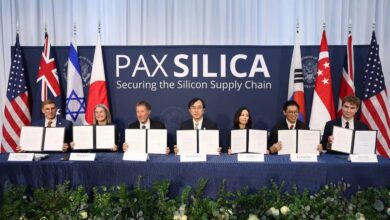
    The Pax Silica initiative, launched recently, aims to establish a secure and innovation-driven silicon supply chain that includes critical minerals, energy inputs, advanced manufacturing, semiconductors, AI infrastructure, and logistics. The initial group of involved countries includes Japan, South Korea, Singapore, the Netherlands, the United Kingdom, Israel, the United Arab Emirates, and Australia, but conspicuously excludes India. This absence means that all Quad members, except for India, are part of the initiative.

    Helberg explained that the focus of the initial grouping was on countries that are central to semiconductor manufacturing. He highlighted that nations like Singapore, South Korea, Japan, Taiwan, and the Netherlands form the “nucleus of semiconductor manufacturing.” The U.S. chose to start with a smaller group to streamline participation before considering further expansion down the supply chain.

    Future Collaboration Plans

    Looking ahead, Helberg indicated that the Pax Silica initiative is a component of Washington’s broader work plan for 2026, aimed at creating a clear pathway for reliable countries with unique contributions to join the framework. The initiative was officially inaugurated with a declaration signed by representatives from the U.S., Japan, Israel, Australia, Singapore, and South Korea.

    According to the U.S. State Department, Pax Silica seeks to diminish coercive dependencies and safeguard essential materials and capabilities vital for artificial intelligence. The initiative also aims to enable partner countries to develop and deploy advanced technologies at scale, reflecting a strategic move toward enhancing global supply chain resilience.

    Digihunt is not a financial advisor and this is not investment advice.

  • Meet Muhammad Binghatti: The Dubai Architect Redefining Iconic Global Structures

    Meet Muhammad Binghatti: The Dubai Architect Redefining Iconic Global Structures

    In the bustling skyline of Dubai, where architectural marvels continually emerge, Muhammad Binghatti is recognized as a transformative figure in real estate. As the CEO and chief architect of Binghatti Holding, he has redefined the connection between design and branding in the industry. His innovative approach treats buildings as branded entities, making him one of the most notable developers in the city. Binghatti’s focus on creating visually striking structures is not just about aesthetics; it’s about establishing a unique identity in a competitive market.

    Inheriting a Business, Rewriting Its Language

    Muhammad Binghatti took the reins of the family business in 2014, shortly after obtaining his architectural degree from the American University of Sharjah. His father, Hussain Binghatti Aljbori, founded the company in 2008, transforming it from humble beginnings into a diversified holding group, covering various sectors like real estate and construction. Upon taking charge, Muhammad recognized the need to shift the company’s identity. Instead of simply expanding the business, he aimed to integrate design into the core strategy.

    Binghatti’s approach sets him apart in an industry often led by financiers and contractors. He has blurred the traditional lines between developer and designer, allowing him to influence directly the conceptual identity and architectural style of each project. This strategy positions him as a creative director with financial authority, enabling him to create buildings that serve as both functional spaces and powerful brand statements. He views buildings as billboards, making traditional marketing methods unnecessary.

    Architecture as Product

    Binghatti’s architectural style features a distinctive visual language, characterized by repetitive geometric balconies and bold cantilevers. He refers to this design philosophy as “kinetic architecture,” creating a cohesive aesthetic that makes his buildings easily recognizable within Dubai’s dense urban environment. By drawing inspiration from consumer branding, he has shifted the perception of real estate, merging art and architecture in a way that resonates with potential buyers.

    He likens his branding strategy to that of luxury brands, highlighting the significance of design in making a lasting impression. Just like a luxury car or handbag, Binghatti aims for his buildings to evoke a similar sense of identity. This innovative approach has captured attention, and Muhammad Binghatti has often been referred to as a “rockstar architect.” His designs not only attract buyers but also thrive on social media, increasing their visibility in a crowded market.

    Branded Residences and Record Sales

    Binghatti’s branding strategy has achieved new heights through collaborations with renowned luxury brands. Projects such as the Burj Binghatti Jacob & Co. Residences and Bugatti Residences have redefined branded real estate in the Middle East. These developments go beyond mere logo placement; they embody the essence of the brands they represent, creating a seamless lifestyle experience for residents.

    Recently, Binghatti garnered headlines by selling the most expensive penthouse in Dubai, valued at AED 550 million (approximately USD 150 million). This sale not only set a new regional record but also showcased the effectiveness of Binghatti’s branding strategy. The company has seen significant growth, boasting a portfolio with over 12,000 residential units and a total investment value exceeding AED 70 billion (around USD 19 billion). Demand for Binghatti’s properties continues to rise, with a substantial number of buyers being international investors.

    Scale, Numbers, and the Business Beneath the Aesthetics

    By 2025, Binghatti Holding will have an impressive portfolio of over 80 projects across Dubai, with plans for further expansion. The company has reported remarkable financial growth, including a 145% year-on-year increase in net profit for the first nine months of 2025. Revenue has nearly tripled, driven by strong off-plan sales and early handovers. This success highlights the brand’s allure, particularly among non-resident investors.

    While estimates of Muhammad Binghatti’s personal net worth vary, credible sources suggest the value of the Binghatti property portfolio is approximately USD 10.8–10.9 billion. The intricacies of private real estate ownership make it challenging to separate personal wealth from corporate valuation. However, it is clear that Binghatti holds significant influence in the industry, merging design authority with financial expertise. His vision for the future includes innovative concepts like smart buildings integrating artificial intelligence, further solidifying his leadership position in Dubai’s evolving skyline.

    Disclaimer: Digihunt is not a financial advisor and this is not investment advice.

  • India-Oman Trade Agreement Bolsters India’s Gulf Strategy for Economic Growth

    India-Oman Trade Agreement Bolsters India’s Gulf Strategy for Economic Growth

    India and Oman are set to bolster their economic relationship with the signing of a Comprehensive Economic Partnership Agreement (CEPA) on December 18. This agreement, to be signed in Muscat during Prime Minister Narendra Modi’s three-nation tour, aims to enhance trade ties and expand India’s strategic influence in the Gulf region. The CEPA will cover goods, services, and investments, with implementation expected in the coming months following negotiations that commenced in November 2023.

    Details of the Agreement

    The CEPA aims to reduce or eliminate tariffs on a wide range of products, liberalize trade in services, and facilitate investment between the two nations. According to the Global Trade Research Initiative (GTRI), the structure of this agreement mirrors India’s free-trade pact with the United Arab Emirates. Bilateral trade between India and Oman reached approximately $10.5 billion in the fiscal year 2024-25, with India exporting $4.1 billion worth of goods and importing $6.6 billion, mainly in energy and fertilizer inputs.

    Ajay Srivastava, founder of GTRI, pointed out that while the agreement bolsters India’s economic and strategic presence in the Gulf, the trade gains are likely to be incremental rather than transformative. He acknowledged Oman’s relatively small market size yet emphasized its significant geopolitical and energy relevance for India.

    Impact on Trade Dynamics

    India’s exports to Oman are led by naphtha, valued at $747.6 million, followed by petrol at $561 million, along with various products such as machinery, aircraft, rice, and personal care items. Currently, over 80% of Indian goods enter Oman with an average tariff of around 5%, though some items face duties as high as 100%. The elimination of these tariffs under the CEPA is expected to enhance the competitiveness of Indian industrial exports. However, sustained growth will depend on the quality and differentiation of these products.

    On the other hand, Oman is anticipated to benefit from improved access to the Indian market for its energy and industrial inputs. In FY2025, India’s imports from Oman were dominated by crude oil, liquefied natural gas, and fertilizers, each valued at approximately $1.1 billion. Many of these products already enjoy low duties under India’s existing trade agreements, indicating that the CEPA will strengthen current supply chains rather than significantly alter trade flows.

    Broader Negotiating Agenda

    In addition to tariff reductions, the CEPA includes a comprehensive negotiating agenda encompassing intellectual property rights, government procurement, digital trade, customs cooperation, and support for small and medium-sized enterprises. These provisions aim to address non-tariff barriers and enhance predictability for businesses in both nations.

    India also intends to pursue streamlined approval processes for pharmaceutical products that have already been cleared by major international regulatory bodies, such as the US Food and Drug Administration and the European Medicines Agency. This strategy reflects similar provisions in India’s agreement with the UAE, indicating a concerted effort to facilitate trade in critical sectors.

    Strategic Significance

    Despite challenges posed by Oman’s relatively small population of around five million and a GDP of approximately $115 billion, the CEPA holds significant strategic importance. With over 6,000 joint ventures between India and Oman and Indian investments exceeding $7.5 billion, particularly in the Sohar and Salalah free zones, the agreement is about geopolitics as much as it is about trade volumes. The GTRI report highlights that this partnership is likely to enhance India’s regional presence while fostering economic growth for both nations.

    Disclaimer: Digihunt is not a financial advisor and this is not investment advice.

  • PFRDA Updates NPS Exit Rules: 80% Corpus Withdrawal for Private Subscribers, Exit Age to 85

    PFRDA Updates NPS Exit Rules: 80% Corpus Withdrawal for Private Subscribers, Exit Age to 85

    India’s pension regulator has announced significant changes to the National Pension System (NPS), which will enhance flexibility for non-government subscribers in managing their retirement savings. The new regulations allow these subscribers to withdraw up to 80% of their accumulated pension wealth upon exit, an increase from the previous limit of 60%. Additionally, the maximum exit age has been raised from 70 to 85 years, providing individuals with expanded options for managing their retirement funds. These amendments will take effect upon publication in the official Gazette, aiming to empower subscribers with greater control over their financial futures.

    Enhanced Withdrawal Options

    Under the revised framework, non-government NPS subscribers can now withdraw a larger portion of their pension wealth at the time of exit. The new rule permits them to access up to 80% of their accumulated pension wealth, while only 20% is required to be used for purchasing an annuity. This change is part of the Pension Fund Regulatory and Development Authority (PFRDA) regulations, which also allow subscribers to seek financial assistance from regulated institutions by pledging their NPS accounts. This flexibility is expected to improve liquidity for subscribers, enabling them to manage their finances more effectively without needing to exit the NPS prematurely.

    Furthermore, if a subscriber’s total pension corpus at the time of exit is less than Rs 8 lakh, they can choose to withdraw the entire amount as a lump sum or opt for periodic payouts through systematic withdrawals. The number of partial withdrawals allowed during the subscription period has also increased from three to four, with a mandatory gap of four years between each withdrawal. After reaching the age of 60, subscribers can make partial withdrawals up to three times, with a minimum gap of three years between each.

    Extended Investment Horizon

    A significant reform in the amended regulations is the extension of the maximum exit age for non-government subscribers from 70 to 85 years. This change also applies to government sector subscribers, who can now remain invested until the age of 85, an increase from the previous limit of 75 years. For government employees opting for a normal exit, the existing structure remains unchanged, allowing them to withdraw 60% of their accumulated pension wealth while mandating that 40% be used for annuity purchase.

    In cases of premature exit due to resignation, removal, or dismissal, government employees must annuitize 80% of their accumulated pension wealth, with only the remaining portion available for lump-sum withdrawal. If the total accumulated pension wealth is Rs 5 lakh or less, full withdrawal in lump sum will continue to be permitted across all exit scenarios, including normal, premature, or exit due to death.

    Greater Autonomy in Retirement Planning

    The PFRDA’s revisions aim to provide subscribers with greater autonomy and flexibility in managing their retirement savings. By reducing the mandatory annuity requirement for private subscribers to 20% and expanding withdrawal options, the new regulations empower individuals to tailor their retirement plans according to their financial needs.

    All subscribers, including those in government, non-government, and NPS-Lite categories, can now remain invested in the NPS until the age of 85, unless they choose to exit earlier under the specified conditions. This significant shift in policy reflects a growing recognition of the need for more adaptable retirement planning solutions, allowing individuals to better align their savings with their life circumstances and financial goals.

    Digihunt is not a financial advisor and this is not investment advice.

  • Cyient Subsidiary to Buy Majority Share in US Firm Kinetic Technologies for  Million

    Cyient Subsidiary to Buy Majority Share in US Firm Kinetic Technologies for $93 Million

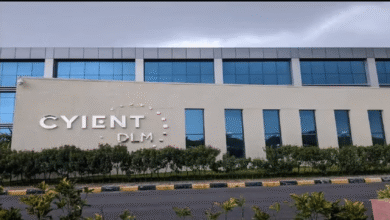
    Cyient Semiconductors, a subsidiary of Cyient Ltd, is set to acquire a majority stake in Kinetic Technologies, a power semiconductor company based in San Jose. Valued at up to $93 million (approximately Rs 846 crore), the deal is expected to finalize by April 30, 2026, pending customer closing conditions. This acquisition aims to enhance Cyient’s capabilities in the Edge AI and high-performance computing markets, positioning the company as a leader in custom power integrated circuits (ICs).

    Details of the Acquisition

    Cyient Semiconductors Singapore Pte Ltd has signed a definitive agreement to acquire over 65% of Kinetic Technologies. The current leadership and engineering teams at Kinetic will maintain their existing structure, ensuring continuity for customers, partners, and employees. This strategic move is designed to align Kinetic’s operations with Cyient Semiconductors’ broader goals, boosting their market presence and operational efficiency. The acquisition is part of Cyient’s vision to establish India’s first ASIC-led custom power semiconductor powerhouse, focusing on innovative solutions in the semiconductor sector.

    Kinetic Technologies’ Expertise

    Founded in 2006, Kinetic Technologies specializes in developing high-performance integrated circuits for efficient power delivery and signal conditioning. The company has built a strong reputation in analog and mixed-signal design, particularly in power conversion solutions, display power, protection, and interface technologies. By integrating Kinetic’s established portfolio with Cyient Semiconductors’ design capabilities, the combined entity is well-positioned to capture significant market share in high-growth sectors. This collaboration aims to leverage Kinetic’s expertise to enhance product offerings and meet the increasing demands of the semiconductor market.

    Strategic Implications for Cyient Semiconductors

    Cyient Semiconductors’ CEO, Suman Narayan, emphasized that the acquisition will significantly bolster their platform strategy. By merging Kinetic’s depth in power management and protection ICs with Cyient’s custom ASIC engine, the company aims to address the surging demands in artificial intelligence and related fields. This partnership is expected to shorten development cycles and enhance the ability to tackle complex power, thermal, and reliability challenges in high-volume systems. The outcome will be the creation of custom application-specific power management ICs tailored for data centers, communications, medical electronics, and industrial IoT, ensuring superior performance and cost efficiency.

    Future Prospects and Market Opportunities

    Kinetic Technologies’ CEO, Kin Shum, expressed optimism about the partnership with Cyient Semiconductors, highlighting the potential benefits from the growing semiconductor market and the availability of talent in India. The collaboration is expected to unlock new opportunities and drive innovation in power semiconductor solutions. As the demand for advanced power management systems continues to rise, this acquisition positions both companies to capitalize on emerging trends and enhance their competitive edge in the global semiconductor landscape.

    Digihunt is not a financial advisor and this is not investment advice.

  • Silver Prices Reach Rs 2 Lakh per Kg in Delhi as Global Market Soars

    Silver Prices Reach Rs 2 Lakh per Kg in Delhi as Global Market Soars

    Silver prices in India have achieved a historic milestone by surpassing the Rs 2 lakh-per-kilogram mark for the first time. This surge can be attributed to robust demand in both domestic and international markets. Recently, silver prices skyrocketed by Rs 7,300, reaching an unprecedented Rs 2,05,800 per kg, compared to the previous closing price of Rs 1,98,500 per kg. Analysts indicate that this upward trend is likely to persist, driven by various market factors.

    Record Highs in Silver Prices
    The All India Sarafa Association has confirmed that silver prices have reached an all-time high, reflecting a significant spike in demand. Dilip Parmar, a research analyst at HDFC Securities, remarked that the rise in silver prices is closely aligned with a similar trend observed in international markets. Since the start of the year, silver has seen an impressive increase of Rs 1,15,300, or 127.40%, from Rs 90,500 per kg on January 1, 2025. This remarkable growth underscores the metal’s increasing allure among investors and collectors.

    Gold Prices Also on the Rise
    Gold prices have also experienced a slight uptick, rising by Rs 600 to reach Rs 1,36,500 per 10 grams. This increase coincides with a broader trend of rising bullion prices, making gold more attractive to investors. Renisha Chainani, head of research at Augmont, noted that the US dollar index has dropped to a two-month low, rendering dollar-priced bullion more affordable for international buyers. In the international arena, spot gold climbed by $18.59, or 0.43%, to $4,321.06 per ounce, as traders await the upcoming US Consumer Price Index data.

    Global Market Influences
    International market dynamics are playing a vital role in the price surge. Spot silver in overseas trading has crossed the $66-per-ounce mark for the first time, increasing by $2.77, or 4.35%, to a new record of $66.52 per ounce. Kaynat Chainwala, AVP of Commodity Research at Kotak Securities, explained that this remarkable rally is fueled by tight physical supply conditions and growing safe-haven demand. Additionally, strong inflows into silver-backed ETFs and expectations of US Federal Reserve rate cuts have further propelled the price increase.

    Future Outlook for Silver and Gold
    Looking forward, analysts predict that investment demand from both retail and institutional investors will remain robust, potentially driving prices even higher. Chainwala also highlighted concerns regarding China’s plans to restrict silver exports starting in 2026, which could aggravate supply issues. With Chinese silver inventories already at their lowest levels in a decade, any export restrictions could intensify the physical squeeze, enhancing the bullish outlook for silver prices. Overall, the current market conditions suggest that both silver and gold will continue to attract significant investor interest in the near future.

    Digihunt is not a financial advisor and this is not investment advice.

  • Indian Government Updates E-Visa Process to Boost Local Companies with Foreign Professionals

    Indian Government Updates E-Visa Process to Boost Local Companies with Foreign Professionals

    The Indian government has announced a major overhaul of the visa process for companies seeking to bring foreign professionals into the country. This initiative aims to streamline the entry of engineers and technical experts required for various production-related tasks, such as machine installation and quality checks. The newly launched online module by the Department for Promotion of Industry and Internal Trade (DPIIT) is designed to expedite the issuance of sponsorship letters, facilitating quicker visa approvals for foreign specialists.

    Streamlined Visa Process for Foreign Experts
    The DPIIT has introduced a new online module that enables Indian companies to generate sponsorship letters digitally for foreign professionals applying under the e-Production Investment Business Visa, commonly known as the e-B-4 Visa. Launched recently, this system is part of a broader effort to enhance the ease of doing business in India. Since its implementation, 129 sponsorship letters have already been generated, reflecting a positive response from domestic firms. An official from DPIIT indicated that the previous visa application process was cumbersome and lengthy, but the new digital platform is expected to substantially cut the time needed for companies to secure e-visas for foreign experts.

    Benefits for Domestic Firms
    The revised visa process offers significant advantages for Indian companies that import machinery from abroad, particularly from countries like China. These companies have often experienced delays in obtaining the necessary visas for foreign technical support. With the new system, foreign professionals can apply for visas more efficiently using the digitally generated sponsorship letters. The DPIIT has highlighted that the time taken to grant these visas will be greatly reduced, allowing companies to access essential expertise without unnecessary hindrances.

    New Categories and Simplified Procedures
    In August 2025, the Ministry of Home Affairs issued a circular redefining several categories of employment and business visas. This included transferring specific tasks, such as the installation and commissioning of equipment, from the employment visa category to the business visa regime. The DPIIT has also established a new sub-category called the Production Investment Visa under the Business Visa framework. This visa is specifically tailored for foreign specialists engaged by Indian companies for various roles, including installation, quality checks, and training.

    The Production Investment Visa will now be issued as an e-visa through the online portal. To facilitate this process, Indian companies must generate sponsorship letters digitally via the National Single Window System (NSWS). The DPIIT has simplified the application process by streamlining forms and eliminating the need for recommendations from the Line Ministry, making it easier for businesses to navigate the visa application landscape.

    Integration with Existing Systems
    The new system integrates with existing databases, such as the Ministry of Corporate Affairs and the GST Network, helping to eliminate the requirement for line ministry approvals. Each generated sponsorship letter will have a unique ID that foreign professionals can use when applying for their e-visas. This integration aims to create a more efficient and user-friendly experience for both Indian companies and foreign experts. The DPIIT’s initiative reflects a strong commitment to enhancing the business environment in India, ensuring that companies can quickly and effectively bring in the talent they need to succeed in a competitive market.

    Digihunt is not a financial advisor and this is not investment advice.