US Explains India’s Absence from Pax Silica Talks on Trade and Supply Chain Security

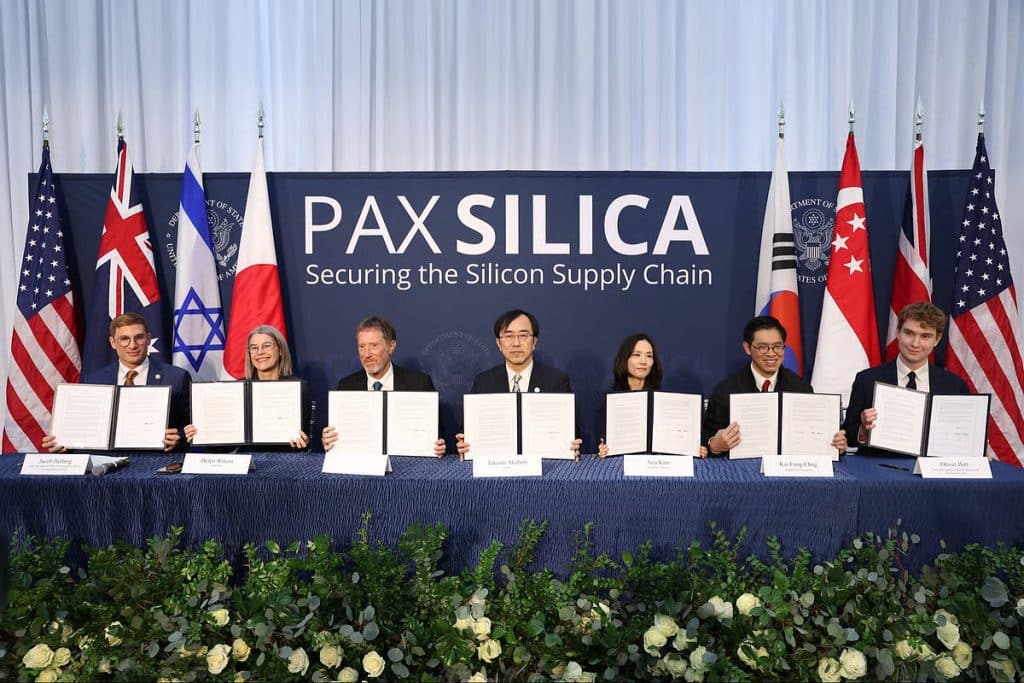
The United States has clarified that India’s absence from the newly launched Pax Silica technology initiative is not a result of any political or trade tensions. Under Secretary of State for Economic Affairs Jacob Helberg emphasized that India continues to be a crucial partner in enhancing supply chain security. He mentioned that discussions surrounding trade and supply chain security are being managed separately and expressed optimism about deepening collaboration between the two nations.
Clarification on India’s Role
During a briefing at the Foreign Press Centre, Helberg addressed speculation regarding India’s exclusion from the Pax Silica Summit. He reassured that the U.S. sees India as a “highly strategic potential partner” in supply chain security initiatives. Helberg pointed out that discussions on trade arrangements and supply chain security are distinct and parallel processes. He underscored the U.S.’s eagerness to engage with India in these discussions, highlighting the critical nature of the bilateral relationship.
Helberg also mentioned maintaining “nearly daily communication” with officials in New Delhi, indicating a commitment to promptly explore avenues for enhanced collaboration. He plans to attend the India AI Impact Summit in February, which he anticipates will provide a platform to establish “tangible milestones” for cooperation between the U.S. and India.
Pax Silica Initiative Overview
The Pax Silica initiative, launched recently, aims to establish a secure and innovation-driven silicon supply chain that includes critical minerals, energy inputs, advanced manufacturing, semiconductors, AI infrastructure, and logistics. The initial group of involved countries includes Japan, South Korea, Singapore, the Netherlands, the United Kingdom, Israel, the United Arab Emirates, and Australia, but conspicuously excludes India. This absence means that all Quad members, except for India, are part of the initiative.
Helberg explained that the focus of the initial grouping was on countries that are central to semiconductor manufacturing. He highlighted that nations like Singapore, South Korea, Japan, Taiwan, and the Netherlands form the “nucleus of semiconductor manufacturing.” The U.S. chose to start with a smaller group to streamline participation before considering further expansion down the supply chain.
Future Collaboration Plans
Looking ahead, Helberg indicated that the Pax Silica initiative is a component of Washington’s broader work plan for 2026, aimed at creating a clear pathway for reliable countries with unique contributions to join the framework. The initiative was officially inaugurated with a declaration signed by representatives from the U.S., Japan, Israel, Australia, Singapore, and South Korea.
According to the U.S. State Department, Pax Silica seeks to diminish coercive dependencies and safeguard essential materials and capabilities vital for artificial intelligence. The initiative also aims to enable partner countries to develop and deploy advanced technologies at scale, reflecting a strategic move toward enhancing global supply chain resilience.
Digihunt is not a financial advisor and this is not investment advice.