Author: Kanhaiya

  • Stocks to Watch: Reliance Industries, Hindustan Aeronautics, Bajaj Housing, Avenue Supermarts and More

    Stocks to Watch: Reliance Industries, Hindustan Aeronautics, Bajaj Housing, Avenue Supermarts and More

    On October 14, market participants will focus on several key events, including the September quarter earnings of major companies along with Hyundai’s upcoming IPO. Global factors such as US retail sales, the ECB interest rate decision, China’s Q3 GDP data, and oil price fluctuations will also play a significant role.

    Indian markets are expected to open with a slight upward trend, as indicated by GIFT Nifty futures. Here are some of the stocks likely to be in focus today:

    Reliance Industries: The company is set to release its Q2 earnings report after market hours on Monday, October 14. Investors will also be looking for any announcements regarding the record date for its bonus share issue.

    Wipro: The company’s board is scheduled to meet on October 16 to consider a bonus share issue. Wipro is notable for being the Nifty constituent with the most bonus issues to date.

    Bajaj Housing Finance: The lock-in period for shareholders expires on Monday, October 14, which will allow 12.6 crore shares (equivalent to 2% of the company’s outstanding equity) to become tradable. However, the end of the lock-in period doesn’t necessarily mean all these shares will be sold on the open market.

    Hindustan Aeronautics: Recently elevated to Maharatna status by the Finance Ministry, making it the 14th such company in India.

    Avenue Supermarts: The company reported a 5.8% rise in net profit for Q2, reaching Rs 659.6 crore, with revenue increasing by 14.4% to Rs 14,444.5 crore. However, its EBITDA margin narrowed by 40 basis points to 7.6% compared to 8% last year.

    Ola Electric: The company has come under scrutiny by the Automotive Research Association of India (ARAI) due to its pricing practices for the S1 X 2 kWh model. ARAI raised concerns about the company failing to notify about a price reduction before its ‘BOSS’ sale, which could impact its eligibility for government subsidies.

    Disclaimer: The views and investment tips by experts in this digihunt.com report are their own and not those of the website or its management. Readers are advised to check with certified experts before making any investment decisions.

  • Petrol, Diesel Fresh Prices Announced: Check Rates In Your City On October 14

    Petrol, Diesel Fresh Prices Announced: Check Rates In Your City On October 14

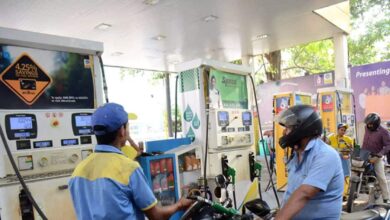
    Petrol and diesel prices on October 14.

    Petrol Diesel Price Today In India. Check city-wise rate table now

    Petrol, Diesel Prices Today On October 14, 2024: Every day at 6 a.m., oil marketing companies (OMCs) update petrol and diesel prices, providing consistency despite the volatility of these commodities. These adjustments reflect changes in global crude oil prices and fluctuations in foreign exchange rates, ensuring consumers stay informed about the latest fuel costs.

    Petrol Diesel Price Today In India (Check city-wise rate table below)

    Check city-wise petrol and diesel prices on October 14

    City Petrol Price (Rs/litre) Diesel Price (Rs/litre)
    Delhi 94.72 87.62
    Mumbai 103.44 89.97
    Chennai 100.75 92.56
    Kolkata 104.95 91.76
    Noida 94.81 87.93
    Lucknow 94.65 87.76
    Bengaluru 102.86 88.94
    Hyderabad 107.41 95.65
    Jaipur 104.88 90.36
    Trivandrum 107.25 96.13
    Bhubaneswar 100.97 92.46

    In India, fuel prices have remained steady since May 2022, following a reduction in fuel taxes by the central government and several states.

    Fuel retail prices are adjusted by OMCs daily at 6 am based on the global price of crude oil. The government oversees fuel prices through excise tax, base pricing, and price caps.

    Factors Affecting Petrol And Diesel Prices In India 

    In India, petrol and diesel prices are influenced by several factors, including freight charges, value-added tax (VAT), and local taxes, resulting in varying rates across different states.

    Crude oil price: The primary raw material for the production of petrol and diesel is crude oil; as such, its price directly influences the ultimate cost of these fuels.

    The exchange rate between the Indian rupee and the US dollar: As a major importer of crude oil, India’s petrol and diesel prices are also influenced by the exchange rate between the Indian and US dollar.

    Tax: Various taxes on petrol and diesel are imposed by both the central and state governments. These taxes may differ across states, exerting a notable influence on the ultimate prices of petrol and diesel.

    The cost of refining:

    The final price of petrol and diesel is additionally influenced by the expenses incurred in refining crude oil into these fuels. The refining process can be costly, and the refining expenses may fluctuate based on factors like the type of crude oil utilised and the refinery’s efficiency.

    The demand for petrol and diesel: The demand for petrol and diesel can also affect their prices. If demand for these fuels increases, it can lead to higher prices.

  • USISPF’s ‘India Leadership Summit 2024’ To Deepen Economic, Tech Ties

    USISPF’s ‘India Leadership Summit 2024’ To Deepen Economic, Tech Ties

    The summit offers a vital platform to strengthen the dynamic strategic partnership between Washington and New Delhi. (Representative image)

    The day-long summit on October 14 also aims to bolster defence ties, promote clean energy and secure a free and open Indo-Pacific.

    In a bid to enhance bilateral trade, supply chains, semiconductor investment, AI and next-gen technologies, the US-India Strategic Partnership Forum (USISPF) is set to host its annual ‘India Leadership Summit 2024′ in the national capital on Monday (October 14).

    The summit follows on the heels of Prime Minister Narendra Modi’s successful recent visit to the US for the Quad Leaders’ Summit and the United Nations General Assembly (UNGA).

    The day-long summit also aims to bolster defence ties, promote clean energy and secure a free and open Indo-Pacific.

    “This is India’s century and I am excited about the possibilities that lie ahead as we work closely with Indian leaders to build a shared and prosperous future for both nations,” said John Chambers, Chairman of USISPF.

    The summit offers a vital platform to strengthen the dynamic strategic partnership between Washington and New Delhi.

    According to a USISPF statement, the summit will feature sessions with prominent leaders including Union Ministers Piyush Goyal, Dharmendra Pradhan and Jyotiraditya Scindia, among other key officials.

    “This summit provides a unique platform for industry and government leaders from both countries to come together for meaningful dialogue. Our aim is to deepen economic ties and explore collaborative solutions that will strengthen the strategic partnership between Washington and New Delhi,” said Mukesh Aghi, President and CEO of USISPF.

    The summit will delve into strategies for fortifying India’s manufacturing economy, as Washington and New Delhi collaborate on rebuilding and realigning global supply chains.

    “The partnership between the United States and India has never been stronger. As two of the world’s leading democracies, we have the unique opportunity to co-create the next generation of technologies and fortify our bilateral ties across critical sectors such as digital transformation, clean energy, and defence,” said Chambers.

    (This story has not been edited by digihunt staff and is published from a syndicated news agency feed – IANS)

  • SBI Plans to Raise Threshold for Instant MSME Loans, Empowering Small Businesses

    SBI Plans to Raise Threshold for Instant MSME Loans, Empowering Small Businesses

    Apart from a vast branch network, SBI reaches its customers through 65,000 ATMs and 85,000 business correspondents.

    To ensure adequate credit availability to the MSME sector, SBI is planning to enhance the threshold under the instant loan scheme from the existing Rs 5 crore.

    To ensure easy and adequate credit availability to the MSME sector, the State Bank of India (SBI) is planning to enhance the threshold under the instant loan scheme from the existing Rs 5 crore.

    ‘MSME Sahaj – End to End Digital Invoice Financing’, provides solutions ranging from applying for the loan, documentation and disbursement of the sanctioned loan within 15 minutes, without any manual intervention.

    “We have, last year, introduced a business rule engine based, data-based assessment of the credit limits up to Rs 5 core. Anybody walking into our MSME branch has to give only their PAN and approval for sourcing GST data, we can give approval in 15-45 minutes,” SBI Chairman C S Setty told PTI in an interview.

    Simplification of the MSME credit is something that the bank is emphasising on and making lending cash flow based backed by the CGTMSE guarantee, he said.

    This reduces the need for collateral, which would enable a lot of people to come into the formal MSME borrowing system, he said.

    “We still have a large number of MSME customers accessing the informal credit. We would like to bring them to the banking fold,” he said.

    As far as network expansion is concerned, Setty said SBI is planning to open 600 branches across the country in the current financial year.

    SBI has a network of 22,542 branches across the country as of March 2024.

    “We have strong branch expansion plans… this would be mainly focused on emerging areas. A lot of residential colonies are not covered by us. Around 600 branches is something we are planning in the current year,” he said.

    Apart from a vast branch network, SBI reaches its customers through 65,000 ATMs and 85,000 business correspondents.

    “We serve about 50 crore customers and we take pride in saying that we are the banker to every Indian, and, more importantly, to every Indian family,” he said.

    He also said he will endeavour to transform SBI into the best and the most valued bank not only from a shareholder point of view but for every stakeholder who deals with the lender.

    “It could be my customers, it could be our shareholders, it could be the larger ecosystem — the society, the institutional framework — all the stakeholders should be saying that this is the best bank to deal with,” he added.

    MSME Sahaj

    MSME Sahaj is a web-based digital solution designed to provide business loans for MSMEs through invoice financing.

    The platform leverages a data-driven credit assessment engine to offer a seamless process, from the loan application and documentation to the disbursement of the sanctioned amount, all within 15 minutes.

    The system also automates loan closure on the due date, ensuring efficient management without manual intervention.

    With MSME Sahaj, customers can access finance of up to Rs 1 lakh against their GST-registered sales invoices in under 15 minutes.

  • FPIs Take Out Rs 58,711 Crore From Equities In October On Geopolitical Crisis, Strong Chinese Stocks

    FPIs Take Out Rs 58,711 Crore From Equities In October On Geopolitical Crisis, Strong Chinese Stocks

    According to the data, FPIs made a net withdrawal of Rs 58,711 crore from equities between October 1 and 11. (Representative image)

    Foreign investors turned net sellers in October, withdrawing shares worth Rs 58,711 crore in month so far owing to escalating conflict between Israel and Iran

    Foreign investors turned net sellers in October, withdrawing shares worth Rs 58,711 crore in the month so far owing to the escalating conflict between Israel and Iran, a sharp rise in crude oil prices, and the strong performance of the Chinese market.

    The outflow came following a nine-month high investment of Rs 57,724 crore in September.

    Since June, Foreign Portfolio Investors (FPIs) have consistently bought equities, after withdrawing Rs 34,252 crore in April-May. Overall, FPIs have been net buyers in 2024, except for January, April, and May, data with the depositories showed.

    Looking ahead, global factors such as geopolitical developments and the future direction of interest rates will play a crucial role in determining the flow of foreign investments into the Indian equity markets, Himanshu Srivastava, Associate Director, Manager Research, Morningstar Investment Research India, said.

    According to the data, FPIs made a net withdrawal of Rs 58,711 crore from equities between October 1 and 11.

    “Escalating conflicts, particularly in the Middle East between Israel and Iran, have increased market uncertainty, leading to risk aversion among global investors. FPIs have become cautious and pulling out money from emerging markets,” Vinit Bolinjkar, Head of research at Ventura Securities, said.

    The geopolitical crisis has also led to a sharp rise in Brent crude oil prices from USD 69 per barrel on Sep 10 to USD 79 per barrel on Oct 10, which poses inflationary risks and increases the fiscal burden for India, he added.

    V K Vijayakumar, Chief Investment Strategist, Geojit Financial Services, believes that FPIs have been following a strategy of ’Sell India, Buy China’ after the Chinese authorities announced monetary and fiscal measures to stimulate the slowing Chinese economy. FPI money has been moving to Chinese stocks, which are cheap even now.

    Together, these developments have created a temporary barrier in Indian equities, reflected in FPI outflow in both debt and equity segments.

    It is anticipated these trends will stabilise around the time of the US polls, Pankaj Singh, smallcase Manager and Founder & Principal Researcher at Smartwealth.ai, said.

    In the debt markets, FPIs pulled out Rs 1,635 crore through the General Limit and invested Rs 952 crore via Voluntary Retention Route (VRR) during the period under review.

    So far this year, FPIs invested Rs 41,899 crore in equities and Rs 1.09 lakh crore in the debt market.

    (This story has not been edited by digihunt staff and is published from a syndicated news agency feed – PTI)

  • Update Mobile Number On Aadhaar Card, Can You Do It Online?

    Update Mobile Number On Aadhaar Card, Can You Do It Online?

    Mobile number update in Aadhaar card

    Know how can you update mobile number in Aadhaar

    In a world where everything is going digital, our Aadhaar card has become a crucial gateway to various services, from banking to government benefits. Yet, something as simple as changing your mobile number on Aadhaar can still feel like a challenge. If you’ve been wondering how to go about this, here’s a clear guide to help you navigate the process effortlessly and stay connected to the services you rely on.

    Is It Mandatory To Provide Mobile Number For Aadhaar Enrolment?

    Providing a mobile number or email ID is not mandatory for Aadhaar enrolment for Resident Indians. However, it is recommended to provide these details to receive updates on your Aadhaar application status and to access various Aadhaar-based services through OTP-based authentication.

    Email ID is mandatory for Non-Resident Indians (NRIs) and Resident Foreign Nationals.

    Need For Mobile Number Linked With Aadhaar

    Your mobile number is used to send One-Time Passwords (OTPs) for Aadhaar-based authentication when accessing government services, banking, or e-KYC processes. This adds a layer of security to your transactions.

    Many online services, like PAN card linking, mobile number portability, or opening bank accounts, require your Aadhaar for verification, and having an updated mobile number ensures you don’t miss out on important messages or alerts.

    Can You Update the Mobile Number On the Aadhaar Card Online?

    You can update your mobile number in Aadhaar by visiting any Aadhaar Enrolment Centre or by using a Postman service. No supporting documents or the old mobile number are required for the update.

    Mobile number updates cannot be done online.

    Aadhaar Enrolment centre can be located by visiting at Bhuvan portal: https://bhuvan-app3.nrsc.gov.in/aadhaar/

  • ‘We Aren’t A Perfect Country, But…’, Radhika Gupta Praises India’s Healthcare After Facing An Emergency Hospital Visit

    ‘We Aren’t A Perfect Country, But…’, Radhika Gupta Praises India’s Healthcare After Facing An Emergency Hospital Visit

    Radhika Gupta. (File Photo)

    After her recovery, Gupta took to the social media to share her experience and express her gratitude for the swift medical care she received at the hospital.

    Radhika Gupta, CEO and Managing Director of Edelweiss Mutual Fund was rushed to the hospital on Sunday, October 06, after suffering a severe fall that resulted in a head injury.

    The incident occurred earlier in the day, and she was immediately taken to hospital, where she received emergency care, including medical tests and stitches.

    Gupta praised India’s healthcare system, noting that medical services in “developed countries” are often slower to respond. She shared her experience on social media, emphasising the high cost of medical insurance in developed nations, where people still face long waits for urgent care, even in critical situations.

    Gupta was treated at Mumbai’s Jaslok Hospital for her injuries, and despite the seriousness of the fall, she was discharged within two and a half hours. She credited the swift response and efficiency of the medical staff for her rapid recovery.

    Appreciation Post

    After her recovery, Gupta took to the social media platform X (formerly Twitter) to share her experience and express her gratitude for the swift medical care she received at the hospital.

    “This is an appreciation post! I had a bad fall and subsequent head injury last Sunday. Had to be rushed for emergency medical care and then treatment. Despite it being a Sunday morning, I managed to get an ambulance, excellent care, tests, and stitches within a few hours thanks to the efficient team at Jaslok Hospital. I was back home in 2.5 hours of the fall,” She wrote on X.

    Healthcare In Developed Countries

    In her post, Gupta contrasted her experience with healthcare services in other developed nations, emphasising the long waits often encountered in emergency departments overseas. She commended the Indian healthcare system for its efficiency, stating, “We’re not a perfect country, but there are many things we do well, and for that, I am very grateful.”

    “Have lived and seen medical emergencies in many very “developed” parts of the world where long waits at ERs spanning hours and hours are common and medical care even when your head is bleeding is not immediate (despite paying a lot of money for insurance). We aren’t a perfect country, but there are many things we do right, and for this, I am very grateful,” Gupta’s X post added.

    Radhika Gupta is also well-known for her motivational speeches and thought leadership, often sharing insights on resilience, leadership, and the importance of being one’s authentic self.

  • Petrol, Diesel Fresh Prices Announced: Check Rates In Your City On October 13

    Petrol, Diesel Fresh Prices Announced: Check Rates In Your City On October 13

    Petrol and diesel prices on October 13

    Petrol Diesel Price Today In India. Check city-wise rate table now

    Petrol, Diesel Prices Today On October 13, 2024: Every day at 6 a.m., oil marketing companies (OMCs) update petrol and diesel prices, providing consistency despite the volatility of these commodities. These adjustments reflect changes in global crude oil prices and fluctuations in foreign exchange rates, ensuring consumers stay informed about the latest fuel costs.

    Petrol Diesel Price Today In India (Check city-wise rate table below)

    Check city-wise petrol and diesel prices on October 13

    City Petrol Price (Rs/litre) Diesel Price (Rs/litre)
    Delhi 94.72 87.62
    Mumbai 103.44 89.97
    Chennai 100.75 92.56
    Kolkata 104.95 91.76
    Noida 94.81 87.93
    Lucknow 94.65 87.76
    Bengaluru 102.86 88.94
    Hyderabad 107.41 95.65
    Jaipur 104.88 90.36
    Trivandrum 107.25 96.13
    Bhubaneswar 100.97 92.46

    In India, fuel prices have remained steady since May 2022, following a reduction in fuel taxes by the central government and several states.

    Fuel retail prices are adjusted by OMCs daily at 6 am based on the global price of crude oil. The government oversees fuel prices through excise tax, base pricing, and price caps.

    Factors Affecting Petrol And Diesel Prices In India 

    In India, petrol and diesel prices are influenced by several factors, including freight charges, value-added tax (VAT), and local taxes, resulting in varying rates across different states.

    Crude oil price: The primary raw material for the production of petrol and diesel is crude oil; as such, its price directly influences the ultimate cost of these fuels.

    The exchange rate between the Indian rupee and the US dollar: As a major importer of crude oil, India’s petrol and diesel prices are also influenced by the exchange rate between the Indian and US dollar.

    Tax: Various taxes on petrol and diesel are imposed by both the central and state governments. These taxes may differ across states, exerting a notable influence on the ultimate prices of petrol and diesel.

    The cost of refining:

    The final price of petrol and diesel is additionally influenced by the expenses incurred in refining crude oil into these fuels. The refining process can be costly, and the refining expenses may fluctuate based on factors like the type of crude oil utilised and the refinery’s efficiency.

    The demand for petrol and diesel: The demand for petrol and diesel can also affect their prices. If demand for these fuels increases, it can lead to higher prices.

  • Israeli PM Benjamin Netanyahu Offers Condolences Over Demise Of Ratan Tata

    Israeli PM Benjamin Netanyahu Offers Condolences Over Demise Of Ratan Tata

    Ratan Tata (L) passed away at the age of 86 on October 9. (Photo Credits: PTI) A file image of Israeli prime minister Benjamin Netanyahu (R). (Reuters)

    Ratan Tata passed away on Wednesday evening aged 86.

    Israeli Prime Minister Benjamin Netanyahu expressed his heartfelt condolences following the passing of industrialist Ratan Tata.

    The former Tata Group chairman passed away on Wednesday evening aged 86.

    In a message on social media, Netanyahu addressed Prime Minister Narendra Modi, acknowledging Tata’s immense contributions to India’s growth and his significant role in strengthening Israel-India relations.

    He sympathised with Tata’s family and lauded the industrialist’s enduring legacy.

    French President Emmanuel Macron also conveyed his condolences, noting that Tata’s leadership had profoundly influenced industries in both India and France and commended his humanist vision and lifelong dedication to societal progress.

  • Real Estate Developers Expect Housing Demand Pick-Up this Festive Season, to Roll Out Attractive Offers

    Real Estate Developers Expect Housing Demand Pick-Up this Festive Season, to Roll Out Attractive Offers

    As the festive season graces India, the real estate market is poised for its traditional surge, fuelled by developer incentives and strong economic indicators. This year, a confluence of factors, including evolving buyer preferences and robust infrastructure development, is driving growth, particularly in emerging luxury hotspots like Gurugram.

    CBRE’s Festive Season Residential Outlook 2024 predicts continued growth, building on the strong sales performance witnessed throughout 2023 and the first nine months of 2024. Developers are preparing a range of attractive offers for homebuyers, including EMI waivers, GST exemptions, and complimentary add-ons like modular kitchens and furnished apartments. Some developers are even partnering with banks to offer fixed interest rates for specified periods, further sweetening the deal.

    “Building on the strong sales performance throughout 2023 and the Jan-Sep 2024 period, the housing market remains well-positioned for continued growth as we approach the festive season,” says Anshuman Magazine, Chairman & CEO (India, South-East Asia, Middle East & Africa) of CBRE. “Traditionally, this time of the year is considered auspicious for home purchases, hence the sector will witness a surge in demand, particularly from previously hesitant first-time homebuyers.”

    Gurugram, in particular, is attracting significant attention, emerging as a focal point for luxury real estate investments. Major infrastructure developments, coupled with a growing affluent population, are driving this trend. Knight Frank’s India Real Estate Report reveals a 12% year-on-year increase in property sales across the Delhi-NCR region in the first half of 2024, with Gurugram playing a significant role. Areas like Golf Course Road, Golf Course Extension Road, and Southern Peripheral Road (SPR) are highly sought after due to their excellent connectivity, commercial expansion, and luxury residential projects.

    Aakash Ohri, Joint Managing Director and Chief Business Officer of DLF Homes, notes, “The Indian festive season has evolved into the annual high point for residential real estate. This auspicious time is seen as an ideal opportunity to invest in wealth-creating assets. The growing significance of homeownership, bolstered by consumer confidence in recent years, has notably stimulated housing demand.” He adds, “This year, the sector is poised to experience a substantial upsurge, particularly in the luxury segment, attracting HNIs and UHNIs, as well as significant investments from the NRI community.”

    This demand for luxury is reflected in a report by Liases Foras, which shows that luxury property prices in Gurugram increased by an average of 8% in the first half of 2024. Prime areas like Golf Course Extension Road and Dwarka Expressway are outpacing the national average in price appreciation, solidifying their status as prime investment hotspots.

    Vineet Dawar, Senior Vice President of Sales & Strategy at Elan Group, echoes this sentiment, stating, “With market sentiment already strong, we anticipate that the festive season will further accelerate the real estate sector’s growth. Both the residential and commercial segments are seeing promising buyer interest, particularly in key areas of the Delhi-NCR such as Dwarka Expressway and SPR road.”

    Gurugram’s success is intrinsically linked to its continuous infrastructure improvements. The expansion of the Rapid Metro and the upgrade of SPR have significantly enhanced connectivity, attracting both residential and commercial interest. Savills India reports that commercial leasing in Gurugram grew by 18% in the first half of 2024, with SPR and Dwarka Expressway emerging as key growth corridors for IT parks, retail outlets, and office spaces.

    Rahul Singla, Director of Mapsko Group, highlights a shift in buyer preferences, stating, “After the pandemic, there’s been a marked rise in demand for homes that offer more space and lifestyle features like work-from-home setups. We’re expecting strong interest in the mid-to-luxury market segments, as more buyers now prefer comfort, convenience, and enhanced living experiences.”

    Mohit Malhotra, Founder and CEO of NEOLIV, adds, “As the festive season approaches, expectations for sales in Gurgaon’s real estate market are high. This period typically ignites increased buyer interest, driven by optimism and the desire to invest in new homes. Developers are expected to roll out attractive offers and along with the ongoing infrastructure improvements we can expect a good festive period.”

    Beyond Gurugram, emerging markets like Sonipat and Panchkula are also witnessing increased real estate activity. Sonipat, benefiting from its proximity to Delhi and ongoing infrastructure projects like the KMP Expressway, is attracting both residential and industrial investment. Panchkula, close to Chandigarh, is seeing growing interest due to its strategic location and burgeoning IT and business hubs.

    Impact of Loan Rates

    Despite higher loan rates, homeownership remains a priority for many. RBI data shows a substantial 40% increase in home loan deployment, reflecting the resilience and confidence in the housing market. However, credit providers need to remain cautious to manage NPAs effectively.

    In conclusion, the festive season is set to illuminate India’s real estate market, driven by a potent mix of developer incentives, evolving buyer preferences, and strong economic fundamentals. While Gurugram shines as a luxury hotspot, emerging markets are also presenting compelling investment opportunities. As the year progresses, the sector appears poised for sustained growth, fuelled by the enduring aspiration for homeownership and the allure of a prosperous future.