Author: Kanhaiya

  • Jio Platforms Q2 Profit Rises 23.4% To Rs 6,539 Crore, ARPU At Rs 195.1

    Jio Platforms Q2 Profit Rises 23.4% To Rs 6,539 Crore, ARPU At Rs 195.1

    Reliance Jio announces Q2 FY25 financial results.

    The company’s revenue from operations rose 18 percent to Rs 31,709 crore in the September quarter

    Jio Platforms Ltd, the digital services unit of India’s largest conglomerate and parent of Reliance Jio Infocomm Ltd, on October 14 reported a 23.4 percent increase in quarterly profit to Rs 6,539 crore from a year earlier.

    The company’s revenue from operations rose 18 percent to Rs 31,709 crore in the September quarter from Rs 26,875 crore a year earlier, driven by the partial impact of the tariff hike and the scale-up of home and digital services businesses.

    EBITDA increased 17.8 percent to Rs 15,931 crore in the September quarter from Rs 13,528 crore a year ago, led by healthy revenue growth.

    Reliance Jio Infocomm, India’s largest telecom operator by users, reported a quarterly profit of Rs 5,445 crore, up 12 percent from Rs 4,863 crore in the same quarter a year ago.

    Jio’s ARPU rose 7.4 percent to Rs 195.1 from a year earlier due to the tariff hike and a better subscriber mix. Jio said the full impact of the tariff hike will be felt in the next 2-3 quarters.

    Disclosure: digihunt.com is part of the Network18 group. Network18 is controlled by Independent Media Trust, of which Reliance Industries is the sole beneficiary.

  • Reliance Industries Q2 Net Profit Rises 9.4% Quarter-on-quarter To Rs 16,563 Crore, Beats Analysts’ Estimates

    Reliance Industries Q2 Net Profit Rises 9.4% Quarter-on-quarter To Rs 16,563 Crore, Beats Analysts’ Estimates

    Reliance Industries Ltd’s fiscal second-quarter net profit rose to Rs 16,563 crore, up 9.4 percent from the preceding quarter.

    Revenue from operations for India’s most valuable company stood at Rs 2.35 lakh crore in the quarter ended September 30, compared with Rs 2.36 lakh crore a quarter ago.

    A Moneycontrol poll of seven brokerages estimated Reliance Industries fiscal second-quarter revenue to fall marginally to Rs 2.31 lakh crore from the preceding three months. Net profit was expected to fall 12 percent to Rs 15,354 crore.

    “Our performance reflects robust growth in Digital Services and Upstream business. This helped partially offset weak contribution from O2C business which was impacted by unfavourable global demand-supply dynamics,” said chairman and managing director Mukesh Ambani.

    Reliance Jio said the telecom operator’s monthly ARPU (average revenue per user) grew by a strong 7.4 percent year-on-year to Rs 195.1. The company said that the full impact of the tariff hike will flow through in the next 2-3 quarters. Further, Jio strengthened its leadership in 5G with 148 million subscribers upgrading to the faster service. This segment contributes 34 percent of wireless data traffic for Reliance Jio.

    Disclosure: digihunt is part of the Network18 group. Network18 is controlled by Independent Media Trust, of which Reliance Industries is the sole beneficiary.

  • HCL Technologies Q2 Results: Net Profit Rises 11%, Beats Estimates; Rs 12 Dividend Declared

    HCL Technologies Q2 Results: Net Profit Rises 11%, Beats Estimates; Rs 12 Dividend Declared

    HCL Tech has released its Q2 FY25 financial results.

    HCL Technologies Q2 Results: Its revenue from operations for India’s third-largest IT major during July-September 2024 rose 8.2 per cent to Rs 28,862 crore.

    HCL Technologies Q2 Results: IT major HCL Technologies on Monday reported a 11 per cent rise year-on-year in its net profit to Rs 4,235 crore, beating Street expectations, for the second quarter of FY25. The revenue from operations for India’s third-largest IT major during July-September 2024 rose 8.2 per cent to Rs 28,862 crore.

    On a quarter-on-quarter basis, HCL Tech’s net profit slipeed by a marginal 0.5 per cent. However, its revenue grew about 3 per cent.

    HCL Tech also declared another interim dividend of Rs 12 per share. With this, the total interim dividend for the fiscal year now stands at Rs 42 per share.

    Earlier, HCL Tech had given an interim dividend of Rs 18 per share in May, and Rs 12 per share in July.

  • CPI Inflation in September Jumps to 9-Month High of 5.49%

    CPI Inflation in September Jumps to 9-Month High of 5.49%

    Official CPI inflation data for September 2024 has been released.

    Year-on-year inflation rate based on All India Consumer Food Price Index (CFPI) number is 9.24% (Provisional) for the month of September, 2024

    Retail Inflation in September 2024: India’s CPI inflation in September 2024 jumped to a nine-month high of 5.49 per cent on high food prices, as compared with 3.65 per cent in the previous month, according to official data released on Thursday, September 12. The previous high than this was recorded in December 2023 at 5.69 per cent.

    India’s retail inflation had stood at 5.02 per cent in September 2023.

    The retail inflation print of 5.49 per cent is higher than the RBI’s tolerance band of 2-6 per cent.

    “Year-on-year inflation rate based on All India Consumer Price Index (CPI) for the month of September, 2024 is 5.49%. Corresponding inflationrates for rural and urban are 5.87% and 5.05%, respectively. It is likely that the increase in inflation rate for the month of September, 2024 is due to high base effect and weather conditions,” the Ministry of Statistics & Programme Implementation said in a statement.

    Year-on-year inflation rate based on All India Consumer Food Price Index (CFPI) number is 9.24% (Provisional) for the month of September, 2024. Corresponding inflation rate for rural and urban is 9.08% and 9.56%, respectively, it added.

  • ‘Anybody who met Mr Tata…’: Tata Sons Chairman N Chandrasekaran Shares Rare Insights on Ratan Tata

    ‘Anybody who met Mr Tata…’: Tata Sons Chairman N Chandrasekaran Shares Rare Insights on Ratan Tata

    Tata Sons Chairman N Chandrasekaran says Ratan Tata’s direction squarely focused on making sure employees were well taken care of.

    In a hearfelt post, Tata Sons Chairman N Chandrasekaran says anybody who met Rata Tata came away with a story about his humanity, warmth, and dreams for India. There really was no one like him.

    Days after the demise of Ratan Tata, Tata Sons Chairman N Chandrasekaran on Monday penned down moments with the former Tata Sons chairman and said anybody who met Rata Tata came away with a story about his humanity, warmth, and dreams for India. There really was no one like him.

    Tata, who remained the Chairman Emeritus of the sprawling salt-to-software conglomerate till his death, breathed his last at Breach Candy Hospital in south Mumbai at 11:30 pm on October 9. He was put under intensive care on October 7. Ratan Tata was laid to rest on October 10 with full state honours in Mumbai.

    “Anybody who met Mr Tata came away with a story about his humanity, warmth, and dreams for India. There really was no one like him. Our relationship grew over the years, first focusing on business and eventually evolving into a more personal connection. We discussed interests ranging from cars to hotels, but when our conversations turned to other matters — those of daily life — he would show how much he noticed and felt. He was someone to be discovered, over time and through experience. I remember several such instances,” Chandrasekaran said in a post on LinkedIn.

    Chandrasekaran record the momemt when he just became Chairman, saying “I was introduced to a situation within Tata Motors which involved a dispute between the company and the employees’ union over wages for two years. In March ‘17, Mr. Tata and I met the union leaders together. During the meeting, Mr. Tata relayed three messages: he regretted the delay in finding a resolution. He explained that the company was passing through hardship. And both of us committed that this dispute would be concluded within a fortnight.”

    Ratan Tata’s direction squarely focused on making sure employees were well taken care of—not just to resolve the dispute, but to ensure they and their families’ well-being. Across other Group companies, his perspective on employees was uniform. It is something that has shaped a number of our leaders across the Group, he stated.

    Chandrasekaran also shared a telling anecdote about Tata’s character during the renovation of Bombay House, the Tata headquarters.

    He wrote, “Bombay House had not been touched since 1924, and more important (as many people told me) Mr. Tata would not like it. “Bombay House is a temple,” I was told, emphasising its sanctity. When I finally mentioned to Mr. Tata about Bombay House, he said, “May I ask you something? When you say ‘renovate’, do you mean ‘vacate’?” I explained that we planned to move everyone to a nearby office. He gently clarified: “Where will the dogs go?” The dogs were an integral part of Bombay House, often seen at the reception. “We will build a kennel.” “Really?” he said, considering it. When the renovation of Bombay House was complete, Mr. Tata wanted to see the kennel first.”

    He was very happy to see how thoughtful the kennel’s design was, and how well the dogs would be cared for. Seeing his happiness with the kennel and his priorities was a reminder that while big projects are important, it’s the details that reveal how we think, what we prioritise, and how we are perceived. His joy was confirmation that we had done the right thing, the Tata Sons chairman wrote.

    Chandrasekaran concluded his tribute by highlighting Tata’s remarkable memory and keen observation skills. Whether recalling the intricacies of a room’s design or the content of a book read years prior, Tata possessed a photographic memory and an exceptional ability to process information.

    “His eye received everything clearly, as his mind perceived everything clearly,” Chandrasekaran concluded, encapsulating the essence of Ratan Tata: a leader defined not only by his business acumen but also by his profound humanity and unwavering attention to detail.

  • Housing Prices in Top-10 Cities Surge 88% in 5 Years, Gurugram Rate Jumps 160%

    Housing Prices in Top-10 Cities Surge 88% in 5 Years, Gurugram Rate Jumps 160%

    In terms of per sq. ft. prices, Mumbai continues to be the costliest with average price at Rs 35,500 psqft. (Representative Photo)

    Mumbai experienced the lowest increase at 37%, with prices rising from Rs 25,820 per sq ft to Rs 35,500 per sq ft during the same period.

    The average price of newly launched residential projects in India’s top 10 cities has surged by a staggering 88 per cent over the past five years, according to a report by real estate data analytics firm PropEquity released on Monday.

    Gurugram witnessed the most dramatic price growth, with average prices catapulting by 160% from Rs 7,500 per sq ft in 2019 to Rs 19,500 per sq ft in 2024. In contrast, Mumbai experienced the lowest increase at 37%, with prices rising from Rs 25,820 per sq ft to Rs 35,500 per sq ft during the same period.

    Following Gurugram in terms of price growth are Noida (146%), Bengaluru (98%), Hyderabad (81%), Chennai (80%), Pune (73%), Navi Mumbai (69%), Kolkata (68%), Thane (66%), and finally Mumbai.

    The report analysed 15,000 new launch projects comprising apartments, floors, and villas across the top 10 cities: Bengaluru, Chennai, Hyderabad, Kolkata, Mumbai, Thane, Navi Mumbai, Pune, Noida, and Gurugram.

    “Real estate prices have escalated exponentially across all major cities in the last five years,” explains Samir Jasuja, Founder & CEO of PropEquity. “The massive infrastructure development, growing interest from NRIs, HNIs/UHNIs and stock market gainers looking to create wealth and generate income through real estate investment, rising homeownership sentiments and overall shift towards luxury/super luxury homes as a result of rising aspiration and affluence are the contributing factors for such a steep rise.”

    Despite experiencing the lowest price increase, Mumbai remains the most expensive city with an average price of Rs 35,500 per sq ft. Gurugram follows at Rs 19,500 per sq ft, and Noida at Rs 16,000 per sq ft.

    The data further reveals a significant shift in the affordability landscape. In 2019, only Mumbai boasted average new launch prices exceeding Rs 10,000 per sq ft. However, by 2024, all cities except Hyderabad, Chennai, and Kolkata crossed this threshold, highlighting the growing demand and shrinking affordability in India’s prime real estate markets.

  • Is Aadhaar Mandatory For Getting A Mobile SIM?

    Is Aadhaar Mandatory For Getting A Mobile SIM?

    UIDAI is a statutory authority established under the provisions of the Aadhaar Act, 2016. (Representative image)

    As per the Department of Telecommunications (DoT) guidelines, you can register up to nine mobile numbers under your name.

    Aadhaar is one of the most crucial documents for verifying an individual’s identity in India. It serves as a unique 12-digit identification number that is linked to an individual’s biometric and demographic data. Aadhaar is essential for various official purposes, including accessing government services, filing taxes, opening bank accounts, applying for passports, and obtaining mobile SIM cards. Its widespread use helps streamline administrative processes and ensures transparency and efficiency in public service delivery.

    Is Aadhaar Mandatory For Mobile Connection?

    As of now, Aadhaar is not mandatory for getting a mobile SIM in India. However, it is one of the accepted identity proofs for the Know Your Customer (KYC) process.

    According to the information available on the official website of UIDAI, Aadhaar is not mandatory for obtaining a mobile connection. However, under the amendments to the Telegraph Act, 1885, telecom users may voluntarily use their Aadhaar number as a KYC document along with authentication for getting a new SIM card.

    For your safety and the security of the nation, it is recommended to verify the identity of all mobile subscribers using a reliable identifier like Aadhaar.

    This helps prevent misuse, as many criminals and terrorists obtain SIM cards using fake identities or in the names of unsuspecting individuals to commit fraud and other crimes.

    When a mobile number is verified and linked to Aadhaar, it becomes easier to track down fraudsters, criminals, and terrorists, ensuring they are identified and brought to justice.

    The UIDAI has clarified that no entity, including mobile phone companies, is allowed to store or use your biometrics collected during Aadhaar verification. Once you place your finger on the fingerprint sensor, your biometric data is immediately encrypted and securely transmitted to the UIDAI for verification purposes.

    How Many SIM Cards Are Linked to Your Aadhaar?

    As per the Department of Telecommunications (DoT) guidelines, you can register up to nine mobile numbers under your name.

  • RBI Governor Asks Banks to Strengthen Liquidity Buffer, Stay Alert on Social Media

    RBI Governor Asks Banks to Strengthen Liquidity Buffer, Stay Alert on Social Media

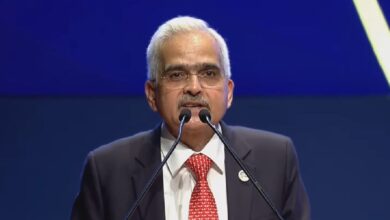
    RBI Governor Shaktikanta Das. (File photo)

    The feasibility of expanding RTGS (real-time gross settlement) to settle transactions in major trade currencies such as dollar and euro can be explored, says RBI Governor Shaktikanta Das.

    RBI Governor Shaktikanta Das on Friday asked banks to strengthen their liquidity buffer to handle any unfavourable situation and stay alert in social media space. He also said the feasibility of expanding RTGS (real-time gross settlement) to settle transactions in major trade currencies such as the dollar and euro can be explored.

    He also said the Central Bank Digital Currency has the potential to facilitate efficient cross-border payments.

    In his keynote address at the conference on ‘Central Banking at Crossroads’, Das said, “Remittances are the starting point for many emerging and developing economies, including India, to explore cross-border peer-to-peer (P2P) payments. We believe there is immense scope to significantly reduce the cost and time for such remittances.”

    He added that the feasibility of expanding real-time gross settlement (RTGS) to settle transactions in major trade currencies such as dollar. Euro and Pound can be explored through bilateral or multilateral arrangements.

    Das also said divergence of monetary policies across the world is leading to volatility in capital flows and exchange rates. Today’s global economy is more integrated than ever before.

    The RBI Governor also raised concerns over misuse of Artificial Intelligence in the banking space saying it could lead to more cyber attacks and data breaches.

    “Banks and other financial institutions must put in place adequate risk mitigation measures against all these risks. In the ultimate analysis, banks have to ride on the advantages of AI and Bigtech and not allow the latter to ride on them,” he said.

  • Hyundai IPO to Open Tomorrow: Should You Apply? Check Recommendations, Price, Lot Size

    Hyundai IPO to Open Tomorrow: Should You Apply? Check Recommendations, Price, Lot Size

    Hyundai IPO: Hyundai Motor India Ltd (HMIL), the Indian arm of South Korean automaker Hyundai, is set to launch its initial public offering (IPO) for public subscription on Tuesday, October 15. The Rs 27,870.2-crore IPO, which is a complete offer-for-sale (OFS) where the company’s South Korean parent will be diluting some of the stake, will be closed on October 17. Should you apply? Here’s everything you need to know:

    Though the IPO will remain opened for public between October 15 and October 17, anchor investors can submit bids on October 14. The share allotment will take place on October 18, while Hyundai Motor India’s shares will be listed on BSE and NSE on October 22.

    It is India’s biggest IPO comfortably surpassing LIC’s Rs 21,000-crore IPO, which was until now the biggest IPO in the country’s history.

    Hyundai Motor India IPO: Price Band and Lot Size

    The price band of the much-awaited IPO has been fixed in the range of Rs 1,865 to Rs 1,960 per share.

    Investors can bid for the IPO for a minimum of 7 equity shares and in multiples of 7 equity shares thereafter.

    Hyundai Motor India IPO GMP Today

    According to market observers, unlisted shares of Hyundai Motor India Ltd are trading Rs 65 higher in the grey market than its issue price. The Rs 65 grey market premium or GMP means the grey market is expecting a 3.32 per cent listing gain from the public issue. The GMP is based on market sentiments and keeps changing.

    ‘Grey market premium’ indicates investors’ readiness to pay more than the issue price.

    Hyundai Motor India IPO: Analysts’ Recommendations

    This IPO marks a significant milestone for the Indian auto industry, as it is the first automaker’s initial share sale in over two decades, following Japanese automaker Maruti Suzuki’s listing in 2003. Most brokerages have given a ‘buy’ ratings to the IPO.

    Hyundai Motor India IPO recommendations from various brokerages.

    Giving a ‘Buy’ recommendation, Bajaj Broking in its IPO note said, “For the last three fiscals, the company has reported an average EPS (earning per share) of Rs 62.56, and an average RoNW (return on net worth) of 39.11 per cent. The issue is priced at a P/BV (price-to-book value) of 13.11 based on its NAV (net asset value) of Rs 149.52 as of June 30, 2024, as well as post-IPO equity capital since this is a secondary issue.”

    If one attributes FY25 annualised super earnings to its post-IPO fully diluted paidup equity capital, then the asking price is at a price-to-earning (P/E) of 26.73, and based on FY24 earnings, the P/E stands at 26.28, it said.

    “The issue relatively appears fully priced, but the company is poised for bright prospects post completion of its ongoing expansions,” said Bajaj Broking.

    Hyundai Motor India reported profit after tax (PAT) margins of 6.05 per cent (FY22), 7.67 per cent (FY23), 8.50% (FY24), 8.48% (Q1-FY25), and RoCE (return of capital employed) margins of 20.37 per cent, 28.75 per cent, 62.90 per cent, 13.69 per cent for the referred periods, respectively.

    Another brokerage Master Capital Services in its IPO note said, “Hyundai’s IPO offers potential value growth by expanding investment prospects in the underdeveloped Indian auto market.”

    Another brokerage LKP Securities also recommended a ‘subscribe for long term’.

    “We believe it (Hyundai Motor India IPO) is the second best player to play as a proxy to the Indian PV (passenger vehicle) theme along with the likes of Maruti Suzuki. The company has about 15 per cent market share on the back of 68 15 per cent share coming from the SUVs, while more than 20 per cent share coming from exports. Its revenues are growing along with the industry in India and have strong return ratios as well. Its EBITDA margins at 13.8 per cent in Q1 FY25 are best among the industry. The current capacity utilisation of HMI’s plants is nearly 100 per cent, due to which in near future the company may not be able to cater to the demand,” LKP stated.

    However, since the PV industry is slightly in a slow lane currently, this may augur well for the company, as HMI is expanding its capacity by 30 per cent in the next 2 to 3 years. With new model launches (4 in mid-term, including the new Creta EV), HMI should give a strong fight to its rivals. At the upper end of the price band, on FY 24 earnings, the stock should trade at 26x times which is a fair value as compared to its closest peer Maruti Suzuki (29x FY 24 earnings). “Therefore, on all favourable parameters, we assign a SUBSCRIBE rating on the stock. We recommend investing in this stock over the long term for higher returns,” LKP said.

    Saji John, senior research analyst at Geojit Financial Services, said, “Hyundai’s impressive financial performance and premium product mix, especially in the SUV segment, could alter the competitive landscape in the listed space. This could force other automakers to innovate and improve their offerings to build investors’ confidence. Investors might reallocate their portfolios based on Hyundai’s perceived growth potential and valuation, which could put downward pressure on its competitors’ share price.”

    Hyundai’s emphasis on innovation, particularly in the EV sector, strategically places it to gain a larger market share and command higher prices. With the growing consumer preference for EVs, Hyundai’s cutting-edge and competitive models are likely to draw more buyers. The company’s robust brand image and loyal customer base, especially in the SUV and premium car markets, could further diminish Maruti’s market share and sales. Additionally, Hyundai’s strong reputation for quality and safety is a significant factor in attracting customers, John added.

    “Hyundai’s IPO being the first major auto IPO in India in over two decades could attract significant global investor interest. This influx of foreign investment could further enhance the sector’s valuation. The company’s portfolio expansion and manufacturing capabilities highlight the growth potential and investment in the automotive market. The increased competition and innovation driven by Hyundai’s enhanced financial strength post-IPO could push other automakers to reassess their growth potential and market positioning, positively re-rating the sector. Conversely if the listing has been perceived as overvalued then it can negatively impact,” John said.

    Mirae Asset Capital Markets in its note said, “On financial metrics, HMIL exhibits superior operating margins relative to its closest competitor. At the upper price band of INR 1,960, HMIL is priced at a PE of 26.3x FY24 EPS, in comparison to Maruti Suzuki Ltd., which trades at 30.8x FY24 EPS.”

    Hyundai Motor India IPO: More Details

    Hyundai Motor India commenced operations in India in 1996 and currently sells 13 models across segments.

    In its draft papers, Hyundai Motor India said, “Further, our Company expects that listing of the Equity Shares will enhance our visibility and brand image and provide liquidity and a public market for the Equity Shares in India.”

    Hyundai set up its India operations in 1996, starting off with the Santro hatchback, once its most sold car. Hyundai holds India’s no.2 carmaker spot, coming in behind Maruti Suzuki. It currently has a roughly 15% share in the country’s competitive car market. It sold 614,721 cars in India and exported 163,155 units in the year to March 2024

    Hyundai has one factory outside of Chennai in southern Tamil Nadu state, also dubbed the Detroit of Asia. The factory has a capacity of 824,000 units per year and is running at a utilisation rate of 94 per cent, leaving little room for growth that would help compete with Maruti Suzuki.

    Hyundai aims to reach production of about 1 million units a year with the acquisition of a former General Motors plant in western Maharashtra state. The plant is expected to start operations only by the second half of the year to March 2026.

    Hyundai has 1,377 dealers across India. In India, the carmaker sells 13 models, with the ‘Creta’ and ‘Venue’ sport utility vehicles as well as the ‘Grand i10 Nios’ hatchback among its top-selling models.

    Hyundai’s current factory is also a key export hub, which manufactures cars that are shipped to South Africa, the Middle East as well as Latin America.

    Citi, HSBC Securities, JP Morgan, Kotak Mahindra Capital and Morgan Stanley are the investment banks advising on the transaction and law firm Shardul Amarchand Mangaldas is the company counsel. Cyril Amarchand Mangaldas is the banks’ counsel and Latham and Watkins is acting as the international counsel.

  • Stocks Markets Updates: Sensex, Nifty 50 Trade High On Pre-open

    Stocks Markets Updates: Sensex, Nifty 50 Trade High On Pre-open

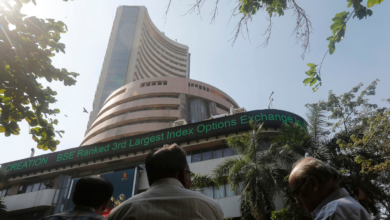
    The Indian stock market indices, Sensex and Nifty 50, are expected to open higher on Monday, following gains in global markets. Gift Nifty trends suggest a mildly positive start for the Indian benchmark index.

    Gift Nifty trades around the 25,085 level, a premium of approximately 35 points over the previous close of Nifty futures.