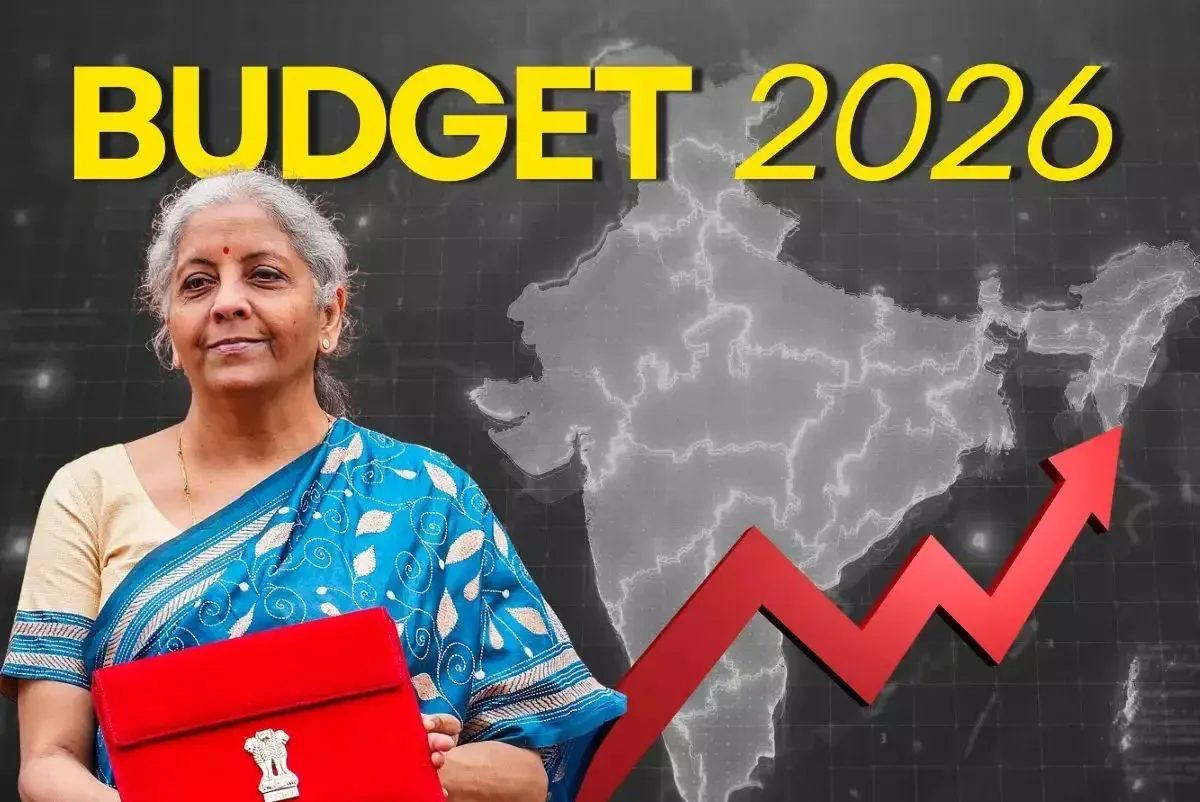
The Union Budget 2026 is set to play a crucial role in shaping India’s economic trajectory, highlighting the need for household financial resilience alongside rapid economic growth. As the nation aims to become a $5 trillion economy, it grapples with challenges like declining savings and insufficient financial protection for families. Experts urge that life insurance should be prioritized in the upcoming budget, as it is essential for safeguarding the aspirations of over a billion citizens against economic uncertainties.
The Resilience Gap: Importance of Household Security
For India to realize its vision of a “Viksit Bharat,” the financial security of its families must be a vital measure of national success. Recent statistics from the Economic Survey 2024-25 indicate a concerning trend: the country’s gross domestic savings as a percentage of GDP fell from 31.2% in 2021-22 to 30.2% in 2022-23. This drop in savings, coupled with stagnation in financial protection, leaves households increasingly exposed. The implications of this trend extend beyond mere numbers, signaling a potential crisis in the nation’s financial foundation.
To counter this exposure, the Union Budget 2026 should adopt a two-pronged fiscal strategy aimed at strengthening household financial security. First, a comprehensive revision of tax sections 80C, 80CCC, and 80CCD is necessary to increase savings limits in accordance with inflation. Currently, India’s total life insurance coverage stands at only 24% of GDP, significantly lower than countries like Singapore and Malaysia. This presents a substantial protection gap of 83% in India compared to 55% in Singapore. The government could introduce a dedicated tax deduction for pure term insurance premiums, independent of the existing ₹1.5 lakh limit under Section 80C. Such measures would elevate life insurance from a discretionary expense to a fundamental component of financial planning, better protecting households.
India’s Impending Challenge: Ageing with Dignity
Despite increased disposable incomes, many Indian households remain near financial distress, especially those dependent on a single income. The need for reform is underscored by a demographic shift, as India is projected to age more rapidly than it accumulates wealth. By 2050, one in five Indians will be over 60 years old, yet current retirement preparedness lags behind expectations.
To address these demographic and financial issues, the Union Budget 2026 must prioritize retirement planning as a critical social necessity. This could be achieved by establishing a dedicated tax framework for annuities and pension products, ensuring that all pension-linked instruments receive equal treatment under the National Pension System (NPS). Furthermore, the budget should consider including annuities under Section 10(10D) as tax-exempt instruments. Currently, retirement payouts are taxable, which deters individuals from securing their financial futures. Granting tax-free status to these payouts would enhance the significance of protection in a changing economy, making life insurance a vital safety net for all.
From Reform to Execution: Making Policy Work for Households
To execute these targeted solutions effectively, the regulatory framework must evolve in sync with the proposed reforms. Recognizing life insurance as an essential service under the GST framework is a significant move forward, laying the groundwork for broader sector reforms. This alignment supports the Sabka Bima Sabki Raksha Bill 2025, which aims for universal coverage.
The upcoming Union Budget 2026 must also outline a clear execution roadmap to facilitate the transition towards 100% foreign direct investment (FDI) while ensuring strong governance. Additionally, there is an urgent need for a roadmap regarding Composite Licensing, enabling a “one-stop-shop” model that integrates life and health insurance. This strategy could reduce distribution costs and simplify the consumer experience, fostering a more comprehensive protection ecosystem for all Indians.
As the nation prepares for the future, recognizing life insurance as a key stabilizer in the economy is critical. The Union Budget 2026 offers an opportunity to institutionalize financial security as a national priority, ensuring that by 2047, every Indian household is adequately protected.
Digihunt is not a financial advisor and this is not investment advice.