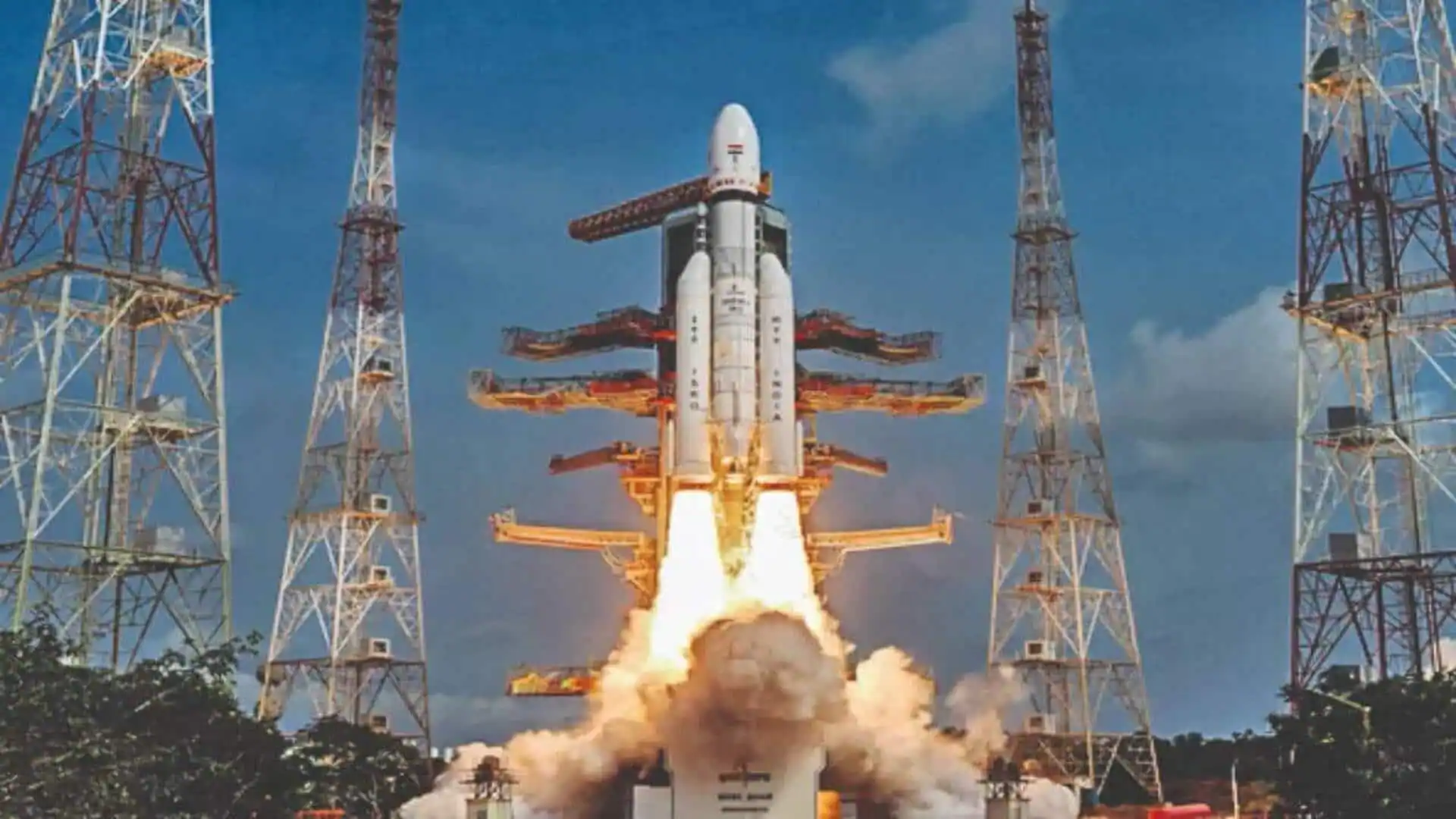
The Satcom Industry Association-India (SIA-India) is advocating for a substantial increase in India’s space budget, recommending that the government triples its current allocation. This proposal comes as part of pre-budget submissions made to various government bodies, where the association emphasized the necessity for specialized manufacturing incentives and long-term funding frameworks to improve connectivity, navigation, and earth observation capabilities. Currently, India’s public spending on space is only 0.04% of GDP. SIA-India asserts that a gradual increase in budget allocations is imperative to align with global norms and support the country’s ambitions in the space sector.
Call for Increased Space Budget
SIA-India has proposed a phased approach to increase the national space budget, beginning with an allocation of approximately Rs 18,000 crore in the upcoming fiscal year. This would be succeeded by increments to Rs 27,000 crore and Rs 36,000 crore over the following four years. The association believes this adjustment would elevate India’s spending on space to 0.12% of GDP, aligning it more closely with leading spacefaring nations. Such funding is viewed as vital for enhancing launch capabilities, developing satellite constellations, and establishing new testing infrastructure, thereby stimulating growth in the private sector.
The association’s president, Subba Rao Pavuluri, underscored that India’s position in the global space economy heavily relies on consistent long-term investments in capability development. He noted that various sectors, including secure communications, navigation, and disaster resilience, increasingly depend on space assets. To fulfill strategic aspirations and uphold leadership in the Indo-Pacific region, SIA-India urges the recognition of space as critical infrastructure alongside a significant boost in public investment.
Classification of Space Systems as Critical Infrastructure
In its recommendations, SIA-India called on the government to reclassify satellite communications, Earth observation, and NavIC-based navigation as national critical infrastructure. The association contends that these systems are essential for financial networks, telecommunications, logistics, governance, and disaster response. By prioritizing the protection and planning of these systems, the government can enhance their reliability and effectiveness.
Among their key suggestions, SIA-India has proposed a hybrid Production-Linked Incentive (PLI) scheme specifically designed for low-volume, high-reliability space components. They argue that conventional PLIs are unsuitable for space manufacturing and instead recommend incentives tied to capital investment, testing, export readiness, and component qualification. The association has pinpointed several areas, such as radiation-hardened electronics and precision optics, where India currently depends on imports, thus emphasizing the urgency for domestic production capabilities.
Tax and Regulatory Reforms for Space Manufacturing
SIA-India is also advocating for clearer tax regulations and classification rules for space-grade components. This includes creating dedicated Harmonized System of Nomenclature (HSN) codes and rationalizing Goods and Services Tax (GST) to cut embedded costs. They also seek mechanisms for zero-rating or refunds on satellite manufacturing and launch services. Additionally, the association is pushing for accelerated depreciation on space-grade equipment and an extension of the business-loss carry-forward period to fifteen years to better reflect the long development cycles common in the space industry.
To streamline customs operations, SIA-India recommends establishing clean-room inspection zones at major ports to shield sensitive hardware from damage. These reforms aim to enhance the efficiency and competitiveness of India’s space manufacturing sector, enabling it to meet both domestic and international demand more effectively.
Long-term Plans for Earth Observation and Launch Infrastructure
SIA-India has proposed to the Department of Space and ISRO that long-term budgets be established for a national Earth observation procurement plan and a NavIC capability expansion program. The association is also urging the development of public-private testing hubs equipped with advanced facilities like thermal-vacuum chambers and vibration rigs, calibrated to ISRO standards.
Moreover, SIA-India is advocating for budgetary support to expand launch infrastructure, including the construction of a third launch pad and shared engine-test facilities for private vehicle developers. They have also recommended creating a national space-economy measurement system and operational guidelines for the Rs 1,000 crore space venture fund. This fund aims to support a multi-year National Satellite Connectivity Mission, which focuses on enhancing satellite backhaul and broadband services in around 40,000 challenging gram panchayats. Additionally, it aims to provide financial support for user terminals and domestic high-throughput satellite capacity.
Digihunt is not a financial advisor and this is not investment advice.