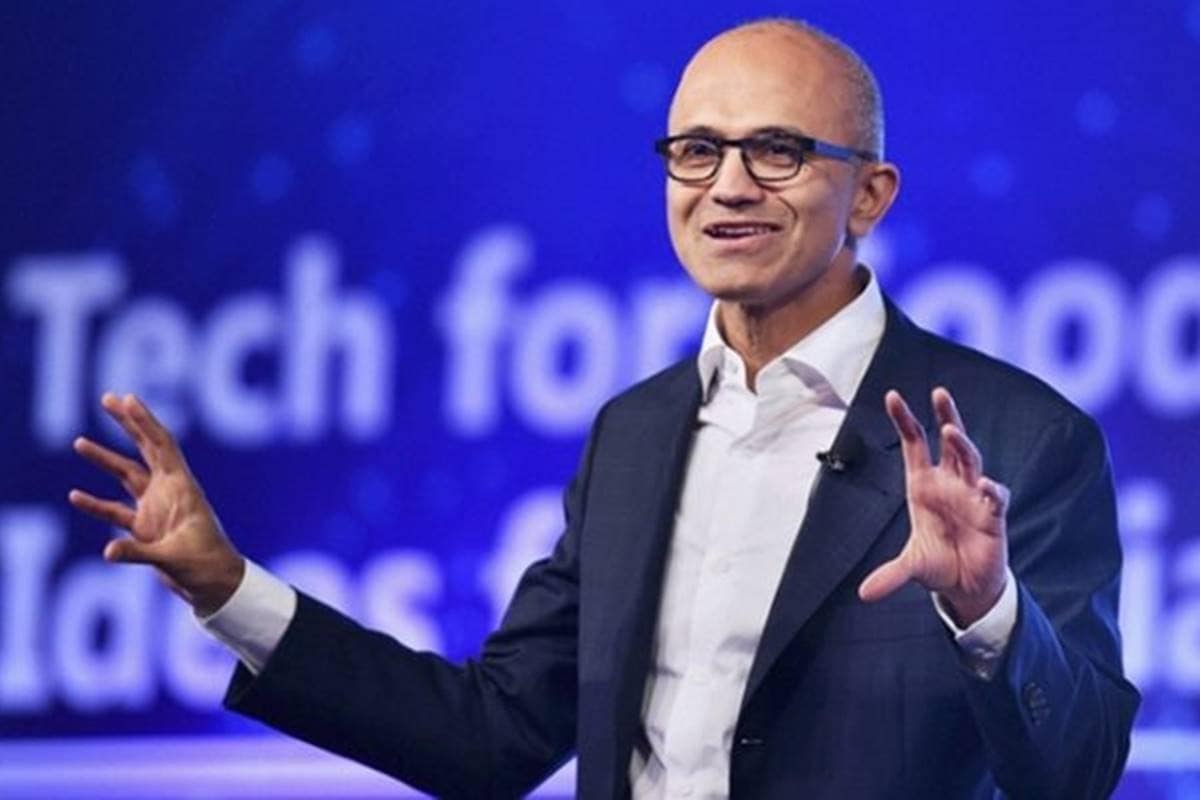
Microsoft CEO Satya Nadella recently underscored the importance of cyber resilience in safeguarding national sovereignty during his visit to Bengaluru as part of the Microsoft AI Tour. He cautioned that countries isolating themselves from global threat intelligence may inadvertently create vulnerabilities. Nadella also announced key partnerships with major Indian technology companies to promote the adoption of artificial intelligence, signifying a crucial step toward innovation in the region.
Cyber Resilience and Sovereignty
Nadella emphasized that as nations develop sovereign data infrastructures, it is vital to stay connected to global insights on cyber threats. He noted that while local data storage is mandated by some countries, cyber threats can arise from anywhere. Thus, it is essential for sovereign infrastructures to remain open to global perspectives. He described cybersecurity as fundamentally a “signals game” and an “intelligence game,” urging leaders to incorporate sovereignty and resilience into a comprehensive risk management strategy. Microsoft intends to offer governments and enterprises a range of public, private, and sovereign cloud services to bolster their cybersecurity.
Strategic Partnerships and AI Adoption
During his address, Nadella revealed strategic collaborations with prominent Indian firms, including Cognizant, Infosys, TCS, and Wipro. These partnerships aim to boost the adoption of agentic AI, with each company set to deploy over 50,000 Microsoft Copilot licenses, resulting in a total exceeding 200,000 licenses. This initiative marks a significant milestone in large-scale AI adoption. The announcement follows Microsoft’s commitment of $17.5 billion in investments in India, focusing on AI infrastructure, skill enhancement, and sovereign capabilities, representing the company’s largest investment in Asia to date.
Transforming Software Development
Nadella highlighted the necessity for a fundamental shift in how developers approach software creation. He argued that technology should focus on outcomes rather than simply innovation. He proposed that the traditional software development lifecycle (SDLC) must transition to an AI-driven model, placing data at its center. He elaborated that effective context engineering involves organizing data to inform intelligent systems, which can then optimize processes to achieve better outcomes.
Innovative AI Frameworks
The Microsoft CEO also introduced the AI LLM Council, a decision-making framework inspired by OpenAI co-founder Andrej Karpathy. This structure employs multiple large language models, such as GPT, Gemini, and DeepSeek, which function as “council members” to synthesize reasoning. Nadella illustrated this idea with a playful example of selecting an all-time Indian cricket XI, demonstrating how the models debated various player selections. He characterized this multi-model discussion as “a chain of debate, not a chain of thought,” providing insight into a future where AI agents enhance human decision-making through reasoning and synthesis.
Digihunt is not a financial advisor and this is not investment advice.