Rupee Hits Record Low of 90.74 Against Dollar Amid Trade Deal Uncertainty and FII Outflows

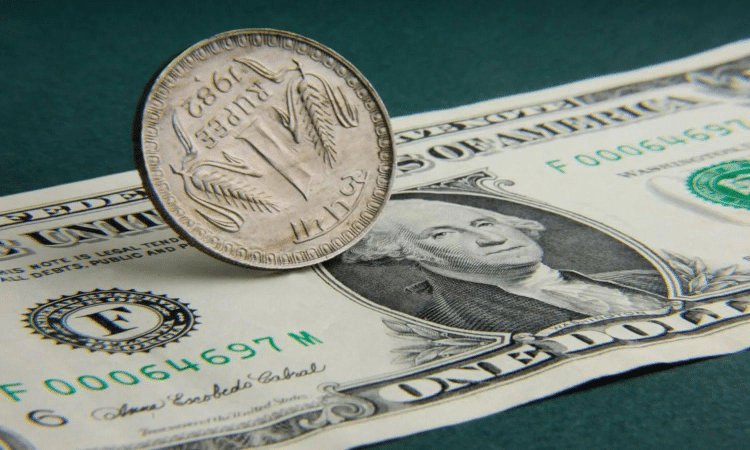
The Indian rupee has reached a record low, closing at 90.74 against the US dollar. This decline follows an intra-day drop to 90.80, driven by ongoing uncertainties surrounding trade negotiations between India and the US, coupled with continued outflows of foreign funds. Analysts suggest that strong demand for dollars from importers and a risk-averse sentiment among investors are major factors affecting the rupee’s performance.
Rupee’s Performance and Market Sentiment
The rupee opened at 90.53 per dollar in the interbank foreign exchange market but faced pressure during the trading session, ultimately settling at 90.74, down 25 paise from its previous close. This follows a 17 paise decline on Friday, when the rupee had already hit a then-record low of 90.49. Forex traders noted that, despite some positive macroeconomic indicators, the domestic currency struggled to gain traction. Concerns over capital outflows and trade negotiations have overshadowed any potential support for the rupee. Dilip Parmar, a research analyst at HDFC Securities, stated that the rupee has become the weakest currency in Asia.
Factors Influencing the Currency’s Decline
Parmar mentioned that the rupee’s decline is mainly due to a significant imbalance between demand and supply in the currency market. The high demand for dollars from importers, combined with ongoing capital outflows, remains a critical concern for the currency’s stability. He indicated that the technical outlook for the USD-INR pair appears bullish in the near term, with resistance levels around 90.95 and support near 90.50. This analysis suggests that the rupee may continue to face difficulties in the coming days.
Trade Negotiations and Economic Outlook
Trade negotiations between India and the US are a central focus for market participants. Commerce Secretary Rajesh Agrawal noted that both countries are “very close” to finalizing a framework trade deal, although no specific timeline was provided. The discussions include tariff-related issues alongside a comprehensive bilateral trade agreement. Exporters and industry bodies are closely monitoring these negotiations, as elevated import duties have adversely affected Indian exports to the US. The outcome of these discussions could significantly influence the rupee’s future trajectory.
Market Reactions and Broader Economic Indicators
In the broader financial landscape, the dollar index, which measures the US dollar’s strength against a basket of six major currencies, saw a slight reduction of 0.08% to 98.32. Concurrently, Brent crude futures, a global oil benchmark, increased by 0.21% to $61.25 per barrel. In the equity market, benchmark indices experienced a marginal decline, with the Sensex dropping by 54.30 points to close at 85,213.36 and the Nifty declining by 19.65 points to 26,027.30. Furthermore, foreign institutional investors sold equities worth Rs 1,114.22 crore, reflecting cautious market sentiment. On a positive note, India’s foreign exchange reserves rose by $1.033 billion to reach $687.26 billion in the week ending December 5, following a decline in the previous week.
Digihunt is not a financial advisor and this is not investment advice.