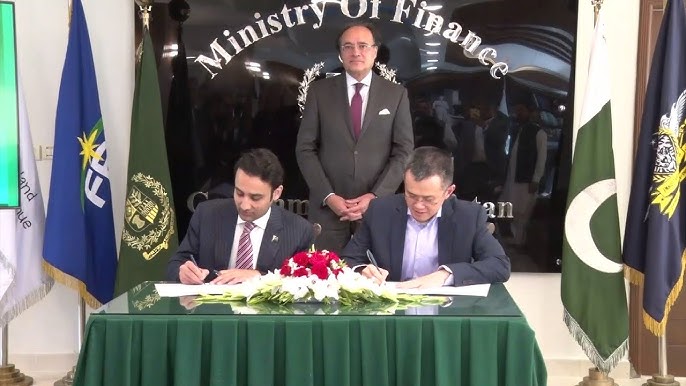
Pakistan is making significant strides in modernizing its financial infrastructure by signing a memorandum of understanding (MoU) with global cryptocurrency exchange Binance. The agreement aims to explore the tokenization of sovereign and real-world assets worth up to $2 billion. Finance Minister Muhammad Aurangzeb and Binance CEO Richard Teng formalized this collaboration to enhance liquidity, transparency, and accessibility to international markets while ensuring compliance with local laws and regulations.
Details of the MoU
The MoU was signed at the Finance Division and marks a crucial step for Pakistan in adopting blockchain technology. The agreement will assess the feasibility of digitizing various assets such as government bonds, treasury bills, and commodity reserves. The Ministry of Finance highlighted that this partnership is designed to improve the country’s financial landscape by leveraging blockchain platforms. While the MoU is non-binding and does not create procurement commitments, it lays the groundwork for potential agreements to be negotiated within six months.
Officials noted that Binance and its affiliates may provide technical expertise, advisory support, and training to help Pakistan build a compliant blockchain infrastructure. This initiative aims to attract global investors while ensuring that Pakistan retains full sovereign control over its assets. The MoU is viewed as a vital step in aligning Pakistan’s financial ecosystem with international best practices, especially as tokenization trends gain momentum worldwide.
Government’s Commitment to Reform
Finance Minister Aurangzeb characterized the signing of the MoU as a strong message of the government’s commitment to reforming the financial sector, stating, “This is a very strong message — not only for Pakistan, but for the entire world.” He expressed confidence in the partnership with Binance and emphasized the government’s dedication to effectively executing the agreement. Aurangzeb’s remarks underscore the significance of this collaboration in positioning Pakistan as an innovative player in the global financial landscape.
Changpeng Zhao, an advisor to the Pakistan Crypto Council and CEO of Binance, described the development as a “landmark” moment for Pakistan’s financial future. He expressed optimism that this collaboration would lead to positive and lasting outcomes for the economy, paving the way for the full deployment of blockchain initiatives.
Regulatory Developments in Pakistan
In a related development, the Pakistan Virtual Assets Regulatory Authority (PVARA) announced it has issued No Objection Certificates to Binance and HTX. This step initiates a phased approach toward full licensing, in line with Financial Action Task Force (FATF) guidelines. PVARA emphasized that strong governance, anti-money laundering (AML), and counter-terrorism financing (CFT) compliance are critical for building a trusted digital asset ecosystem in Pakistan.
The authority characterized its formal arrangements with Binance and HTX as a major stride toward establishing a regulated digital asset framework. This initiative is anticipated to enhance the credibility of Pakistan’s financial system and attract further investment in the growing digital asset market. As the country advances with these developments, it aims to create a robust environment for digital assets that aligns with global standards.
Disclaimer: Digihunt is not a financial advisor and this is not investment advice.