Luxury Car Sales Drop in China Due to Economic Slowdown, Affecting European Car Brands

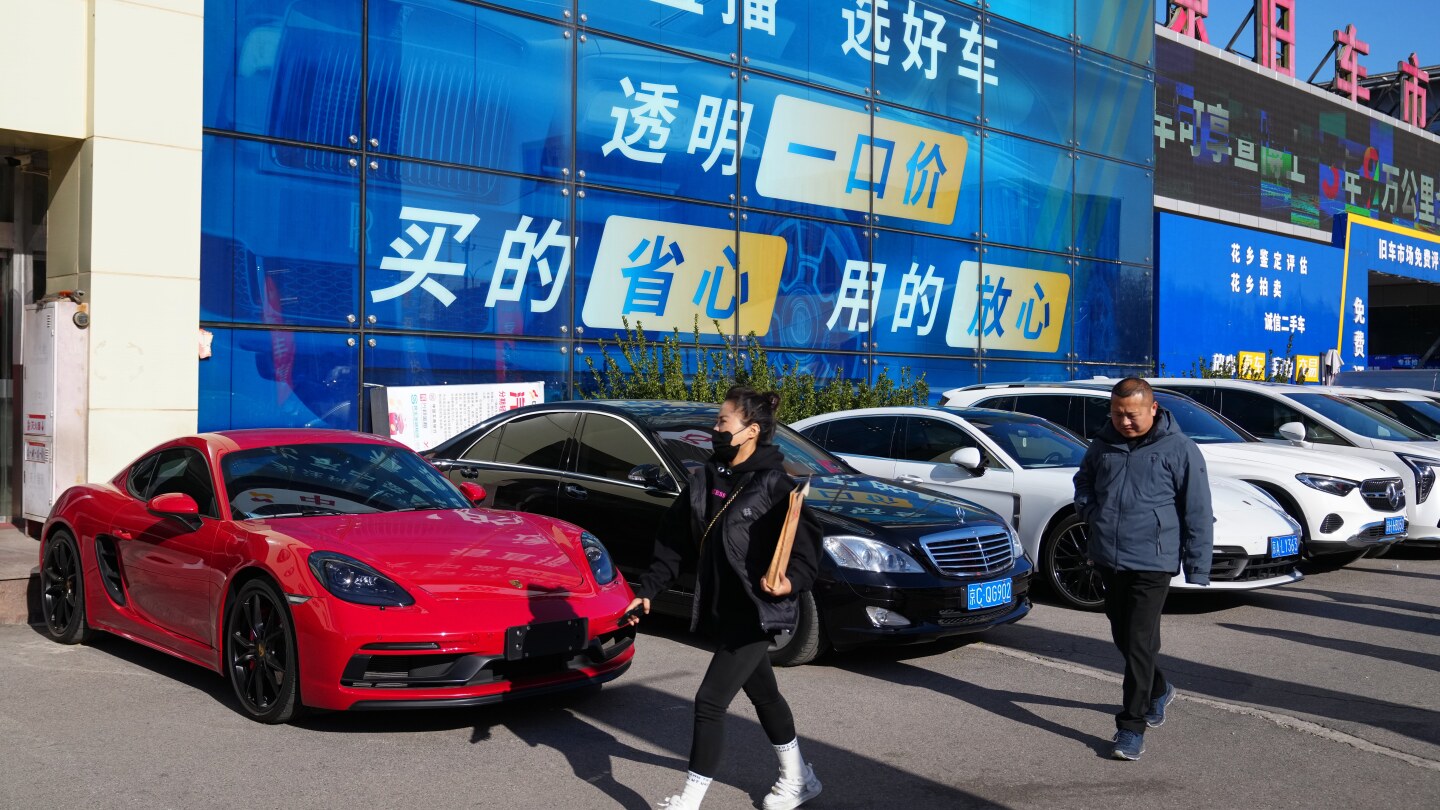
Chinese consumers are increasingly moving away from foreign luxury cars, opting instead for more affordable domestic brands that provide substantial discounts. This trend is challenging European automakers like Porsche, Aston Martin, Mercedes-Benz, and BMW, who have traditionally dominated China’s luxury vehicle market. A combination of economic slowdown and shifting consumer preferences is altering the landscape of the automotive industry in China, leading to a decline in demand for premium vehicles.
A Decline in Luxury Car Demand
The luxury car market in China is experiencing a downturn as economic conditions deteriorate. Prolonged struggles in the property sector have undermined consumer confidence, making buyers hesitant to invest in high-end vehicles. Paul Gong, head of China Automotive Industry Research at UBS, notes that many affluent consumers are increasingly reluctant to display their wealth, further impacting luxury car sales. Additionally, the Chinese government’s introduction of a 20,000 yuan ($2,830) trade-in subsidy for electric and plug-in hybrid vehicles has influenced buyer behavior, motivating consumers to opt for more affordable, entry-level cars from local manufacturers.
Claire Yuan, director of corporate ratings for China autos at S&P Global Ratings, observes that the slowing economy significantly contributes to the declining demand for premium cars. The market share of luxury vehicles, typically priced above 300,000 yuan ($42,400), had increased from 7% in 2017 to approximately 15% in 2023. However, this trend has reversed, with the share of premium car sales dropping to 14% in 2024 and further declining to 13% in the first nine months of 2025.
Chinese Automakers Gain Market Share
As the demand for luxury vehicles decreases, Chinese automakers are capitalizing on the situation to expand their market presence. Companies like BYD, a leading electric vehicle manufacturer, are aggressively innovating and introducing new models at competitive prices. Analysts emphasize that Chinese brands are now offering products that are not only more affordable but also increasingly competitive in the premium segment.
Recent data from the China Association of Automobile Manufacturers reveals that Chinese brands accounted for nearly 70% of passenger car sales in the first 11 months of this year. In contrast, German brands held a mere 12% market share, while Japanese and U.S. brands represented about 10% and 6%, respectively. BYD has notably surpassed Volkswagen as the top car seller in China, especially in the “new energy vehicle” category, which includes electric and hybrid models. The company has made significant price cuts, with reductions of up to 34% on its electric and plug-in hybrid vehicles, intensifying competition for established foreign brands.
Impact on Luxury Dealerships
The decline in luxury vehicle sales is affecting dealerships across China. Sales representatives at various luxury car centers report that the sluggish economic climate is driving prices down. For instance, a 2024 Porsche Panamera with low mileage is now listed at 950,000 yuan ($134,300), a considerable drop from its original price of 1.4 million yuan ($198,454). This trend is not limited to Porsche; other luxury brands such as Mercedes-Benz, BMW, Bentley, and Rolls-Royce are also facing similar issues.
In Beijing’s used-car market, sales representatives have noticed a significant decline in premium vehicle prices over the past year. Despite producing over 3.5 million vehicles in November, domestic auto sales have decreased by 4% year-on-year, reflecting fading demand as some trade-in subsidies have been suspended in various regions. One used car salesperson humorously commented on the current economic situation, stating, “Who still has money these days? People’s pockets are cleaner than their faces,” highlighting cautious spending behaviors among consumers.
Future Outlook for the Luxury Market
The future of the luxury car market in China remains uncertain as economic pressures continue to mount. Ola Kallenius, CEO of Mercedes-Benz, acknowledged that the intense competition in the Chinese market is unlikely to lighten soon. The company has indicated that the market situation for premium and luxury vehicles remains tense, with ongoing challenges expected.
As the landscape evolves, foreign luxury brands must adapt to the changing preferences of Chinese consumers, who are increasingly leaning toward domestic options that offer both affordability and advanced technology. The shift in consumer behavior, combined with economic factors, suggests that the luxury automotive sector in China may need to rethink its strategies to reclaim market share and appeal to a more budget-conscious clientele.
Digihunt is not a financial advisor and this is not investment advice.