India’s Retail Sector Grows Stronger as US Malls Face Challenges, Driven by Consumer Demand

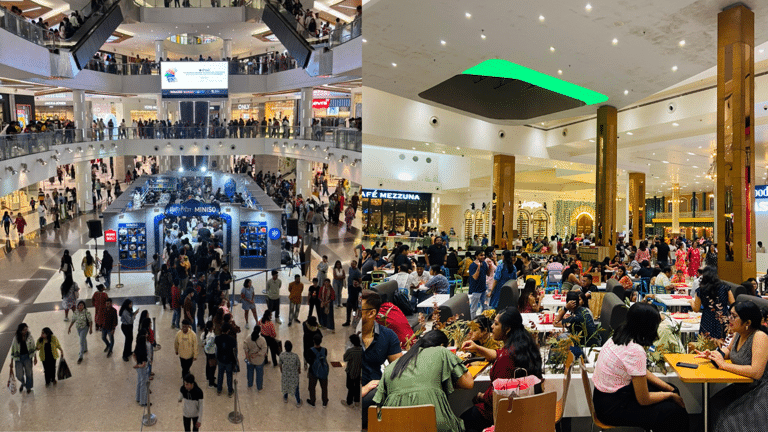
India is emerging as a beacon of growth in the retail sector, sharply contrasting with the ongoing struggles faced by shopping malls in Western economies. According to Anarock, a prominent real estate consultancy, the U.S. has experienced nearly 1,200 mall closures since 2020, with many now repurposed due to high vacancy rates. In contrast, India’s retail landscape is thriving, supported by strong consumer demand and significant interest from institutional investors, with projections indicating over $3.5 billion in investments in Indian shopping malls over the next three years.
Investment Surge in Indian Retail
The Indian retail market is witnessing a substantial influx of foreign investment, with over 88 international brands entering the sector and many more planning to follow. Anuj Kejriwal, CEO of Retail Leasing and Industrial and Logistics at Anarock Group, emphasized the aggressive expansion strategies of these brands. He noted that demand for Grade-A retail spaces is particularly high, as the availability of such properties is limited. This scarcity, combined with a burgeoning young consumer base, has created a unique opportunity for growth in the Indian retail market.
Occupancy Rates and Rental Growth
The operational performance of Indian malls indicates a significant demand-supply imbalance. Premium malls are achieving occupancy rates between 95% and 100%, accompanied by long waiting lists for prime locations. Rental growth in these malls has consistently outpaced pre-pandemic levels, reflecting a robust recovery and a thriving retail environment. Kejriwal pointed out that this trend is unusual on a global scale, where leasing cycles typically lag behind construction cycles. The high occupancy rates and rental growth highlight the resilience and attractiveness of the Indian retail sector.
Transforming Retail Spaces
Indian malls are evolving beyond traditional shopping venues, becoming multi-purpose destinations that cater to a variety of consumer needs. With weekday visitor numbers exceeding 20,000 and weekend figures surpassing 40,000, these malls are increasingly focused on entertainment, dining, and social interaction. Approximately 30% to 35% of foot traffic is driven by food and entertainment options, underscoring the shift in consumer behavior towards experiential shopping. This transformation is crucial for maintaining foot traffic and ensuring the long-term viability of retail spaces in India.
Future Outlook for Indian Retail
Looking ahead, Anarock projects that India will evolve into a $6 trillion consumption economy by 2030, solidifying its position as a key market for international retailers and investors. Despite the global rise of e-commerce, which currently accounts for around 8% of retail in India—significantly lower than the 20% seen in the U.S. and China—physical retail continues to thrive. This coexistence of online and offline channels presents a unique opportunity for growth, making India an attractive destination for long-term investment in the retail sector.
Digihunt is not a financial advisor and this is not investment advice.