India-EU Trade Deal: Goyal Highlights Positive Progress in Free Trade Agreement Talks

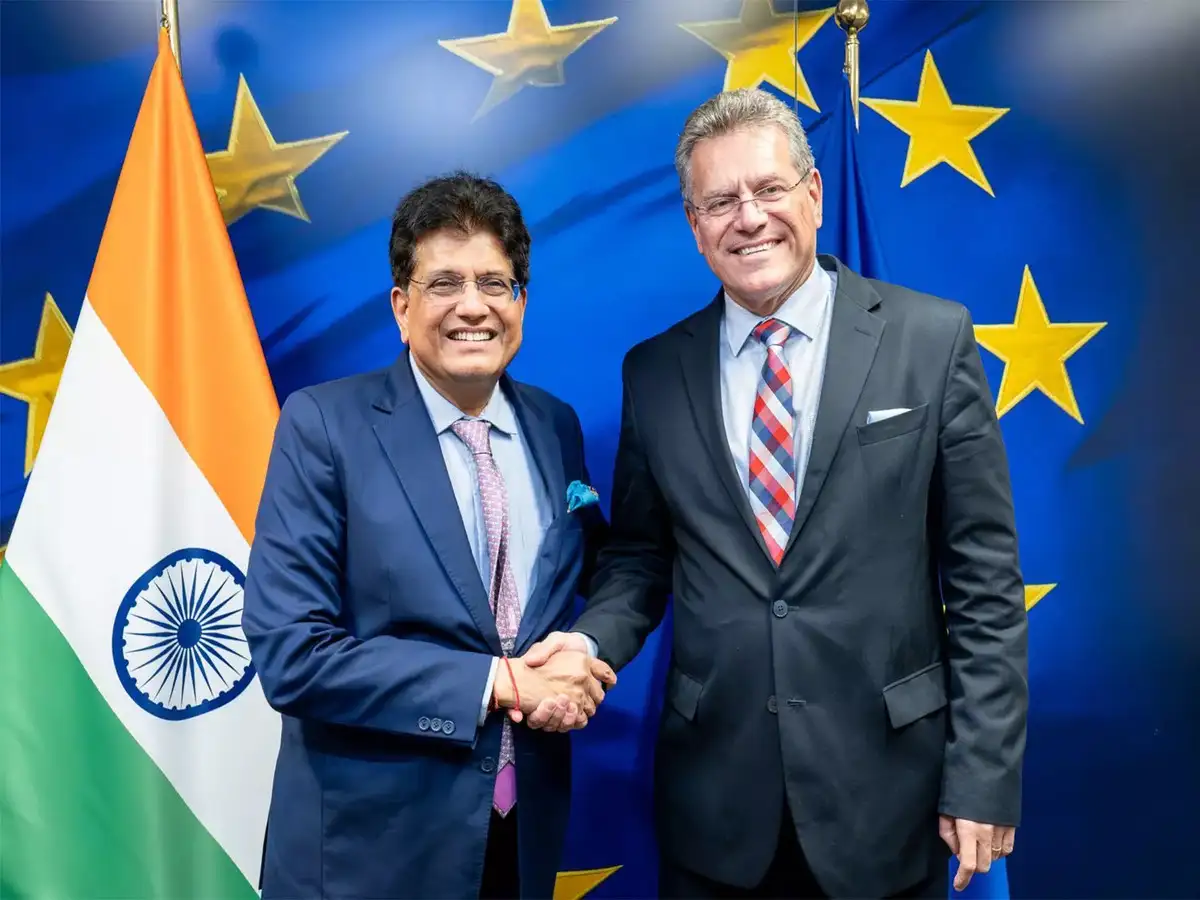
Commerce and Industry Minister Piyush Goyal announced that negotiations for a free trade agreement (FTA) between India and the European Union (EU) are progressing positively. A preliminary outline of the agreement has been established, and both parties are keen to finalize the deal soon. Goyal expressed confidence in reaching a conclusion, particularly with a deadline approaching at the end of December, coinciding with the upcoming Republic Day celebrations in India.
Progress in Negotiations
During a recent visit to New Delhi, Goyal met with Maros Sefcovic, the European Union Commissioner for Trade and Economic Security, to review the status of the FTA negotiations. The discussions, held on December 8 and 9, were described as very positive by Goyal. He emphasized that both sides are committed to concluding the agreement as soon as possible. The urgency is heightened by the scheduled attendance of top EU leadership at India’s Republic Day parade on January 26, followed by an India-EU summit the next day. While Goyal noted that he cannot guarantee a specific timeline for the conclusion, there is a strong commitment from both parties to expedite the process.
Historical Context of the Talks
Negotiations for the FTA resumed in June 2022 after being stalled for over eight years. The discussions encompass a comprehensive free trade agreement, an investment protection pact, and a deal on geographical indications. The talks initially faced challenges in 2013 due to disagreements over market access. Since then, India and the EU have intensified their efforts to reach an agreement, recognizing the potential benefits for both economies.
India’s bilateral trade with the EU has been significant, reaching $136.53 billion in the fiscal year 2024-25. Exports from India to the EU were valued at $75.85 billion, while imports stood at $60.68 billion. This trade relationship makes the EU India’s largest trading partner for goods, accounting for approximately 17% of India’s total exports.
Key Areas of Negotiation
The negotiations cover 23 policy areas, including trade in goods and services, investment, customs and trade facilitation, and intellectual property rights. The EU has proposed substantial duty reductions on various products, including automobiles, medical devices, wine, and spirits. Additionally, the EU seeks a robust intellectual property framework to protect innovations and creations. If finalized, the FTA could enhance the competitiveness of Indian exports, which include readymade garments, pharmaceuticals, and steel.
The agreement aims to create a more favorable trading environment, benefiting both Indian exporters and EU importers. As the deadline approaches, the focus remains on resolving outstanding issues to pave the way for a successful conclusion to the negotiations.
Future Implications
The potential FTA between India and the EU holds significant implications for both economies. It could lead to increased trade flows, job creation, and economic growth. The agreement is expected to enhance market access for Indian products in the EU while also providing European companies with greater opportunities in the Indian market. As both sides work towards finalizing the deal, the outcome will be closely watched by businesses and policymakers alike, given its potential to reshape trade dynamics between India and the EU.
Digihunt is not a financial advisor and this is not investment advice.