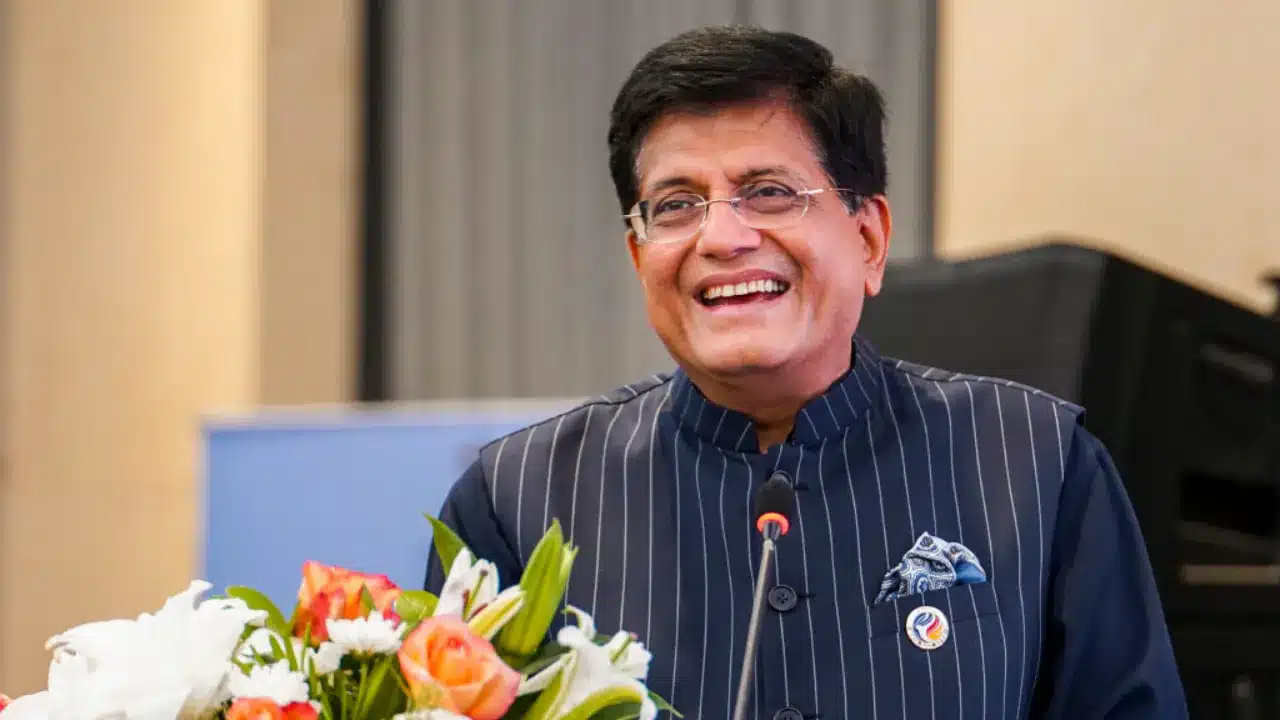
India is on track to become a significant hub for data centre investments, driven by its strong national power grid and ample electricity supply. Union Minister Piyush Goyal emphasized this potential in a recent press conference, showcasing India’s competitive advantage over other advanced economies. With major investments from global tech giants such as Google, Amazon, and Microsoft, the country is preparing to meet the increasing demand for data infrastructure and artificial intelligence capabilities.
India’s Competitive Advantage in Power Supply
During the press conference, Minister Goyal highlighted the advantages of India’s integrated national grid, which has a capacity of 500 gigawatts (GW). This setup gives India an edge compared to regions like Europe and the United States, which lack a cohesive national grid. India’s reliable power infrastructure supports various sectors, including households, agriculture, and industry, making it especially important as the demand for data centres and global capability centres (GCCs) rises. Goyal assured that the power infrastructure is equipped to manage future demand surges, enhancing India’s appeal to international investors in data centres.
Major Investments from Global Tech Giants
The growing interest from global technology companies in India’s data centre sector is reflected in recent announcements of substantial investments. Google has pledged $15 billion to create an AI infrastructure hub in Andhra Pradesh, which includes a gigawatt-scale data centre in partnership with the Adani Group. This initiative is expected to generate between 5,000 and 6,000 direct jobs and potentially up to 30,000 overall. Likewise, Amazon Web Services (AWS) intends to invest $7 billion over the next 14 years to expand its data centre operations in Telangana. Microsoft has also disclosed a significant investment of $17.5 billion aimed at establishing infrastructure to support an AI-driven future in India. These investments demonstrate the increasing acknowledgment of India’s potential in the technology sector.
Balancing Energy Needs and Clean Energy Goals
Minister Goyal discussed the crucial role of coal-based power generation in ensuring a stable and affordable electricity supply for India’s developing economy. He noted that boosting domestic coal production is vital to decrease reliance on imports and ensure energy security. Additionally, Goyal mentioned ongoing efforts to explore alternatives, including converting coal into synthetic gas. While reaffirming India’s commitment to clean energy, he stressed the importance of a practical approach that balances the transition to renewable sources with the demand for cost-effective power. Projections suggest that thermal power requirements could escalate to 307 GW by 2035, emphasizing the need for a diverse energy mix.
Financial Health of the Energy Sector
On the financial stability front, Goyal reported significant improvements in the energy sector, citing a drastic reduction in the debt levels of power generation companies. In the last four years, debt has plummeted from Rs 1.4 lakh crore to about Rs 6,500 crore. This financial health is essential as India strives to realize its vision of Viksit Bharat by 2047, aiming to position its energy sector as a global model for managing scale, speed, and sustainability. Additionally, Minister of State for Power Shripad Naik disclosed that data centres currently demand about 1 GW of power in India, a figure anticipated to grow to 13.56 GW by FY 2031-32 due to new projects. However, he also noted that electricity consumption by data centres is not centrally tracked, as many facilities utilize captive power for their operations.
Digihunt is not a financial advisor and this is not investment advice.