India and New Zealand Target to Double Bilateral Trade in Next Five Years, Says GTRI Report

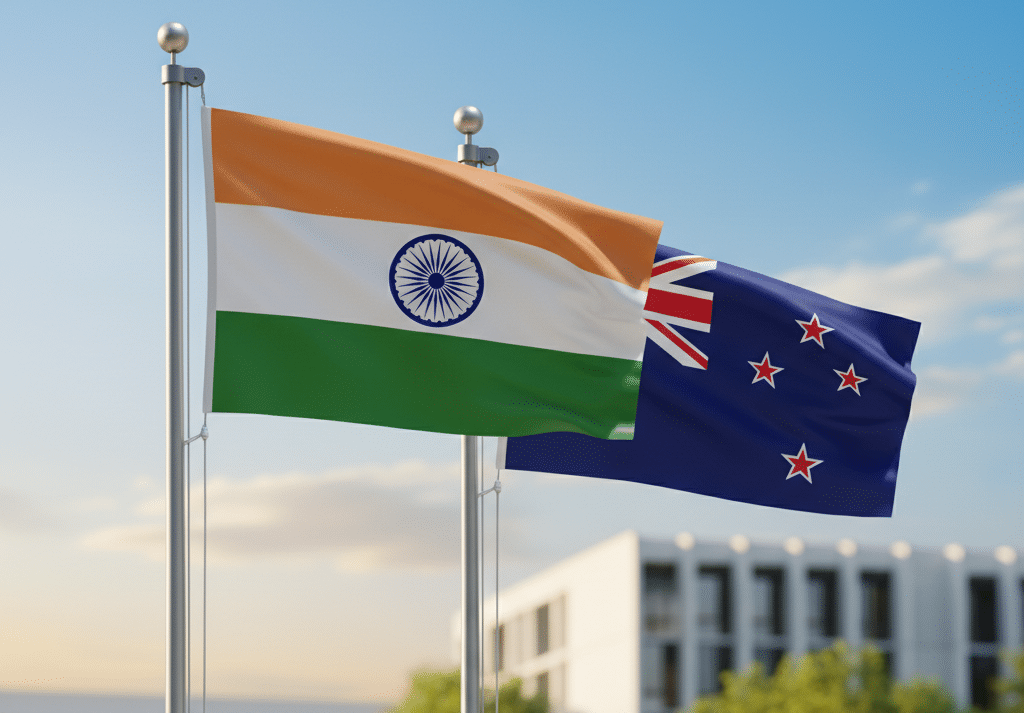
India and New Zealand are setting ambitious goals to enhance their economic relationship, with plans to double bilateral trade over the next five years. A recent report from the Global Trade Research Initiative (GTRI) emphasizes the need for reduced import duties and stronger partnerships in agriculture. These recommendations come as both nations prepare to finalize a comprehensive free-trade agreement aimed at streamlining trade processes and improving access to each other’s markets.
Current Trade Landscape
Bilateral trade between India and New Zealand currently stands at $1.3 billion for the fiscal year 2025. GTRI Founder Ajay Srivastava highlighted the potential for significant growth, suggesting that both countries could double their trade volume by implementing early tariff relief on select products. He emphasized the importance of business delegations and sectoral cooperation in areas such as agriculture, forestry, fintech, and education. Renewed discussions this year mark a significant step forward, as negotiations had previously stalled in 2015. The focus will be on reducing tariffs on goods and improving access to services, which is crucial for both economies.
Tariff Reductions and Trade Agreements
The proposed free-trade agreement is expected to eliminate or significantly reduce duties on a variety of products, including industrial goods, textiles, engineering products, and certain agricultural items. Sensitive agricultural products will, however, remain protected to safeguard local industries. Currently, New Zealand maintains a low average import tariff of 2.3%, while India’s average tariff is considerably higher at 17.8%. This disparity highlights the potential for India to benefit from reduced tariffs, which could enhance its export capabilities.
Diverse Export Profiles
India’s exports to New Zealand are diverse, with aviation turbine fuel leading at $110.8 million, followed by textiles and pharmaceuticals. Other significant exports include machinery, petroleum products, automobiles, and food items like basmati rice and shrimp. Conversely, New Zealand primarily exports raw materials and agricultural products to India, with wood, metal scraps, and various agricultural goods making up the bulk of their trade. The dairy sector remains a contentious issue, as India is committed to protecting its small dairy farmers, resulting in minimal dairy trade between the two nations.
Services Trade and Economic Benefits
The trading of services plays a vital role in the economic relationship between India and New Zealand. In fiscal year 2024, India’s services exports to New Zealand were valued at $214.1 million, primarily in the IT, software, and healthcare sectors. In contrast, New Zealand’s services exports to India reached $456.5 million, significantly contributing from education, tourism, and specialized aviation training. Both countries stand to gain from a strengthened partnership, with India potentially accessing the high-income Pacific market and New Zealand tapping into one of the world’s fastest-growing economies amid global trade uncertainties.
Digihunt is not a financial advisor and this is not investment advice.