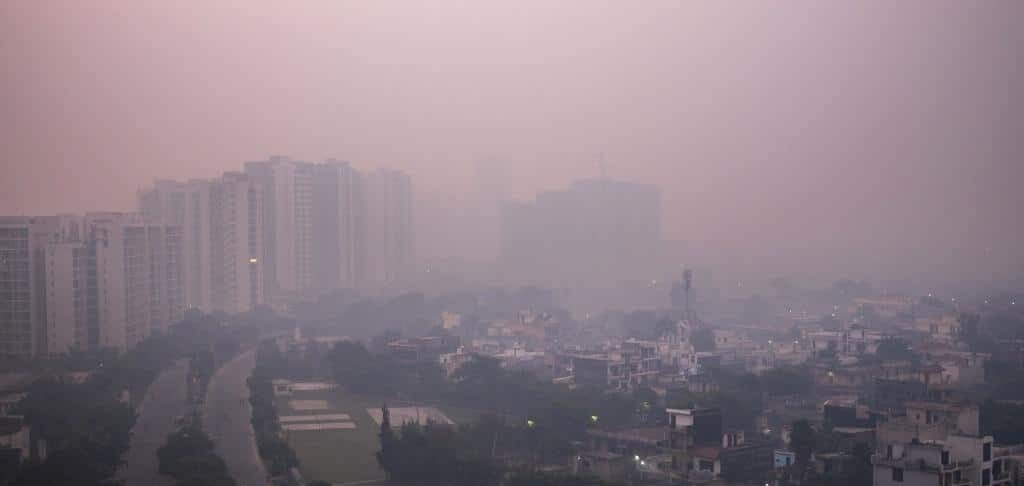
In a groundbreaking initiative, Haryana has launched the Haryana Clean Air Project for Sustainable Development in collaboration with the World Bank, aiming to tackle air pollution in the region. With a budget of Rs 3,600 crore, this ambitious project seeks to significantly enhance air quality over the next five years. The comprehensive plan includes various measures, from upgrading industrial practices to promoting cleaner transportation options, all designed to combat hazardous air pollution affecting the National Capital Region (NCR).
Comprehensive Measures to Combat Air Pollution
The Haryana Clean Air Project outlines a series of extensive interventions targeting multiple sources of air pollution. A key component of the initiative is the incentivization of 1,000 industries to transition to cleaner energy sources by purchasing new boilers that operate on PNG, CNG, or other gaseous fuels. Additionally, the project plans to introduce 1,000 diesel generator sets that will function in hybrid or dual fuel modes, further reducing emissions. The state government also aims to procure 500 electric buses and phase out diesel autos, while providing incentives for 50,000 electric autos to promote sustainable transportation.
To enhance monitoring and enforcement, the project includes the establishment of a command and control center. This center will oversee the construction of a 500-kilometer dust-free road, aimed at minimizing road-dust emissions. Furthermore, the initiative proposes the installation of two common boilers in industrial clusters and the implementation of two pilot tunnel kilns to mitigate emissions from brick kilns. These measures are part of a broader strategy to ensure cleaner air for residents in the NCR.
Advanced Monitoring Infrastructure
As part of the Haryana Clean Air Project, the government plans to significantly enhance its air quality monitoring capabilities. The proposal includes the installation of 10 Continuous Ambient Air Quality Monitoring (CAAQM) stations across the state, along with a mobile van equipped with real-time source apportionment technology. This advanced monitoring infrastructure will enable authorities to effectively track air quality and respond to pollution sources in a timely manner.
These initiatives were presented during a review meeting on ‘Air Pollution Control in Delhi NCR,’ chaired by Tanmay Kumar, the secretary of the Ministry of Environment, Forest and Climate Change. The meeting highlighted both short- and long-term strategies proposed by Haryana to address the pressing issue of air pollution in the region.
Efforts to Reduce Stubble Burning
In addition to the broader air quality initiatives, Haryana has implemented specific measures to combat paddy stubble burning, a significant contributor to air pollution. The state government reported that it has mapped 10,028 nodal officers directly to farmer groups, creating an unprecedented village-level monitoring ecosystem. This initiative has led to a notable decrease in active fire locations, with only 662 recorded from September to November 2025, marking a 52.9% decline from the previous year.
To enforce compliance, authorities have imposed environmental compensation in 238 verified cases, filed FIRs, and mandated red entries in land records. The government has complemented these enforcement measures with financial incentives, offering Rs 1,200 per acre for in-situ residue management, Rs 8,000 per acre for crop diversification, and Rs 4,500 per acre for adopting direct seeding of rice. Over 5.6 lakh farmers have registered for residue management support, covering 39.3 lakh acres, with a projected payout of Rs 471 crore in incentives, demonstrating the state’s commitment to sustainable agricultural practices.
Digihunt is not a financial advisor and this is not investment advice.