Experts Emphasize SHANTI’s Role in Safeguarding Nuclear Plants from Safety Oversight Issues

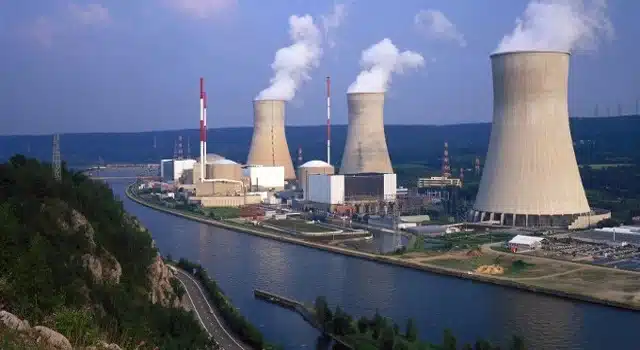
The Indian Parliament has made a significant move to reform its nuclear energy framework with the passage of the Sustainable Harnessing of Nuclear Energy for Transforming India (SHANTI) Bill. The bill, approved by the Rajya Sabha following a thorough four-hour debate, aims to improve safety oversight and facilitate private sector participation in the civil nuclear sector. This legislative change is viewed as vital for India to meet its clean energy targets by 2047, even as opposition parties express concerns about safety and liability.
Key Features of the SHANTI Bill
The SHANTI Bill introduces a comprehensive safety regime that focuses on continuous compliance throughout the lifecycle of nuclear plants. In contrast to the previous framework, which relied heavily on executive discretion and accountability after accidents, the new legislation mandates a statutory approach to safety. This includes the necessity for both an operational license and an independent safety authorization, ensuring that all radiation exposure activities—such as construction, operation, and waste management—obtain explicit safety approval.
Moreover, the bill consolidates various regulatory functions, including enforcement and civil liability, into a single statute. This streamlining is designed to reduce legal complexities and uncertainties concerning compliance. The Atomic Energy Regulatory Board (AERB) is provided with clear statutory authority to inspect facilities, investigate incidents, and enforce safety standards, moving away from dependency on executive discretion in regulatory actions.
Addressing Safety Concerns
Despite governmental assurances, opposition parties have raised concerns about the potential risks tied to increased private involvement in the nuclear sector. Critics argue that the bill may not sufficiently address safety and liability issues, particularly in the event of a nuclear incident. However, government officials stress that the SHANTI Bill sets up a proactive governance framework, identifying serious risk scenarios as nuclear incidents even without actual damage.
The legislation seeks to strengthen accident prevention measures by legally binding safety obligations to every stage of a nuclear plant’s lifecycle, marking a shift from previous laws that prioritized compensation and insurance after accidents rather than preventive measures.
Implications for India’s Energy Future
The SHANTI Bill is viewed as a vital step in India’s goal to significantly expand its nuclear energy capacity. Currently, the country’s nuclear capacity stands at about 8GW, but experts believe scaling it up to 100GW by 2047—and potentially reaching 300GW by 2070—will necessitate considerable reforms. Anujesh Dwivedi, a partner at Deloitte India, has pointed out that continuing with the existing legal framework would obstruct the transition from thermal power to nuclear energy.
Prime Minister Narendra Modi has described the bill’s passage as a “transformational moment for our technology landscape,” highlighting the government’s commitment to advancing nuclear energy as a fundamental part of India’s clean energy strategy. The successful execution of the SHANTI Bill could lead to a more robust and safer nuclear energy sector in the nation.
Future Prospects and Challenges
As India embarks on this new chapter in nuclear governance, attention will need to be devoted to the effective implementation of the SHANTI Bill. The government must address the concerns expressed by opposition parties and the public regarding safety and liability. Ongoing monitoring and evaluation of the regulatory framework will be crucial in establishing public trust in the nuclear energy sector.
Core nuclear energy functions, such as fuel enrichment and heavy water production, will remain under central government control, ensuring that crucial aspects of nuclear energy management are safeguarded. As India strives to meet its clean energy objectives, the impact of the SHANTI Bill will be pivotal in defining the future of nuclear energy in the country.
Digihunt is not a financial advisor and this is not investment advice.