China’s $1 Trillion Trade Surplus: How Exports Thrive Despite Trump’s Tariff Impact

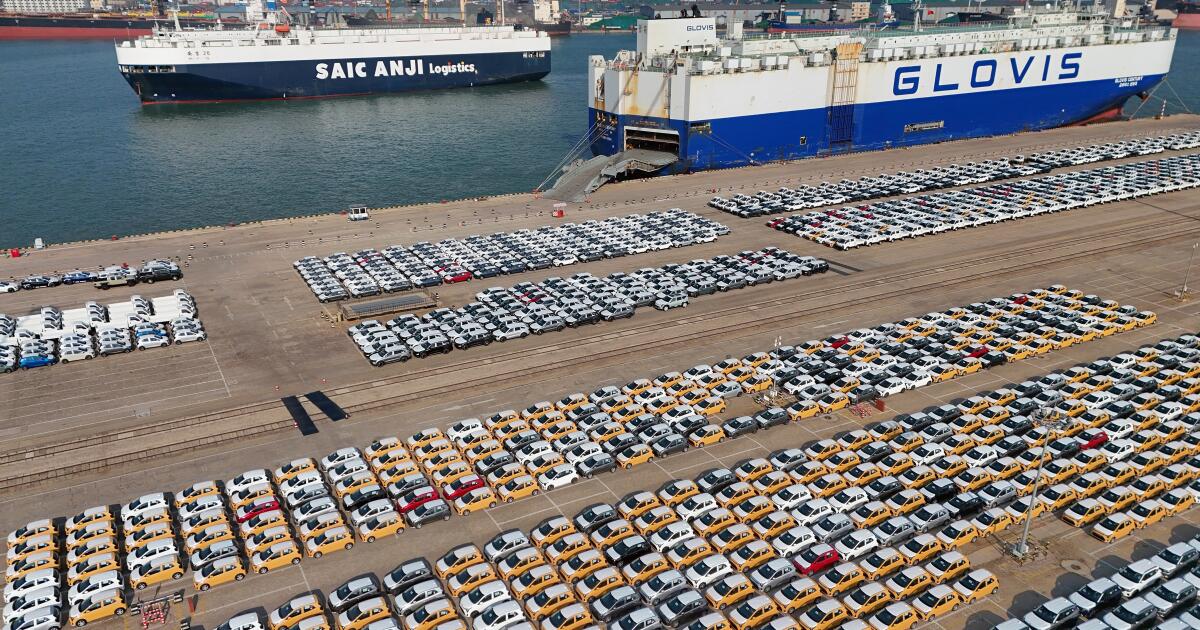
China has achieved a remarkable $1 trillion trade surplus in the first eleven months of the year, defying the heavy tariffs imposed by former U.S. President Donald Trump. This unprecedented surplus underscores the global demand for affordable Chinese goods, even as exports to the United States have significantly declined. The shift in trade dynamics reflects China’s ability to adapt and redirect its export strategies, bolstering its economy amid ongoing trade tensions with Washington.
Resilience Amid Tariffs
Chinese exporters have successfully navigated the challenges posed by U.S. tariffs through strategic adjustments. Many companies have shifted their supply chains and redirected shipments to markets where demand for lower-cost products remains robust. This proactive approach has allowed China to mitigate the impact of tariffs, demonstrating the resilience of its export sector. According to customs data, exports rose by 5.7% year-on-year from January to November, despite an 18.3% drop in shipments to the U.S. Exports to Europe increased by 8.9%, while Southeast Asia saw a 14.6% rise, and shipments to Africa surged by 27.2%.
This export rebound has reinforced the Chinese government’s belief that reliance on the U.S. market can be reduced. The ongoing trade negotiations between President Xi Jinping and U.S. officials have yet to yield a comprehensive agreement, but the current situation has strengthened China’s resolve to maintain its trade stance. The ability to pivot towards other markets has become a crucial strategy for Chinese manufacturers, who are increasingly looking beyond the U.S. for growth opportunities.
Global Demand and Structural Pressures
China’s status as a global manufacturing powerhouse has played a significant role in its ability to adapt to changing trade conditions. Years of investment in production capacity, particularly under the “Made in China 2025” initiative, have positioned the country to meet global demand effectively. Despite challenges posed by tariffs, China’s exports have surged nearly 45% over the past five years, driven by increased global demand during the pandemic.
However, this export growth has also led to overcapacity in various sectors, intensifying domestic price competition. As a result, many manufacturers are compelled to seek international markets to sustain their growth. The reliance on Chinese goods has continued to grow in developing economies, where competitors struggle to match China’s scale and pricing. Wang Jun, deputy head of the General Administration of Customs, emphasized that China’s trade performance reflects the strength of its industrial supply chain and the resilience of its exporters.
Concerns Over Sustainability
While China’s export surge has garnered attention, economists caution that some of the growth may be overstated due to transshipments—goods routed through other countries for processing before being re-exported. This practice complicates tariff enforcement and raises questions about the sustainability of China’s export expansion. Although many analysts predict that exports will remain strong in the coming year, they also expect the pace of growth to slow.
Trade tensions are not limited to the U.S.; countries in the European Union, India, and Brazil have expressed concerns over Chinese “dumping” practices. The EU has already implemented tariffs and anti-dumping measures on various Chinese products. During a recent visit to China, French President Emmanuel Macron highlighted the trade imbalances between Europe and China, warning that additional tariffs could be on the horizon.
Domestic Economic Challenges
Despite the impressive trade surplus, China faces significant economic vulnerabilities at home. The property sector has been in decline for five years, negatively impacting household wealth and consumer spending. Youth unemployment remains high, and limited social security coverage continues to restrain domestic consumption. Deflationary pressures have also affected the economy, driven by overcapacity and fierce price competition in sectors such as electric vehicles and e-commerce.
With the government hesitant to implement a major stimulus package, exports have become a vital support for economic growth. The Central Economic Work Conference recently acknowledged the challenges ahead, stating that the economy faces both “old problems and new challenges.” Officials indicated that a “more proactive fiscal policy” and a “moderately loose monetary policy” would be maintained in the coming year. As China prepares its next five-year economic plan, priorities will include enhancing economic strength, technological capabilities, and manufacturing quality, signaling a focus on long-term growth strategies.
Digihunt is not a financial advisor and this is not investment advice.