Trump’s Tariff Threat on India Causes Rice Stocks to Fall, Kohinoor Drops 10%

Indian rice exporters experienced significant turmoil on Dalal Street following comments from U.S. President Donald Trump regarding potential new tariffs on rice imports from India. This announcement triggered a wave of concern among investors about the future of agricultural trade between the two countries.
Market Reactions to Tariff Hints
The stock market responded sharply to Trump’s remarks. Kohinoor Foods saw the most drastic decline, dropping 9.9% to Rs 24.41, marking its lowest intraday and 52-week point on the Bombay Stock Exchange (BSE). Although the stock later showed a minor recovery, it rose to Rs 27.81, reflecting an increase of over 2.5%. Other prominent rice exporters also faced declines; LT Foods decreased by 6.5% to Rs 368, while KRBL fell 2.7% to Rs 370.05. By late morning, KRBL began to recover, gaining over 1.5%, and LT Foods traded at Rs 376 around 11:40 AM. Chaman Lal Setia Exports also experienced a downturn, slipping 4.5% to Rs 243.05 before reducing its losses to just 0.29%.
Trump’s Remarks and Their Implications
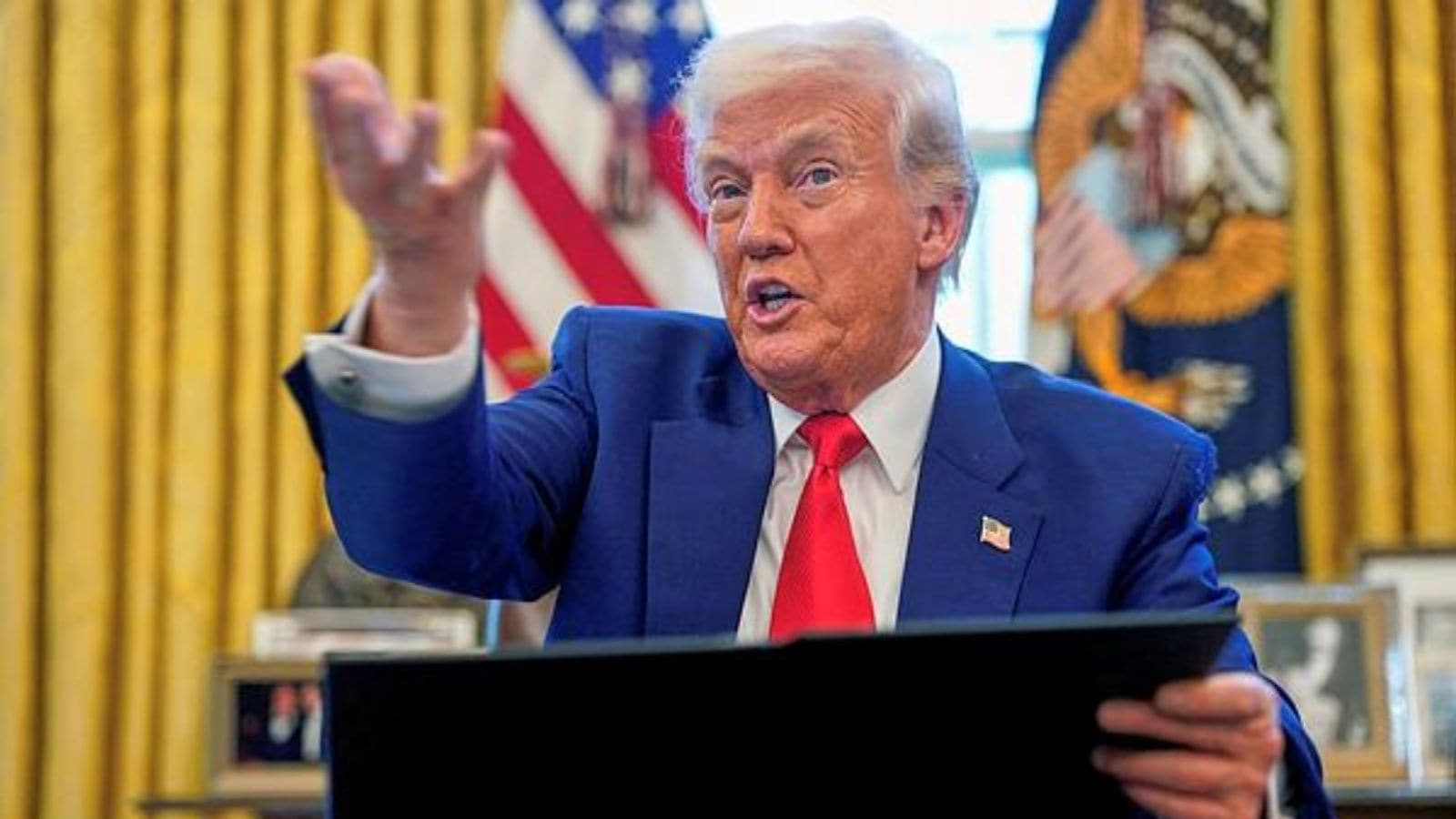
The sell-off was catalyzed by comments from Trump during an event at the White House, where he announced additional support for American farmers. He raised concerns about what he termed the “dumping” of Indian rice in the U.S. market, asserting that lower-priced imports from India, Vietnam, and Thailand were detrimental to domestic farmers. “They shouldn’t be dumping,” Trump stated, underscoring the need for fair competition. His comments come amid rising pressure from the farming community, a politically significant group given the approaching midterm elections. Farmers face increasing input costs and fluctuating crop prices, influenced in part by prior tariff decisions.
Potential for Further Tariffs
The likelihood of new tariffs is exacerbated by the pre-existing 50% tariff imposed by the U.S. on Indian goods in August, which included an additional 25% tariff due to India’s continued purchase of Russian oil. A U.S. delegation is scheduled to visit India this week, but analysts believe the chances of reversing these tariffs are slim. Additionally, Canada, another crucial trade partner, is also facing uncertainty, with Trump hinting that duties on Canadian goods could rise by up to 10%, potentially pushing them to 45%.
Future Outlook for Rice Exporters
As the U.S. government signals renewed attention to agricultural trade policies, investors are monitoring the situation closely. Any further developments regarding U.S. tariff policies, especially those impacting the agricultural sector, could significantly sway market trends in the days ahead. Rice-exporting stocks are likely to remain volatile as the ramifications of Trump’s remarks unfold, and stakeholders will be keenly observing how these changes may affect their operations and profitability.
Digihunt is not a financial advisor and this is not investment advice.