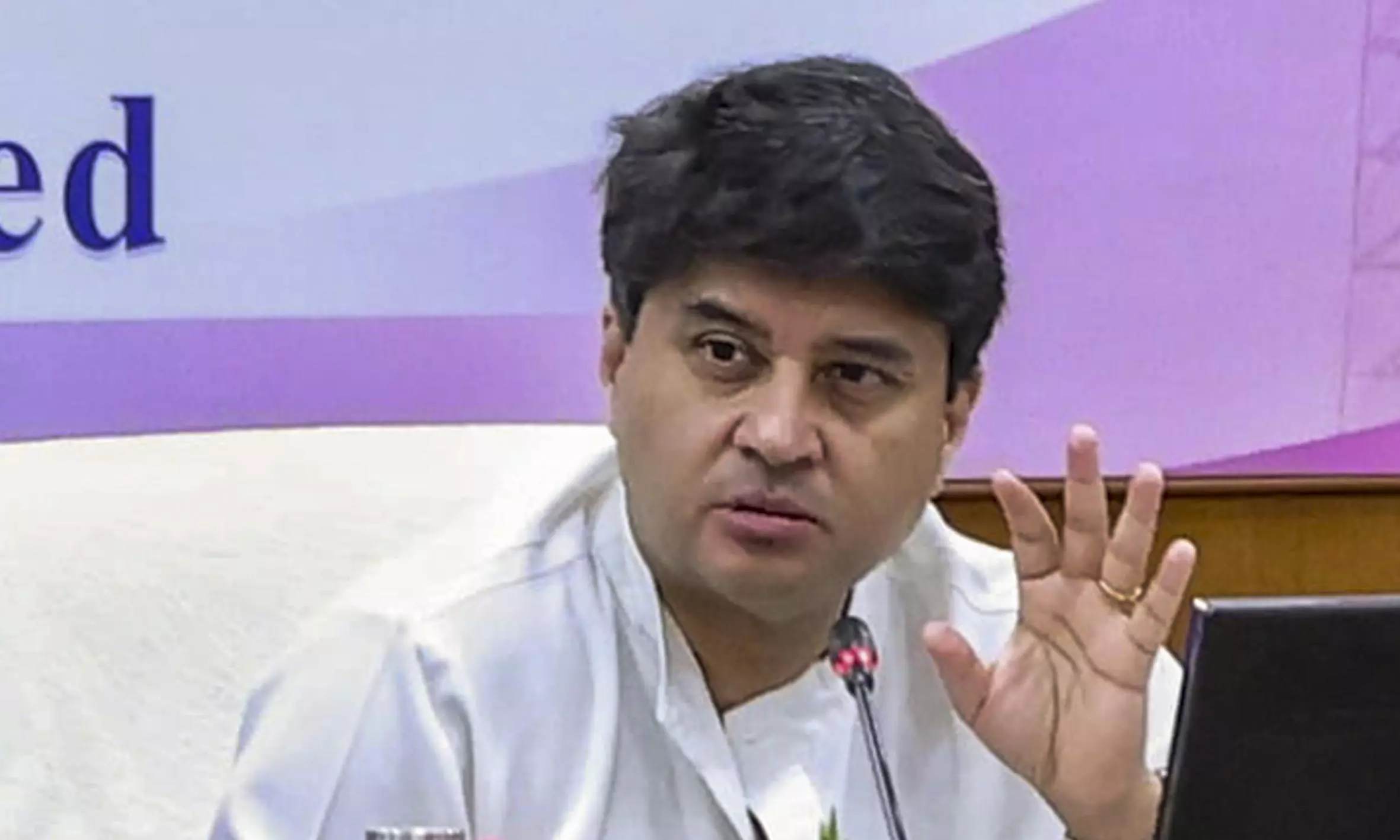
Satellite communication services in India are on the verge of launch, contingent upon operators meeting security requirements and finalizing spectrum pricing, as explained by Union Telecom Minister Jyotiraditya Scindia. In a recent interview, Scindia mentioned that firms such as Starlink, Eutelsat One, and Jio Satellite Global Services will be granted spectrum once they adhere to the necessary regulations. The government is also assessing the ongoing challenges faced by Vodafone Idea (Vi) concerning its financial obligations.
Security Compliance and Spectrum Allocation
The deployment of satellite communication services is dependent on compliance with security regulations. Scindia highlighted that license holders—including OneWeb, Reliance Jio, and Starlink—must secure clearances related to international gateways. This compliance ensures that data stays within India, a vital requirement for the government. To aid this process, provisional spectrum has already been assigned to satellite communication firms, enabling them to demonstrate adherence to security protocols. Scindia pointed out that these companies are actively working towards meeting the compliance standards.
The Department of Telecommunications (DoT) is responsible for finalizing spectrum pricing, which has encountered some disputes between the DoT and the Telecom Regulatory Authority of India (Trai). Scindia expressed optimism that the pricing issue will soon reach resolution as both parties strive for a consensus on spectrum allocation for satellite communications.
Vodafone Idea’s Financial Challenges
Vodafone Idea is grappling with substantial financial difficulties, reporting liabilities to the government totaling roughly Rs 2 lakh crore, which includes Rs 1.19 lakh crore in spectrum dues. The company has cautioned that without government assistance, the Centre might face losses from the non-recovery of dues and a depreciation in equity value. Scindia confirmed that the DoT is currently deliberating Vodafone Idea’s request for relief, stating that the matter is still under review.
The Supreme Court has allowed the government to address Vodafone Idea’s financial situation within its policy-making purview. Scindia clarified that no relief has been extended to the company up to this point. Instead, the government has converted its dues into equity, resulting in a 49 percent stake in Vodafone Idea valued at approximately Rs 37,000 crore. In the absence of additional relief, Vodafone Idea is obligated to settle around Rs 18,000 crore by March 2026, with similar payments anticipated annually for the next six years.
Market Competition and Future Outlook
Despite Vodafone Idea’s challenges, Scindia affirmed that India’s telecom market remains competitive. He noted that the country is distinctive in having four strong telecom service providers, which is uncommon in many global markets. Vodafone Idea and BSNL collectively serve over 300 million customers, and Scindia expressed a desire for this competitive environment to persist.
Vodafone Idea has indicated that any disruption in its operations could foster a duopoly in the market, potentially leading to increased telecom tariffs for consumers. However, Scindia maintained that the current market conditions promote healthy competition. He reiterated the government’s commitment to nurturing a diverse and competitive telecom sector that ultimately benefits consumers nationwide.
Digihunt is not a financial advisor and this is not investment advice.