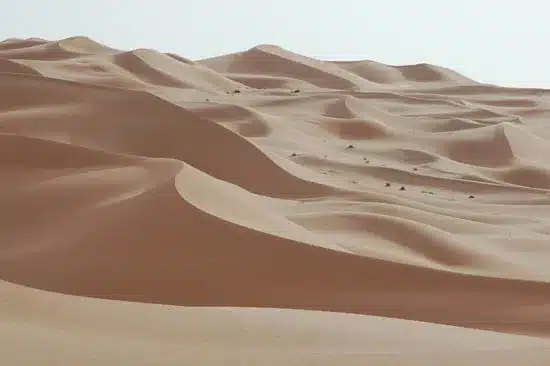
Gulf nations, particularly Saudi Arabia and the UAE, are increasingly importing sand from countries such as Australia, China, and Belgium, despite their extensive desert landscapes. This surprising trend is driven by the specific requirements of modern construction, where the smooth grains of desert sand do not meet the standards needed for high-strength concrete. As these nations embark on ambitious multi-billion-dollar projects, the demand for suitable construction-grade sand continues to rise, highlighting a broader global issue of resource dependency and scarcity.
Why Desert Sand Won’t Do
Desert sand, although plentiful in regions like Saudi Arabia, is not suitable for concrete production. The grains are typically too round and smooth due to wind erosion, which reduces their ability to bond effectively in concrete mixes. Concrete relies on a combination of cement, water, and aggregate, with the latter providing bulk and strength. The aggregate must consist of angular and coarse grains to ensure a robust mix. Unfortunately, desert sand lacks the required texture and shape, rendering it ineffective for construction.
The global cement industry, which significantly contributes to carbon emissions, relies heavily on high-quality aggregate. Natural sand, essential for creating durable structures, is primarily sourced from riverbeds, lakes, and seabeds, where the grains are naturally angular and rough. Despite the apparent abundance of desert sand, its properties make it unsuitable for the rigorous demands of modern construction.
Australia’s Role in Supplying Sand
Australia has emerged as a leading exporter of high-quality silica and construction sand, ranking as the second-largest sand exporter globally in 2023. With exports valued at $273 million, Saudi Arabia has become a key importer, acquiring approximately $140,000 worth of natural construction-grade sand from Australia. This dependence on imported sand underscores Saudi Arabia’s commitment to meeting the stringent material standards required for major infrastructure projects, including NEOM and The Red Sea Project.
These ambitious developments necessitate vast quantities of concrete and high-quality materials that desert sand cannot provide. As discussions around this issue gain traction on social media, they reflect the ongoing need for superior construction materials to bolster the Kingdom’s urbanization efforts.
The Broader Gulf Context
Saudi Arabia is not the only Gulf nation reliant on imported sand; other countries like the UAE and Qatar face similar challenges. The UAE, particularly in cities such as Dubai and Abu Dhabi, has sourced construction-grade sand from abroad to support its rapid urban expansion. Iconic structures like the Burj Khalifa, standing at 828 meters, required immense quantities of materials, including sand that met specific engineering standards.
The construction of the Palm Jumeirah, an artificial island, exemplifies the UAE’s dependency on imported sand. This project alone consumed 186.5 million cubic meters of marine sand, depleting local reserves. As urbanization accelerates in the Middle East, the demand for construction sand continues to rise, prompting countries to explore sustainable solutions while remaining reliant on imports in the near term.
Vision 2030 and the Need for Quality
Saudi Arabia’s Vision 2030 initiative aims to diversify the economy beyond oil, driving significant infrastructure developments. Projects such as the $500 billion NEOM city and The Line urban concept require specialized building materials that comply with international standards. Importing industrial-grade sand has become essential for the successful construction of these modern facilities and tourism hubs.
The global sand crisis, highlighted by the United Nations Environment Programme (UNEP), emphasizes the urgency of addressing sand scarcity. Unregulated extraction practices have led to environmental degradation, prompting some countries to invest in alternatives such as manufactured sand and recycled construction materials. While Saudi Arabia is exploring these options, a comprehensive national policy aimed at reducing sand imports has yet to be established. However, advancements in materials science may eventually help the Kingdom lessen its dependence on foreign sand, paving the way for a more sustainable future in construction.
Digihunt is not a financial advisor and this is not investment advice.