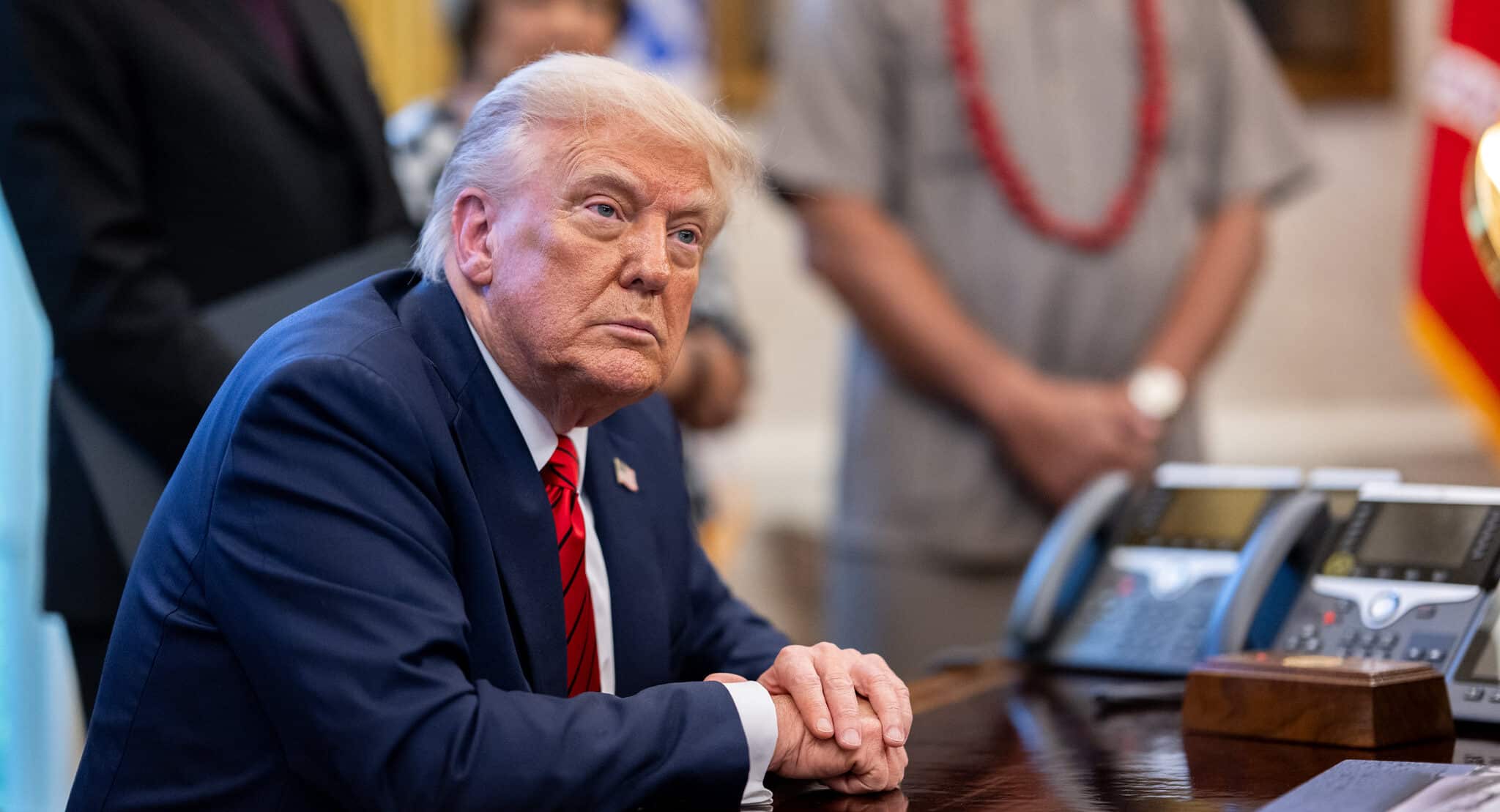
US President Donald Trump has praised the nation’s economic performance as an “economic golden age” following a surprising 4.3% growth in the third quarter of 2023. In a post on Truth Social, he attributed this success to his administration’s tax policies and tariffs, even as inflation concerns and a weakening labor market persist. Although the growth figures exceeded expectations, they emerge alongside rising inflation and mixed labor data, prompting questions about the sustainability of this economic momentum.
Strong Economic Growth Reported
The Commerce Department’s latest report has indicated that the US gross domestic product (GDP) grew at an annualized rate of 4.3% from July to September, a marked increase from the previous quarter’s 3.8% growth. This figure surpassed analysts’ forecasts, which had projected a growth rate of around 3%. The report, post a government shutdown delay, serves as the first of three estimates for the quarter. Key drivers of this growth include robust consumer spending, increased exports, and government spending. Consumer spending, which constitutes about 70% of the US economy, rose by 3.5%, up from 2.5% in the prior quarter. Exports surged impressively at 8.8%, while imports fell by 4.7%, positively impacting the overall GDP figure.
Inflation Concerns Persist
Despite strong growth, inflation remains a pressing concern. The Federal Reserve’s preferred inflation measure, the personal consumption expenditures (PCE) index, increased to an annual rate of 2.8% in the third quarter, compared to 2.1% in the previous quarter. Core PCE inflation, which excludes food and energy, also rose from 2.6% to 2.9%. These figures indicate inflation is still above the Federal Reserve’s target of 2%, suggesting ongoing price pressures even as the economy expands. The Fed has approached these inflationary pressures with caution, having cut interest rates three times heading towards the end of 2025, attributing this to concerns over a slowdown in hiring and overall economic momentum.
Mixed Labor Market Data
Labor market indicators provide a varied picture of economic health. Recent reports revealed that the US added 64,000 jobs in November, although this was countered by a loss of 105,000 jobs in October. The unemployment rate now stands at 4.6%, the highest since 2021. This variability in job growth raises questions about the sustainability of economic expansion. The performance of the labor market is crucial as it directly influences consumer spending and overall economic activity. As the economy navigates these challenges, the relationship between growth, inflation, and employment will be closely watched by policymakers and analysts.
Trump’s Economic Claims
In response to these developments, President Trump has confidently asserted that his administration’s policies drive the current economic performance. He underscored strong consumer spending, rising net exports, and declining trade deficits. Trump claimed that investment levels are reaching new heights due to his tax reforms and tariffs, referring to this period as the “Trump Economic Golden Age.” While his assertions highlight positive growth figures, underlying economic indicators suggest a more intricate landscape with inflation and labor market challenges that could affect future growth. As the administration continues to advocate its economic agenda, the balance between growth and inflation will remain a key focus for policymakers and the public.
Digihunt is not a financial advisor and this is not investment advice.