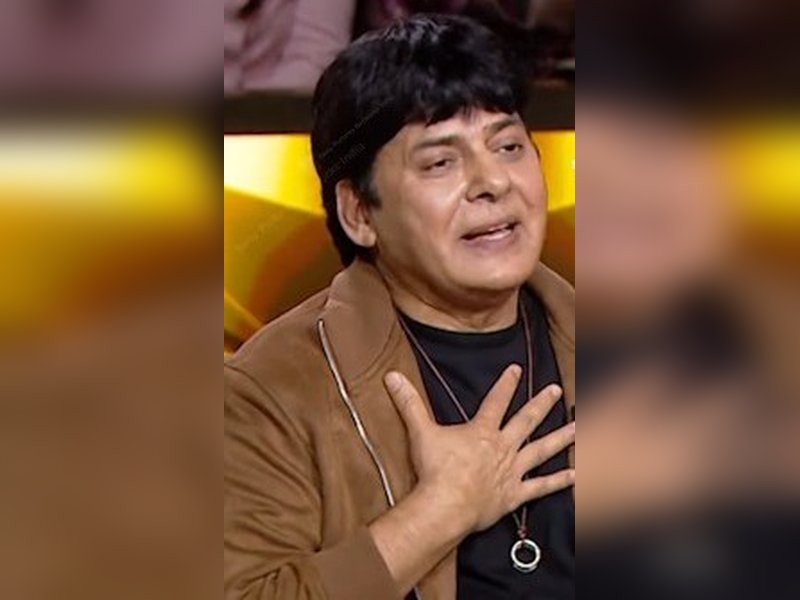
This week on the popular quiz reality show Kaun Banega Crorepati, celebrated actor-comeddigihunt Sudesh Lehri and Kiku Sharda will grace the coveted hot seat alongside the legendary host, Amitabh Bachchan.
A Heartfelt Episode
The episode promises to deliver not just a game, but a series of light-hearted conversations, fun-filled moments, and some profoundly shocking revelations that will captivate the audience. Sudesh Lehri, one of India’s most beloved comic entertainers, opens up about the hardships of his childhood with poignant honesty.
Sudesh’s Inspiring Confession
Lehri revealed, “When I was a child, I never went to school, not even nursery. We were very poor.” In an emotionally charged moment, he paid a heartfelt tribute to the cinematic icon, sharing that Amitabh Bachchan was his unseen inspiration who unknowingly guided his artistic journey.
Reflecting on his challenging upbringing, Lehri shared, “I was always fond of watching films. The first time I ever went to a theatre, someone took me because I didn’t have the money, and the film I watched was ‘Shankar Shambhu’. After a long time, I saw ‘Ganga Ki Saugand’, your film, where you had that small hand scene. Then ‘Namak Halaal’ came, and because I loved comedy, I used to watch you again and again.” He fondly recalled, “We even got the videocassette of the same.”
Memorable Moments from Films
He reminisced about iconic moments, saying, “Then there was the song ‘Ke Pag Ghunghroo Bandh Meera’… the scene where you dance with slippers… and of course Amar Akbar Anthony, the mirror scene. Sir, everyone knows you as the angry young man, but I have learnt comedy from you. Whatever I write or perform, it comes from watching you. There is no film of yours that I haven’t seen. I remember the dialogue of all your films.”
Amitabh’s Warm Acknowledgment
In response, Amitabh Bachchan warmly acknowledged Sudesh’s journey and recounted a nostalgic anecdote from his early days shooting in Rishikesh. He added, “Since you talked about Ganga Ki Saugand. It was shot in the 60s and 70s, and it was shot in Rishikesh.”
The exchange between these two artists served as a powerful reminder of how cinema inspires, heals, and shapes generations, often in ways the actors themselves are unaware of.