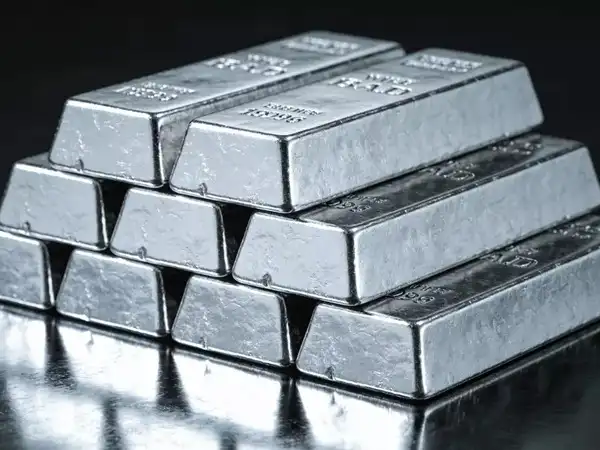
After an impressive surge earlier this year, silver prices faced a significant decline on Monday, dropping by Rs 21,000 per kilogram within just an hour of trading. The MCX Silver March futures reached an intraday low of Rs 2,33,120 per kg, after hitting a record high of Rs 2,54,174 earlier in the session. This sharp decline was largely attributed to profit-taking by investors and a broader trend of volatility in the global silver market, where prices briefly exceeded the $80 per ounce mark before retreating below $75.
Factors Behind the Sudden Decline
Several key factors contributed to the recent downturn in silver prices. After an astonishing 181% increase this year, silver outperformed gold, bolstered by its status as a critical mineral in the U.S., limited supply, and rising industrial demand. However, the profit-taking on Monday reflected investors’ eagerness to capitalize on recent gains. Moreover, reports of advancements in peace talks between U.S. President Donald Trump and Ukrainian President Volodymyr Zelensky helped ease geopolitical tensions, typically reducing the demand for safe-haven assets like silver.
The Chicago Mercantile Exchange’s adjustment to the initial margin requirement for silver futures contracts also played a role in the price correction. This change raised the margin from $20,000 to approximately $25,000, introducing additional pressure on prices. Analysts suggest that the Rs 2.4 lakh level could serve as a crucial support point in the near term, despite ongoing volatility.
Market Reactions and Predictions
Market analysts remain divided regarding the future trajectory of silver prices. Jigar Trivedi, a senior research analyst at Reliance Securities, holds a positive outlook for silver, though he acknowledges the potential for sharp fluctuations. In contrast, financial services firm BTIG issued a cautionary note, describing the recent rally as “parabolic.” They warn that such patterns often lead to rapid reversals rather than gradual corrections, indicating that current price levels may be unsustainable.
Historically, silver has demonstrated a tendency for sharp corrections following significant gains. For instance, during the late 1970s and early 1980s, silver prices surged before undergoing dramatic declines. Analysts have noted that the current rally, which has seen prices nearly triple since the pandemic lows, might be approaching a similar fate. Technical indicators reveal that silver is trading around 89% above its 200-day moving average, a level that has historically preceded substantial price drops.
Historical Context and Investor Sentiment
The historical context of silver price movements illustrates a pattern of volatility following considerable increases. Noteworthy instances include the increase from $6 to $49 per ounce in 1979, followed by a staggering 90% decline, and a peak near $48 in 2011, after which prices fell by over 75%. These past market cycles are a reminder that when upward momentum fades, silver prices can face sharp corrections, often surpassing 50%.
Investor sentiment currently remains cautious, with many recalling these historical trends. Manish Banthia, chief investment officer for fixed income at ICICI Prudential Mutual Fund, stresses that dramatic advances in silver prices rarely end without turbulence. As the market assesses the recent price fluctuations, investors are advised to stay alert and consider the possibility of further volatility in the coming weeks.
Digihunt is not a financial advisor and this is not investment advice.