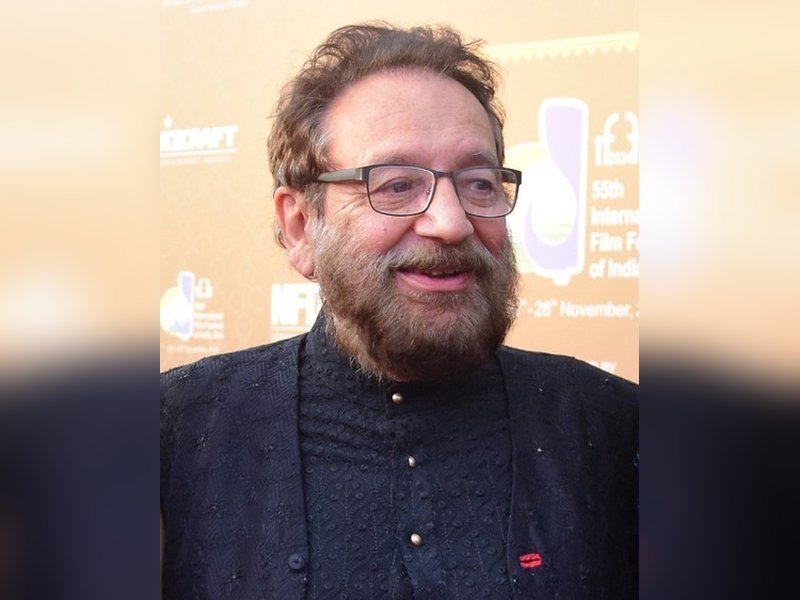
After the announcement of Netflix’s acquisition of Warner Bros., which includes its film and TV studios along with its gaming business, acclaimed filmmaker Shekhar Kapur raised concerns about a crucial aspect that seems overlooked: the individual consumer.
Sharing his thoughts on X, formerly Twitter, Shekhar pointed out that while the industry is engrossed in discussions about corporate strategy and profitability, these conversations are based on the flawed assumption that large corporations can accurately predict what individuals will choose to watch.
He noted, “In the impending purchase of Warner Brothers by Netflix… everyone is looking at corporate strategy, corporate profitability, long-term business… and assumptions about what the consumers will want…(sic)”
Shekhar further criticized this notion by stating, “As if a large pool of historical IP, matched by delivery power to consumers at current state of technology, is the future… but most of those assumptions are wrong… why? Because a consumer is an individual… and makes individual choices. The assumption that corporations can predict or direct an individual’s choice on a large scale is fundamentally false…(sic)”
He emphasized that this belief is increasingly misguided with the rapid rise of AI, which he called “the most democratic technology we have had in a long time.” He elaborated, “Even more so with the onset of AI, for AI is the most democratic technology that we have had for a long time, primarily because it gives each individual the power of choice… and the ability to exert that individual power… and AI will give the individual the power to influence the collective (sic).”
According to Shekhar, who boasts accolades like a BAFTA Award, a National Film Award, and a Golden Globe nomination, AI will challenge the traditional idea that scale is an advantage. He stated, “And therefore AI will be anti-size… or anti the ability to encapsulate, or force consumers to choose according to corporate boardroom decisions…”
He added that AI will facilitate the creation of sophisticated content by individuals at significantly lower costs than corporations can manage, which can be shared directly among individuals. “Be it via YouTube or other platforms that could soon be created… AI will allow the battle between the democracy of individual content creation and the gatekeepers of content to be a one-sided contest… in favour of the individual.”
Shekhar pointed to the success of TikTok, which reached a near-billion-dollar valuation before Hollywood recognized its potential. He noted that micro-dramas and low-budget formats are rapidly gaining popularity. With AI further lowering barriers to entry, he warned that traditional content gatekeepers are facing “serious trouble.”
“Don’t forget that TikTok was almost a Billion Dollar valuation even before Hollywood had caught on to it… and now micro-dramas are becoming really popular… AI has lowered the entry bar to what was once high-budget content so much that the gatekeepers of content are in serious trouble (sic).”
He concluded with a stark reminder: “…and oh, by the way… almost 80 percent of the world’s population (therefore current and future potential consumers) lies outside the delivery power of the new behemoth… and the rising content/power of delivery will come from within this 80 percent (sic).”