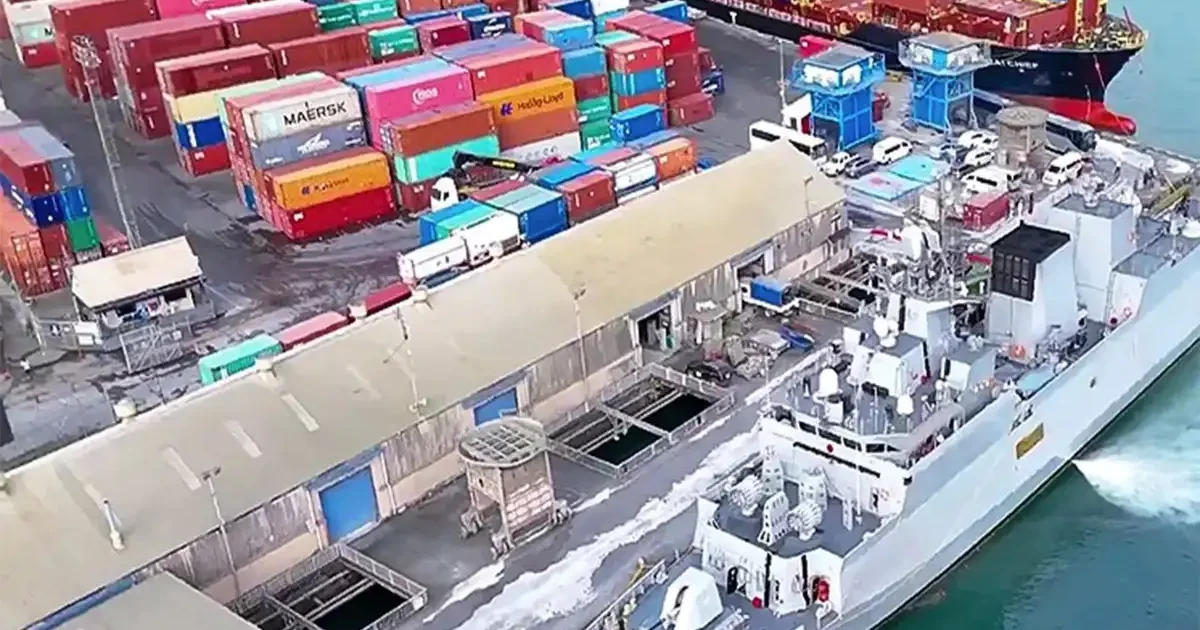
India’s export sector has demonstrated remarkable resilience in 2025, navigating significant challenges like steep tariffs from the United States, geopolitical tensions, and global trade uncertainties. Exporters have adapted by diversifying their markets and products, a strategy that officials believe will sustain growth into 2026. The country’s merchandise exports, previously fluctuating, have rebounded, showcasing a strong recovery and positive outlook for the future.
Export Performance Amid Challenges
In 2025, India’s merchandise exports reached $407 billion from January to November, demonstrating resilience in the face of adversity. This is a recovery from a dip to $389.5 billion in 2023, following a peak of $453.3 billion in 2022. The year 2024 saw a resurgence, with exports climbing to $443 billion. Despite the imposition of a 50% duty by the US on Indian goods, exporters quickly recalibrated their strategies, effectively cushioning the impact through market diversification. A senior official from the commerce ministry noted that trade is adaptable, akin to water finding its own course.
Commerce Secretary Rajesh Agrawal highlighted that India’s combined exports of goods and services reached a record $825.25 billion in the fiscal year 2024-25, marking a growth of over 6% year-on-year. The upward trend has continued into the current fiscal year, with exports totaling $562 billion from April to November 2025. Agrawal expressed optimism for 2026, citing three upcoming free trade agreements with the UK, Oman, and New Zealand that are expected to enhance market access for Indian goods and services.
Market Diversification and Growth Drivers
The diversification of markets has emerged as a key strategy for Indian exporters. While the US and the UAE remain significant markets, there has been notable growth in exports to Europe, East Asia, and South Asia. In November, exports to the US surged by 22.61%, reaching $6.98 billion, while shipments to Spain skyrocketed by nearly 150%. This trend indicates a shift in focus, with exporters increasingly looking beyond traditional markets.
Industry experts have identified electronics exports as a major growth driver, with a remarkable increase of nearly 39% in November. This growth is attributed to foreign direct investment (FDI) that has bolstered capacity creation and integration into global value chains. Other sectors contributing to this momentum include engineering goods, pharmaceuticals, and automotive exports. The Federation of Indian Export Organisations’ Director General, Ajay Sahai, emphasized that supply-chain realignments and improved trade partnerships position exporters favorably for the upcoming year.
Government Support and Strategic Initiatives
The Indian government is actively pursuing a multi-faceted strategy to support exporters amid ongoing global uncertainties. This includes a substantial export promotion mission valued at Rs 25,060 crore, along with additional collateral-free credit of up to Rs 20,000 crore. Other measures involve debt repayment moratoriums, extended export credit tenors, and leveraging free trade agreements to enhance market access.
Over the past five years, the NDA government has signed or implemented several free trade agreements, including those with Mauritius, Australia, the UAE, Oman, the UK, EFTA, and New Zealand. These agreements are expected to play a crucial role in facilitating trade and improving the competitive landscape for Indian exporters. However, challenges remain, including geopolitical tensions, trade fragmentation, and protectionist measures that could impact future growth.
Outlook for 2026 and Beyond
Looking ahead, the outlook for India’s exports in 2026 appears promising, provided that current trends continue. However, exporters remain cautious due to ongoing global uncertainties, including the potential for a bilateral trade agreement with the US and negotiations with the European Union. The World Trade Organization has projected a modest global trade growth of 2.4% for 2025, but has revised its outlook for 2026 down to 0.5%, citing concerns over tariff uncertainties and slowing GDP growth in developed economies.
The rupee’s volatility, which weakened by approximately 5% in 2025, adds another layer of complexity to the export landscape as India approaches 2026. Despite these challenges, industry leaders maintain confidence in a strong and stable export outlook, bolstered by continued policy support and strategic market diversification efforts.
Disclaimer: Digihunt is not a financial advisor and this is not investment advice.