Author: Kanhaiya

  • TCS Q2 Results: Rs 10 Dividend Per Share Announced; Sets Record Date

    TCS Q2 Results: Rs 10 Dividend Per Share Announced; Sets Record Date

    TCS has released its Q2 FY25 financial results today.

    Tata Consultancy Services Ltd. (TCS), the largest domestic software exporter, on Thursday announced an interim dividend.

    Tata Consultancy Services Ltd. (TCS), the largest domestic software exporter, on Thursday (October 10) announced an interim dividend of Rs 10 per share for the financial year 2024-25 (FY25).

    The company has fixed October 18, 2024, as the record date and November 5 as the payment day.

    “We would like to inform you that at the Board Meeting held today, the Directors have declared second interim dividend of Rs 10 per Equity Share of Rs 1 each of the Company,” TCS said in a BSE filing.

    The second interim dividend shall be paid on Tuesday, November 5, 2024, to the equity shareholders of the company, whose names appear on the Register of Members of the Company or in the records of the Depositories as beneficial owners of the shares as on Friday, October 18, 2024, which is the Record Date fixed for the purpose, it added.

    TCS on Thursday reported a 5 per cent rise year-on-year in its consolidated net profit to Rs 11,909 crore for the second quarter of the financial year 2024-25 ended September 30 (Q2 FY25). Its revenue from operations during July-September 2024 increased 7.6 per cent year-on-year to Rs 64,259 crore.

  • Pranik Logistics IPO: Check Subscription Status, GMP Today

    Pranik Logistics IPO: Check Subscription Status, GMP Today

    Pranik Logistics IPO: The initial public offering of Pranik Logistics Ltd has been opened for public subscription on Thursday. The price band of the Rs 22.47-crore IPO has been fixed at Rs 73 to Rs 77 per share for the public issue. Till 12:41 pm on the first day of bidding on Thursday, the IPO received a 1.24 times subscription garnering bids for 24,06,400 shares as against the 19,36,000 shares on offer.

    The category for non-institutional investors received 0.35 times subscription, while the portion for retail individual investors (RIIs) got subscribed 2.34 times.

    Pranik Logistics IPO: Key Dates

    The Pranik Logistics IPO will remain opened for public subscription between October 10 and October 14. The share allotment of the Pranik Logistics IPO will likely be finalised on October 15, while its shares will be listed on both NSE SME on October 17.

    Pranik Logistics IPO: Price Band

    The price band of the Rs 22.47-crore IPO has been fixed at Rs 73 to Rs 77 per share for the public issue.

    Pranik Logistics IPO: GMP Today

    According to market observers, unlisted shares of Pranik Logistics Ltd continue are trading at the same price as its issue price of Rs 77, thus zero GMP. The zero GMP indicates no listing gains from the IPO.

    The GMP is based on market sentiments and keeps changing. ‘Grey market premium’ indicates investors’ readiness to pay more than the issue price.

    Pranik Logistics IPO: More Details

    The Pranik Logistics IPO is entirely a fresh issue of 29.18 lakh shares.

    Pranik Logistics Limited, which was established in 2015, offers integrated logistics solutions. The company is a PAN India logistics provider operating as a freight forwarder and transporter, providing integrated services such as transportation, warehousing, material handling, and freight forwarding to its clients in various industries such as retail, consumer durables, telecom, manufacturing, pharma, etc.

    Pranik Logistics IPO opens for subscription on October 10, 2024 and closes on October 14, 2024. The allotment for the Pranik Logistics IPO is expected to be finalized on Tuesday, October 15, 2024. Pranik Logistics IPO will list on NSE SME with tentative listing date fixed as Thursday, October 17, 2024.

    Pranik Logistics IPO price band is set at ₹73 to ₹77 per share. The minimum lot size for an application is 1600 Shares. The minimum amount of investment required by retail investors is ₹123,200. The minimum lot size investment for HNI is 2 lots (3,200 shares) amounting to ₹246,400.

    Narnolia Financial Services Ltd is the book running lead manager of the Pranik Logistics IPO, while Maashitla Securities Private Limited is the registrar for the issue. The market maker for Pranik Logistics IPO is Prabhat Financial Services.

    Pranik Logistics Ltd’s revenue rose 11 per cent and profit after tax (PAT) rose by 336 per cent in the financial year 2023-24.

  • Garuda Construction IPO Closes Today: Should You Subscribe? Check Subscription Status, GMP Today

    Garuda Construction IPO Closes Today: Should You Subscribe? Check Subscription Status, GMP Today

    Garuda Construction and Engineering IPO: The initial public offering of Garuda Construction and Engineering Ltd, which was opened for public subscription on Tuesday, has so far received over five times subscription. The price band of the Rs 264-crore IPO has been fixed at Rs 82 to Rs 95 per share for the public issue. Till 12:25 pm on the final day of bidding on Thursday, the IPO received a 5.36 times subscription garnering bids for 10,66,74,592 shares as against the 1,99,04,862 shares on offer.

    The category for non-institutional investors received 3.81 times subscription, while the portion for retail individual investors (RIIs) got subscribed 8.67 times. The QIB category received a 1.07 times subscription.

    Garuda Construction and Engineering IPO: Key Dates

    The Garuda Construction IPO will remain opened for public subscription between October 8 and October 10. The share allotment of the Garuda Construction and Engineering IPO will likely be finalised on October 11, while its shares will be listed on both BSE and NSE on October 15.

    Garuda Construction and Engineering IPO: Price Band

    The price band of the Rs 264.1-crore IPO has been fixed at Rs 92 to Rs 95 per share for the public issue.

    Garuda Construction and Engineering IPO: GMP Today

    According to market observers, unlisted shares of Garuda Construction and Engineering Ltd continue to trade at the same price as its issue price of Rs 20, thus zero GMP. The zero GMP indicates no listing gains from the IPO.

    On the first day of the IPO on Tuesday, the GMP was Rs 5.

    The GMP is based on market sentiments and keeps changing. ‘Grey market premium’ indicates investors’ readiness to pay more than the issue price.

    Garuda Construction and Engineering IPO: Analysts’ Recommendations

    Most brokerages have given a ‘subscribe’ recommendation to the IPO.

    Brokerage firm Anand Rathi in its IPO note said, “At the upper price band, the company is valuing at P/E of 24.28 times, with a market cap of Rs 884 crore post issue of equity shares and return on net worth of 36.14 times. We believe that the IPO is fully priced and recommend a ‘subscribe for long term’ rating to the IPO.”

    It also said the company mainly focuses on civil construction of residential and commercial buildings with track record of successfully executing a diverse mix of construction projects, that is, with visible growth through increasing order book and strong project management and execution capabilities to finish projects on schedule with high construction quality.

    Another brokerage Swastika Investmart, however, recommends this IPO to “high-risk investors” for the long term.

    It said Garuda Construction and Engineering has a strong order book and project diversification are key strengths of the business. The PE ratio is in line with industry peers, but the return on net worth is superior. FY23 saw strong growth in revenue and profit, while FY24 was sluggish due to the election year.

    Brokerage firm Stoxbox in its note said, “The company has reduced its debt & is debt-free. With an order book worth Rs 1,408 crores, which is 9.2 times its sales, and an IPO priced at a reasonable Price-to-Earnings (P/E) ratio of 19.5 times based on FY24 earnings, we recommend a ‘subscribe’ rating for this IPO from a long-term perspective.”

    It added that Garuda Construction’s revenue doubled to Rs 154.2 crore in FY24, showing an impressive annual growth rate of 26 per cent. Its profit after tax also grew to Rs 36.4 crores in FY24, with an annual growth rate of 24.7 per cent. The average debt-to-equity ratio of other companies in the industry ranged between 0.23 times and 0.66 times during FY19-FY23.

    Garuda Construction and Engineering IPO: More Details

    The Garuda Construction and Engineering IPO is a mix of fresh issue of 1.83 crore equity shares and an offer of sale (OFS) of 95 lakh equity shares by promoter PKH Ventures.

    The IPO size has been pegged at Rs 264 crore at the upper end of the price band.

    Proceeds from its fresh issuance to the extent of Rs 100 crore will be utilised for working capital requirement; and balance towards general corporate purposes including unidentified inorganic acquisitions.

    The Mumbai-based Garuda Construction is currently engaged in civil construction of six residential projects, two commercial projects, one industrial project and one infrastructure, with an order book of Rs 1,408.27 crore.

    On financial front, the company’s revenue from operations rose from Rs 77.02 crore in FY22 to Rs 154.18 crore in FY24, at a Compound Annual Growth Rate (CAGR) of 26 per cent, and profit after tax increased from Rs 18.78 crore in FY22 to Rs 36.43 crore in FY24, at a CAGR of 25 per cent.

    Corpwis Advisors is the sole book running lead manager and Link Intime India is the registrar of the issue.

  • Tata Group’s Market Cap Ballooned 17 Times To Rs 30,000 Lakh Crore Under Ratan Tata’s Leadership

    Tata Group’s Market Cap Ballooned 17 Times To Rs 30,000 Lakh Crore Under Ratan Tata’s Leadership

    Ratan Tata’s tenure as the chairman of Tata Sons from 1991 to 2012 transformed the Tata Group into a globalised diversified conglomerate from an Indian legacy house, with its market capitalisation ballooning 17 times. The group, with its listed entities’ combined market capitalisation at Rs 30 lakh crore, saw dramatic growth with his strategic decisions and well-timed acquisitions.

    In December 2012, Ratan Tata stepped down as Chairman of Tata Sons after 50 years with the Tata group; and was honoured with the title of Chairman Emeritus of Tata Sons.

    During Ratan Tata’s tenure at the helm, Tata Group’s revenues grew from about Rs 18,000 crore to Rs 5.5 lakh crore, and the market cap from about Rs 30,000 crore to Rs 5 lakh crore.

    When Ratan Tata took over as chairman, he inherited a diverse conglomerate of over 95 companies, many of which were operating independently, with little synergy or strategic alignment. These companies were operating in a diverse range of businesses that included chemicals, hotels, salt, software, steel, soaps, and watches.

    One of Tata’s priorities was restructuring and consolidating the group, streamlining operations, and enforcing a singular corporate identity across its various subsidiaries. “I think the group needed cohesion… My concern was that after him [group patriarch JRD Tata], it would be difficult to hold it together,” Tata had said about his taking over as the group Chairman.

    The 144-year old Tata group was a “slow, bureaucratic, domestic market focused, loosely connected agglomerate of businesses,” wrote K.S. Manikandan, K. Rajyalakshmi and J. Ramachandran in a paper for Indian Institute of Management (IIM)-Bangalore. Tata transformed it into an “ambitious, integrated business house that realised over 60 per cent of its revenues from global markets,” they wrote.

    India’s economic liberalisation and Ratan Tata’s Group captaincy

    A key turning point came with the liberalisation of the Indian economy in 1991. Ratan Tata’s appointment as chairman of the group coincided with the liberalisation, which dramatically changed the country’s industrial landscape. Tata recognised the need to innovate and become globally competitive, positioning the conglomerate to benefit from the opening up of the Indian economy to foreign investments and partnerships.

    Tata entered into collaborations with multinationals and set up several high technology ventures such as Tata Teleservices (Bell Canada) and Tata Communications in the telecom sector, Tata Petrodyne in upstream oil and gas (with BP), Tata Information Systems in information technology (with IBM) and initiated talks with Singapore Airlines to launch airline services in India.

    To fund the new ventures, Tata sold a 20 percent stake in Tata Industries Ltd. to Hong Kong-based Jardine Matheson group for $35 million, according to the IIM-B paper.

    It was Ratan Tata under whose leadership the Tata group pursued a globalisation drive with high-profile acquisitions such as Tetley, Corus, Jaguar Land Rover, Brunner Mond, General Chemical Industrial Products and Daewoo. He took over from JRD Tata as Chairman of Tata Sons and Chairman of the Tata trusts in March 1991. Tata Sons is the principal investment holding company and promoter of Tata companies. Sixty-six per cent of the equity share capital of Tata Sons is held by philanthropic trusts, which support education, health, livelihood generation and art and culture.

    Tata Steel’s Acquisition of Corus (2007): In what was then India’s largest-ever foreign acquisition, Tata Steel acquired the Anglo-Dutch steelmaker Corus for $12 billion. This acquisition catapulted Tata Steel into the ranks of the world’s largest steel producers and was a major contributor to the group’s rising market value.

    Before the acquisition, Tata Steel was largely focused on the domestic market. With Corus, it gained a significant foothold in Europe and became a more diversified and globally recognised steelmaker.

    Tata Motors’ acquisition of Jaguar Land Rover (2008): In a bold move, Tata Motors acquired the iconic British brands Jaguar and Land Rover from Ford for $2.3 billion. While initially met with scepticism, this acquisition turned out to be a masterstroke.

    Under Tata’s ownership, JLR became profitable, and its global success bolstered Tata Motors’ market capitalisation. By 2015, JLR was contributing more than 90 per cent of Tata Motors’ profits, underscoring the success of this deal.

    These acquisitions significantly boosted Tata Group’s overall market capitalisation over the next few years.

    TCS: The crown jewel of Tata Group

    A pivotal driver of the Tata Group’s market capitalisation growth has been TCS (Tata Consultancy Services), the group’s information technology (IT) services arm. While launched back in 1968, TCS truly spread its wings under Ratan Tata’s strategic leadership. TCS went public in 2004, raising Rs 4,713 crore through its initial public offering (IPO). The company’s stellar performance since then has transformed it into the group’s largest company by market capitalisation, contributing over Rs 15 lakh crore.

    TCS’s growth, aided by the global IT outsourcing boom, positioned it as a leader in digital transformation services. The company continues to be the group’s most valuable asset, and its exponential rise in market cap has been a primary factor in the Tata Group’s overall growth.

    Key milestone: Tata Group surpassed Rs 30 lakh crore in market capitalisation in 2024, driven by continued strength in TCS, resurgence in Tata Motors, and growth in Tata Steel and Tata Power.
  • ‘Ratan Tata is My Role Model’: When Rakesh Jhunjhunwala Recounted Tatas’ Contributions

    ‘Ratan Tata is My Role Model’: When Rakesh Jhunjhunwala Recounted Tatas’ Contributions

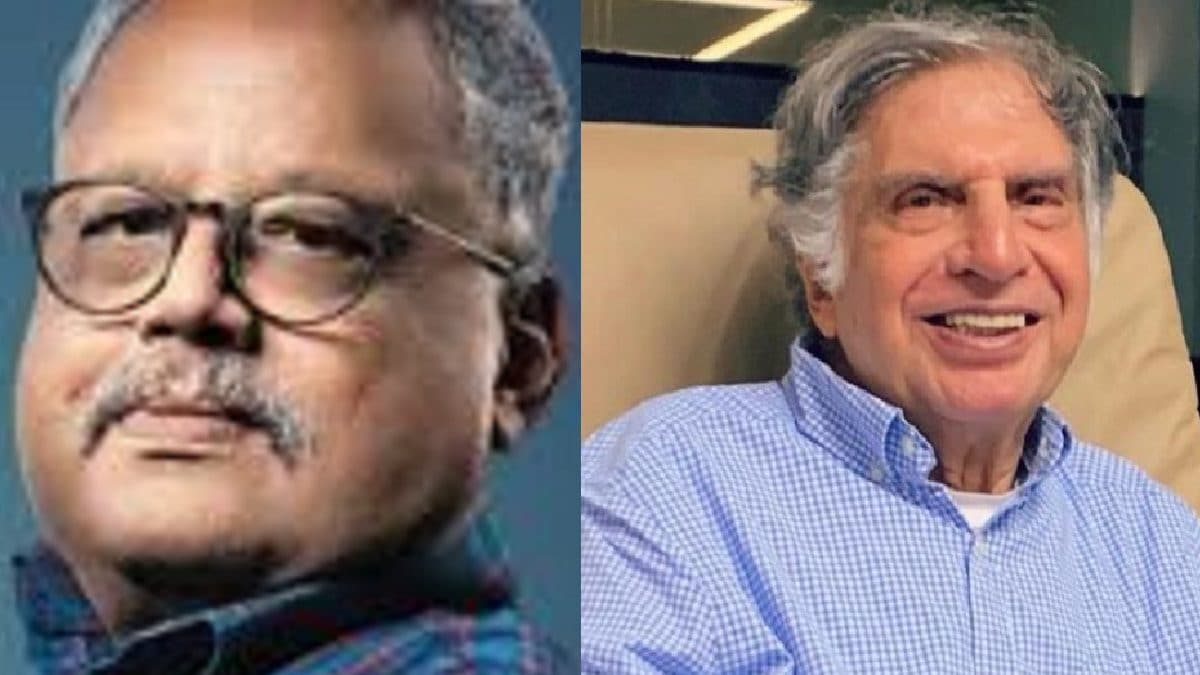
    Rakesh Jhunjhunwala (left) and Ratan Tata.

    Tatas, including Jamsetji Tata and Ratan Tata, were blessed by God as they willed all their wealth to charity and they contributed to the society through industrial contributions extensively.

    Rakesh Jhunjhunwala, the late ace investor who passed away in August 2022, considered Tata Sons Chairman Emeritus Ratan Tata as his role model due to his philanthropy and entrepreneurship spirit. He said Tatas, including Jamsetji Tata and Ratan Tata, were blessed by God as they willed all their wealth to charity and they contributed to the society through industrial contributions extensively.

    “Tatas are blessed by God. They are my role models in life. The persons who established the house of Tata, Sir Ratan Tata and Sir Jamsetji Tata, willed all their wealth to charity. At the Tata Cancer Hospital in Mumbai, every child who comes to Mumbai is examined by them. If they feel they can cure it, they give free treatment, the Indian Medicines Society gives medicines. Now, they are setting up hospitals in every district,” Rakesh Jhunjhunwala had said during a news channel event.

    He also praised Ratan Tata for transforming India’s industrial landscape and benefitting the country.

    “Who set up India’s first steel plant, first five-star hotel, first power plant, first software company, first car manufacturing company? Who set up the Indian Institute of Science? So, it’s a role model of what wealth is. They are creating wealth for the good of society. What greater noble aim can a human have?” said Jhunjhunwala.

    Ratan Tata, who led the salt-to-software empire for over two decades, took his last breath at Breach Candy Hospital in south Mumbai at 11:30 pm on Wednesday.

    A recipient of the Padma Vibhushan, Tata had been in the hospital’s intensive care unit since Monday.

  • Ratan Tata’s Key To Startup Success, Look For The Ones With Greatest Spark

    Ratan Tata’s Key To Startup Success, Look For The Ones With Greatest Spark

    Ratan Tata died on Wednesday, Oct 9. (Image: PTI File)

    Tata emphasised that while the potential of a business model is important, the true essence lies in the entrepreneur’s vision and commitment.

    Ratan Tata’s vision for startups underscored the significance of passion and innovation in entrepreneurship. He noted that the most promising startups are often led by individuals who exhibit a unique spark or enthusiasm for their ideas. This viewpoint illustrates that successful ventures frequently arise from the founders’ vision and dedication, which can lead to transformative changes in their industries.

    With over 20 startups in his investment portfolio, Ratan Tata had not only championed innovation but also provided invaluable mentorship to small business founders.

    In a 2021 interview with CNBC-TV18’s Shereen Bhan, Ratan Tata revealed that his initial interest in entrepreneurship was fueled by the same excitement he experienced during his time at Tata, where he encouraged the company to explore early computer and software startups in the Bay Area.

    Entrepreneur’s Vision and Commitment

    Tata emphasised that while the potential of a business model is important, the true essence lies in the entrepreneur’s vision and commitment. Tata expressed his preference for founders who are genuinely passionate about creating something sustainable and impactful, rather than those merely seeking a quick exit.

    Ratan Tata As An Investor

    Reflecting on his experiences as an investor, Tata mentioned that he was always inspired by the excitement of someone claiming they could achieve what seemed impossible.

    “I was usually the one in Tata’s that was urging that we do this. So while in Tata, I was involved in the Bay Area and in some of the early computer startups, some of the software startups. And those were exciting companies for me. I was in Tata, so I was not doing anything myself, I was doing it in the name of Tata,” Ratan Tata had told CNBC-TV18.

    He had added that the relationship you established with the founder, the truth and faith that you put on the table or he puts on the table, would be the difference between a flashy entrepreneur who is either trying to copy another company that’s been successful or that has a dream that doesn’t come true. That’s the difference.

    Role of Government

    Emphasising the role of the government, Tata had said that it has a crucial role in advancing technology, a task that the private sector often finds challenging due to the significant financial investment and high risk involved. Many of the most intriguing startups and entrepreneurial activities have emerged from individuals who utilised government funding to launch their initiatives. Such investments would not have been possible without government support.

  • India’s Wealthiest Tycoons: Mukesh Ambani Reclaims Top Spot; Collective Wealth Of 100 Richest Indians Hit Record Mark

    India’s Wealthiest Tycoons: Mukesh Ambani Reclaims Top Spot; Collective Wealth Of 100 Richest Indians Hit Record Mark

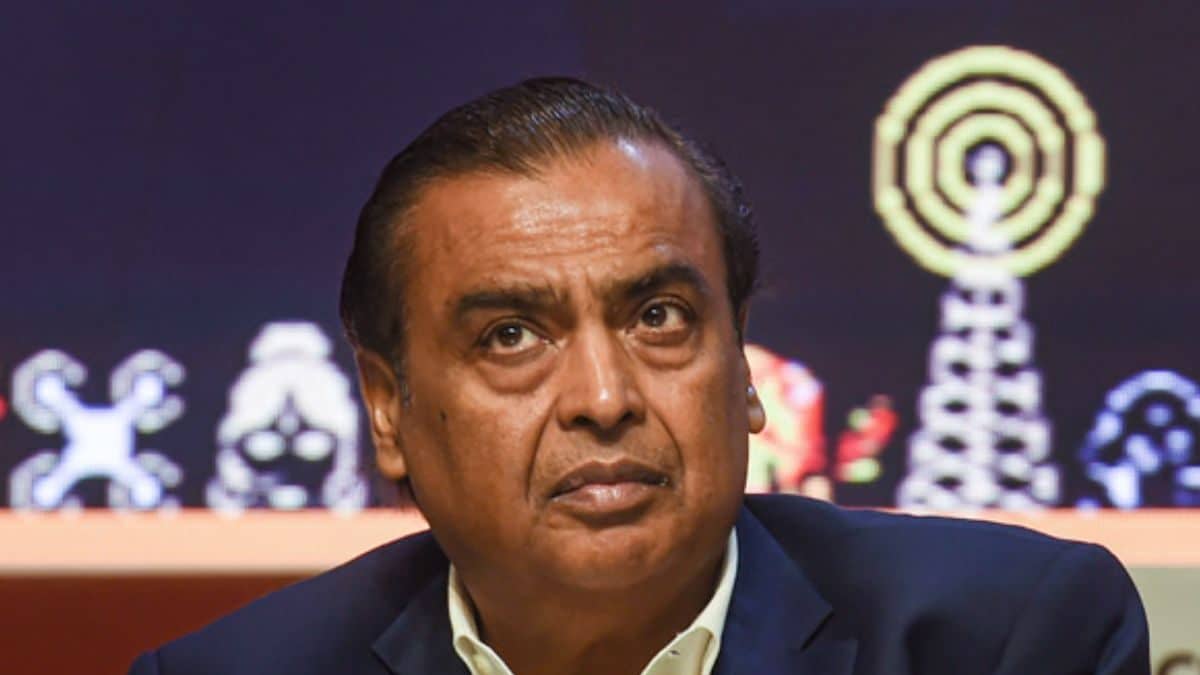
    Mukesh Ambani, Chairman and managing director, Reliance Industries | Image/PTI

    Billionaire Mukesh Ambani, chairman and managing director of Reliance Industries, has reclaimed the top spot in the list of wealthiest people in India.

    Billionaire Mukesh Ambani, chairman and managing director of Reliance Industries, has reclaimed the top spot in the list of wealthiest people in India, in a year that saw the country’s top 100 richest tycoons cross a trillion dollars in collective net worth for the first time, according to Forbes’ coverage of India’s Richest 2024.

    Ambani, who recently announced a bonus issue of shares as a Diwali gift to Reliance investors, topped the chart with wealth rising $27.5 billion in the past year to $119.5 billion. He’s the second-biggest gainer in dollar terms this year, up $27.5 billion to $119.5 billion, the magazine said in a report on October 9.

    The Reliance Industries chairperson’s current net worth stands at $108.3 billion, making him the 13th richest person in the world. Mukesh Ambani runs Reliance Industries, which has explored business space in petrochemicals, oil and gas, telecom, retail, media and financial services.

    Combined Wealth Of 100 Richest Indians Hit Record Mark

    Overall, 2024 marked a record-breaking year for India’s 100 richest tycoons as their collective wealth surpassed the trillion-dollar milestone for the first time. The total wealth jumped 40 per cent to $1.1 trillion in 2024, rising from $799 billion reported in 2023, the magazine said.

    It comes after Prime Minister Narendra Modi returned to power for a third term in June, putting the stock market on overdrive. The benchmark BSE Sensex rose 30% since fortunes were measured a year ago.

    The report mentioned that a towering growth in the stock market performance with investors showing interest in IPO and mutual funds has resulted in the rich getting richer.

    “As a result, more than 80 per cent of those on the list are wealthier, with 58 adding $1 billion or more to their respective net worths,” it said.

    The Forbes list of ‘India’s 100 Richest 2024’ also featured other prominent billionaires including Gautam Adani, Chairperson of Adani Group, who holds a fortune of $116 Billion, making to second spot in the list after Mukesh Ambani.

  • ‘Ratan Tata Sat Among People In Back Rows At Local Football Match’: Internet Remembers The Humble Industrialist

    ‘Ratan Tata Sat Among People In Back Rows At Local Football Match’: Internet Remembers The Humble Industrialist

    Social media users shared how Ratan Tata used to stop to chat with kids. (Image: PTI File)

    A social media user remembered Ratan Tata as a “very down to earth” person who would stop to chat with neighbourhood kids.

    One of India’s most loved business tycoons, Ratan Tata, died late on Wednesday, aged 86. Tata is among the few names in the business world, known to be down to earth. As news of his passing away came, many on the social media remembered Tata as the man who was modest and down to earth.

    “My most vivid memory of Mr Ratan Tata is seeing him sitting among people in the back rows, on the stands of the Cooperage football ground in Mumbai and watching local football games. Such was his simplicity and greatness,” wrote a user on X.

    “India has lost his Kohinoor today. He was an extremely down to earth person. He was an honest man who loved India. I pay my tributes to him,” Maharashtra CM Eknath Shinde said.

    Another X user remembered Ratan Tata as a “very down to earth” person who would stop to chat with neighbourhood kids. “I have some nice memories of Sir Ratan Tata when I used to live in Colaba some decades ago, he used to live next door in Bakhtawar nd would religiously walk his two Doberman dogs every evening in his shorts nd Tshirt, would spot him sometimes at the US club playing tennis nd having chai, was a simple nd friendly guy, in spite of achieving so much he was very down to earth nd humble, would always say hello nd chat with the young kids in the compound. A gracious nd chivalrous gentleman, that’s the memory I have of this legend. What can one say about his philanthropic nature which was not just confined to humans but even to animals particularly the four legged ones. The doormen at the Taj Hotel were instructed not to shoo away stray dogs,” the user wrote.

    “He recently built a multi specialty hospital just for animals in Mumbai nd also started a wonderful service for the old nd aged who were alone nd needed someone to take them to doctors ,buy their grocery etc. Ratan Tata was truly a noble man,” she added.

    Another X user remembered how Ratan Tata stopped to chat with him while on a walk. “It reminds me of the 1st time I met Ratan Tata when growing up in Mumbai. He was on his regular evening walk with his dogs in the United Services Club in Colaba. How down to earth can one be, when he saw I wanted to shake hands with him, he stopped, talked to me about my school,” he wrote.

  • ‘Humiliated’ by Ford Motors in 1999, Ratan Tata Had His Sweet, Cold Revenge in 2008

    ‘Humiliated’ by Ford Motors in 1999, Ratan Tata Had His Sweet, Cold Revenge in 2008

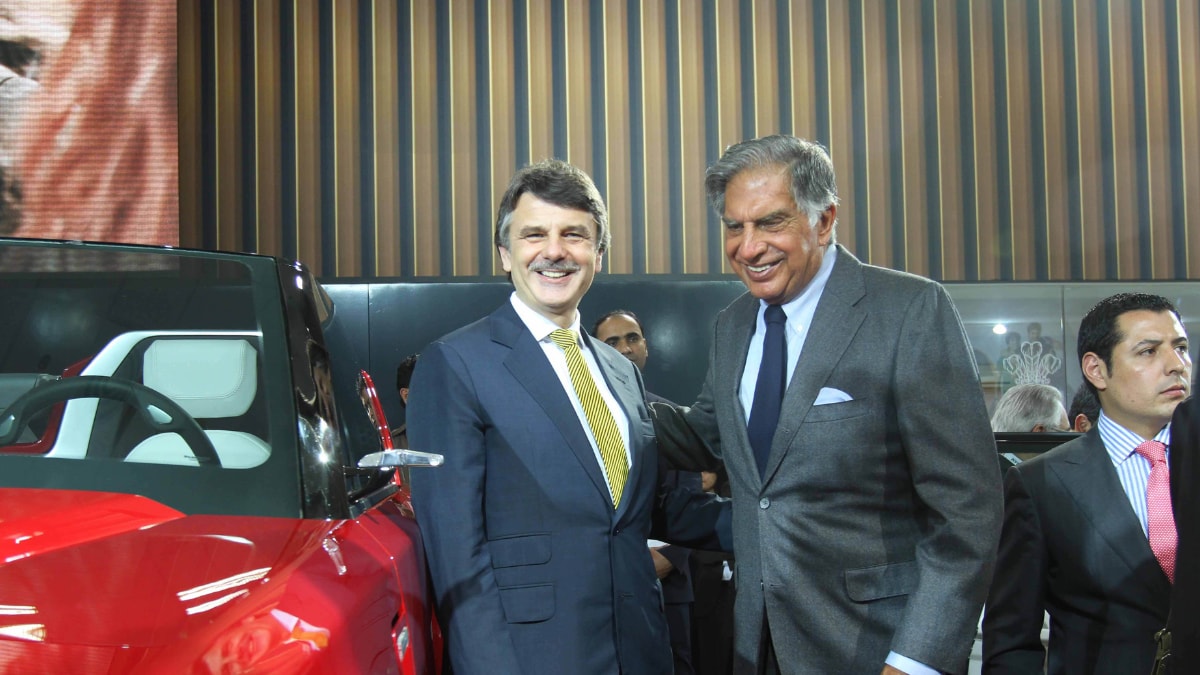
    Ratan Tata with Land Rover’s Defender Concept 100 Sport car at the 11th Auto Expo at Pragati Maidan on January 5, 2012. (Jasjeet Plaha via Getty Images)

    As the country bids adieu to Ratan Tata, who passed away at 86, we recall the time the industrialist clapped back with class at Ford Motors for “humiliating” an Indian delegation visiting its headquarters

    Ratan Naval Tata, the former Tata Group chairman who transformed a staid group into India’s largest and most influential conglomerate, was known throughout his life for his simple lifestyle and humble demeanor. This humility, however, belied Ratan Tata’s razor-sharp acumen that a group of officials at America’s Ford Motors came to know about the hard way.

    As the country bids adieu to the industrialist and philanthropist who passed away at 86, we recall the time Ratan Tata clapped back with class at some Ford Motors officials for “humiliating” Indians visiting its headquarters.

    The year was 1999 and Tata Indica, the Tata Group’s big passenger car bet, was not delivering expected returns a year into its launch.

    Desperate, the Tata Motors brass, led by Ratan Tata, acceded to a meeting request from Ford Motors for a possible sale of the passenger vehicles division to the American auto major. Some people had advised Tata to sell the business, and the Ford officials came to Bombay House to hold talks.

    During the meeting at the Tata headquarters, the American company evinced interest in buying out the business after the not-so-warm response to the hatchback car for over a year since launch.

    Soon, top Tata officials, led by Ratan Tata, went to the US for another meeting, which lasted about three hours. According to those who attended the meeting, officials from Ford “humiliated” the visiting Indians at the meeting in Detroit.

    “You do not know anything, why did you start the passenger car division at all,” the Ford officials told their guests, and spoke about “doing a favour” to the Indian company by buying out the latter’s business.

    The team decided to return to India immediately after the meeting, which was described as “humiliating” by the people present. On the 90-minute flight taking them back to New York, a sombre Ratan Tata reportedly spoke very few words.

    “This was in 1999. Come 2008, the same Ford’s JLR was bought by us. Ford chairman Bill Ford thanked Tata, saying, ‘You are doing us a big favour by buying JLR’,” Pravin Kadle, a long-time group veteran, had recounted during a public event a few years ago.

    In 2008, the Tata Group bought the iconic brands making sedans and sports utility vehicles in a $2.23-billion deal from Ford.

    Post-acquisition, the Tata Group has scripted one of the most fabulous turnarounds in the auto industry and has been able to position the marquee British brands as formidable entities in the fiercely competitive global car market. Even as Tata Motors has come a long way and gained market share in India, it continues to earn a significant part of its revenues from the JLR.

    With PTI inputs

  • PM Modi Speaks To Noel Tata, Condoles Demise Of Veteran Industrialist Ratan Tata

    PM Modi Speaks To Noel Tata, Condoles Demise Of Veteran Industrialist Ratan Tata

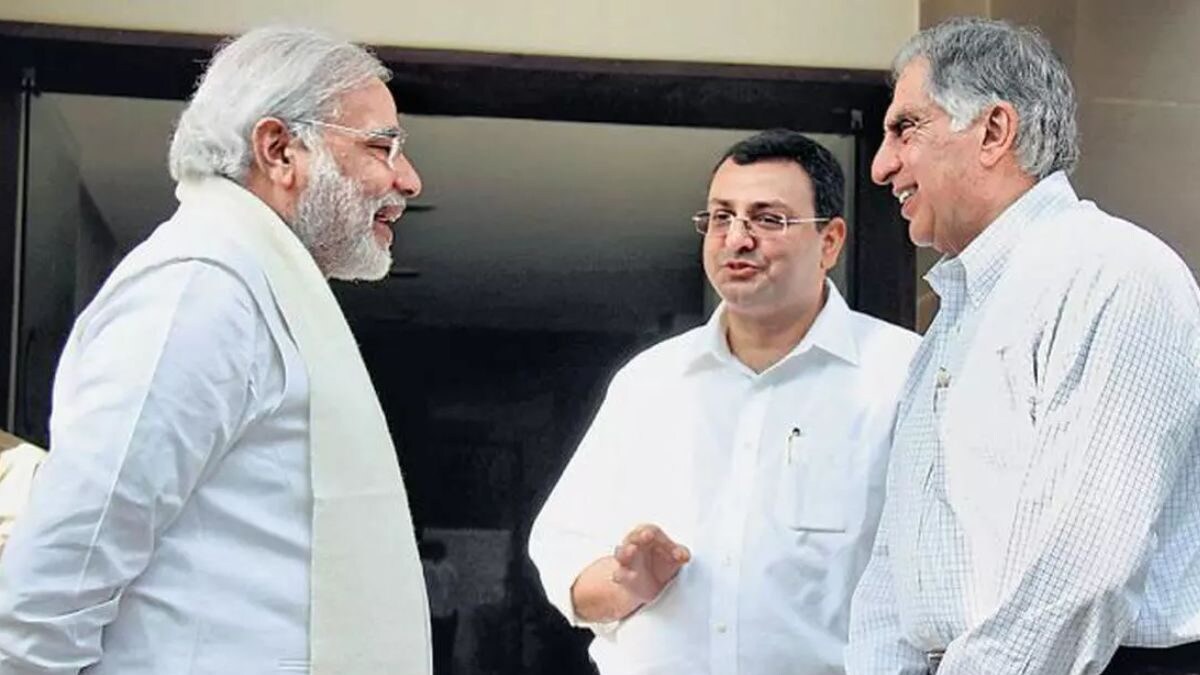
    Prime Minister Narendra Modi with Ratan Tata | Image/PTI (File)

    Prime Minister Narendra Modi on Thursday spoke to Noel Tata and expressed condolences on the passing away of his sibling, India’s renowned business tycoon Ratan Tata.

    Prime Minister Narendra Modi on Thursday spoke to Noel Tata and expressed condolences on the passing away of his sibling, India’s renowned business tycoon Ratan Tata.

    Veteran industrialist and Tata Sons Chairman Emeritus Ratan Tata died late Wednesday at the age of 86 after a brief illness. He was admitted to Mumbai’s Breach Candy Hospital on Monday due to a sudden drop in blood pressure and was in critical condition in the intensive care unit.

    More details to follow…