
Author: Kanhaiya

  • NeoPolitan Pizza and Foods IPO Day 3: Check Subscription Status, GMP Today

    NeoPolitan Pizza and Foods IPO Day 3: Check Subscription Status, GMP Today

    NeoPolitan Pizza and Foods IPO.

    Unlisted shares of NeoPolitan Pizza and Foods Ltd are trading at the same price as its issue price of Rs 20, thus zero GMP. The zero GMP indicates no listing gains from the IPO.

    NeoPolitan Pizza and Foods IPO: The initial public offering of NeoPolitan Pizza and Foods Ltd, which was opened on September 30, will be closed on Friday, October 4. The price of the Rs 12-crore SME IPO has been fixed at Rs 20 per share for the public issue. Till 11:11 am on the third day of bidding on Thursday, the SME IPO received a 5.58 times subscription garnering bids for 3,18,12,000 shares as against the 57,00,001 shares on offer.

    The category for non-institutional investors received 0.96 times subscription, while the portion for retail individual investors (RIIs) got subscribed 10.21 times.

    The IPO will be closed on October 4.

    NeoPolitan Pizza and Foods IPO: Key Dates

    The IPO is available for public subscription between September 30 and October 4. The share allotment of the NeoPolitan Pizza and Foods IPO will likely be finalised on October 7, while its shares will be listed on the BSE SME on October 9.

    NeoPolitan Pizza and Foods IPO: Price Band

    The price of the Rs 12-crore SME IPO has been fixed at Rs 20 per share for the public issue.

    NeoPolitan Pizza and Foods IPO: GMP Today

    According to market observers, unlisted shares of NeoPolitan Pizza and Foods Ltd are trading at the same price as its issue price of Rs 20, thus zero GMP. The zero GMP indicates no listing gains from the IPO.

    The GMP is based on market sentiments and keeps changing. ‘Grey market premium’ indicates investors’ readiness to pay more than the issue price.

    NeoPolitan Pizza and Foods IPO: More Details

    The NeoPolitan Pizza and Foods IPO is entirely a fresh issue of 60 lakh shares.

    NeoPolitan Pizza and Foods IPO bidding opened for subscription on September 30, 2024 and will close on October 4, 2024. The allotment for the NeoPolitan Pizza and Foods IPO is expected to be finalized on Monday, October 7, 2024. NeoPolitan Pizza and Foods IPO will list on BSE SME with tentative listing date fixed as Wednesday, October 9, 2024.

    NeoPolitan Pizza and Foods IPO price is ₹20 per share. The minimum lot size for an application is 6000 Shares. The minimum amount of investment required by retail investors is ₹120,000. The minimum lot size investment for HNI is 2 lots (12,000 shares) amounting to ₹240,000.

    Turnaround Corporate Advisors Private Limited is the book running lead manager of the NeoPolitan Pizza and Foods IPO, while Bigshare Services Pvt Ltd is the registrar for the issue. The market maker for NeoPolitan Pizza and Foods IPO is Mnm Stock Broking.
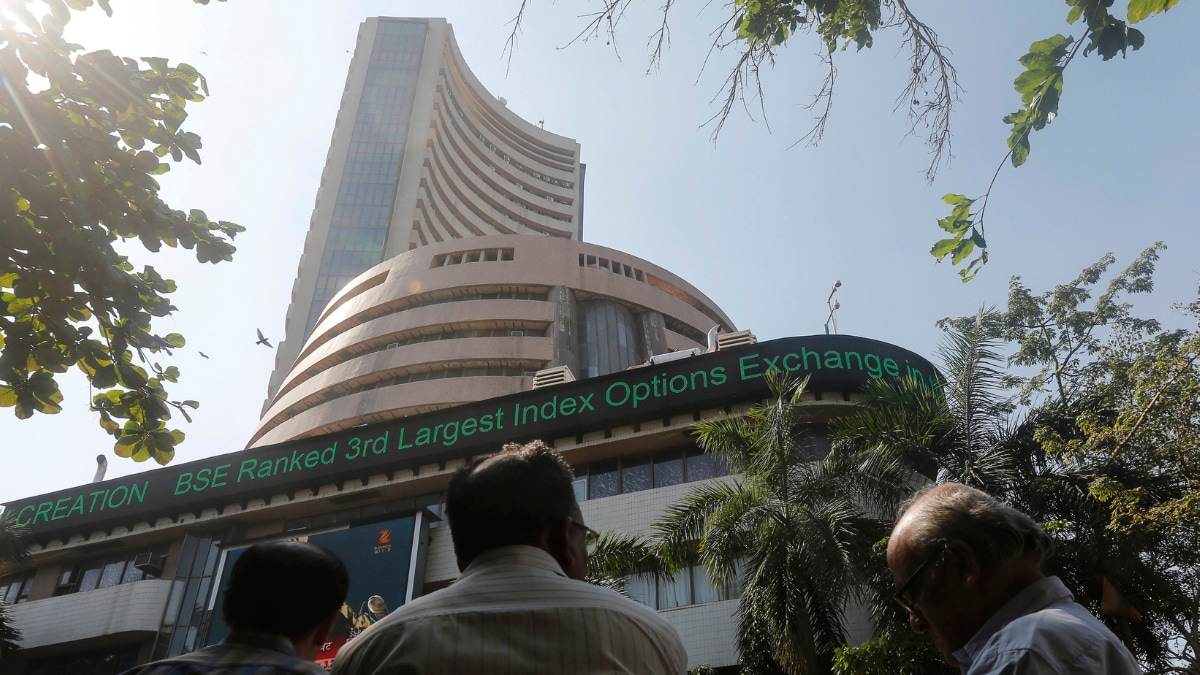

  • Stock Market LIVE Updates: Sensex Tanks Over 900 Points, Nifty Below 25,550; All Sectors In Red

    Stock Market LIVE Updates: Sensex Tanks Over 900 Points, Nifty Below 25,550; All Sectors In Red

    Oct 03, 2024
    09:32 IST

    Stock Market LIVE Updates: Bharat Forge unit ties up with US-based cos to produce next-gen artillery platforms

    Stock Market LIVE Updates: Kalyani Strategic Systems, a wholly-owned subsidiary of Bharat Forge, India, plans to enter into a multi-party agreement with US-based defense companies, AM General and Mandus Group LLC, to explore the co-development and co-production of next-generation artillery gun platforms.

    The company, in an exchange filing, said, “This collaboration is targeted to address the requirement of modern armies of the world in an evolving combat scenario equipping them with compact, robust, light weight, ruggedized, mobile, all weather, all terrain 105mm and 155mm next generation artillery gun platforms.”

    Oct 03, 2024
    09:26 IST

    Stock Market LIVE Updates: Broader indices fall 1% each

    The BSE MidCap fell 1.14 per cent, while BSE SmallCap declined by 1.09 per cent on Thursday morning.

    Oct 03, 2024
    09:25 IST

    Stock Market LIVE Updates: Global Cues

    Meanwhile, gains in Asia were led by Japanese stocks, which were buoyed by the modest overnight uptick on Wall Street despite escalating tensions in the Middle East. The Nikkei 225 was up 2.21 per cent, while the broader Topix index rose by 2 per cent.

    Australia’s S&P/ASX 200 was down marginally by 0.07 per cent, while, Hong Kong’s Hang Seng was down 2.35 per cent.

    In Asia, following a meeting with Bank of Japan Governor Kazuo Ueda, Japan’s new Prime Minister Shigeru Ishiba stated that current economic conditions do not warrant another interest rate hike.
    Investors in Asia are also anticipating a busy day of data releases. Australia’s Judo Bank Composite PMI for September fell to 49.6, down from 51.7 in August, indicating contraction. The services PMI also dipped to 50.5 from 52.5 in the previous month.

    Additionally, the Australian Bureau of Statistics is expected to release trade data for August, with economists predicting a surplus of 5.5 billion Australian dollars, down from AU$6.01 billion in July.

    Other key data includes Japan’s PMI figures for September and Hong Kong’s August retail sales.

    Markets in mainland China will remain closed until October 8 for a week-long holiday, and South Korea is also closed Thursday for National Foundation Day.

    That apart, MSCI’s global equities index was down slightly on Wednesday while the dollar rose and oil prices pared earlier gains, as investors digested US economic data and anxiously awaited Israel’s response to Iran’s missile attack the previous day.

    Oil prices rose on worries that further escalation in the Middle East could threaten oil supplies from the world’s top producing region, but gains were limited by a large build up in US crude inventories.

    US President Joe Biden said he would not support any Israeli strike on Iran’s nuclear sites and urged Israel to act “proportionally” in response to Iran’s biggest ever direct attack on Israel. Iran, after firing ballistic missiles on Israel on Tuesday, said early Wednesday that its attack was finished barring further provocation.

    The dollar hit a three-week high against the euro after the ADP national employment report showed US private payrolls increased more than expected in September ahead of Friday’s highly anticipated jobs data.

    Longer-dated US Treasury yields rose after the data pointed to a stable labour market while investors monitored Middle East hostilities.

    On Wall Street, the Dow Jones Industrial Average rose 39.55 points, or 0.09 per cent, to close at 42,196.52, the S&P 500 gained 0.01 per cent, to close at 5,709.54, and the Nasdaq Composite rose 14.76 points, or 0.08 per cent, to end at 17,925.12.

    MSCI’s gauge of stocks across the globe fell 0.04 per cent, to 845.49. Earlier the STOXX Europe 600 index closed up 0.05 per cent at 521.14.

    In energy markets, US crude settled up 0.39 per cent at $70.10 a barrel and Brent ended the session at $73.90 per barrel, up 0.46 per cent on the day.

    In Treasuries, the yield on benchmark US 10-year notes rose 4 basis points to 3.783 per cent, from 3.743 per cent late on Tuesday, while the 30-year bond yield rose 4.9 basis points to 4.1299 per cent.

    The 2-year note yield, which typically moves in step with interest rate expectations, rose 1.4 basis points to 3.6352 per cent, from 3.621 per cent late on Tuesday.

    A closely watched part of the US Treasury yield curve measuring the gap between yields on two- and 10-year Treasury notes, seen as an indicator of economic expectations, was at a positive 14.6 basis points.

    In currencies, the dollar index, which measures the greenback against a basket of currencies including the yen and the euro, rose 0.34 per cent to 101.60.

    In precious metals, spot gold fell 0.14 per cent to $2,659.22 an ounce. US gold futures fell 1.02 per cent to $2,640.00 an ounce.

    (With inputs from Reuters.)

    Oct 03, 2024
    09:19 IST

    Stock Market LIVE Updates: Adani merges step-down subsidiaries with ANIL

    The Adani Group has merged two of its step-down subsidiaries with Adani New Industries Ltd, a company focused on green hydrogen and wind turbine manufacturing, as noted in a stock exchange filing on Wednesday.

    According to Adani Enterprises Ltd, the group’s flagship company, “Adani Infrastructure Private Limited and Mundra Solar Technology Limited have been amalgamated with Adani New Industries Limited, which is a wholly owned subsidiary of the company.”

    Oct 03, 2024
    09:19 IST

    Stock Market LIVE Updates: Oil rises as Middle East conflict deepens, gains capped by global supply outlook

    Oil prices ticked higher in early trade on Thursday as investors weighed the escalating conflict in the Middle East and the potential for disruption to crude flows, against an amply-supplied global market.

    Brent crude futures increased 64 cents, or 0.87%, to $74.54 a barrel as of 0006 GMT. U.S. West Texas Intermediate crude futures gained 72 cents, or 1.03%, to $70.82 a barrel.

  • Gold Rate Rises In India: Check 22 Carat Price In Your City On October 03

    Gold Rate Rises In India: Check 22 Carat Price In Your City On October 03

    Gold Rate Today In India.

    Gold Rate Today: Stay updated with the latest gold prices across various cities in India.

    Gold Rate Today In India: On October 03, gold prices in India were around Rs 77,000 per 10 grams. The price of 24-carat gold, known for its highest purity, stood at Rs 77,460 per 10 grams. For jewellery buyers, 22-carat gold, which is more durable due to its alloy composition, was priced at Rs 71,010 per 10 grams.

    Silver, on the other hand, was trading at Rs 94,900 per kilogram.

    Gold Rate Today In India: Retail Gold Price On October 03

    Check gold prices today in different cities on October 03, 2024; (In Rs 10/gram)

    City 22 Carat Gold Rate Today 24 Carat Gold Rate Today
    Delhi 71,160 77,610
    Mumbai 71,010 77,460
    Ahmedabad 71,060 77,510
    Chennai 71,010 77,460
    Kolkata 71,010 77,460
    Gurugram 71,160 77,610
    Lucknow 71,160 77,610
    Bengaluru 71,010 77,460
    Jaipur 71,160 77,610
    Patna 71,060 77,510
    Bhubaneshwar 71,010 77,460
    Hyderabad 71,010 76,890

    Retail Cost of Gold in India

    What Is The Retail Price Of Gold Per Gram?

    Gold price per gram is the cost of one gram of gold. It’s typically expressed in a specific currency (e.g., Indian Rupees). The price can fluctuate daily due to various factors, including economic conditions, geopolitical events, and supply and demand.

    The retail price of gold in India, which represents the final cost per unit weight for consumers, is shaped by multiple factors beyond its intrinsic value.

    Gold is deeply embedded in Indian culture, acting as a key investment and holding significant importance in traditional weddings and festivals.

    As market conditions shift, investors and traders closely watch these trends. Stay tuned for more updates on this developing story.

  • Pushing Workers Very Hard Can’t Sustain Pace; Different Mindset Needed: Zoho CEO Vembu

    Pushing Workers Very Hard Can’t Sustain Pace; Different Mindset Needed: Zoho CEO Vembu

    Amid an intense debate in India Inc about high stress at workplaces, Zoho CEO and Co-founder Sridhar Vembu has said companies that push workers “very hard” will not be able to sustain the pace and advocated that a “different” mindset is needed to build long-term and sustainable organisations.

    In an interview to PTI, the billionaire businessman and social entrepreneur said burnout, loneliness post-migration to big cities, long-commutes and stressful work conditions are throwing people into “a very big pressure cooker” like environment.

    Vembu also spoke at length on why he believes big-tech companies must be regulated, and emphasised the importance of ‘standards’ in preventing the creation and rise of digital monopolies.

    A case in point is messaging services which operate in silos, he said and questioned “(when) email is not a monopoly, why should messaging be a monopoly”.

    On the issue of workplace stress, Vembu said, while he has put-in 27-28 years and is raring to work another 28 years if possible, he is certainly not in favour of reckless pace of work that leads to burnout, either for himself or his employees.

    “I have been around 27-28 years, and I want to work another 28 years, if possible, but that means I cannot burn myself out. I don’t want any of our people to burn themselves out,” he added.

    His comment assumes significance in the backdrop of the tragic death of a young employee at one of the prominent consultancy firm that led to social media outcry and triggered intense debate in corporate India about high-stress at workplaces.

    That and other incidents over the last few weeks have brought into spotlight the issue of social and mental wellbeing of workers, and the importance of work-life balance.

    Vembu said that depression and burnout are real issues, and emphasised the need for a “balance”. Any company pushing employees very hard cannot sustain its pace in the long-term, according to him.

    “And then there is a second factor. We are bringing young people from various places, smaller towns into big cities. And the first problem is, of course, loneliness. They come into the workforce, lonely. And we see this problem ourselves… We have encountered this. The second thing is, of course, commuting, and 1-2 hour commute is now becoming increasingly the norm in our cities, Bengaluru being a classic example,” he said.

    As loneliness, long commutes, stressful work conditions take a toll, excessive workloads just makes matters worse.

    “… So you already have loneliness, long-commutes, stressful work condition… So, you are throwing people into a very big pressure cooker, and very tragically, some people break, other people are broken,” he said advocating the need for companies to diversify and create a presence in smaller towns and cities.

    “I believe that is why we have to diversify geographically. Every activity should not be at one place and we have to think differently about how we build long-term companies,” said Vembu, who is known for his zeal for rural India, and whose technology company Zoho works on the philosophy that world-class products can be built anywhere.

    On India’s Digital Public Infrastructure or DPI, Vembu termed it a “shining success story”.

    “India has emerged as a very strong player in this area. In fact, we are a global leader in this. I don’t believe any other country has this much DPI investment going on, and these many standards coming out… be it ONDC, the health stack, and all of that. And in this, we are leapfrogging much of the developed world,” he said.

    DPIs are also critical in preventing formation of monopolies, as it controls standards.

    “As an example, of where a standard is not yet there… messaging platforms don’t interoperate with others. On the other hand, emails interoperate.

    “Technically, it is possible to interoperate, but it is right now under ‘lock and key’ by proprietary players. The government could force this open by mandating it… that you want to operate in India, we want messaging standards. I would strongly support it, because there is no reason for monopolies in these,” he said.

    He further noted that “So standards are very important. DPI is playing a vital role. We are very happy to play our part in that.”

    (This story has not been edited by digihunt staff and is published from a syndicated news agency feed – PTI)

  • Top 10 Government Schemes: Small Savings Schemes Interest Rates October 2024, Explore All Benefits Now

    Top 10 Government Schemes: Small Savings Schemes Interest Rates October 2024, Explore All Benefits Now

    Know interest rates and key features of small savings schemes

    Check latest small savings schemes interest rates and all features of ten government-backed schemes in India

    Small Savings Schemes Interest Rates: Government savings plans give people a safe and reliable way to save money, helping them and their families stay financially secure in the future. These plans usually offer better interest rates than regular savings accounts. By investing in various small savings schemes, you can earn interest on deposits and grow your money over time.

    The finance ministry on September 30 reviewed the interest rates on small savings schemes, including public provident fund (PPF), National Savings Certificates (NSC) and Kisan Vikas Patra (KVP).

    Small Savings Scheme Interest Rate October 2024

    Here’s a list of ten government-backed schemes which can be availed from banks/post offices across the country.

    1. National Savings (Monthly Income Account) Scheme

    • Minimum Rs 1000 in the multiples thereof. Maximum Rs 9 lakhs in a single account and Rs 15 lakhs in a joint account.
    • The account matures in 5 years.
    • A depositor may operate more than one account under this scheme subject to the ceiling of the maximum amount, which may be invested in a single, or joint account.
    • The account can be closed prematurely after one year but before the expiry of three years on deduction of 2% of the deposit. In case the account is closed after the expiry of three years, 1% of the deposit shall be deducted.
    • National saving account interest rate: (October 01 to December 31, 2024)- 7.4%

    2. National Savings Time Deposit Account

    • Four categories of Time Deposit Accounts are available – 1 year, 2 years, 3 years and 5 years
    • Minimum deposit of Rs 1000 and thereafter in the multiples of Rs 100.
    • No maximum deposit limit.
    • An account can be closed after six months. Where deposits in the account are withdrawn prematurely after six months but before one year, simple interest at the POSA rate shall be payable.
    • Deposits in 5-year Time Deposit qualify for deduction u/s 80-C of Income Tax Act.
    • Interest: (October 01 to December 31, 2024)- 6.90 (1 year) 7 (2 years) 7.10 (3 years) and 7.5% (5 years).

    3. Senior Citizens Savings Scheme

    • Minimum deposit of Rs 1000 in the multiples thereof with a maximum deposit of Rs 30 lakhs.
    • An individual who has attained the age of 60 years or above on the date of opening of an account or an individual who has attained the age of 55 years or more but less than 60 years and has retired under Superannuation, VRS, or Special VRS, can open an account.
    • Retired personnel of Defence Services (excluding Civilian Defence Employees) may open an account upon attaining the age of fifty years subject to the fulfilment of other specified conditions.
    • A depositor may open an account individually or jointly with a spouse.
    • Interest shall be payable from the date of deposit to 31st March/ 30th June/30th September/31st December on 1st working day of April/July/October/January as the case may be, in the first instance and thereafter, interest shall be payable on 1st working day of April/July/October/January.
    • The account can be closed after the expiry of 5 years from the date of opening of the account.
    • The depositor may extend the account for a further period of 3 years.
    • Premature closure is permissible subject to certain conditions.
    • Deposits in SCSS qualify for deduction u/s 80-C of the Income Tax Act.
    • Senior Citizens Savings Scheme Interest rate: (October 01 to December 31, 2024)- 8.20%

    4. National Saving certificate (VIII issue)

    • Minimum deposit Rs 1000/- and thereafter in multiple of Rs 100.
    • Account matures in 5 years
    • No maximum deposit limit.
    • A single-holder type account may be opened by an adult for himself or on behalf of a minor.
    • A single-holder type account may also be opened by a minor on attaining the age of 10 years.
    • Joint ‘A’ Type accounts may be opened by up to three adults payable to both the holders jointly or to the survivor.
    • Joint ‘B’ Type accounts may be opened by up to three adults payable to either of the survivors.
    • Loan facility available by pledging with the banks.
    • Interest: (October 01 to December 31, 2024)- 7.7%.

    5. Public Provident Fund Scheme

    • The minimum deposit is Rs 500 and the maximum deposit is Rs 1,50,000 in a financial year.
    • Loan facility is available from 3rd financial year upto 6th financial year.
    • Withdrawal is permissible every year from the 7th financial year.
    • Account matures on completion of fifteen complete financial years from the end of the year in which the account was opened.
    • After maturity, the account can be extended for any number for a block of 5 years with further deposits.
    • Account can be retained indefinitely without further deposit after maturity with the prevailing rate of interest.
    • The amount in the PPF account is not subject to attachment under any order or decree of a court of law.
    • Deposit qualifies for deduction under Sec.80-C of I.T.Act.
    • Interest earned in the account is free from Income Tax under Section -10 of I.T.Act.
    • PPF interest rate 2024-25: 7.1%

    6. Sukanya Samriddhi Account

    • Minimum deposit Rs 250 and maximum deposit Rs 1.5 lakhs in a financial year.
    • The account can be opened in the name of a girl child till she attains the age of 10 years.
    • Only one account can be opened in the name of a girl child.
    • Accounts can be opened in post offices and authorised banks.
    • Withdrawal shall be allowed for higher education of the account holder to meet education expenses.
    • The account can be prematurely closed in case of marriage of a girl child after she attains the age of 18 years.
    • The account can be transferred anywhere in India from one Post office/Bank to another.
    • The account shall mature on completion of a period of 21 years from the date of opening of the account.
    • Deposit qualifies for deduction under Sec.80-C of I.T.Act.
    • Interest earned in the account is free from Income Tax under Section -10 of I.T.Act.
    • Sukanya Samriddhi Account Interest rate October 01 to December 31, 2024: 8.20%

    7. Mahila Samman Saving Certificate

    Mahila Samman Saving Certificate scheme is a one-time new small savings scheme of the government of India announced in the Budget 2023.

    This offers a deposit facility upto Rs.2 lakh in the name of women or girls for a tenure of 2 years at a fixed interest rate of 7.5% with a partial withdrawal option.

    8. Kisan Vikas Patra

    • Minimum Rs 1000 and thereafter in multiples of Rs 100.
    • No maximum deposit limit.
    • A single-holder type account may be opened by an adult for himself or on behalf of a minor.
    • A single-holder type account may also be opened by a minor upon attaining the age of 10 years.
    • Joint ‘A’ Type accounts may be opened by up to three adults payable to both the holders jointly or to the survivor.
    • Joint ‘B’ Type accounts may be opened by up to three adults payable to either of the survivors.
    • Accounts can be opened in post offices and authorised banks.
    • Kisan Vikas Patra can be transferred from one person to another and from one post office to another.
    • Kisan Vikas Patra can be encashed after 2 and half years from the date of investment at the following rates.
    • Money doubles on maturity.
    • Interest rate: 7.5 % (115 months maturity)

    9. Recurring Deposit Account Scheme

    • In this scheme, a minimum of Rs 100 per month can be deposited with no maximum limit fixed.
    • Advance deposits can be made at the option of the depositor for 6 months or 12 months and earn a rebate.
    • The scheme account matures in 5 years. Withdrawal to the extent of 50% of the amount of the existing balance is permissible after one year of the opening of the account.
    • The account can be closed prematurely after 3 years with simple interest at the rate of a Post Office Savings Account (POSA).
    • Currently, the rate of interest is 6.7% on 5 years of RD

    10. Post Office Saving Account

    • In this scheme, a minimum deposit of Rs 500 is required and there is no maximum deposit limit.
    • A person can open the account in his name individually or jointly with an adult person. The account can be opened on behalf of a minor.
    • Also, a minor who has attained the age of 10 years may open the account independently.
    • Interest in the account up to Rs 10,000 qualifies for deduction from Income in a financial year under the Income Tax Act.
    • The scheme is offering an interest rate of 4%

    The interest rates for the current quarter October-December 2024 are as follows:

    • Savings Deposit: 4%
    • 1-Year Post Office Time Deposits: 6.9%
    • 2-Year Post Office Time Deposits: 7.0%
    • 3-Year Post Office Time Deposits: 7.1%
    • 5-Year Post Office Time Deposits: 7.5%
    • 5-Year Recurring Deposits: 6.7%
    • National Saving Certificates (NSC): 7.7%
    • Kisan Vikas Patra: 7.5% (will mature in 115 months)
    • Public Provident Fund: 7.1%
    • Sukanya Samriddhi Account: 8.2%
    • Senior Citizens Savings Scheme: 8.2%
    • Monthly Income Account: 7.4%

    Disclaimer: The views and investment tips by experts in this digihunt.com report are their own and not those of the website or its management. Readers are advised to check with certified experts before making any investment decisions.

  • Diffusion Engineers IPO Allotment Today: Check GMP, How To Check Status Online

    Diffusion Engineers IPO Allotment Today: Check GMP, How To Check Status Online

    Diffusion Engineers IPO Allotment Date: After the end of three days of bidding for the initial public offering (IPO) of Diffusion Engineers Limited, applicants are eagerly waiting for the Diffusion Engineers IPO allotment date, which is most likely on Tuesday, October 1, 2024, i.e. today.

    In the wake of the ‘T+3’ listing rule, the public issues must be listed on the Indian exchanges within three working days post-closure of the bidding date. Bidding for the Diffusion Engineers IPO ended on Monday, and the Diffusion Engineers IPO listing date is most likely on Friday, as Wednesday will be a stock market holiday for Mahatma Gandhi Jayanti.

    The 158-crore IPO received 114.5 times subscription in the price range of Rs 159-168 per share. The strong investor interest came despite a sharp correction in the secondary market on September 30.

    Non-institutional investors subscribed 207.60 times their reserved portion of Diffusion Engineers IPO, while qualified institutional buyers and retail investors subscribed 95.74 times and 85.61 times, respectively.

    Diffusion Engineers IPO GMP Today

    According to stock market observers, shares of Diffusion Engineers Limited are available at a premium of Rs 59 in the grey market today. This means Diffusion Engineers IPO GMP (Grey Market Premium) today is Rs 59. Market observers said that the grey market reflects a premium of around 35 per cent against the upper price band of Diffusion Engineers IPO, which is praiseworthy as the secondary market fell heavily on Monday.

    Investors who participated in the IPO can check their allotment status on the official website of the registrar, Bigshare Services.

    Diffusion Engineers IPO allotment status: Direct link to check on Bigshare Services

    Step 1: Open the direct link to the registrar. (Click on this URL – .

    Step 2: Select Diffusion Engineers from the dropdown menu.

    Step 3: Enter PAN, Application number, or DP client ID.

    Step 4: Click Submit.

    Step 5: The allotment status will be displayed on the screen.

    Diffusion Engineers IPO allotment status check on BSE

    Step 1: Visit the BSE website.

    Step 2: Click on ‘Investors’ under the main menu.

    Step 3: Navigate to ‘Investor Services’ and select ‘Status of Issue Application’.

    Step 4: Choose ‘Equity’ as the issue type.

    Step 5: Fill in the details, including PAN and issue name, to view the status.

    Shares of Diffusion Engineers are expected to be credited to the demat accounts of eligible investors by October 3, with trading set to begin on the BSE and NSE on October 4.

  • Tata Advanced Systems Expands Global Footprint with Local Production Deal in Morocco

    Tata Advanced Systems Expands Global Footprint with Local Production Deal in Morocco

    Source: Tata Advanced Systems’ X Handle

    Kingdom of Morocco’s Royal Armed Forces and Tata Advanced Systems sign deal for local production of Wheeled Armoured Platform.

    Tata Advanced Systems Limited (TASL) is set to establish a defence manufacturing facility overseas in Casablanca, Morocco. The plant will initially focus on producing Wheeled Armoured Platforms (WhAP) for the Royal Moroccan Armed Forces, with plans to expand its reach across the wider African market in the future.

    This initiative represents the first significant greenfield defence plant set up by an Indian company abroad.

    Tata Advanced Systems Limited (TASL) is a fully owned part of Tata Sons and serves as the aerospace and defence division of the Tata Group. TASL functions as both an operating company and a holding company.

    Wheeled Armoured Platforms

    The WhAP was developed in partnership with the Defence Research and Development Organisation (DRDO) and was rigorously tested in diverse African desert environments before being chosen by Morocco.

    The WhAP is an amphibious infantry combat vehicle built to move across different types of land. It has already been used in small numbers by the Indian Army, including at the Ladakh border.

    A new factory is expected to produce 100 combat vehicles each year. It should be ready within a year, with the first vehicles expected to roll out in 18 months.

  • US Adds 250,000 Visa Slots Appointments For Indian Travellers, Check All Details

    US Adds 250,000 Visa Slots Appointments For Indian Travellers, Check All Details

    US President Joe Biden along with Prime Minister Narendra Modi in a file photo. (Reuters)

    This move is part of a goal set by Prime Minister Narendra Modi and President Joe Biden to speed up the visa process.

    The US Embassy in India has made 250,000 new visa appointments available for Indian tourists, skilled workers, and students. This move is part of a goal set by Prime Minister Narendra Modi and President Joe Biden to speed up the visa process.

    These new appointments will help Indian applicants get visa interviews more quickly.

    The US Embassy announced that these additional slots will enable hundreds of thousands of Indian applicants to secure timely visa interviews, easing travel. For the second consecutive year, the US mission in India has processed over 1 million non-immigrant visa applications.

    US Ambassador to India Eric Garcetti said, “I’m proud that we’ve kept our promise. Our embassy and consulate teams are working hard to meet the growing demand.”

    Students, Workers and Tourists

    During this year’s student visa season, the US Mission processed a record number of applications and made sure every first-time student got an appointment at one of its five consular offices in India.

    The statement said, “We processed record numbers this summer, and all first-time student applicants got appointments. Now, we’re focusing on reuniting families, helping businesses, and supporting tourism.”

    In 2024, over 1.2 million Indians have already traveled to the US, a 35% increase compared to the same period in 2023. Around six million Indians have a non-immigrant visa, and thousands more are issued daily.

  • Incurred a Loss Even After Selling Rs 2 Crore Flat For Rs 3 Crore? Understand this Calculation

    Incurred a Loss Even After Selling Rs 2 Crore Flat For Rs 3 Crore? Understand this Calculation

    Property investors often overlook the fact that the value of Rupee decreases over time. (Representative/digihunt Hindi)

    Most investors calculate their profit and loss based on the purchase price. They often overlook key factors like opportunity cost and time value of money in their calculations

    There is a common misconception that one can never incur a loss if they invest in real estate. People think that a value of a property is bound to appreciate if it is held on for a long duration. However, we often fail to understand the big picture. While we may tend to think that we have profited, we remain blind to the fact that we have actually incurred a loss.

    Most investors calculate their profit and loss based on the price at which they bought the property. If they sell the property at a price less than the price at which they bought it, they think that they have incurred a loss. Alternatively, if they sell it for more, then they consider it to be profit. They do take the two elephants in the room into consideration, which are Opportunity Cost and the Value of Money over Time.

    For instance, let us consider that one has bought a flat for Rs 2 crore. After four years, its value increases to Rs 2.7 crore. However, they choose not to sell it but instead hold on to that property till its vaule becomes Rs 3 crore.

    However, in this process of waiting for the desired selling price, four more years go by. Then after a total of eight years, they are able to sell the flat for Rs 3.1 crore.

    They might think that they have made a profit of Rs 1.1 crore from the flat after the transaction. However, they miss the point that they had to wait for four years for the price of the flat to appreciate by only Rs 30 lakh.

    If they had sold it four years earlier for Rs 2.70 crore and deposited that money in a Fixed Deposit account in a bank, they might have received better returns.

    If one had kept this amount in a Fixed Deposit account at ICICI Bank which gives 7 percent interest, they would have received Rs 3,56,38,092 (Rs 3 crore 56 lakhs). The interest received in four years would have been around Rs 86 lakh. As per this calculation, the seller has suffered a loss of Rs 46 lakhs on the property.

    The example of FD has been stated because it is one of the safest options of savings. If the same money was invested in anything else offering medium to high returns, the profit could have been much higher.

    Investors often overlook the fact that the value of Rupee decreases over time. Owing to inflation, the purchasing power of money decreases. Hence, the person has suffered a loss even after receiving an additional Rs 40 lakh in four years.

    The loss incurred on selling real estate may not be the actual one but may exceed beyond that. For instance, if one buys an apartment from a builder in Delhi-NCR for Rs 1 crore and sells it at Rs 90 lakh six years later, they might be mistaken to estimate that they have incurred a loss of only Rs 10 lakh. However, if we take inflation into account, the loss incurred would be even more in actual.

    One should diversify and maintain a balance while investing. Our portfolio should be distributed into a range of categories like real estate, equity, debt and gold. If one invests in only one asset, the risk factor increases. Every asset has the possibility of appreciating as well as depreciating. One needs to understand these concepts to make better investment decisions.

  • Capital Gains Tax On Mutual Funds, Here’s Your Tax Liability Explained

    Capital Gains Tax On Mutual Funds, Here’s Your Tax Liability Explained

    STCG applies to mutual fund investments held for less than one year, while LTCG applies to those held for more than one year.

    Short-term capital gains tax is levied on investments held for less than one year, whereas long-term applies to investments held for more than one year.

    The Union Budget 2024 introduced significant revisions to capital gains tax rates, affecting both short-term and long-term capital gains from equity and equity-oriented mutual funds. This overhaul of the capital gains tax framework is expected to influence investment decisions and financial planning, promoting a more balanced and equitable approach to taxation.

    Capital Gains on Mutual Funds

    Two key changes were announced regarding capital gains tax rates that will impact mutual fund investors’ returns. The long-term capital gains tax (LTCG) has been increased from 10% to 12.5%, while the short-term capital gains tax (STCG) has risen from 15% to 20%.

    However, mutual fund investors holding their investments for over a year will benefit from a raised exemption limit, now increased from Rs 1 lakh to Rs 1.25 lakh.

    STCG applies to mutual fund investments held for less than one year, while LTCG applies to those held for more than one year.

    New Rules;

    Taxation:

    For equity mutual funds, gains are classified as short-term capital gains (STCG) if held for 12 months or less. If held for more than 12 months, they are considered long-term capital gains (LTCG).

    STCG: 20% (for holdings of 1 year or less)

    LTCG: 12.5% (on gains exceeding Rs 1.25 lakh for holdings over 1 year)

    For debt mutual funds, taxation follows the investor’s applicable tax slab, regardless of the holding period.

    Gains from other mutual funds are considered short-term if held for less than 24 months and long-term if held for more than 24 months.

    Short-Term Capital Gains Tax On Mutual Fund

    • Previously taxed at 15%.
    • Now taxed at a flat 20% irrespective of the income tax slab.

    Long-Term Capital Gains Tax On Mutual Funds

    • Previously taxed at 10% with indexation benefits for gains exceeding Rs 1 lakh.
    • Now taxed at a flat 12.5% without indexation benefits, with an exemption limit of Rs 1.25 lakh.

    Impact on Rs 5 Lakh Mutual Fund Earnings

    Scenario 1: Short-Term Capital Gains

    If the entire Rs 5 lakh is considered as short-term capital gains, the tax liability will be:

    Before Budget 2024: 15% of Rs 5 lakh = Rs 75,000

    After Budget 2024: 20% of Rs 5 lakh = Rs 1,00,000

    Increase in tax liability: Rs 25,000

    Scenario 2: Long-Term Capital Gains

    Assuming the entire Rs 5 lakh is considered as long-term capital gains:

    Before Budget 2024: Taxable income = Rs 5 lakh – Rs 1 lakh (exemption) = Rs 4 lakh.

    Tax = 10% of Rs 4 lakh = Rs 40,000

    After Budget 2024: Taxable income = Rs 5 lakh – Rs 1.25 lakh (exemption) = Rs 3.75 lakh.

    Tax = 12.5% of Rs 3.75 lakh = Rs 46,875

    Increase in tax liability: Rs 6,875

    Key Points to Remember

    • The new tax regime is more straightforward but generally results in higher tax outgo.
    • The holding period for equity-oriented mutual funds to qualify as long-term is still 12 months.
    • Indexation benefits are no longer available for long-term capital gains.
    • The exemption limit for long-term capital gains has been reduced.

    It is essential to evaluate your specific financial situation and consider consulting with a tax professional to understand the implications of these changes on your overall tax liability.

    Disclaimer: The views and investment tips by experts in this digihunt.com report are their own and not those of the website or its management. Readers are advised to check with certified experts before making any investment decisions.