Author: Kanhaiya

  • India, US Sign Pact to Cooperate on Critical Battery Mineral Supply Chains

    India, US Sign Pact to Cooperate on Critical Battery Mineral Supply Chains

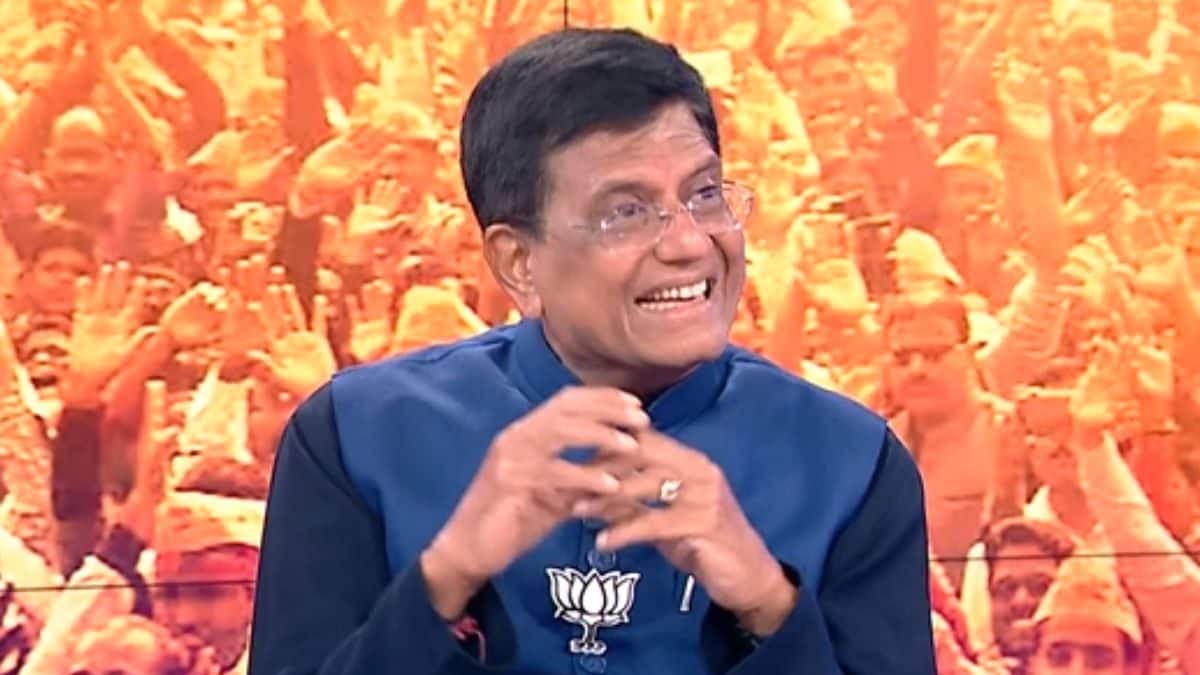
    Union commerce minister Piyush Goyal (Image: digihunt)

    Piyush Goyal and US Commerce Secretary Gina Raimondo signed an agreement on Thursday to cooperate on strengthening supply chains in the two countries for lithium, cobalt and other critical minerals used in electric vehicles and clean energy applications.

    Indian Trade Minister Piyush Goyal and U.S. Commerce Secretary Gina Raimondo signed an agreement on Thursday to cooperate on strengthening supply chains in the two countries for lithium, cobalt and other critical minerals used in electric vehicles and clean energy applications.

    The Commerce Department said in a statement that the memorandum of understanding (MOU), signed during Goyal’s visit to Washington, was aimed at building resilience in the sector for each country.

    “Priority areas of focus include identifying equipment, services, policies and best practices to facilitate the mutually beneficial commercial development of U.S. and Indian critical minerals exploration, extraction, processing and refining, recycling and recovery,” Commerce said.

    Goyal, speaking at a Center for Strategic and International Studies in Washington after the signing, described the MOU as a multi-dimensional partnership that would include open supply chains for materials, technology development and investment flows to promote green energy.

    He said the U.S. and India would also need to include third countries in their engagement, including mineral-rich countries in Africa and South America.

    The MOU, which Reuters first reported was in the works on Monday, falls far short of a full critical minerals trade deal that would allow India to benefit from the $7,500 U.S. electric vehicle tax credit.

    Japan last year signed a deal with the U.S. Trade Representative’s office that allows Japanese automakers to more fully participate in the credit, aiming to reduce U.S.-Japanese mineral dependence on China and prohibiting bilateral export controls on lithium, nickel, cobalt, graphite, manganese and other minerals.


    (This story has not been edited by digihunt staff and is published from a syndicated news agency feed – Reuters)

  • Hyundai Motor India IPO: Opening Date, Size, Price, All You Need to Know

    Hyundai Motor India IPO: Opening Date, Size, Price, All You Need to Know

    Hyundai Motor India Ltd, the Indian arm of South Korean automaker Hyundai, is likely to launch its much-awaited Rs 25,000-crore initial share-sale for public subscription on October 14, news agency PTI has reported citing people familiar with the development.

    This IPO marks a significant milestone for the Indian auto industry, as it is the first automaker’s initial share sale in over two decades, following Japanese automaker Maruti Suzuki’s listing in 2003.

    Hyundai Motor India IPO Size

    This would be the largest initial public offering (IPO) in India after LIC’s initial share sale of Rs 21,000 crore.

    Hyundai Motor India’s proposed Rs 25,000-crore IPO is entirely an offer-for-sale (OFS) of 142,194,700 equity shares of the face value of Rs 10 each by promoter Hyundai Motor Company, with no fresh issue component, according to the draft red herring prospectus (DRHP) filed in June.

    In February this year, reports suggested that Hyundai was looking to raise at least $3 billion through an IPO. It might dilute a 15-20 per cent stake to raise funds in the range of $3.3-5.6 billion.

    Hyundai Motor India IPO: Opening Date & Price

    According to a PTI report, this record-breaking IPO is likely to be launched on October 14. However, the official date will be announced by Hyundai Motor India later.

    The price band of the IPO will also be announced later.

    Hyundai Motor India IPO: A Complete Offer for Sale

    The Hyundai Motor India IPO is completely an offer for sale (OFS). It means the existing promoters are offloading their equity in the market, and no fresh equity will be floated.

    The South Korean parent is diluting some of the stake through the OFS route. Since the public issue is completely an OFS, Hyundai Motor India Ltd, which is the second largest carmaker in India after Maruti Suzuki India, will not receive any proceeds from the IPO.

    The automaker received approval from the Securities and Exchange Board of India (Sebi) on September 24 to float its IPO.

    In its draft papers, Hyundai Motor India stated that it expects that the listing of the equity shares “will enhance our visibility and brand image and provide liquidity and a public market for the shares”.

    Hyundai Motor India IPO: More Details

    Hyundai Motor India commenced operations in India in 1996 and currently sells 13 models across segments.

    In its draft papers, Hyundai Motor India said, “Further, our Company expects that listing of the Equity Shares will enhance our visibility and brand image and provide liquidity and a public market for the Equity Shares in India.”

    Citi, HSBC Securities, JP Morgan, Kotak Mahindra Capital and Morgan Stanley are the investment banks advising on the transaction and law firm Shardul Amarchand Mangaldas is the company counsel. Cyril Amarchand Mangaldas is the banks’ counsel and Latham and Watkins is acting as the international counsel.

  • Wave City Launches Premium Residential Project ‘Eden’

    Wave City Launches Premium Residential Project ‘Eden’

    ‘Eden’ will feature G+31 storey high-rise towers, with three towers set to launch in the first phase, offering 3 BHK apartments.

    Spread across 5.2 acres, the Wave City’s project will combine contemporary living spaces with lush green areas and a clubhouse equipped with world-class facilities.

    Wave City, North India’s first operational Hi-tech City, on Thursday announced the launch of its latest premium residential project, ‘Eden’. This modern development blends sustainability with luxury, offering state-of-the-art amenities designed to meet the needs of today’s homebuyers.

    ‘Eden’ will feature G+31-storey high-rise towers, with three towers set to launch in the first phase, offering 3 BHK apartments. Spread across 5.2 acres, the project will combine contemporary living spaces with lush green areas and a clubhouse equipped with world-class facilities.

    C J Singh, chief operating officer of Wave City, said, “At Wave City, we strive to deliver cutting-edge properties that provide a superior living experience. Eden exemplifies our commitment to modern design, incorporating energy-saving technologies and expansive green spaces to offer tranquillity amidst urban life. We are confident this project will mirror the success of our previous luxury ventures, Veridia and Eligo.”

    The initial launch includes spacious 3 BHK apartments in two configurations, each designed with three open sides to allow ample natural light and ventilation. The project is strategically positioned at the intersection of Wave City’s 57m and 62m arterial roads, offering easy access to the 6.5-acre Central Park in Greenwood Enclave and other green spaces within Eden.

    Residents will enjoy a host of amenities, including an Olympic-sized swimming pool, fine dining, and multiple recreational options within the clubhouse, ensuring a lifestyle of convenience and luxury.

  • Noida’s Real Estate On Fire, Under-Construction Property Prices Shoot Up 69%: Report

    Noida’s Real Estate On Fire, Under-Construction Property Prices Shoot Up 69%: Report

    Noida property price forecast

    Prices of under-construction properties increase a whopping 69% YoY in Noida, aggregate residential prices increase 46.2% YoY

    Noida Property Price Trends: With demand (searches) increasing 15.72% YoY, and supply increasing 13.1% YoY, the aggregate asking residential price by homeowners has increased a whopping 46.2% YoY in Noida, shared Magicbricks in its recent PropIndex report. The average residential rate in this NCR town is Rs 11,625 per square foot (psf).

    Noida Property Price Trends

    Magicbricks shared further that the average price of builder floors is Rs 3,800 psf, Rs 10,100 psf for multistorey apartments, Rs 17,000 psf for residential houses and Rs 18,900 psf for luxurious villas.

    The report also noted that Noida 7X (near FNG), Noida Expressway South (towards Pari Chowk) and Dadri Main Road are the most searched areas. The average residential rate in these areas ranges from Rs 11,700 psf to Rs 15,300 psf.

    Noida Property Rates News

    Source: Magicbricks

    The demand for under-construction properties has also increased significantly, driving prices up by a whopping 69% YoY, increasing from Rs 7,547 psf in Q3 ’23 (Jul-Sep 2023) to Rs 12,758 psf in Q3’24.

    According to the portal, customer preference leans heavily towards 3-bedroom apartments (average price Rs 11,300 psf), comprising 64% of the total demand.

    Following closely, 2 BHK units (average price Rs 8,400 psf) commanded 22% of searches in the area.

    Why Noida?

    Noida (New Okhla Industrial Development Authority) is a planned city in the state of Uttar Pradesh. It is part of the National Capital Region (NCR) of India and lies adjacent to Delhi, making it a popular choice for residential and commercial real estate due to its proximity to the capital.

    Known for its well-developed infrastructure, Noida is a hub for IT, technology parks, educational institutions, and entertainment facilities. Over the years, it has seen rapid urbanisation and industrial growth, with a booming real estate market that attracts homebuyers and investors alike.

  • Market Crash Giving Buy Opportunity to Mutual Fund Investors, Say Analysts

    Market Crash Giving Buy Opportunity to Mutual Fund Investors, Say Analysts

    Stock Market Crash: Should you book profit or is it an opportunity to invest?

    Analysts say the market correction provides investors an opportunity to purchase more mutual fund units at a lower price

    Benchmark equity indices were trading sharply lower on Thursday, with the Sensex dropping over 1,800 points and the Nifty50 slipping below the 25,250 mark. The decline was in line with losses in other Asian markets as investors curbed their risk appetite amid the escalating Middle East conflict.

    The escalating tensions in the Middle East, coupled with the implementation of changed norms for trading in index derivatives, weighed on market sentiment and investors are worried whether they should book some of the profits or instead gradually increase their SIPs.

    Market Correction An Opportunity For Mutual Fund Investors?

    Analysts say the market correction provides investors an opportunity to purchase more units at a lower price.

    Should You Stop Your SIPs?

    Investors with a long-term horizon should strongly consider topping up their SIPs during market dips, as this strategy can significantly enhance long-term returns.

    Swapnil Aggarwal, Director, VSRK Capital, said: “In the aftermath of a market correction, mutual fund investors often face a critical decision, to stop their SIPs (Systematic Investment Plans) or to view the downturn as a valuable opportunity. Historically, market correction tend to be short-lived, frequently providing a chance to buy mutual fund units at lower prices. By continuing SIPs during such downturns, investors can take advantage of ‘rupee-cost averaging,’ accumulating more units when prices are reduced. This approach not only lowers the average cost per unit but also positions the portfolio for greater returns when the market eventually recovers, softening the impact of short-term volatility.”

    While the immediate impact of a market correction may lead to declines in the NAV (Net Asset Value) of mutual funds, disciplined investors can view this as a moment to reassess their strategies. Focusing on long-term financial goals, while adopting a proactive approach, allows investors to turn market volatility into opportunity, paving the way for future growth and resilience, Aggarwal added.

    Another mutual fund advisor advises investors that topping up of SIP should not strain their financial situation and if they have limited liquidity and don’t want to take unnecessary risks, should continue with regular SIP investments.

    “If you have additional funds and a long-term investment horizon, topping up your SIPs during market downturns can be beneficial. Buying more units at lower prices can enhance returns when the market recovers. Ensure that topping up your SIPs does not strain your financial situation. It’s important to maintain an emergency fund and avoid overcommitting to investments. If you have limited liquidity and don’t want to take unnecessary risks, regular investments through SIPs can help reduce the impact of market fluctuations,” recommends Adhil Shetty, CEO of Bankbazaar.com.

    Disclaimer:Disclaimer: The views and investment tips by experts in this digihunt.com report are their own and not those of the website or its management. Users are advised to check with certified experts before taking any investment decisions.

  • Aadhaar New Rule From October 1 For This Purpose, Check Details

    Aadhaar New Rule From October 1 For This Purpose, Check Details

    Starting October 1, significant changes will be implemented regarding the use of personal identification for certain financial and tax-related processes. Individuals will experience a shift in the requirements for Aadhaar Enrolment ID for PAN allotment or income tax return filings, streamlining the procedure for greater efficiency. These adjustments are part of ongoing efforts to simplify compliance and improve transparency in the system.

    What is an Aadhaar Enrolment ID?

    The Aadhaar Enrolment ID is a unique identifier assigned to individuals during Aadhaar registration. It serves as a temporary reference to track the status of an Aadhaar application until the official Aadhaar number is issued. The Enrolment ID comprises a 14-digit number and a 14-digit date stamp, which together help monitor the enrolment process.

    Latest Update

    The Centre’s decision to discontinue the option of using the Aadhaar enrollment ID in place of the Aadhaar number took effect on October 1. Starting this month, individuals will no longer be required to provide their Aadhaar enrollment ID when applying for a PAN or filing income tax returns.

    Background

    In the Union Budget 2024, Finance Minister Nirmala Sitharaman announced the discontinuation of the option to quote the Aadhaar Enrolment ID instead of the Aadhaar number for taxation purposes.

    Additionally, it was proposed that individuals who have been allotted PAN based on their Aadhaar Enrolment ID must provide their Aadhaar number to the Income Tax authorities by a notified date.

    “The said provisions allowing the quoting of Aadhaar Enrolment ID in application form for allotment of PAN or in the return of income, was introduced in 2017. Since then, as per data available in public domain, coverage of Aadhaar number has been increasing, and has encompassed majority of the population in India. Hence, it is imperative to discontinue the option of quoting of the Enrolment ID of Aadhaar application form, as any allotment of PAN against the Enrolment ID may lead to duplication and misuse of PAN,” the Budget memorandum stated.

  • Will RBI Cut Rate As Monetary Policy Committee Gets New Members?

    Will RBI Cut Rate As Monetary Policy Committee Gets New Members?

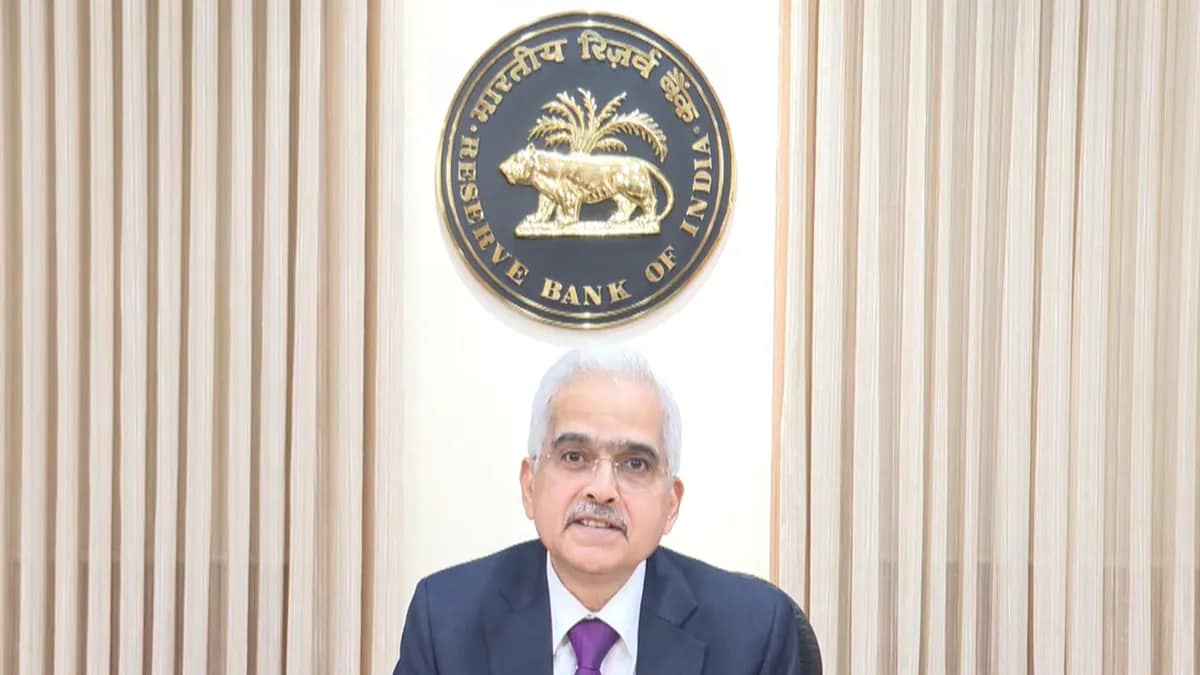
    RBI Governor Shaktikanta Das will present the monetary policy statement at 10 am on Thursday. (File Photo)

    The central government has reconstituted the Monetary Policy Committee of RBI

    The government on Tuesday appointed three external members, Ram Singh, Saugata Bhattacharya and Nagesh Kumar, to the RBI’s rate-setting Monetary Policy Committee for four years.

    The central government has reconstituted the Monetary Policy Committee (MPC) of RBI, the finance ministry said in a statement.

    The new members have replaced Ashima Goyal, a member of the Economic Advisory Council of Prime Minister, Shashanka Bhide, senior advisor at the National Council for Applied Economic Research and Jayanth Varma, who is a professor at the Indian Institute of Management, Ahmedabad.

    RBI MPC Members 2024

    Ram Singh is the director of the Delhi School of Economics, Saugata Bhattacharya is an economist, and Nagesh Kumar is the director and Chief Executive, Institute for Studies in Industrial Development, New Delhi.

    The panel, which decides interest rates, is headed by the Reserve Bank of India Governor.

    The reconstituted MPC is scheduled to have its first meeting from October 7 to 9. Following the MPC meeting, Governor Das will announce the bi-monthly monetary policy on October 9.

    Will RBI Reduce Repo Rate In 2024?

    Radhika Rao, Executive Director and Senior Economist, DBS Bank says that the varied backgrounds of the three members will provide a good mix of perspectives on domestic and global developments. Official learning of the new members is likely to be gleaned from the commentary during the rate decision as well as subsequent minutes of the policy meeting, Roa adds.

    Impact of US Fed

    For India, Rao said that the US Fed’s decision is a necessary but not sufficient condition for the RBI monetary policy committee to shift expeditiously to a dovish gear. Domestic conditions, primarily the inflation path, besides currency movements and growth impulse, should also warrant a pivot.

    Repo Rate Cut To Be Paused Again?

    Moderation in the July-August CPI inflation was on the back of an exceptionally favourable base effect, with stickiness in food inflation offsetting a deeper pullback in the headline print, says Rao.

    “The central bank’s resolve in addressing food price inflation and preventing an un-anchoring in inflationary expectations is likely to see the MPC members lean towards a pause in October, with a softening in stance towards the December rate review. Geopolitics also warrant attention after the overnight escalation in tensions between Iran and Israel,” Rao adds.

    Ajit Banerjee, President & Chief Investment Officer, Shriram Life Insurance Company, feels that the MPC would continue to maintain the status quo on the policy rates since it would like to start the rate cut cycle once it gets convinced that CPI inflation has been controlled in a relatively durable way and it will not be vulnerable to the food inflation fluctuations intermittently.

    MPC Mandate

    The MPC was constituted in 2016, following the finalisation of the Monetary Policy Framework Agreement that introduced inflation targeting.

    The inflation target was set at 4 per cent with a tolerance band of plus/minus 2 per cent.

    The six-member MPC is chaired by the RBI governor. Its official members include the Deputy Governor in charge of monetary policy and the Executive Director in the Monetary Policy Department.

    According to the rules, the rate-setting committee requires at least four members to be present at a meeting.

    In 2020, while the search committee, headed by Cabinet Secretary Rajiv Gauba, zeroed in on the candidates and recommended them to the government, the appointment process was delayed as certain processes, such as security clearances of some members, were not completed in time.

    The search committee included RBI Governor Shaktikanta Das, NITI Aayog Vice-Chairman Suman Bery, and Economic Affairs Secretary Ajay Seth.

  • HSBC Hikes ITC Target Price On Attractive Risk-Reward Ratio, Sees 12% Upside

    HSBC Hikes ITC Target Price On Attractive Risk-Reward Ratio, Sees 12% Upside

    Shares of ITC are in news on Thursday after the FMCG firm said ITC Infotech India, a subsidiary of the company, has acquired 100 per cent shares of Blazeclan Technologies for Rs 485 crore. Consequently, Blazeclan and its subsidiaries have become step-down wholly owned subsidiaries of the company, effective October 1.

    “We have been advised by ITC Infotech India Limited, a wholly owned subsidiary today, that they have acquired 100 per cent of the share capital of Blazeclan Technologies Private Limited (Blazeclan). Consequently, Blazeclan and its following subsidiaries have become step-down wholly owned subsidiaries of the Company with effect from 1 October, 2024,” said ITC in a communication to bourses.

    ITC stock has a one-year beta of 0.6, indicating low volatility during the period. In terms of technicals, the relative strength index (RSI) of ITC stock stands at 56.6, signaling it’s trading neither in the oversold nor in the overbought zone. ITC shares are trading higher than the 5 day, 10 day, 20 day, 30 day, 50 day, 100 day and 200 day moving averages.

    Global financial services firm HSBC has maintained its ‘Buy’ rating on ITC, raising the target price from Rs 480 to Rs 580, suggesting a potential upside of 12 per cent from its previous closing price of Rs 515.9. This revision reflects HSBC’s confidence in ITC’s defensive appeal in the current market environment.

    The brokerage notes that ITC’s stock is trading at a wider discount compared to its FMCG peers. HSBC also emphasizes the stability of the tax regime for cigarettes, a significant segment of ITC’s business, which supports the company’s earnings growth prospects in the FMCG space.

    Additionally, HSBC acknowledges ITC’s growth potential, highlighting its relative value within the market and sector.

    Shares of ITC fell as much as 1.3 per cent to Rs 509 in Thursday’s intraday trade. Its shares have surged 9% in 2024 to date and 16% over the past 12 months, with the company currently holding a market capitalization of Rs 6,38,638 crore.

    In Q1 FY25, ITC reported a marginal increase in standalone net profit at Rs 4,917.45 crore, compared to Rs 4,902.74 crore in the year-ago period. The standalone revenue from operations for the reported quarter was Rs 18,219.74 crore, reflecting a 7 per cent increase over Rs 16,995.49 crore in the corresponding quarter of the previous financial year.

    The FMCG segment revenue rose 6.3 per cent in Q1, driven by growth in staples, snacks, dairy, personal wash, fragrances, home care, and agarbatti. The segment’s EBITDA margin expanded by 25 basis points year-on-year to 11.3 per cent. Cigarette segment net revenue increased by 7 per cent, with segment PBIT (Profit Before Interest and Taxes) rising by 6.5 per cent year-on-year.

    Disclaimer:Disclaimer: The views and investment tips by experts in this digihunt.com report are their own and not those of the website or its management. Users are advised to check with certified experts before taking any investment decisions.

  • HDFC Bank Credit Card: Know New Reward Points Rules From October 1

    HDFC Bank Credit Card: Know New Reward Points Rules From October 1

    Know New Reward Points Rules From October 1 for HDFC Bank Credit Cards

    Know adjustments to your HDFC Bank Credit Card that were applied on and from October 1.

    HDFC Bank has made changes to its loyalty programme for specific credit cards. The amended rules came into force from October 1, 2024. Regarding this update, the bank has emailed the impacted clients as well. For instance, HDFC Bank has limited the amount of reward points on the Smartbuy platform that may be redeemed for Apple products to one product per calendar quarter.

    In addition, starting from October 1, the SmartBuy portal will cap the amount of Reward Points that may be redeemed for Tanishq gift cards to 50,000 per calendar quarter. It is also important to note that only Infinia and Infinia Metal Cards are affected by these changes.

    “On the HDFC Bank SmartBuy portal, the redemption of Reward Points for Apple Products is capped at one product per calendar quarter, effective October 1, 2024,” as per the HDFC Bank official website. The definition of the quarters is as follows: April to June, July to September, October to December and January to March.

    Furthermore, beginning on October 1, the maximum number of Reward Points that may be redeemed for Tanishq vouchers on the HDFC Bank SmartBuy platform will be 50,000 every calendar quarter. Quarters of the calendar include April through June, July through September, October through December and January through March. Only Infinia and Infinia Metal Cards are covered by this.

    Meanwhile, below are the adjustments to your HDFC Bank Credit Card that were applied on and from October 1:

    – There will be a cap of 2000 Reward Points each calendar month on Rewards accrued from Utility transactions.

    – There will be a cap of 2000 Reward Points per calendar month on Rewards accrued from Telecom and Cable transactions.

    – Note that the capping according to the product feature will still be in effect for the following credit cards: Bharat, Millennia, Best Price Save Smart, Paytm, Paytm Business, UPI, BIZ UPI, Swiggy, BIZ First and Paytm.

    – Reward Points will not be awarded for payments made for education through third-party apps, such as CRED, Cheq, MobiKwik and others. Reward Points will be accrued, nevertheless, for payments for education made directly through college or school POS systems or websites.

  • Sensex, Nifty Tank 1% Each, Investor Wealth Worth Rs 6 Lakh Cr Wiped Off; Why Is Market Falling?

    Sensex, Nifty Tank 1% Each, Investor Wealth Worth Rs 6 Lakh Cr Wiped Off; Why Is Market Falling?

    The domestic equity market took a sharp hit at the open on October 3, with both the Sensex and Nifty 50 plunging over 1 percent each, pressured by mixed global cues and rising geopolitical tensions in the Middle East.

    The BSE Sensex was trading 1,264 points, or 1.5%, lower at 83,002. The Nifty50 was down 344 points, or 1.33%, trading at 25,452 around 9:16 am.

    The market capitalisation of all listed companies on BSE declined by Rs 5.63 lakh crore to Rs 469.23 lakh crore.

    Concerns over a potential escalation in the Middle East grew after Iran launched ballistic missiles at Israel earlier in the week, fueling fears that oil supplies from the region could be disrupted if the conflict intensifies.

    The India VIX, often referred to as the market’s fear gauge, spiked more than 8 percent, reaching 13.

    Here are the key factors behind today’s meltdown

    Iran-Israel Tensions

    Indian stocks declined on Thursday amid rising concerns over the escalating hostilities between Iran and Israel. Reports indicate that the Israeli military has confirmed the deaths of eight soldiers, including a team commander, during ground operations in southern Lebanon.

    This escalation follows Iranian missile attacks targeting Tel Aviv, with Israel’s military chief warning of an imminent response.

    Crude Oil On The Rise

    Oil prices increased amid concerns that escalating tensions in the Middle East could threaten supplies from major producers. Brent crude briefly surpassed $75 per barrel, while West Texas Intermediate topped $72, with both benchmarks rising nearly 5% over the past three days.

    A rise in oil prices is a negative for importers of the commodity like India, as crude contributes significantly to the country’s import bill.

    “The situation will change if Israel attacks any oil installations in Iran which will trigger a huge spike in crude. If it happens, it can turn out to be more damaging for oil importers like India. Therefore, investors should watch the emerging situation very closely,” said Dr V K Vijayakumar, Chief Investment Strategist, Geojit Financial Services.

    Sebi Tightens F&O Measures

    The recent decision by market regulator Sebi to tighten rules in the futures and options (F&O) segment has also contributed to the decline in equity markets today. Analysts stated that these new measures, which include limiting weekly expiries to one per exchange and increasing contract sizes, may dampen retail sentiment and reduce trading volumes.

    This uncertainty around trading dynamics has likely fueled investor concerns, adding to the market’s downward pressure amid broader geopolitical tensions.

    The Chinese Factor

    Investors in India are increasingly worried about the resurgence of Chinese stocks, which have underperformed in recent years. Following the announcement of economic stimulus measures by the Chinese government last week, analysts predict sustained growth in Chinese stocks, prompting a potential outflow of funds from India.

    The SSE Composite index rose 8% on Tuesday and has gained over 15% in the past week. As a result, foreign institutional investors have withdrawn Rs 15,370 crore from Indian equities in the last two trading sessions.

    Nifty Technical

    On the Nifty 50, top gainers included Tech Mahindra, NTPC, Tata Steel, ONGC, and JSW Steel, with gains of 0.2-2 percent. In contrast, Tata Motors, Wipro, Asian Paints, Eicher Motors, and BPCL were the biggest laggards, each dropping 2-3 percent.

    On the technical side, Deepak Jasani, Head of Retail Research at HDFC Securities said that Nifty 50 could face resistance from the 25,956-26,011 band and find support at 25,446 in the near term.

    Disclaimer:Disclaimer: The views and investment tips by experts in this digihunt.com report are their own and not those of the website or its management. Users are advised to check with certified experts before taking any investment decisions.