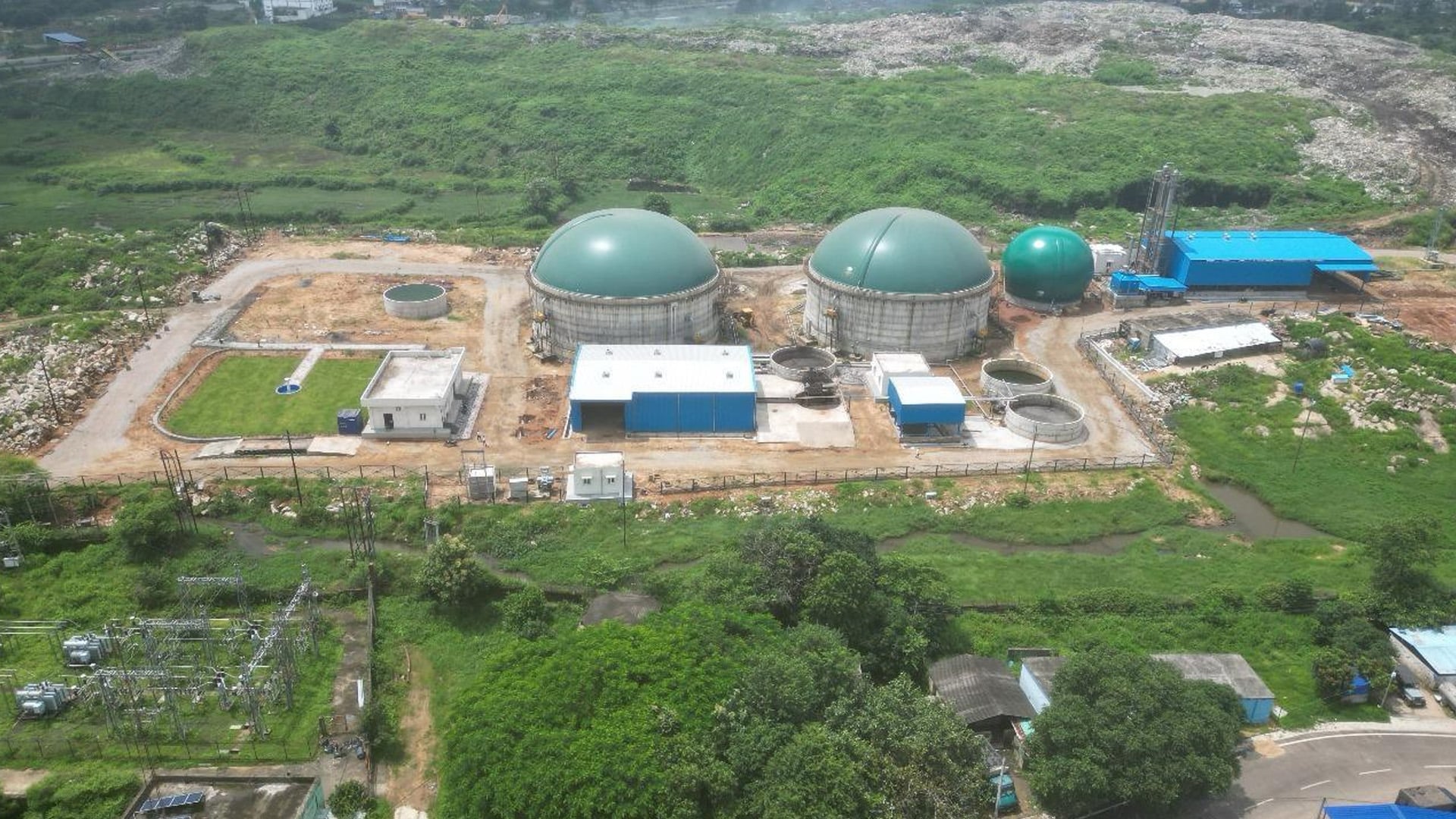
India has made significant advancements in renewable energy with the establishment of 132 Compressed Bio Gas (CBG) plants, producing a total of 920 tonnes of clean fuel daily. This initiative is part of the Sustainable Alternative Towards Affordable Transportation (SATAT) program, which focuses on converting agricultural and organic waste into energy. The initiative not only enhances rural incomes but also contributes to reducing emissions. Union Minister for Petroleum and Natural Gas, Hardeep Singh Puri, shared these developments on social media, underscoring the program’s impact in transforming waste into a valuable resource.
Overview of the SATAT Initiative
Launched on October 1, 2018, the SATAT initiative aims to build a robust ecosystem for the production of Compressed Bio Gas from various waste and biomass sources across India. The program actively encourages entrepreneurs by inviting expressions of interest from oil and gas marketing companies, such as Indian Oil Corporation Limited (IOCL), Bharat Petroleum Corporation Limited (BPCL), Hindustan Petroleum Corporation Limited (HPCL), Gas Authority of India Limited (GAIL), and Indraprastha Gas Limited (IGL). This collaborative strategy is designed to boost the production and marketing of CBG, leading to a cleaner environment and sustainable energy solutions.
The CBG plants also serve as an alternative fuel source while managing waste effectively, especially in rural regions rich in agricultural byproducts. By converting waste into energy, the initiative not only supports local economies but also promotes environmental sustainability. The increasing number of CBG plants presents a promising opportunity for job creation and economic development in these areas.
Boosting Domestic Energy Production
In addition to the CBG initiative, Minister Puri has emphasized the government’s recent initiatives to bolster India’s domestic energy production. He announced the introduction of 50 new exploration and production (E&P) blocks that encompass oil, gas, and coal bed methane assets. This initiative is a crucial step towards enhancing the country’s energy security. The new blocks will be available through various schemes, including the Open Acreage Licensing Policy (OALP-X) and the Discovered Small Field (DSF-IV) program.
The OALP-X initiative includes 25 blocks spread over approximately 1.83 lakh square kilometers, featuring onshore, shallow water, deepwater, and ultra-deepwater blocks. These blocks offer flexibility in exploration throughout the contract period and come with graded royalty rates. Meanwhile, the DSF-IV program comprises 55 discoveries across nine contract areas, providing incentives such as zero royalty for the first seven years in deepwater regions and relaxed eligibility criteria for participants.
Incentives for Exploration and Development
To encourage participation in energy resource exploration and production, the government has rolled out various incentives. For example, upcoming coal-bed methane rounds will offer pricing freedom and cost reimbursement for mandated drilling in the 2026 round. These measures aim to attract more investors and streamline operations within the energy sector.
Additionally, the Oilfields (Regulation and Development) Amendment Act, 2025, alongside the PNG Rules 2025, is set to establish a unified regulatory framework. This framework is designed to elevate the ease of doing business in the energy sector, making it more accessible for both domestic and international investors. By simplifying regulations and delivering clear guidelines, the government intends to create a more robust energy market capable of meeting the country’s growing demands.
Digihunt is not a financial advisor and this is not investment advice.