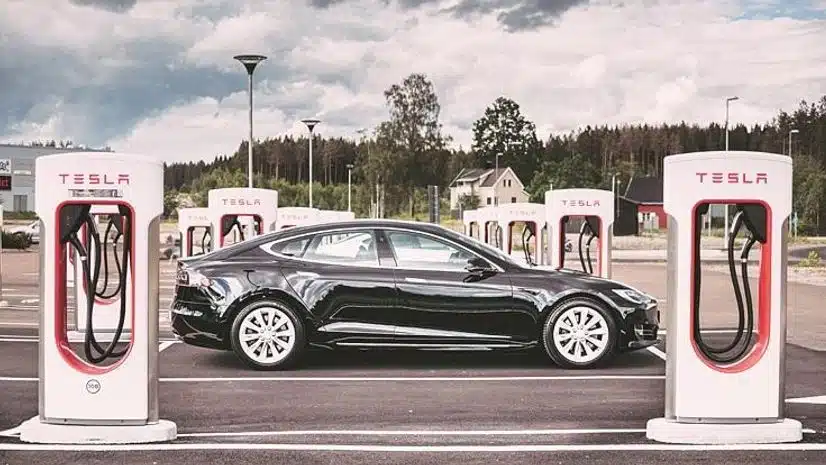
Tesla Loses Title as Largest Electric Vehicle Manufacturer
Tesla has lost its position as the world’s largest electric vehicle (EV) manufacturer, experiencing a decline in deliveries for the second consecutive year in 2025. The company delivered 1.64 million vehicles, reflecting a 9% decrease from the previous year. This drop has allowed Chinese competitor BYD to surpass Tesla, achieving sales of 2.26 million electric vehicles. The decline in demand, especially in key markets, combined with rising competition, has notably affected Tesla’s market standing.
Declining Deliveries and Market Competition
In 2025, Tesla’s deliveries decreased to 1.64 million vehicles, a significant decline compared to the previous year. This downturn is linked to intensified competition in the electric vehicle sector and weakening demand in essential regions. BYD has emerged as a strong rival, selling 2.26 million electric vehicles last year, surpassing Tesla in total sales. In the fourth quarter of 2025, Tesla delivered 418,227 vehicles, falling short of the 440,000 units analysts had projected. This shortfall was partly attributed to the expiration of a $7,500 federal tax credit in the U.S., phased out at the end of September.
Stock Performance and Investor Sentiment
Despite the decrease in vehicle sales, Tesla’s stock has remained relatively stable, trading at $450.27 in early sessions on Friday. Investors seem to be looking past the immediate sales challenges, as the stock ended 2025 with an 11% increase, reflecting confidence in the company’s long-term strategy. CEO Elon Musk’s vision for Tesla emphasizes a shift towards autonomous mobility and robotics, generating investor interest. Musk has stated that future growth will depend on robotaxi services, energy storage solutions, and humanoid robots for both domestic and industrial applications.
New Models and Future Strategies
The fourth quarter of 2025 saw the introduction of more affordable versions of the Model Y and Model 3, aimed at boosting demand. The new Model Y is priced just below $40,000, while the Model 3 starts at under $37,000. These lower-priced models are expected to improve Tesla’s competitiveness against Chinese EV manufacturers in both European and Asian markets. Analysts suggest that although Tesla may continue facing financial challenges in the short term, sales and profits are anticipated to stabilize and recover as 2026 unfolds.
Long-Term Outlook and Executive Compensation
Looking ahead, analysts predict a 3% decline in revenue and a nearly 40% drop in earnings per share for Tesla’s upcoming fourth-quarter results, scheduled for release in late January. However, Musk believes that the decrease in car sales will not hinder Tesla’s long-term prospects, as the company shifts towards innovative technologies and new business avenues. In support of this strategy, shareholders recently approved a substantial new pay package for Musk at the company’s annual meeting. Additionally, Musk secured a favorable ruling from the Delaware Supreme Court, reinstating a $55 billion pay package awarded to him in 2018, further cementing his status as the world’s richest individual.
Digihunt is not a financial advisor and this is not investment advice.