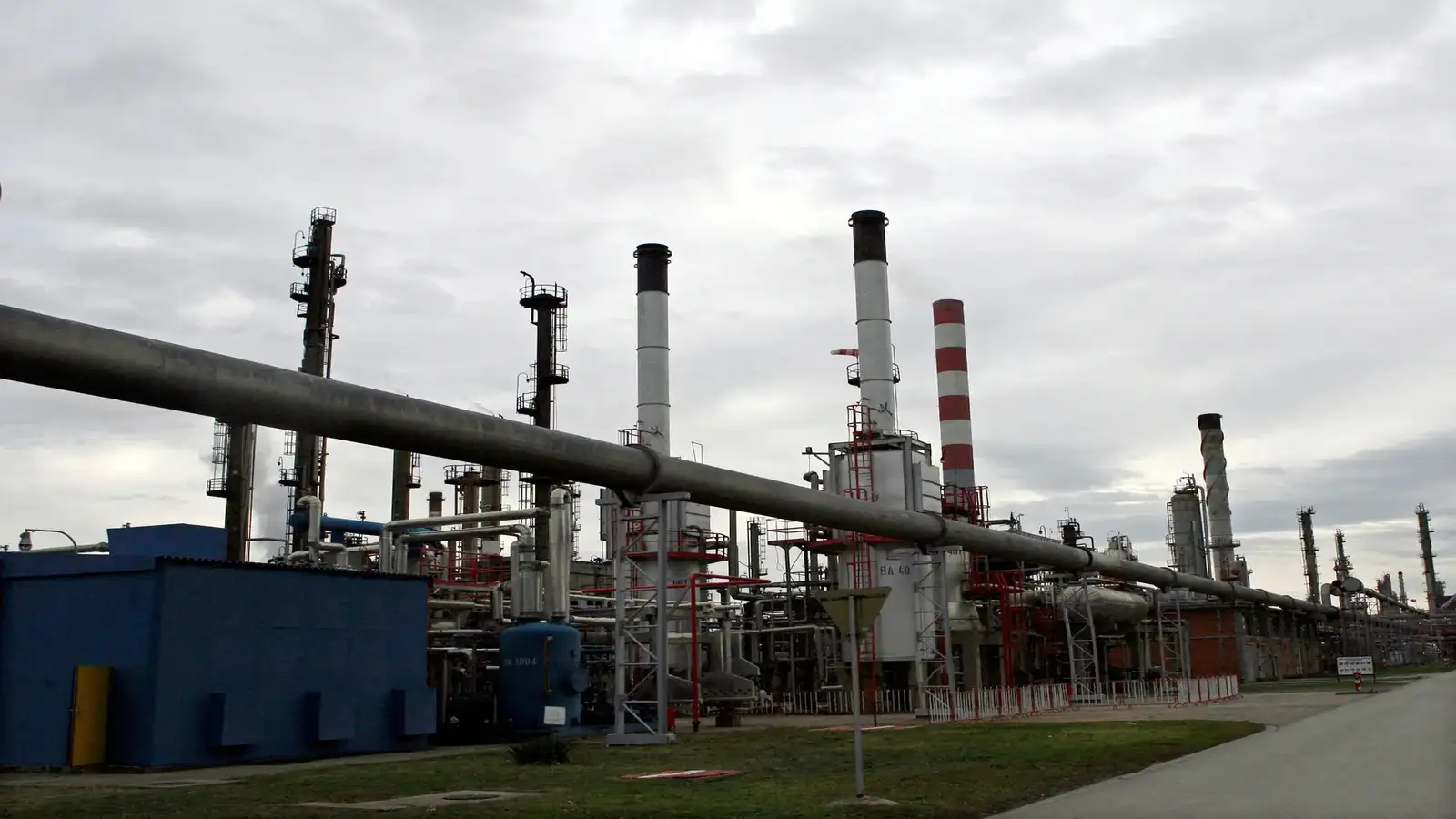
The United States has granted a temporary reprieve to the majority-Russian-owned Serbian oil company, Petroleum Industry of Serbia (NIS), permitting it to continue operations despite sanctions related to Russia’s invasion of Ukraine. Serbian Energy Minister Dubravka Djedovic Handanovic announced that the Pancevo refinery, responsible for approximately 80 percent of Serbia’s fuel needs, will resume operations after a 36-day shutdown. This step comes as Serbia seeks to stabilize its energy security amid ongoing geopolitical tensions and economic challenges.
Impact of Sanctions on Serbia’s Energy Sector
The sanctions imposed by Washington on NIS in October 2023 were aimed at curtailing Russia’s influence in the energy sector. These measures resulted in the closure of Serbia’s sole oil refinery, creating significant disruptions in the country’s fuel supply. As a close ally of Russia and one of the few European nations that have not enforced sanctions on Moscow, Serbia faced severe repercussions from these restrictions. The shutdown necessitated reliance on domestic fossil fuel reserves to meet energy demands, raising critical concerns about energy security and economic stability.
The temporary license issued by the U.S. Office of Foreign Assets Control (OFAC) allows NIS to operate until January 23, offering a vital lifeline for the Pancevo refinery. This facility plays a crucial role in Serbia’s energy infrastructure, and its prolonged closure could have resulted in economic decline and the potential loss of thousands of jobs. NIS employs around 13,500 people and significantly contributes to the national budget, making its operation essential for the country’s economic health.
Negotiations and Future Prospects
Despite the temporary relief, discussions about the possible sale of NIS are ongoing. The U.S. sanctions mandate the complete exit of Russian shareholders, complicating negotiations. Analysts caution that the refinery’s closure could pose severe risks to Serbia’s economy. The Serbian government faces pressure to find a solution that addresses both international expectations and domestic necessities.
Serbian President Aleksandar Vucic has expressed optimism concerning the situation, suggesting “phenomenal political news” may be forthcoming. His remarks indicate that the government is actively pursuing a resolution to the ownership issues surrounding NIS. The involvement of Hungarian Prime Minister Viktor Orban in talks with the U.S. State Department signifies that regional dynamics are also influencing this complex scenario.
Regional Implications and Collaborations
The reprieve for NIS carries broader implications for regional energy dynamics. Croatian pipeline operator Janaf, which had previously stopped crude supplies to the Pancevo refinery due to sanctions, announced that it had been notified by OFAC about the temporary license. This development enables Janaf to continue its oil transportation agreement with NIS, which is set to last until the end of 2026, with a total capacity of 10 million tonnes.
Ongoing negotiations involving Hungarian firm MOL, which is exploring the acquisition of the Russian segment of NIS’s shares, underscore the interconnectedness of energy markets in the region. As Serbia strives to safeguard its energy security while managing international pressures, the outcomes of these discussions will be pivotal for its energy sector and economic stability.
The situation remains dynamic, with potential developments on the horizon as Serbia balances its relationships with both Western countries and Russia. The upcoming weeks will be crucial in determining the long-term viability of NIS and the overall energy landscape in the Balkans.
Digihunt is not a financial advisor and this is not investment advice.