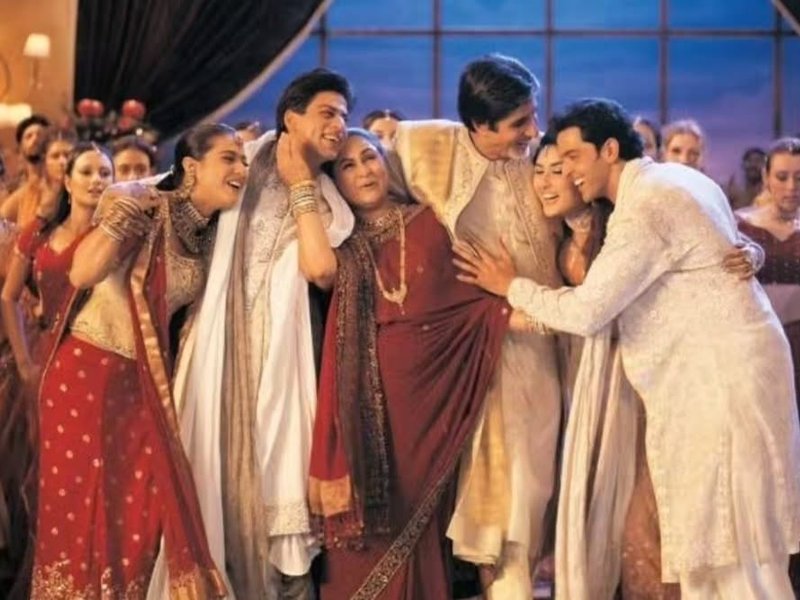
The first quarter of the new century reshaped Bollywood in remarkable ways. From introducing fresh stories and new concepts to emerging faces and a renewed sense of grandeur, this era explored relatable friendships and diverse portrayals of love, romance, and heartbreak. The period from 2000 to 2025 saw Hindi cinema tackle power-packed masala entertainers while also engaging in meaningful conversations about mental health, social issues, and emotional well-being. Layered relationships marked a significant shift in storytelling and sensibilities. Here’s a look at the top 15 Bollywood movies that became iconic for their unique contributions!
Kaho Naa… Pyaar Hai (2000)
Bollywood superstar Hrithik Roshan and Ameesha Patel made their debut in this film directed by Rakesh Roshan, which became a sensation among the youth at the dawn of the 21st century. With Hrithik’s double role and chartbuster songs, it launched him into superstardom.
Lesser-known fact: The movie was originally supposed to star Kareena Kapoor opposite Hrithik, and she had even shot for it before quitting, leading to Ameesha stepping in for the role of Sonia.
Mohabbatein (2000)
Directed by Aditya Chopra, this musical romance starred megastar Shah Rukh Khan and Aishwarya Rai. It marked the first on-screen collaboration between Bollywood legends Amitabh Bachchan and SRK and depicted a clash between strictness and free-spirited love.
Lesser-known fact: This was Aditya Chopra’s second directorial venture after Dilwale Dulhania Le Jayenge, taking him four years to develop the script.
Lagaan (2001)
Directed by Ashutosh Gowariker and starring Aamir Khan and Gracy Singh, this Oscar-nominated film used cricket as a symbol of rebellion against colonialism and showcased its vital role in gaining independence.
Lesser-known fact: The British actors playing colonial officers underwent special dialect training to ensure their accents were historically accurate.
Gadar: Ek Prem Katha (2001)
This film, featuring Sunny Deol and Ameesha Patel, directed by Anil Sharma, revolved around a partition-era love story and became a massive phenomenon, with Tara Singh emerging as an iconic patriotic character.
Lesser-known fact: The famous hand-pump scene was not part of the original script and was added during filming.
Dil Chahta Hai (2001)
A defining moment for urban Indian cinema, the film followed three friends, Aakash, Sid, and Sameer, making their genuine ups and downs relatable to the audience. Farhan Akhtar’s debut film also ignited the trend of friends’ trips to Goa.
Lesser-known fact: Preity Zinta was initially offered the role of Pooja, which was later given to Sonali Kulkarni.
Kabhi Khushi Kabhie Gham (2001)
Karan Johar’s family drama became a pop culture landmark, with Kareena Kapoor’s character Poo becoming one of Bollywood’s most memorable roles. The film also starred SRK, Kajol, Hrithik Roshan, Amitabh Bachchan, and Jaya Bachchan.
Lesser-known fact: Cameos by Abhishek Bachchan and Jugal Hansraj were ultimately cut from the final edit.
Kal Ho Na Ho (2002)
Starring SRK, Preity Zinta, and Saif Ali Khan, this film revolved around the interwoven lives of Naina, Aman, and Rohit, delivering a poignant tale of love, heartbreak, and an emotional ending that resonated with audiences. Directed by Nikhil Advani, it remains memorable for its soundtrack.
Lesser-known fact: Shah Rukh Khan shot the film while receiving treatment for a serious spinal injury.
Devdas (2002)
In Sanjay Leela Bhansali’s opulent adaptation, SRK, Madhuri Dixit, and Aishwarya Rai delivered a feast for the eyes, celebrated for its emotional depth, dialogues, and songs.
Lesser-known fact: The film received a standing ovation when screened at the Cannes Film Festival.
Munna Bhai M.B.B.S (2003)
Rajkumar Hirani’s comedy-drama skillfully blended humour with humanity, introducing the concept of ‘Gandhigiri’ and unforgettable characters like Munna Bhai and Circuit, who set friendship goals.
Lage Raho Munna Bhai (2005)
The sequel was a rare case of achieving the same success as its predecessor.
Lesser-known fact: The character of Circuit was initially a minor role but grew larger due to Arshad Warsi’s performance.
Rang De Basanti (2006)
This film, starring Aamir Khan, linked revolutionary history with contemporary youth angst, transforming cinema into a voice for political awakening.
Lesser-known fact: Several scenes drew inspiration from real-life student activism and political movements.
Taare Zameen Par (2007)
Aamir Khan’s directorial debut sensitively addressed dyslexia and childhood pressure, significantly changing conversations around education and empathy, while highlighting the teacher-student bond.
Lesser-known fact: Aamir took over direction midway after Amole Gupte left due to creative differences.
3 Idiots (2009)
Aamir Khan, R Madhavan, and Sharman Joshi delivered a blockbuster that critiqued the education system with humour. Directed by Rajkumar Hirani, Aamir’s character Rancho became a generational icon.
Lesser-known fact: The film is loosely inspired by Chetan Bhagat’s novel Five Point Someone, though the author was not credited initially.
Dabangg (2010)
Abhinav Kashyap’s masala blockbuster introduced Salman Khan’s iconic character Chulbul Pandey. The swaggering cop who reshaped commercial cinema spawned a successful franchise and also marked the debut of Shatrughan Sinha’s daughter, Sonakshi Sinha.
Lesser-known fact: Salman Khan actively contributed to crafting Chulbul Pandey’s unique body language and dialogue delivery.
Dangal (2016)
Based on the inspiring story of the Phogat sisters, this film became one of India’s highest-grossing films worldwide. Directed by Nitesh Tiwari, it starred Aamir Khan, Fatima Sana Sheikh, and Sanya Malhotra, with Sakshi Tanwar opposite Aamir.
Lesser-known fact: Aamir Khan underwent extreme weight fluctuations, gaining nearly 30 kg and later losing it during filming.