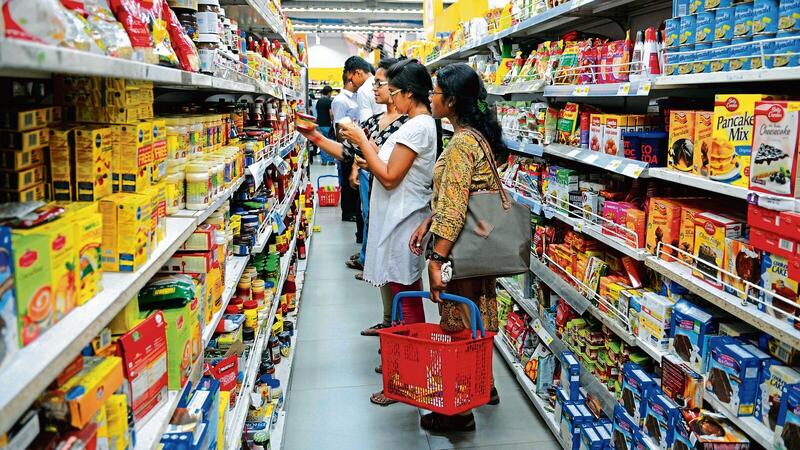
Consumer goods companies across India are witnessing a resurgence in operations following a period of adjustment to the revised Goods and Services Tax (GST) structure. After several months of disruption, supply chains and inventory levels are stabilizing, setting the stage for a recovery in demand anticipated in the upcoming quarter. Major players in the fast-moving consumer goods (FMCG) sector, including Dabur, Emami, and Godrej Consumer Products, have reported that production levels are back to normal as they work to replenish stock in anticipation of increased consumer demand.
Impact of GST Changes on FMCG Operations
The FMCG sector faced considerable challenges after the GST rates were revised on September 22. The changes introduced lower taxes on essential items like soaps, shampoos, and food products, aimed at boosting consumption. However, during this transition, companies and their partners slowed operations due to the complexities of repricing, packaging modifications, and uncertainty among distributors and retailers. Retailers reduced their orders to avoid tying up working capital while finalizing price adjustments, leading to a temporary slowdown in production across the sector.
With the revised pricing structures now in place, companies are beginning to replenish their inventories. Parle Products’ vice-president, Mayank Shah, noted that stock levels are returning to normal as new packaging reflecting the updated prices is rolled out. He expressed optimism that the full benefits of the GST rationalization will become evident in the January-March quarter. Emami’s vice chairman, Mohan Goenka, confirmed that inventory conditions have stabilized, with smooth supply flows and no disruptions in product availability. Zydus Wellness’s CEO, Tarun Arora, added that challenges related to old pricing and packaging have largely been resolved, allowing for a more streamlined operation.
Future Outlook for Consumer Goods
Looking forward, Dabur India anticipates improved performance in the latter half of the financial year. Rehan Hasan, the company’s sales head, indicated that Dabur is targeting mid-to-high single-digit growth in the months ahead. He highlighted that trade disruptions caused by the GST changes have settled, resulting in an uptick in demand, particularly in rural areas; urban demand is being driven by modern trade and e-commerce.
Godrej Consumer Products’ managing director, Sudhir Sitapati, noted a positive shift in industry sentiment following the stabilization of operations. He expressed optimism about demand growth in the wake of GST adjustments, suggesting that strong demand could materialize by January or February. Additionally, AWL Agri Business reported a return to normal consumption levels from food companies, indicating a rebound in demand for edible oils. The company’s executive deputy chairman, Angshu Mallick, confirmed that oil consumption is on the rise across various food products.
Adjustments in Consumer Durables Sector
The consumer durables sector is also experiencing inventory corrections as companies adapt to the new GST rates. Air-conditioner manufacturers, who faced sluggish sales earlier in the year due to an unfavorable summer, are now reducing excess stock following a decrease in GST from 28% to 18%. Blue Star’s managing director, B Thiagarajan, reported that the industry had previously maintained 90 days of inventory, which is now down to around 50 days, reflecting a more balanced supply chain.
With production levels returning to normal and supply chains stabilizing, companies across the FMCG and consumer durables sectors are optimistic that the benefits of the GST rate cuts will soon be evident in sales figures. As businesses continue adapting to the new tax structure, they are preparing for a potential surge in consumer demand in the upcoming quarters.
Digihunt is not a financial advisor and this is not investment advice.