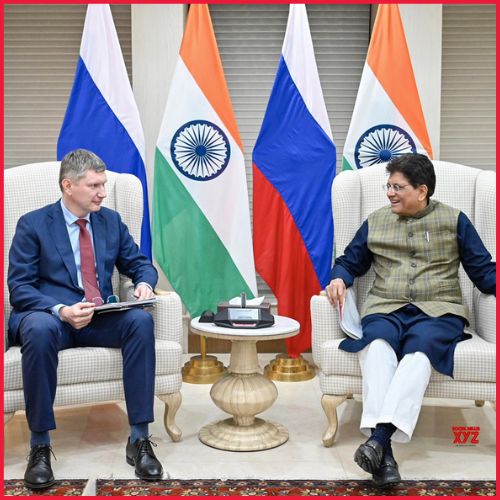
The Russia-India Business Forum recently concluded in New Delhi, emphasizing a desire to expand economic collaboration beyond traditional sectors. Coinciding with President Putin’s visit, the forum gathered business leaders and officials from both nations to strategize on achieving a $100 billion trade goal by 2030.
With the theme “Balanced Trade, Shared Growth,” the event tackled a significant issue: the current trade imbalance heavily favors Russia due to India’s substantial purchases of discounted crude oil. Last year, bilateral trade surpassed $65 billion, yet India’s exports to Russia remain minimal. Addressing this disparity is now a primary focus.
Tackling the Trade Imbalance
Commerce Minister Piyush Goyal highlighted that India produces a variety of goods that Russia needs. Cars, tractors, commercial vehicles, smartphones, electronics, medicines, textiles, and food products present considerable opportunities for Indian companies in the Russian market.
The forum resulted in several agreements across various sectors. TASS and Press Trust of India established a media cooperation deal. Abrau-Durso and Indospirit Beverages will collaborate on alcoholic beverages. Sberbank and India’s CSIR plan to advance scientific research, while BDR Pharmaceuticals is partnering with Kaluga Region and Pharmasyntez to develop a pharmaceutical ingredients plant in Russia. A new three-way agreement among Delovaya Rossiya, the All-India Association of Industries, and the World Trade Center Mumbai aims to facilitate cooperation among small and medium businesses.
New Sectors on the Table
In addition to these specific agreements, the forum identified shared interests in medical technology, hospital infrastructure, cybersecurity, artificial intelligence, digital innovation, and advanced manufacturing. These dynamic sectors offer fertile ground for future collaboration.
Alexander Stuglev, head of the Roscongress Foundation, expressed that the potential for growth is vast, extending beyond conventional industries. He believes a forthcoming phase filled with opportunities is on the horizon, contingent on achieving tangible results.
Making It Work on the Ground
Business leaders emphasized the necessity of involving more SMEs, simplifying regulations, enhancing logistics networks, and establishing reliable methods for cross-border trade. Effective connectivity is crucial. Delegates discussed shipping routes, rail connections, and digital infrastructure vital for creating resilient supply chains that can withstand geopolitical challenges.
People-to-people connections also featured prominently. The forum explored cooperation in tourism, education, research, and skills training through travel programs, student exchanges, and joint research initiatives, thus establishing a human foundation for enduring business relations.
The Window of Opportunity
The outcomes of the forum align with discussions between Putin and Modi during their summit, with both leaders aiming for $100 billion in bilateral trade by 2030, ensuring mutual benefit in trade.
This scenario presents a significant opportunity for Indian businesses. With many Western competitors withdrawing from Russia due to sanctions, there is ample space for Indian firms to establish a foothold. The emphasis is on taking swift action and cultivating lasting partnerships rather than merely filling temporary voids.
The Roscongress Foundation committed to organizing follow-up trips, regional meetings, and business matchmaking platforms to transform forum dialogues into actionable partnerships. This proactive approach could bridge the gap between empty promises and real outcomes.
The clear message from New Delhi is that India and Russia are poised to strengthen their economic connections across new sectors, with concrete plans and institutional backing to ensure success. The overarching goal of achieving the $100 billion target will depend on how effectively businesses on both sides capitalize on the opportunities now available.