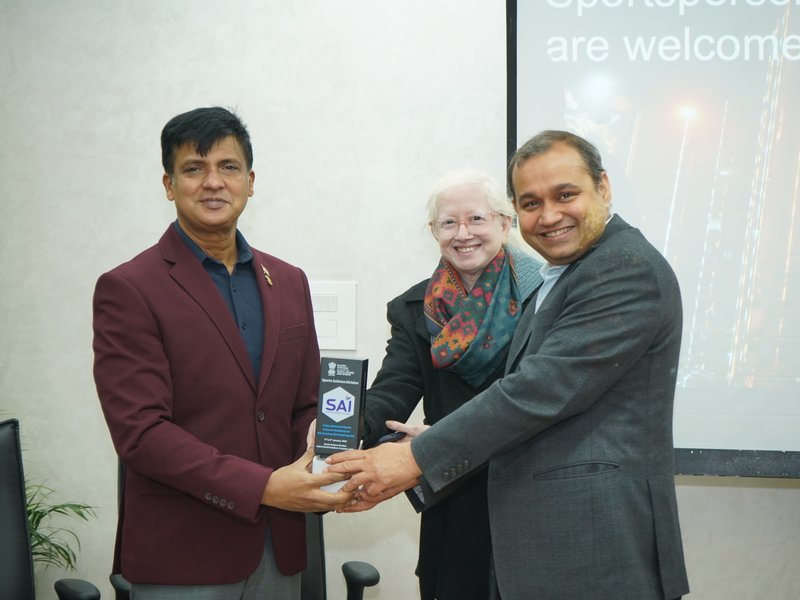
The Sports Authority of India (SAI) has launched a four-day Sports Sciences Workshop for combat sports coaches at its Sports Science Division in New Delhi.
Workshop Focus
The workshop was attended by SAI coaches from key combat sports disciplines including Boxing, Wrestling, and Judo. Its aim is to strengthen the integration of sports science into daily coaching practices. Designed as an immersive and hands-on programme, the workshop emphasizes applying scientific principles to training methodologies, particularly focusing on strength and conditioning models specific to combat sports.
Training Highlights
Coaches will receive training in:
- Functional strength training
- Plyometrics
- Periodised resistance training programmes
- Core principles of exercise physiology relevant to elite performance
Dr. Bibhu Kalyan Nayak, director-cum-head, sports science division, SAI, stated, “Honourable Union Sports Minister Dr. Mansukh Mandaviya and Secretary (Sports) have consistently emphasised the need to encourage coaches in sports science so these principles are applied in day-to-day training.” He added, “Such focused engagements with coaches, supported by sports scientists, will positively contribute to India’s medal prospects. Our vision is athlete-centric, coach-led, and backed by sports science.”
Injury Management and Nutrition
The workshop also addresses the prevention and management of common combat-sport injuries, particularly shoulder-related conditions. This will include evidence-based warm-up protocols, strength and stability training, and scientific load-management strategies. Dedicated modules on sports nutrition, recovery science, anti-doping awareness, and applied sports psychology further encourage a holistic approach aimed at long-term athlete performance and career longevity.
Keynote Address
The inaugural session was addressed by Prof. Deepak Joshi, director, Sports Injury Centre (SIC), Vardhman Mahavir Medical College & Safdarjung Hospital, New Delhi. He emphasized that coordinated integration of sports science, sports medicine, and injury management can fundamentally alter an athlete’s career trajectory. “This collaboration will be a boon for India’s sports ecosystem. Athletes referred by SAI will receive priority treatment, continuous clinical management, and a seamless pathway back to training and competition,” he noted.
Future Collaborations
Building on this collaboration, SAI and the Sports Injury Centre (SIC) are set to sign a landmark Memorandum of Understanding (MoU), following in-principle approval from the Hon’ble Minister for Youth Affairs and Sports. Under the proposed framework, SIC will handle advanced sports medicine and surgical interventions, while SAI will manage applied sports science rehabilitation and return-to-play protocols, ensuring priority care and a safe return to competition for Indian athletes.