Author: Kanhaiya

  • Stocks To Watch: SpiceJet, SBI, HDFC Bank, Vedanta, Titan, Airtel, Infosys, And Others

    Stocks To Watch: SpiceJet, SBI, HDFC Bank, Vedanta, Titan, Airtel, Infosys, And Others

    Stocks To Watch On September 26: Markets experienced a volatile session on Wednesday but managed to extend their upward trend, with a sharp rally in the fag-end. In today’s trade, shares of SpiceJet, SBI, HDFC Bank, Adani Green, and Vedanta among others will be in focus due to various news developments.

    State Bank of India: SBI aims to be the first Indian financial firm to reach a net profit of Rs 1 trillion within the next 3-5 years, said the bank’s chairman, C S Setty. With a standalone net profit of Rs 61,077 crore in FY24, a growth of 21.59 per cent year-over-year, the bank is focused on balancing profit growth with customer-centric operations. A robust credit pipeline of Rs 4 trillion from corporate clients is anticipated, particularly in infrastructure sectors.

    Vedanta: The company’s board will meet on October 8 to discuss a potential fourth interim dividend for FY25. The company has already declared a total dividend of Rs 13,474 crore this financial year, showcasing strong shareholder returns. Vedanta Resources plans to reduce its debt by up to $3 billion over the next three years.

    Piramal Pharma: The pharmaceutical firm aims to double its revenue to $2 billion by FY30, while tripling its Ebitda, said company Chairperson Nandini Piramal. The company plans to maintain a net debt to Ebitda ratio of 1x by FY30. Their CDMO segment is expected to grow significantly, driven by increased demand, especially due to the potential impact of the US Biosecure Act.

    HDFC Bank: The bank’s loan growth may slip below 10 per cent YoY in Q2FY25 due to portfolio management strategies, according to a Macquarie research note. The bank is focusing on reducing its loan-deposit ratio and enhancing net interest margins. Separately, UBS Group bought over Rs 543 crore worth of HDFC Bank shares through an open market transaction, acquiring 30.72 lakh shares at Rs 1,768.05 each.

    Bharti Airtel: The telcom company is rolling out an AI-based solution to detect spam calls and messages, enhancing customer protection and potentially improving customer satisfaction and retention.

    Titan: The company’s fragrance division SKINN Fragrances has launched a new affordable line, 24Seven, targeting younger consumers. The company aims to onboard 2.5 million customers by FY25.

    Adani Enterprises: Gautam Adani’s discussion with Bombardier’s CEO about enhancing India’s aviation capabilities, particularly in MRO services and defense, signals potential growth opportunities in the aviation sector.

    SpiceJet: The airline aims to expand its fleet to 100 aircraft by 2026, according to Chairman Ajay Singh. This announcement follows the airline’s successful fundraising of Rs 3,000 crore through qualified institutional placement (QIP). Singh cited challenges like the Boeing 737 Max grounding and the COVID-19 pandemic as significant hurdles but expressed confidence in the airline’s fundamentals.

    Coromandel International: The company announced it will increase its stake in Senegal-based BMCC to 53.8 per cent by acquiring an additional 8.82 per cent for $3.84 million, alongside a loan infusion of $6.5 million for expansion. The investment is crucial as India relies heavily on imported rock phosphate for fertiliser production. Coromandel’s CEO noted that this move will enhance supply security for its operations, supporting its production at the Kakinada Unit.

    Shriram Finance: The company has successfully raised $500 million via fixed-rate senior secured social USD notes with a 6.15 per cent coupon. This marks the company’s first USD bond issuance in FY25 and reflects strong demand from investors, achieving a 2.4x subscription. Proceeds from the fundraise will be used towards sustainable income-generating segments, particularly in vehicle finance and MSME financing.

    Reliance Power: Rosa Power, a Reliance Power subsidiary, has prepaid Rs 850 crore to Varde Partners, moving closer to achieving zero-debt status. This initiative supports Reliance Power’s broader strategy to strengthen its balance sheet while transitioning towards renewable energy. The company plans to eliminate its remaining obligations by the end of the financial year.

    Bank of India: The bank has raised Rs 2,500 crore through tier-II bonds at a 7.49 per cent coupon rate, amid a robust demand that saw bids exceeding Rs 6,000 crore. This issuance is part of the bank’s strategy to bolster its capital adequacy ratio, which is expected to rise to 16 per cent. The bank plans further capital raising through additional tier-I bonds and infrastructure bonds in the coming months.

    Infosys: The company has partnered with Polestar to create a technology hub in Bengaluru aimed at developing software for electric vehicles, including infotainment and advanced driver assistance systems.

    Biocon: Biocon Biologics, a part of Biocon, reported positive Phase-III clinical study outcomes for its biosimilars of adalimumab and ustekinumab at the EADV Congress 2024. The studies suggest that patients can switch between the biosimilar and reference drugs safely, indicating significant potential for interchangeability and improved patient access to treatments, which could lower healthcare costs.

    Disclaimer:Disclaimer: The views and investment tips by experts in this digihunt.com report are their own and not those of the website or its management. Users are advised to check with certified experts before taking any investment decisions.


  • How Airtel Customers Can Save Money Using This Credit Card

    How Airtel Customers Can Save Money Using This Credit Card

    The maximum cashback is Rs 250 per month.

    Airtel Axis Bank Credit Card users will get a 10 per cent cashback on electricity, gas and water bill payments if done via the Airtel Thanks app.

    The plans for telecom companies have become more expensive recently after all the companies raised the charges. Numerous reports have come out which state that people are presently looking for cheaper options than their regular telecom operators. A telecom operator has started a special cashback offer that can provide significant cashback to users.

    If you are an Airtel user then you can get a cashback of 25 per cent every month on your recharge. It might be surprising to you, but to get this special cashback you just need to the payment using an Airtel Axis Bank Credit Card. There are several other features of the credit card.

    Customers are given a complimentary Amazon voucher of Rs 500 on card activation within 30 days of issuance of the Airtel Axis Bank Credit Card.

    All the customers will get a cashback of 25 per cent on their Airtel mobile recharge, DTH recharge, broadband and Wi-Fi payments on Airtel Thanks App if the payments are done through the Airtel Axis Bank Credit Card. The maximum cashback one can get is Rs 250 per month.

    The users of the Airtel Axis Bank Credit Card will get a 10 per cent cashback on electricity, gas and water bill payments if done via the Airtel Thanks app. The maximum cashback to be given is Rs 250 per month.

    Using this card, customers can get a cashback of 10 per cent on purchases on Swiggy, Zomato and Bigbasket. The maximum cashback to be offered in a month is Rs 500. The cardholders will also get an additional 1 per cent cashback on all other payments.

    The cardholders also get the chance to avail the domestic airport lounge free of cost. This could be availed only four times in a year. However, to take this facility, it is mandatory to have a transaction of Rs 50,000 using the card in the last 3 months.

  • Bullish on India: JPMorgan Says Investing On All Fronts, Adding More Bankers

    Bullish on India: JPMorgan Says Investing On All Fronts, Adding More Bankers

    Sjoerd Leenart, JPMorgan’s Asia Pacific CEO (Image source: LinkedIn)

    JPMorgan, the largest bank in the U.S., is bullish on India and Japan within Asia but is also keen to allocate resources towards Southeast Asia

    JPMorgan, the largest bank in the U.S., is bullish on India and Japan within Asia but is also keen to allocate resources towards Southeast Asia, which is benefiting from the “China Plus One” strategy, a top official at the bank said.

    “India is still firmly in the top three, possibly top two in Asia, together with Japan. Growth in India is actually very broad-based,” Sjoerd Leenart, JPMorgan’s Asia Pacific CEO, said in an interview on Monday.

    “We are investing on all fronts in India. We’re adding bankers, we’re putting more capital into the business and we’re building capabilities such as technology investments to service new segments of the market,” he added.

    JPMorgan expects its commercial banking business, which is focused on mid-sized companies, to grow as much as 30% in India over the next few years, Leenart said.

    India would need to further build its manufacturing ecosystem and ensure scalability to gain from the “China Plus One” strategy which has currently largely benefited the Southeast Asian countries, he added.

    China Plus One is a strategy that businesses are following to diversify investment and supply chains from China into other countries.

    “In India this next leg will to an extent be about becoming a manufacturing hub, creating blue collar jobs, and that’s an opportunity, but it’s almost a necessity for India,” Leenart said.

    “So if that strategy doesn’t work, then India may not do as well as people expect. That’s probably the hardest to execute,” he said, adding he still expected India could succeed.

    On Japan, Leenart said with interest rates now positive, clients have become interested again and from a corporate activity and rates view, the country is full of opportunity.

    JPMorgan’s business in China has been growing significantly and Leenart said despite concerns about slow economic growth there, the country cannot be ignored.

    “We’re actually very excited about what we have in China. We have all the capabilities, and we’re looking to maximize the opportunity that we have with domestic clients and international clients. It’s been growing actually nicely.”

    JPMorgan is looking to invest in Southeast Asia, where the size of the combined economies is around $3 trillion, making it almost as big as India, Leenart said.

    “Obviously it is a little bit more difficult to navigate because it’s fragmented across five or six countries, but that’s a place where we are keen to invest.”

    (This story has not been edited by digihunt staff and is published from a syndicated news agency feed – Reuters)

  • WOL 3D IPO Day 3: Check Subscription Status, GMP Today

    WOL 3D IPO Day 3: Check Subscription Status, GMP Today

    WOL 3D IPO: The initial public offering of WOL 3D Ltd is going to be closed today, Wednesday. The price band of the Rs 25.56-crore SME IPO has been fixed at Rs 142 to Rs 150 per share for the public issue. Till 3:57 pm on the final day of bidding on Monday, the IPO received an overwhelming 363.51 times subscription garnering bids for 41,14,88,000 shares as against the 11,32,000 shares on offer.

    The category for non-institutional investors received 746.78 times subscription, while the portion for retail individual investors (RIIs) got subscribed 348.62 times. The QIB category received a 101.24 times subscription.

    The IPO was opened on Monday, September 23.

    WOL 3D IPO: Key Dates

    The IPO is available for public subscription between September 23 and September 25. The share allotment of the WOL 3D IPO will likely be finalised on September 26, while its shares will be listed on the NSE SME on September 30.

    WOL 3D IPO: Price Band

    The price band of the Rs 25.56-crore SME IPO has been fixed at Rs 142 to Rs 150 per share for the public issue.

    WOL 3D IPO: GMP Today

    According to market observers, unlisted shares of WOL 3D Ltd are trading Rs 80 higher in the grey market than its issue price. The Rs 80 grey market premium or GMP means the grey market is expecting a 53.33 per cent listing gain from the public issue. The GMP is based on market sentiments and keeps changing.

    ‘Grey market premium’ indicates investors’ readiness to pay more than the issue price.

    WOL 3D IPO: More Details

    The Rs 25.56-crore WOL 3D IPO is a combination of fresh issue of 14.52 lakh shares aggregating to Rs 21.78 crore and an offer for sale of 2.52 lakh share aggregating to Rs 3.78 crore.

    WOL 3D IPO opens for subscription on September 23, 2024 and closes on September 25, 2024. The allotment for the WOL 3D IPO is expected to be finalized on Thursday, September 26, 2024. WOL 3D IPO will list on NSE SME with tentative listing date fixed as Monday, September 30, 2024.

    WOL 3D IPO price band is set at Rs 142 to Rs 150 per share. The minimum lot size for an application is 1,000 shares. The minimum amount of investment required by retail investors is Rs 1,50,000. The minimum lot size investment for HNI is 2 lots (2,000 shares) amounting to Rs 3,00,000.

    Hem Securities Limited is the book running lead manager of the WOL 3D IPO, while Bigshare Services Pvt Ltd is the registrar for the issue. The market maker for WOL 3D IPO is Hem Finlease.

  • Does Device Cost Influence Premium App Usage? Here’s A Comparison of Mid-Range and High-End Users

    Does Device Cost Influence Premium App Usage? Here’s A Comparison of Mid-Range and High-End Users

    Bobble AI, an artificial intelligence-powered mobile keyboard platform, has released a study underlining the long-held assumption that users of expensive smartphones are more likely to purchase premium products.

    According to Bobble AI study, for too long, the advertising industry has clung to the misconception that owning a high-end smartphone is a prerequisite for engaging with premium products. The latest study shatters this myth, revealing that mid-range smartphone users are the most affluent luxury goods and services consumers, it said.

    The study, conducted by Bobble AI’s Market Intelligence division, delved into smartphone users’ actual online behaviour to determine whether such an assumption holds.

    Bobble AI’s Market Intelligence division studied user behaviour by segmenting smartphone users into three categories based on device price: high-end (Rs20,000 or more), mid-range (Rs 9,000 to Rs 20,000), and low-end (below Rs 9,000).

    The study focused on two key areas: Intent Affinity and Premium App Usage.

    By analysing digital footprints from Google searches and chat platforms, they identified users’ aspirations for premium goods and services. They then examined user engagement with premium apps, focusing on four product categories: premium fashion, automobiles, OTT subscriptions, and hospitality, all representing high-end desires and experiences.

    Affinity Detected Through Chat and Search Data

    The data reveals that more than 60% of the searches and chats for premium products were among mid-range users (63.71%), followed by low-end users (26.41%), surprisingly, the affinity for the premium products was found to be the least among the high-end handset users (9.88%).

    The report states that the affinity for all four premium categories was highest among the mid-range handset users. Among the high-end handset users, the affinity was the highest for OTT subscriptions at 11.69%.

    Hence, it can be stated with confidence that mid-range handset users have the highest affinity for premium products, strongly contradicting the assumption that high-end handset users would be the ones interested the most in premium products.

    App Usage Metrics

    Bobble AI also studied the app metrics for the premium apps according to the handset usage.

    Open Rate

    The Open rate shows the proportion of active users of the premium apps, the metric was found to be the highest for the low-end handset users, reflecting the aspirational engagement, however, the numbers for the mid-range users narrate an interesting story when read with the chat and search data; even though about the same proportion of users are opening the premium apps among the high end and mid-range users, yet a vast majority of the mid-range users are searching for specific products whereas, more than 90% o the high-end users aren’t searching for products but mostly scrolling through the apps.

    Average Session Counts per User

    The average Session Count per user (ASU) shows the level of engagement the users have with the premium apps. The data shows that the ASU is the highest for the high-end cell phone users, however, the users of mid-range cell phones are a close second and the difference between the high-end users and the mid-range users isn’t significant hence, the behaviour of mid-range users is almost congruent to the behaviour of the high-end users. However, as the report established through the Open rate metric, the mid-range users are the ones who are accessing the apps with a purpose.

    Average Session Duration

    The study looks at the average duration of time spent on premium apps by the users, the calculation of an overall metric for this aspect would show a “not real” picture as the nature of the categories of Apps under the study are quite different.

    The metric shows some interesting results, The “Premium Fashion” category shows that the low-end users have the longest sessions on the Apps, followed by the medium-range users, and the high-end handset users have the shortest sessions. Whereas, the trend gets reversed in the case of OTT subscribers. However, the trends for automobile apps and hospitality apps throw up some interesting findings.

    In the case of Automobile Apps, the session duration is almost the same for the high-end and medium-range handset holders, with the low-end handset holders lagging, whereas, in the case of Hospitality Apps, the high-end handset owners are leading the pack, with medium-range and low-end users lagging with almost the same amount of time spent on the apps.

    Outlook

    The data presented in the report goes a long way in breaking the perception of the relationship between holding an expensive handset and being interested in premium products. The report presents that even though the usage of premium apps is substantial among the owners of high-end mobile handsets, still, the users of medium-range are at the same level of engagement with the premium apps and products.

    The report shows that advertisers can leverage Data-Driven insights by utilising AI-powered tools such as Bobble AI to uncover valuable insights into consumer behaviour and preferences.

    The report goes on to establish that advertisers can significantly increase their reach and ROI by including mid-range smartphone users in their campaigns, thereby expanding the reach of their campaigns. Moreover, the campaigns can tailor their messaging by understanding mid-range users’ unique aspirations and behaviours to create more effective and targeted messaging.

  • Zepto Tops LinkedIn’s 2024 India Startup Rankings, 14 New Players Enter In Top 20

    Zepto Tops LinkedIn’s 2024 India Startup Rankings, 14 New Players Enter In Top 20

    LinkedIn reveals India’s Top Startups of 2024; Zepto retains top spot for second straight year 14 out of the 20 Top Startups ranked this year are new entrants

    Bengaluru continues to thrive with half of the Top Startups headquartered in the city.

    LinkedIn, the professional networking platform, released the 2024 LinkedIn Top Startups India List – an annual ranking of the emerging companies where professionals want to work. This year’s list for India is dominated by software-focused startups. While e-grocery platform Zepto (#1) retains its lead for a second consecutive year.

    Several other emerging companies in the category have grabbed top spots. These include compliance firms Sprinto (#2) and Scrut Automation (#11), biofuel supply chain platform BiofuelCircle (#8), conversation intelligence platform Convin (#14), e-commerce platform GoKwik (#18), and cloud storage management platform Lucidity (#3), which debuts on the list this year.

    The Top Startups list is fuelled by data based on actions of more than 1 billion LinkedIn members globally across four core areas: employee growth, jobseeker interest, member engagement within the company and its employees, and how well these startups have pulled talent from the flagship LinkedIn Top Companies list.

    The Top Startups list also features a diverse mix of finance and insurance services firms like Jar (#5), Plum (#20), Refyne India (#19), HR tech companies like Supersourcing (#9), SourceBae (#7), and EV companies such as Battery Smart (#10) and Oben Electric (#13).

    The full list of 2024 LinkedIn Top Startups in India is below:

    1. Zepto
    2. Sprinto
    3. Lucidity
    4. GrowthX
    5. Jar
    6. Wiingy
    7. SourceBae
    8. BiofuelCircle
    9. Supersourcing
    10. Battery Smart
    11. Scrut Automation
    12. MindPeers
    13. Oben Electric
    14. Convin
    15. GIVA
    16. TravClan
    17. Bijak
    18. GoKwik
    19. Refyne India
    20. Plum

    Nirajita Banerjee, Career Expert and Head of Editorial, LinkedIn India, said that Bengaluru continues to thrive with half of the Top Startups headquartered in the city.

    14 startups are new entrants in this year’s list and several first-time categories like biofuel, compliance, and mental health point to the diversity of career opportunities for professionals eyeing the world of startups, Banerjee shared.

    Based on LinkedIn data, the Top Startups list helps professionals discover emerging companies across a wide range of industries, and arms them with the insights they need when applying for their next job.

    “They can lean on this list as a guide in their job search – learning skills and tailoring their approach to target the Top Startups that are actively looking for talent,” Banerjee added.

  • SBI Aims To Become First Financial Firm To Cross Milestone Of Rs 1 Lakh Crore Profit: Chairman

    SBI Aims To Become First Financial Firm To Cross Milestone Of Rs 1 Lakh Crore Profit: Chairman

    SBI recorded a standalone net profit of Rs 61,077 crore in FY24, registering a growth of 21.59 per cent.

    State Bank of India is aiming to become the first Indian financial firm to cross a milestone of Rs 1 lakh crore net profit in the next 35 years

    State Bank of India (SBI) is aiming to become the first Indian financial firm to cross a milestone of Rs 1 lakh crore net profit in the next 3-5 years, chairman of the country’s largest lender C S Setty has said.

    SBI recorded a standalone net profit of Rs 61,077 crore in FY24, registering a growth of 21.59 per cent.

    “We have potential. Definitely, we would like to be the first company in India to reach that milestone,” Setty said when asked if it is possible to cross Rs 1 lakh crore in the next 3-5 years.

    However, he said, “while profits, market capitalization etc are extremely important elements for our organization, we give equal thrust on customer-centricity and it acts as a fundamental aspect of our operations.”

    With regard to corporate loan demand, Setty said, the bank has already got a Rs 4 lakh crore strong credit pipeline from India Inc and capital expenditure by the private sector is expected to pick up in the second half of the fiscal year.

    We see a good amount of interest in private capital expenditure. The infrastructure financing, of course, is mainly coming from the roads, renewable energy, and some of the refineries,” he told PTI in an interview.

    As far as public spending is concerned, Finance Minister Nirmala Sitharaman in the Budget proposed to raise the capital expenditure target by 11.1 per cent to record Rs 11.11 lakh crore for 2024-25. This is 3.4 per cent of the country’s GDP.

    Setty said some of the corporates had undertaken brownfield expansion for which the capital expenditure was funded by their own cash accruals and cash balances that they had.

    However, he said, “We now see some of the corporates drawing the term loans for brownfield expansion too.”

    “We have a pipeline, both in terms of sanctioned but not disbursed and a pipeline of proposals that are under process. This amounts to almost Rs 4 lakh crore, indicating that the corporate pipeline is strong,” he said.

    Stressing that the private capital expenditure will definitely pick up during the year, he said, there is renewed government expenditure after the first quarter slowdown due to general elections.

    “We see in the second quarter, as well as in the second half of the current financial year, both capital expenditure will be spurred by the government expenditure as well as private expenditure,” he said.

    (This story has not been edited by digihunt staff and is published from a syndicated news agency feed – PTI)

  • As of Now, No Change in Norms for Chinese Investments in India: DPIIT Secretary

    As of Now, No Change in Norms for Chinese Investments in India: DPIIT Secretary

    The sentiments among foreign investors for India is positive, says DPIIT Secretary Amardeep Singh Bhatia. (Pic credit: Getty Images)

    FDI applications from countries sharing land border with India like China have to mandatorily seek government approval for all sectors. This policy was issued in April 2020.

    Investments from China into India are governed by the existing foreign direct investment (FDI) policy and as of now, there is no change in that, a top government official said on Wednesday. FDI applications from countries sharing land border with India like China have to mandatorily seek government approval for all sectors. This policy was issued in April 2020.

    “The policy with regard to investments (from China) is laid down in the press note 3, so we continue with that policy. As of now, there is no change in that policy. In case if any change comes in, we will let you know,” Secretary in the Department for Promotion of Industry and Internal Trade (DPIIT) Secretary Amardeep Singh Bhatia told reporters here.

    He was replying to a question about Chinese investments into India in terms of promoting Make in India.

    Bhatia also said the sentiments among foreign investors for India is positive.

    “Investors are very enthusiastic about investing in India,” he added.

    In 2020, the government made its approval mandatory for FDI from countries that share landed border with India.

    Countries that share land borders with India are China, Bangladesh, Pakistan, Bhutan, Nepal, Myanmar, and Afghanistan.

    On July 30, Commerce and Industry Minister Piyush Goyal has said there is no rethinking in the government to support foreign direct investments (FDI) from China.

    These remarks assume significance as the pre-Budget Economic Survey on July 22 had suggested that instead of importing goods, focusing on FDI from China seems more promising.

    China stands at the 22nd position with only 0.37 per cent share (USD 2.5 billion) in the total FDI equity inflow reported in India from April 2000 to March 2024.

    The ties between the two countries nosedived significantly following the fierce clash in the Galwan Valley in June 2020 that marked the most serious military conflict between the two sides in decades.

    The Indian and Chinese militaries have been locked in a stand-off since May 2020, and a full resolution of the border row has not yet been achieved, though the two sides have disengaged from several friction points.

    India has been maintaining that its ties with China cannot be normal unless there is peace in the border areas.

    Following these tensions, India has banned over 200 Chinese mobile apps like TikTok, WeChat, and Alibaba’s UC browser. The country has also rejected a major investment proposal from electric vehicle maker BYD.

    Though India has received minimal FDI from China, the bilateral trade between the two nations has grown multi-fold.

    China has emerged as the largest trading partner of India with USD 118.4 billion two-way commerce in 2023-24, edging past the US. India’s exports to China rose 8.7 per cent to USD 16.67 billion in the last fiscal year.

    Imports from the neighbouring country increased 3.24 per cent to USD 101.7 billion. The trade deficit widened to USD 85 billion in the last fiscal year from USD 83.2 billion in 2022-23.

    The commerce and industry ministry said the production-linked incentive (PLI) schemes introduced in 2020 have resulted in Rs 1.32 lakh crore (USD 16 billion) in investments and a significant boost in manufacturing output of Rs 10.90 lakh crore (USD 130 billion) as of June 2024.

    (This story has not been edited by digihunt staff and is published from a syndicated news agency feed – PTI)

  • Aarsun Woods – Royal Furniture company in India to open offline stores in 40 cities by 2024 end

    Aarsun Woods – Royal Furniture company in India to open offline stores in 40 cities by 2024 end

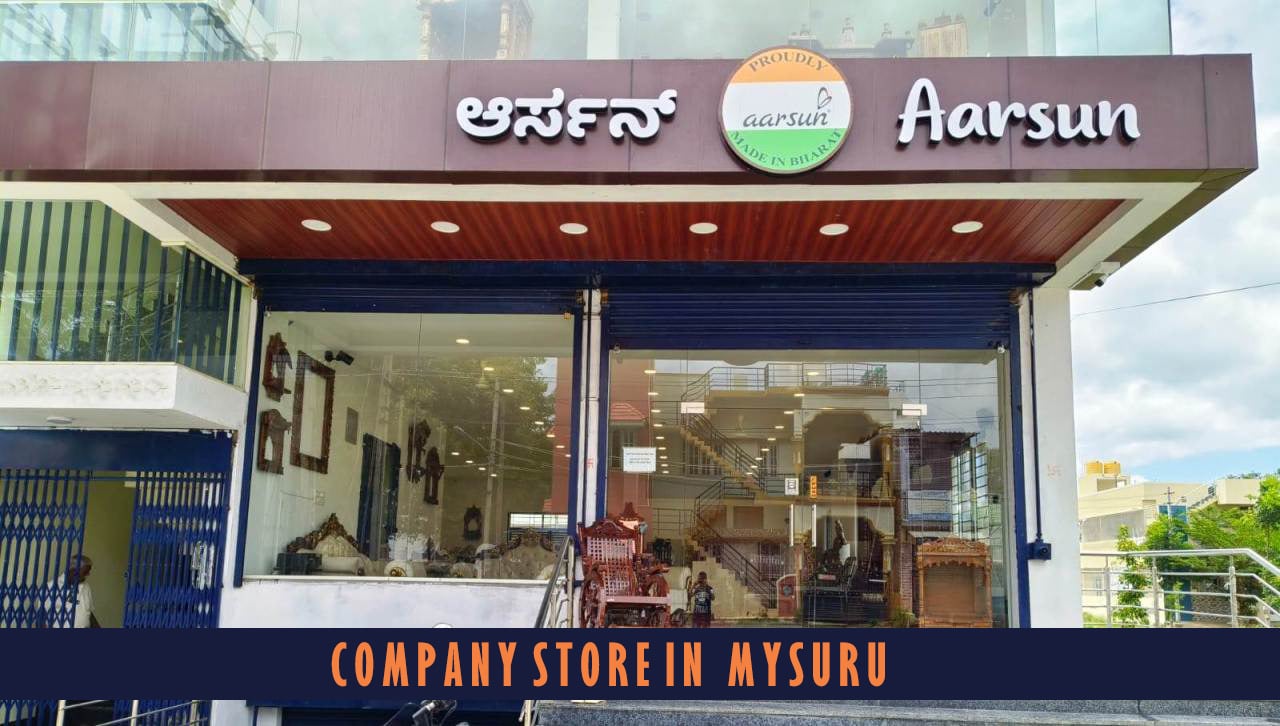
    Aarsun Woods Private Limited (Aarsun) is an Indian company working in hand-made furniture from solid wood. With experience of over 40 years in handicrafts and with a resource of top artisans Aarsun has made its name across the globe in Royal Furniture. Ashish Mittal – Director of Aarsun Woods Pvt Ltd recently announced the opening of their new store in Mysuru, Karnataka, and discussed their plan to expand to open offline stores in 40 cities in India by the end of 2024. The first store is on the CoCo model (Company owned company operated store) in Mysore to provide an experience center to its clients near the city and especially Bangalore which has easy access to the city.

    Presence of the AarSun Woods in the South part of India

    The Mysuru store of Aarsun is the first in India and is they chose this location to strengthen the presence of the company in South part of India. The major clientele of Aarsun is from this region as love of art and architecture has always been there in this part of the world.

    Besides India Aarsun is also a major exporter of Premium Furniture and the company informed they are doing business in 55+ countries already. The top leadership of Aarsun works with an aim to promote their local hand-carving art on a major scale on the global platform. Their efforts have brought business for the locals and accolades for the company as their products are quite amazing and exceed the quality available in different parts of the world.

    With their primary facility in the Saharanpur district of Uttar Pradesh, Aarsun caters to its worldwide clients from their base unit. Top-level Interior Designers, Architects, and Home Decorators are the clients of Aarsun who get their ideas converted to real furniture for their clients. Ashish Mittal – Director of Aarsun Woods – who is also quite popular among clients, for his detailed explanatory videos of furniture on YouTube and Social media, recently shared the company’s plans to open more offline stores.

    He mentioned the company is in touch with several furniture vendors who are interested in the Franchisee of Aarsun as there is a huge demand for Royal Furniture in their areas. Ashish Mittal founder of Aarsun, has helped to take the local art of wood carving to a global level with his presentation skills and simple & easy to understand explanations of the products. Aarsun Furniture has a huge presence on the internet with most of the social media channels covered, have more than 2 Lac subscribers on Youtube – https://www.youtube.com/@Aarsun/videos

    Experience Created New Goals

    With their first experience store in Mysore, Karnataka for South India clients, Aarsun has decided to expand its presence by venturing into physical stores in India. This strategic move aligns with the goal to engage with customers in a more personalized and practical manner. Aarsun has huge demand in various parts of India and this store will save time of travel for the clients who visit all the way to Saharanpur.

    The trend in the furniture market across India has changed in the last few years, and most of the furniture store owners in India know about Aarsun. They credit Aarsun for bringing Carving Furniture back in demand as earlier it was plain and imported furniture that was majorly in demand. The Indian market has seen dramatic turnarounds with more requirements for solid wood and designer furniture back in demand. The store owners now are looking for branded designer furniture for their clients and Aarsun is the top choice. Number of store owners already in the Furniture Industry are in talks with Aarsun to open a store in their respective areas to cater to local clients.

    The company is hopeful to cross the number of 40 stores easily as home owners are looking for good quality furniture, at better prices. The market is expanding exponentially & Aarsun Furniture has huge potential in the designer & Royal Wooden Furniture segment. With some vendors who are already working in different countries with local stores, Aarsun is looking forward for some International stores also in near future.

    Details about Aarsun Furniture is available on their website – https://aarsunwoods.com

  • Ritabhari Chakraborty’s Shah Rukh Khan Dream comes true with ‘Jawan’

    Ritabhari Chakraborty’s Shah Rukh Khan Dream comes true with ‘Jawan’

    In addition to her remarkable acting prowess and adaptability, Ritabhari Chakraborty is leaving an indelible mark on the pan-Indian film scene by actively challenging stereotypes. However, were you aware that Ritabhari has discreetly played a role in crafting and brainstorming dialogues for Shah Rukh Khan in “Jawan” for the promo that came out today? In a recent Instagram post, writer Sumit Arora, who also penned the dialogues for “Jawan,” expressed his gratitude towards Ritabhari for helping him brainstorm the dialogues for this special promo that reminds the world “The Baap” that Shahrukh Khan is.

    Chakraborty in her recent Instagram post also shared, how she is grateful and blessed to have helped in writing the dialogues for none other than Shah Ruk Khan for the promo and that is her dream come true. The fact that the star appreciated it on the phone right after they shared it with him. She also shares a witty insight in her post, “FYI @iamsrk thinks Ritabhari is a wayyyy better name for a writer than Sumit Sabka baap ne bol dia!”

    Take a look at the post –

    On the work front, the all-rounder actress is gearing up for her upcoming music video titled “Time,” which is all set to release this Friday. She has joined forces with Chintan Rachchh and Nikhita Gandhi for this project. On the work front, Chakraborty just wrapped up her other project called Nandini. Her character in the series Nandini, adapted from Sayantani Putatunda’s book.